

Ditching the Second Car: Why Aussie Families Are Switching to a Cargo Ebike
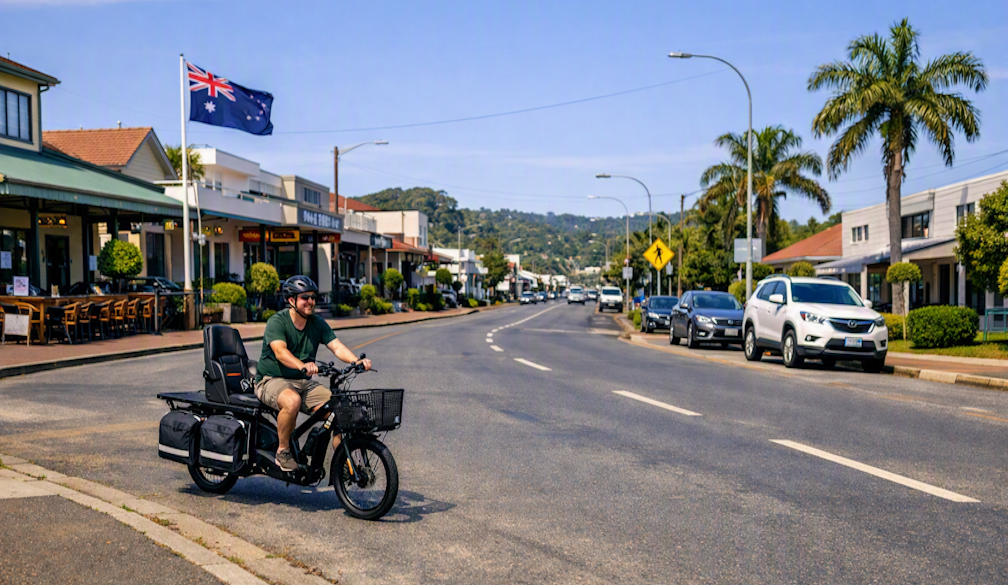
Petrol prices, parking fees and the daily grind of the school run have a way of making a second car feel less like a convenience and more like a burden. That's a big part of why a cargo ebike has gone from niche curiosity to a genuine fixture on suburban streets from Fremantle to the inner north of Melbourne. Where a decade ago you might have spotted one outside a food co-op, these days it's just as likely to be parked outside a primary school gate, loaded up with two kids, a footy bag and the week's groceries.
The appeal isn't hard to understand once you look at the numbers. Running a second car in Australia, once you factor in registration, insurance, fuel and servicing, can easily cost several thousand dollars a year. A cargo ebike handles the same short trips, the school drop-off, the supermarket run, the trip to footy training, for a fraction of that outlay, and it does it without hunting for a parking spot outside the shops on a Saturday morning. For families in denser pockets of Sydney or Brisbane, where a second car sometimes means paying for a permit just to park it on the street, the maths becomes even more compelling.
What Actually Counts as a Cargo Ebike
Not every electric bike with a rack qualifies. A genuine cargo ebike is built from the ground up to carry serious weight, with a reinforced frame, a lower centre of gravity, and a motor tuned for hauling rather than sprinting. Most fall into one of two categories. Front loader models place the cargo area, often a wooden or plastic tub with bench seating, between the handlebars and the front wheel, which keeps the load low and visible to the rider. Longtail models stretch the rear of the bike instead, adding a long, reinforced rack that can carry two children with the right seats and rails, or panniers loaded with shopping.
Both styles have their place, and the right choice usually comes down to where you live and what you're hauling. Front loaders tend to suit riders who want to keep an eye on younger kids directly in front of them and who don't mind a slightly wider bike for tight inner-city lanes. Longtails are generally lighter, narrower and easier to store in a townhouse courtyard or an apartment building's bike cage, which makes them a popular pick for families in Melbourne's inner suburbs or Sydney's eastern suburbs where storage space is at a premium.
Features Worth Checking Before You Buy
Payload rating is the number that matters most, and it's worth reading the fine print rather than assuming every bike advertised as family friendly can actually handle your household. Most cargo ebikes carry a combined rider and load capacity of somewhere between 150 and 220 kilograms, though a handful of premium models push closer to 250. Once you add the rider's own weight, two children, their seats and a loaded pannier, that number disappears faster than most people expect.
Braking matters just as much as capacity. A fully loaded bike carries considerably more momentum than a standard bicycle, so hydraulic disc brakes should be treated as a non-negotiable rather than a nice-to-have, particularly if you're riding anywhere with real hills, think the climb out of Hobart's inner suburbs or the rolling terrain around the Adelaide Hills. Motor placement is another consideration, since a mid-drive motor generally copes better with a heavy load on an incline than a hub motor does.
Compliance also deserves a proper check. Australian rules generally limit these bikes to a motor rated at no more than 250 watts of continuous output, with pedal assistance cutting out at 25 km/h, and increasingly needs to meet the EN 15194 standard now required for imports. Anything advertised with a throttle that pushes well past walking pace without pedalling assistance is stepping into unregistered motor vehicle territory, which brings licensing and insurance headaches nobody wants when they're just trying to get the kids to school on time.
Weatherproofing is worth a thought too, given how much of the country swings between sudden downpours and harsh sun. Look for a battery and controller with a solid IP rating, and check whether the manufacturer offers a rain canopy or sun shade for the cargo area, since Australian conditions are rarely gentle for long.
A Quick Check Before Paying a Deposit
- Add the rider, children, seats and usual luggage together, then compare the total with the stated payload limit.
- Measure your gate, storage area and any lift the bike will need to enter.
- Ask how much a replacement battery costs and whether it is stocked in Australia.
- Test the brakes and low-speed handling with weight onboard.
- Confirm exactly what the warranty covers, including the battery, motor and controller.
Brands Worth Shortlisting
Tern has built a strong reputation locally with the HSD, a compact cargo ebike that's shorter than a standard bicycle yet still handles a genuinely useful load, which suits riders juggling narrow garages or lift access in apartment buildings. Benno takes a slightly sportier approach, with models capable enough for weekend rail trail adventures as well as the daily grind of drop-offs and pickups.
At the premium end, Riese & Müller has earned a following among families treating their bike as a genuine car replacement, with heavy-duty builds designed for years of daily use rather than occasional weekend rides. Local operators including AMPD Bros and Ridewave have also carved out a place in the market, often undercutting the European brands on price while still offering local warranty support, which counts for a lot when a battery or controller needs attention. Specialist retailers such as Dutch Cargo and PedL, both with a presence in Sydney, are worth a visit if you want to compare a front loader against a longtail in person before committing, since the difference in handling only really becomes obvious once you've ridden both.
For many families, the value of a cargo ebike becomes obvious during the ordinary trips that quietly eat into the household budget. The right payload rating comes first, especially if your children are still growing. After that, consider whether the motor can manage your local terrain and whether the bike will fit through your gate, garage or apartment lift. Test ride it with some weight onboard if the retailer allows it. An empty cargo bike can feel very different once two children and their school bags are added.


 Daily Bulletin


