

Walking Shoes vs Running Shoes: Which Are Better for Daily Walking?
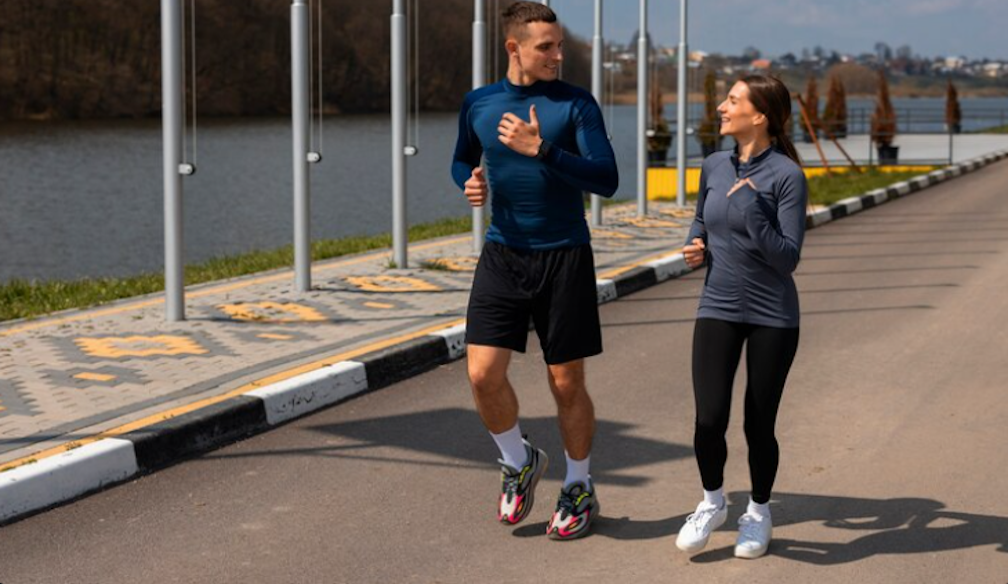
Running shoes have become the default athletic footwear for a lot of people who rarely run.
That is understandable. They are widely available, often heavily cushioned and built to cope with forces greater than those produced during ordinary walking. Some running shoes can make excellent walking shoes. Others feel unnecessarily tall, soft or performance-focused when most of their mileage consists of commuting, errands and a brisk evening walk.
Dedicated walking shoes approach the same problem from another direction. They are generally designed around repeated heel-to-toe movement at walking pace, with an emphasis on comfort, heel cushioning, forefoot flexibility and a stable platform.
So, when comparing walking shoes vs running shoes, there is no rule saying walkers must avoid running footwear. The better choice depends on how the shoe fits, how far you walk, the surfaces you use, whether you also run and what type of cushioning and stability feels comfortable over several hours.
For daily walking, the most specialised shoe is not automatically the best one. The most useful pair is usually the one whose design matches what your feet actually spend most of the week doing.
What Is the Main Difference Between Walking and Running Shoes?
The distinction starts with the movement they are designed around.
Walking and running are different gaits. During ordinary walking, there are periods when both feet are in contact with the ground. Running introduces a flight phase in which neither foot is touching the ground, along with shorter ground-contact periods and different loading patterns.
Classic biomechanics research comparing walking and running found that transitioning into running changes both the duration of the support phase and the shape of the vertical ground-reaction-force curve.
Running footwear therefore has to cope with the demands of a faster gait.
Better Health Channel, a Victorian Government health resource, describes walking shoes as typically benefiting from light weight and shock absorption beneath the heel and ball of the foot. For traditional running footwear, it places more emphasis on overall shock absorption and torsional strength, meaning resistance to excessive twisting.
Those are tendencies, not rigid categories. Modern shoe design overlaps considerably. Some lightweight walking shoes resemble running trainers, while certain cushioned running shoes are comfortable enough to spend their entire lives being walked in.
Can You Use Running Shoes for Walking?
Yes. Many running shoes work perfectly well for walking.
ASICS explicitly notes that road-running shoes can be used for walking and are built to handle demands that are more intense than ordinary walking.
The question is whether the features you are paying for suit your walking.
A moderately cushioned road-running shoe with a comfortable fit, broad enough forefoot and secure heel may work exceptionally well for someone walking five kilometres each morning.
A highly specialised racing shoe is a different proposition. Very tall midsoles, aggressive rocker geometry, carbon plates or other performance features designed around running economy may offer little benefit for someone whose main activity is shopping, commuting and standing at work.
Similarly, a very soft running shoe can feel pleasant during forward movement but less settled while standing or moving slowly around indoor spaces.
Running shoes are not "wrong" for walking. They are simply worth judging as shoes rather than assuming the running label automatically makes them an upgrade.
Why Walking Shoes Can Feel More Stable at Slower Speeds
Walking involves relatively long periods of contact with the ground.
That changes what many people notice beneath their feet. A walker may spend considerable time standing at crossings, changing direction in shops, moving through train stations or walking slowly beside another person. The shoe needs to feel comfortable during those slower moments as well as during a brisk stride.
A lower or more stable platform can feel reassuring in those settings.
Walking-specific footwear often avoids some of the extreme midsole geometries seen in contemporary performance running shoes. Instead, the design may focus on a smooth transition from heel contact through the ball of the foot.
Better Health Channel notes that some walkers prefer rounded or rocker-bottom construction because it helps the body move from heel to toe.
That does not mean every walking shoe should have a rocker sole. Someone with a natural, comfortable stride may prefer a more conventional design.
The feature should serve the wearer rather than dictate how the foot moves.
Running Creates Different Loading Demands
One reason running shoes often carry more substantial cushioning is that running changes the forces acting between the foot and ground.
A study examining vertical ground-reaction force across walking and running speeds found that slow jogging produced vertical-force measures more than 50% higher than those seen during walking in the study conditions.
That does not mean walkers need minimal cushioning.
Daily walking can still involve thousands of repeated steps, often on concrete, asphalt and hard indoor floors. Underfoot comfort matters, especially if the shoes are worn throughout a working day rather than only for a 30-minute exercise session.
The difference is that cushioning should be selected for walking comfort rather than for impact levels the wearer never produces.
Very thick foam can be useful. It can also be unnecessary.
Which Is Better for Walking on Australian Streets?
For most city walking, fit and underfoot comfort matter more than whether the box says walking or running.
Australian daily use often mixes surfaces rather than staying on a single exercise route. Daily Bulletin's recent guide to walking footwear highlighted exactly this pattern: one pair may encounter station platforms, shopping centres, urban pavement and a weekend gravel path within the same week.
That makes versatility valuable.
A walking shoe with moderate tread, cushioning and a relatively lightweight upper can handle most daily situations without feeling overbuilt indoors. A road-running shoe can do the same if its outsole and fit work comfortably at walking pace.
Someone whose routes regularly extend onto loose gravel or unsealed paths should pay more attention to traction. If weekend activity progresses into genuinely rough, steep or muddy terrain, neither an ordinary road-running shoe nor a light urban walking shoe may be the right tool.
That begins to move into trail or hiking footwear territory.
Fit Is More Important Than the Category Name
A technically excellent running shoe is a bad walking shoe if it does not fit.
The same is true of a shoe specifically marketed for walking.
Better Health Channel recommends approximately 1 to 1.5 cm of room at the end of an athletic shoe, enough width for the foot, the ability to move the toes and secure heel retention without slipping. It also specifically warns that buying half a size longer will not necessarily solve a width problem.
That last point is especially useful.
If a shoe feels tight around the ball of the foot, many buyers automatically go from a size 9 to a 9.5 or 10. The extra length may create room in front while doing relatively little for the area actually being squeezed.
A wider fitting in the correct length is usually a more precise solution.
Men looking through recommended walking shoes can see how specialist walking ranges increasingly account for this. FitVille Australia's current men's collection includes conventional lace-ups, slip-ons and other walking-oriented designs, including a dedicated 6E model for customers needing substantially greater width.
The useful point is not that every walker needs a wide shoe. It is that width should be treated as a genuine size variable rather than solved by unnecessary length.
Cushioning: Walking Comfort vs Running Protection
Walking shoes and running shoes can both be heavily cushioned, but the cushioning may be tuned differently.
A runner repeatedly lands and leaves the ground at greater speed. A walker usually progresses through a longer, more controlled heel-to-toe contact.
Better Health Channel notes that the midsole is the main cushioning component of an athletic shoe. Interestingly, cushioning does not simply eliminate the force entering the body. It can increase the time over which that force is applied, giving the body more time to respond.
For daily walkers, that makes feel and stability worth testing together.
If a shoe feels exceptionally soft but your foot seems to move from side to side, the cushioning may not be ideal for your use. If the midsole feels thin and unforgiving after an hour on concrete, the opposite problem exists.
There is no universal amount of foam that qualifies as "best."
Body mass, walking distance, pace, surface and personal preference all affect the answer.
Forefoot Flexibility Matters When Walking
Walking footwear needs to allow the foot to move through the later part of the stride.
After heel contact, body weight progresses forward and eventually moves through the ball of the foot and big toe. A shoe that is rigid in the wrong place can make that transition feel awkward.
Better Health Channel recommends lightweight walking footwear with cushioning beneath the heel and ball of the foot, while also recognising rocker-style designs as one approach to creating an easier heel-to-toe transition.
Running footwear often uses more pronounced geometry.
Some shoes bend conventionally at the forefoot. Others use stiffening elements and rocker profiles to move the runner forward differently.
A walker may enjoy that sensation. Another may find it artificial.
Try the shoe at your normal walking pace rather than assuming a technology developed for running will automatically improve walking.
Do Walking Shoes Need More Heel Support?
They need secure heel fit, but not necessarily a heavily rigid rear section.
The heel should travel with the shoe instead of lifting on every step.
Repeated movement creates friction, and heel instability can be especially irritating over long distances. Better Health Channel advises checking that the shoe grips the heel and does not slip during movement.
Running shoes also require good heel retention, so this is not a feature unique to walking models.
Where designs sometimes differ is how heavily the rear of the shoe is structured and how that structure works with the midsole.
The useful test remains simple: walk in it.
Take several turns. Walk faster. Slow down. If possible, try stairs or a slight slope. A heel problem often becomes much clearer once the movement is less predictable than five steps in a straight line.
What About Standing for Long Periods?
This is where an excellent running shoe and an excellent everyday walking shoe may diverge.
Someone using footwear purely for an hour of exercise is continuously moving. Someone wearing the same pair to work may spend long periods standing.
A tall, highly compliant running midsole can feel different while stationary because there is no repeated forward motion to use the geometry for which it was designed.
A more stable walking platform may suit mixed walking-and-standing days better.
This is not a universal rule. Plenty of people happily work long shifts in running shoes.
The point is to include standing in the trial if standing forms a meaningful part of your day.
Daily footwear should be tested against the entire routine, not only its most athletic 30 minutes.
Which Is Better for Brisk Fitness Walking?
Either can be appropriate.
Better Health Channel describes walking as a low-impact form of physical activity and notes that around 30 minutes of daily walking can improve cardiovascular fitness, strengthen bones and build muscular endurance.
As pace rises, some walkers may appreciate the lighter weight and responsive cushioning associated with road-running footwear.
Someone who regularly walks quickly for an hour may therefore prefer a running-derived shoe over a heavier traditional walking model.
Others prioritise a firmer platform and smoother heel-to-toe motion.
The correct category becomes less important than whether the shoe remains comfortable at the pace you actually maintain.
What If You Walk and Run in the Same Week?
This is one of the strongest arguments for buying a running shoe.
If your routine includes three walking days and two genuine running sessions, it generally makes more sense to choose footwear capable of handling the higher-demand activity.
Running shoes can be walked in. A walking shoe that was never designed for running may not be suitable for repeated running sessions.
ASICS makes this distinction directly, noting that running shoes can generally be used for walking because they are already designed to withstand the greater physical demands associated with running.
That makes a versatile road-running shoe attractive to someone who alternates between the two.
If you never run, though, there is little reason to prioritise running-specific performance characteristics simply because they sound more technical.
Australian Heat Should Influence the Upper
The sole tends to dominate shoe comparisons, but the upper can determine whether a pair remains comfortable after an hour outside.
Breathable mesh usually suits warmer urban walking well. More enclosed or weather-resistant construction may be preferable in wetter conditions, although increased water protection can reduce airflow.
Daily Bulletin's Australian walking guide makes the same practical distinction, noting that hot, dry conditions and damp or humid conditions call for different compromises between ventilation and weather resistance.
Neither running nor walking shoes automatically win here.
Both categories include airy summer models and more enclosed designs.
Choose the upper for climate and use, not the sport printed in the product description.
When Should Walking Shoes Be Replaced?
There is no trustworthy universal kilometre number that applies to every walker and every shoe.
Wear depends on body weight, gait, surface, shoe construction and how often the footwear is rotated.
Visual and physical changes are more useful.
Check whether the outsole has become smooth in important contact areas. Look at the midsole for pronounced compression or asymmetry. Pay attention to whether the heel structure has softened and whether a shoe that used to feel stable now feels noticeably different.
Daily Bulletin's recent Australian footwear guide similarly recommends considering replacement when tread becomes smooth, cushioning feels compressed, the heel loses structure or the lining begins causing rubbing.
Do not judge only by the upper. A shoe can still look tidy while the functional parts underneath have accumulated considerable wear.
When Neither Shoe Category Solves the Problem
Foot pain should not automatically trigger another online order.
Persistent heel pain, recurrent numbness, significant swelling or changes in foot shape may need assessment.
Healthdirect notes, for example, that plantar fasciitis can cause heel pain during walking and that supportive footwear may form part of management.
Flat feet are another example. They are not necessarily problematic, but Healthdirect advises seeking assessment when flat feet are painful, stiff, uneven or affecting walking.
In those situations, debating walking versus running shoes may miss the more important question.
A podiatrist, physiotherapist or doctor can help determine whether footwear is causing the problem, aggravating it or merely revealing something that needs separate attention.
How to Choose Between Walking and Running Shoes in the Shop
Start with the activity that will occupy most of the shoe's life.
If almost all of your mileage is walking, compare walking designs and conventional road-running shoes side by side. Do not assume either category wins before putting them on.
Try footwear later in the day if possible. Better Health Channel recommends end-of-day or post-exercise fitting because feet may be larger then. It also advises wearing the socks you normally use and testing the shoes by actually walking or running in them.
Check toe room, forefoot width and heel movement.
Then pay attention to the midsole. Does it feel pleasantly cushioned or unnecessarily soft? Does the shoe roll naturally through your stride? Can you stand comfortably in it?
Someone browsing recommended walking shoes should apply the same test rather than purchasing from the category name alone. FitVille Australia's current men's walking page spans multiple constructions, including lace-ups, slip-ons and wider-fit models, reinforcing that even within one walking category there is no single design for every foot.
The shoe needs to win on your foot, not on paper.
FAQs About Walking Shoes vs Running Shoes
Are running shoes better cushioned than walking shoes?
They often use cushioning designed for the greater mechanical demands of running, but that does not automatically make them more comfortable for walking. Walking shoes can also provide substantial heel and forefoot cushioning. Stability, fit and walking feel matter alongside softness.
Can I wear walking shoes for running?
Occasional very short jogging may be possible in some athletic walking shoes, but footwear intended only for walking is not necessarily designed for repeated running loads. If running is part of your regular exercise, choosing a suitable running shoe is the more sensible starting point.
Are running shoes good for walking all day?
They can be. Conventional road-running shoes often work well for long walking days, provided they fit securely and remain stable and comfortable at slower speeds and while standing. Highly specialised racing designs may offer features that daily walkers do not need.
Do I need separate shoes for walking and running?
Not necessarily. If you both walk and run, an appropriately fitted running shoe can often handle both activities. If you only walk, a dedicated walking shoe may provide a simpler combination of flexibility, cushioning and stability without unnecessary running-specific features.
Choose for the Movement You Do Most Often
The walking-shoe versus running-shoe comparison does not need a universal winner.
Running shoes are built to handle a more demanding gait, and many are excellent for walking. That makes them particularly practical for people who genuinely mix the two activities.
Dedicated walking shoes have their own advantage. Their design can concentrate on what everyday walkers actually spend hours doing: repeated heel-to-toe steps, periods of standing, slower changes of direction and long stretches on hard surfaces.
For someone who never runs, paying for a highly specialised running design may therefore solve a problem that does not exist.
Start instead with the ordinary week. Think about distance, pace, pavement, work, weather and whether your weekend walks leave the footpath. Then judge fit, cushioning, stability and grip against those conditions.
The right shoe does not need to be the fastest one available. For daily walking, it needs to be the pair you can put on in the morning and stop thinking about for the rest of the day.


 Daily Bulletin


