

3 Charts on the rise in cycling injuries and deaths in Australia
- Written by: Marilyn Johnson, Senior Researcher, Institute of Transport Studies, Monash University
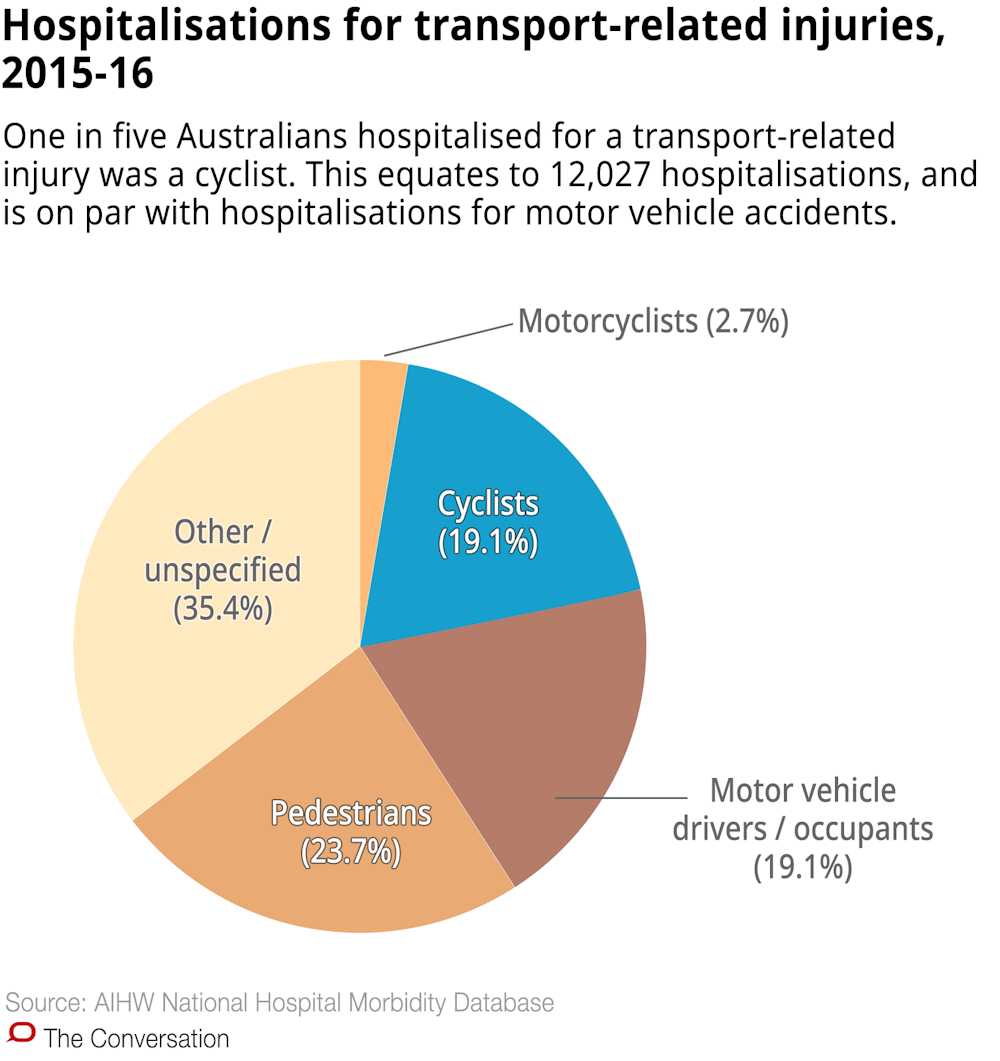
One in five people injured on Australian roads and paths is a cyclist, according to a new Australian Institute of Health and Welfare report that examined injury data from 1999–2000 to 2015–16.
More cyclists are being injured
Zero is the only acceptable number of deaths on our roads. Yet every year, more than 1,000 people are killed in transport-related crashes. This includes an average of 38 people who were killed while riding their bikes.
Add to this, in 2015-16 more than 12,000 people were hospitalised after crashes while riding, almost 80% of whom were men.
 The Conversation, CC BY-ND
The rate of hospitalisation for cyclists increased by 1.5% per year over the 17-year period of the report. Even more concerningly, in the last six years of the report, the increase was 4.4% per year.
In comparison, the rate of hospitalisation for other road users is going down. For motor vehicle occupants, it fell by 1.3%; for pedestrians, the drop was 2.2%.
Separated infrastructure for cyclists is crucial for safety, but typically some part of every trip will include crossing or travelling on the road with motor vehicles. The greater mass and speed of motor vehicles increases the risk of more severe injuries for cyclists.
Read more:
Does everything and nothing change when a cyclist dies?
Rising injuries among older Australians
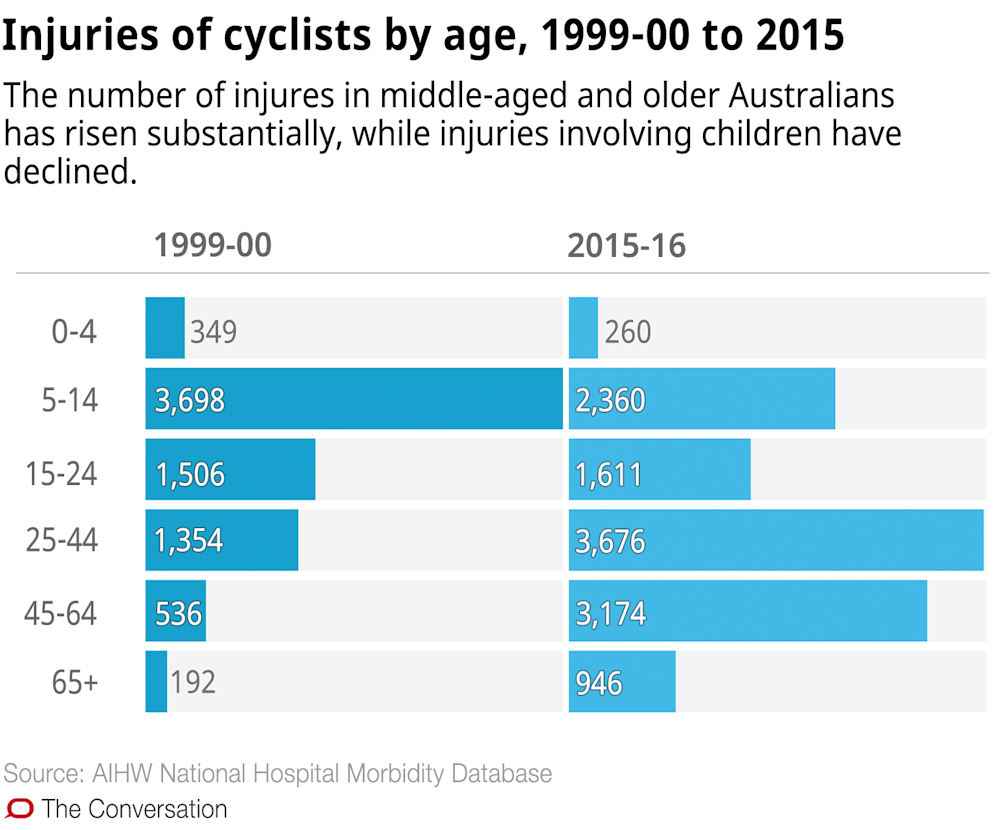
The number of older people who have been killed or injured as a result of a crash while cycling is rising. Over the study period, the number of cyclists aged 45-64 who were hospitalised increased by almost 600%, and 500% among over-65s.
Older cyclists may be more likely to need hospitalisation for an injury that might be less severe in younger cyclists. Compared with cyclists aged under 45, those aged 45 and over were more likely to have life-threatening injuries.
Between 1999–00 and 2015–16, nearly 160,000 cyclists were hospitalised; more than 9,000 per year on average. The age profile of those injured changed dramatically over that period:
The Conversation, CC BY-ND
The rate of hospitalisation for cyclists increased by 1.5% per year over the 17-year period of the report. Even more concerningly, in the last six years of the report, the increase was 4.4% per year.
In comparison, the rate of hospitalisation for other road users is going down. For motor vehicle occupants, it fell by 1.3%; for pedestrians, the drop was 2.2%.
Separated infrastructure for cyclists is crucial for safety, but typically some part of every trip will include crossing or travelling on the road with motor vehicles. The greater mass and speed of motor vehicles increases the risk of more severe injuries for cyclists.
Read more:
Does everything and nothing change when a cyclist dies?
Rising injuries among older Australians
The number of older people who have been killed or injured as a result of a crash while cycling is rising. Over the study period, the number of cyclists aged 45-64 who were hospitalised increased by almost 600%, and 500% among over-65s.
Older cyclists may be more likely to need hospitalisation for an injury that might be less severe in younger cyclists. Compared with cyclists aged under 45, those aged 45 and over were more likely to have life-threatening injuries.
Between 1999–00 and 2015–16, nearly 160,000 cyclists were hospitalised; more than 9,000 per year on average. The age profile of those injured changed dramatically over that period:
 The Conversation, CC BY-ND
We can’t unpack crash details from the hospital data, but broader trends might provide possible reasons for these changes.
A decrease in injury crashes involving children may be because more kids are riding with an adult, or riding on the footpath. Or there may be fewer kids riding bikes.
Increased driver distraction, particularly due to mobile phone use while driving, may also be playing a part.
One possible contributing factor for the rise in injuries among older Australians is the increase in use of electric bikes. Electric bikes, or e-bikes, are fitted with a motor that provides assistance when cycling and makes it easier to ride further and uphill with less effort.
Our recent research with older Australian e-bike riders found 88% rode weekly and one-third rode daily. Owning an e-bike helped people make active transport decisions for longer including people who were not previously regular cyclists.
Read more:
Electric bikes can boost older people's mental performance and their well-being
While e-bikes are a fun, efficient and easy way to get around, their popularity may contribute to the increase in injuries among older cyclists. Rusty bike handling skills, lower muscle strength, and issues with vision may all contribute to increased crash risk.
Type of injury
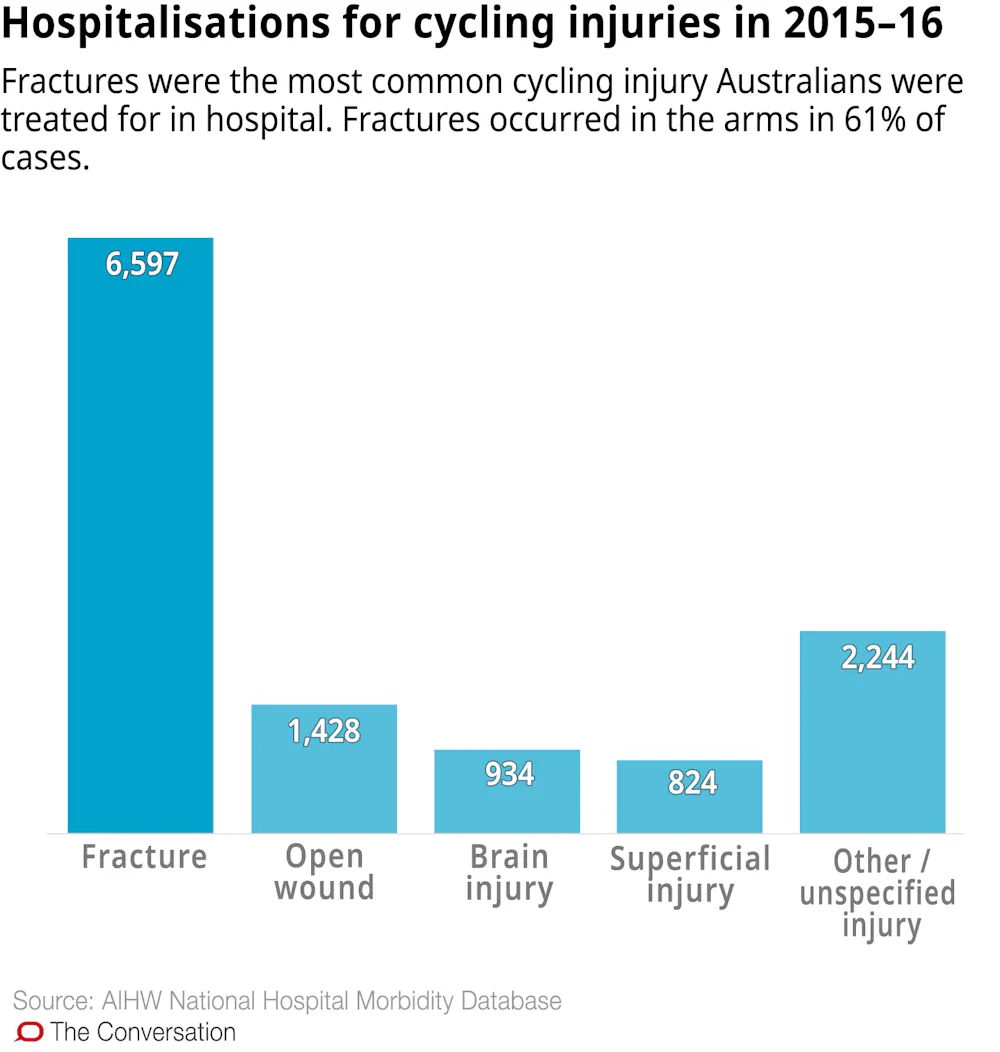
The most common type of injury was a fracture, occurring in 55% of hospitalisations.
The Conversation, CC BY-ND
We can’t unpack crash details from the hospital data, but broader trends might provide possible reasons for these changes.
A decrease in injury crashes involving children may be because more kids are riding with an adult, or riding on the footpath. Or there may be fewer kids riding bikes.
Increased driver distraction, particularly due to mobile phone use while driving, may also be playing a part.
One possible contributing factor for the rise in injuries among older Australians is the increase in use of electric bikes. Electric bikes, or e-bikes, are fitted with a motor that provides assistance when cycling and makes it easier to ride further and uphill with less effort.
Our recent research with older Australian e-bike riders found 88% rode weekly and one-third rode daily. Owning an e-bike helped people make active transport decisions for longer including people who were not previously regular cyclists.
Read more:
Electric bikes can boost older people's mental performance and their well-being
While e-bikes are a fun, efficient and easy way to get around, their popularity may contribute to the increase in injuries among older cyclists. Rusty bike handling skills, lower muscle strength, and issues with vision may all contribute to increased crash risk.
Type of injury
The most common type of injury was a fracture, occurring in 55% of hospitalisations.
 The Conversation, CC BY-ND
Fractures of the arm and legs were most common. The highest proportion of head and neck fractures occurred in children aged four and under (21%). Older Australians were more likely to fracture their femur and pelvis.
Thousands of people cycle safely every day. However, a crash can be catastrophic, especially when a motor vehicle is involved. Action to create a safe cycling environment in Australia is needed from everyone:
government: build safe separated cycling infrastructure; reduce speeds in local areas; include cyclists in the driver licensing test; require truck drivers to complete training to increase their awareness of all vulnerable road-users including cyclists, pedestrians and motorbike riders
drivers: allow at least a metre when passing cyclists (1.5m in speed zones over 60kph); don’t drive distracted or tired
cyclists: be bright, use lights; follow the road rules; stay out of the door zone.
Read more:
More cyclists are ending up in hospital with serious injuries, so we need to act now
The Conversation, CC BY-ND
Fractures of the arm and legs were most common. The highest proportion of head and neck fractures occurred in children aged four and under (21%). Older Australians were more likely to fracture their femur and pelvis.
Thousands of people cycle safely every day. However, a crash can be catastrophic, especially when a motor vehicle is involved. Action to create a safe cycling environment in Australia is needed from everyone:
government: build safe separated cycling infrastructure; reduce speeds in local areas; include cyclists in the driver licensing test; require truck drivers to complete training to increase their awareness of all vulnerable road-users including cyclists, pedestrians and motorbike riders
drivers: allow at least a metre when passing cyclists (1.5m in speed zones over 60kph); don’t drive distracted or tired
cyclists: be bright, use lights; follow the road rules; stay out of the door zone.
Read more:
More cyclists are ending up in hospital with serious injuries, so we need to act now
Authors: Marilyn Johnson, Senior Researcher, Institute of Transport Studies, Monash University
Read more http://theconversation.com/3-charts-on-the-rise-in-cycling-injuries-and-deaths-in-australia-116660


 Daily Bulletin


