

Why Aboriginal voices need to be front and centre in the disability Royal Commission
- Written by: John Gilroy, ARC Research Fellow in Indigenous Health, Disability and Community Development, University of Sydney
We welcome the recently announced Royal Commission into Violence, Abuse, Neglect and Exploitation of People with Disability.
At the same time, the enquiry must consider certain issues in its approach to Aboriginal and Torres Strait Islander people with disabilities.
Experiences of cultural discrimination are amplified for Aboriginal and Torres Strait Islander people with disabilities. They desperately need support that recognises and responds to their cultural needs.
The Commission also must note Aboriginal and Torres Strait Islander people with disabilities are contending with abuse in their families and communities at higher levels than in non-Indigenous communities, and are often living in poverty.
The Aboriginal and Torres Strait Islander disability rights movement has gained significant momentum over recent years. This has included participation in the planning and development of the National Disability Insurance Scheme (NDIS).
Now we must ensure the diversity of Aboriginal and Torres Strait Islander voices is heard in this Royal Commission.
Higher rates of disability, but lower rates of accessing supports
In the latest Census for Disability, Ageing, and Carers, nearly 25% of Aboriginal and Torres Strait Islander people in households reported experiencing disability. This doesn’t include people with disabilities living in out-of-home care, so the prevalence is likely much higher.
In the same survey, 17.5% of the non-Indigenous population reported experiencing disability.
While we have no direct data which explains this higher prevalence, it’s likely disability is more common among Aboriginal and Torres Strait Islander people due to higher rates of chronic health conditions, disease, poverty, and lack of accessible services in remote regions.
Read more: Here's how we can stop putting Aboriginal people with disabilities in prison
Globally, experiences of disability among Indigenous populations have been linked to colonial imperialism, racism, and dispossession from traditional lands and food sources, and social alienation.
Around 5% of NDIS participants are of Aboriginal and Torres Strait Islander heritage. This figure doesn’t reflect the rates of disability in Aboriginal and Torres Strait Islander communities, meaning Aboriginal and Torres Strait Islander people with disabilities are not well-engaged with the NDIS.
Experiences of discrimination
The Commission must acknowledge that for Aboriginal and Torres Strait Islander people with a disability, their experience is entwined with both disablism – discriminatory behaviour arising from the belief that people with a disability are inferior to others – and cultural discrimination. We call this “racial-ableism”, as separating the two is impossible.
Experiences of racial-ableism influence how Aboriginal and Torres Strait Islander people with disabilities engage with the disability service system. Day-to-day experiences of discrimination include non-Indigenous people accusing Aboriginal and Torres Strait Islander people with a disability and/or challenges related to motor coordination of being intoxicated when they are not.
It’s imperative these stories are part of the Commission, as their telling can help build a narrative to prevent abuse towards people with disability.
Read more: Indigenous people with disability have a double disadvantage and the NDIS can't handle that
We need a culturally responsive system
Establishing disability support systems on a Western model that doesn’t consider Aboriginal and Torres Strait Islander peoples’ cultural needs can be seen as a form of abuse.
My (Gilroy’s) research has shown the history of the institutionalisation of Aboriginal and Torres Strait Islander people with disability spans more than one century. This includes many examples of Aboriginal and Torres Strait Islander people being forced to live in large residential centres, excluded from towns, or wrongly incarcerated.
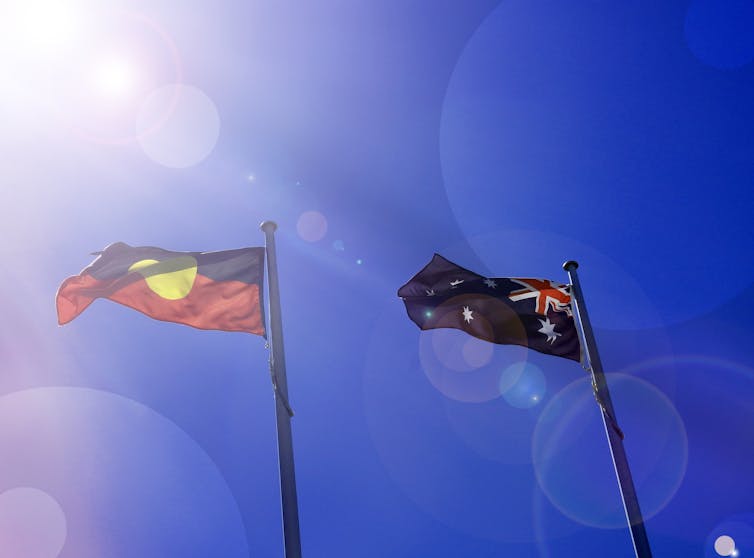 The terms of reference for the Royal Commission suggest there will be a focus on Aboriginal and Torres Strait Islander people with disabilities, but we need to see this in action.
From shutterstock.com
The terms of reference for the Royal Commission suggest there will be a focus on Aboriginal and Torres Strait Islander people with disabilities, but we need to see this in action.
From shutterstock.com
Aboriginal and Torres Strait Islander people with disabilities may live in disability institutions that meet their support needs, but don’t meet their cultural and social needs, such as connecting to community and Country.
Many Aboriginal and Torres Strait Islander people with disabilities in remote and very remote regions have to move off their traditional lands away from family and live in regional or metropolitan centres due to limited disability services in their communities.
For Aboriginal and Torres Strait Islander people, these are forms of cultural abuse. A culturally responsive system is one that meets cultural and social needs and connects Aboriginal and Torres Strait Islander people to their traditional lands, while at the same time accommodating their disability needs.
Read more: Why Aboriginal people with disabilities crowd Australia's prisons
There are challenges in the communities, too
Simply focusing on disability institutions would be turning a blind eye to the chronic abuse of vulnerable people living among their families and communities, including people with a disability, children, and the elderly.
Our research has shown family violence has contributed to Aboriginal and Torres Strait Islander children with a disability being placed in out-of-home care arrangements.
The Commission needs to acknowledge abuse of people with a disability can occur in the family and community.
Read more: Aboriginal Australians want care after brain injury. But it must consider their cultural needs
Meanwhile, Aboriginal and Torres Strait Islander people with a disability experience higher rates of poverty, poorer rates of education attainment, and higher rates of homelessness than non-Indigenous people with a disability. In remote regions where services are scarce, poverty can mean people with disabilities go without food or even shelter.
Our governments must urgently act to address this crisis.
A strengths-based approach
A deficit model focuses solely on the challenges and negative experiences associated with disability, such as “suffering” and “impoverishment”. The Commission should instead be premised on a strengths-based framework.
This gives people the opportunity to express both negative and positive experiences about living as an Aboriginal and Torres Strait Islander person with disability.
A strengths-based approach draws attention to what people with disability can achieve, like enrolling in a qualification, securing employment, or winning a martial arts competition – despite the barriers they face.
Read more: Finally, people with disabilities will have a chance to tell their stories – and be believed
The Commission desperately needs to be attuned to the voices of Aboriginal and Torres Strait Islander people with disability, their carers and peak agencies by including them as key parts of the Commission.
The appointment of an Indigenous Commissioner, in Andrea Mason, is an important start.
Authors: John Gilroy, ARC Research Fellow in Indigenous Health, Disability and Community Development, University of Sydney


 Daily Bulletin


