

High cost means more than half of NZ's young adults don't access dental care
- Written by: Jonathan Broadbent, Associate Professor in Dental Public Health, University of Otago
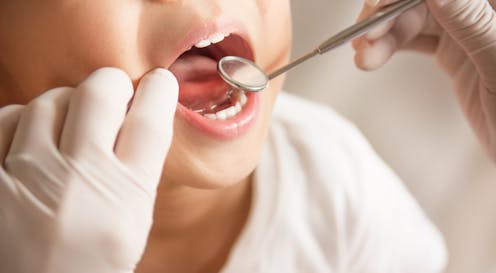
In New Zealand, wealth determines dental health. Inequalities in untreated tooth decay are wider in New Zealand than in Australia, Canada or the United States.
The latest New Zealand Health Survey, run annually by the Ministry of Health, reported that cost prevents an estimated 15% of New Zealand adults (just over half a million) from seeing a GP about a medical problem and nearly 7% (around a quarter million) from filling a prescription. For dentistry, cost stopped 44% of adults (around 1.6 million) from accessing care. In the young adult age group, this was over half the population.
New Zealand’s dental health-care system needs change. The government is currently reviewing the health and disability system, and all dental public health specialists in New Zealand (myself included) made a joint submission to that review. We see adult dental health care as a neglected health policy issue and here, I summarise how I see our ideas for improving the system.
Read more: Two million Aussies delay or don't go to the dentist – here's how we can fix that
The problems
The risk for dental problems is determined in early childhood and can be intergenerational. Those born into disadvantaged families go on to have greater rates of tooth decay as adults.
Young adulthood is when incomes are often at their lowest, but untreated dental decay is at its highest. In New Zealand, dental care for children is free, but the use of dental services declines sharply after the age of 18, when free access ceases. This affects oral health and sets the stage for losing teeth as an adult.
Conventional wisdom has it that the best approach to reducing inequalities is to educate the public, but that doesn’t work. To address social inequalities, we need to address the underlying structural issues and ensure timely access to quality dental care. In dentistry, inequalities in the delivery of dental care services are greater than inequalities in the disease itself. There is a definite gradient in the rate of tooth decay for those from disadvantaged childhood situations, but it is much greater for losing teeth than for decay.
Read more: Why some kids are more prone to dental decay
Public or private?
Some argue dentistry is changing from being a health profession to a simple commercial enterprise. People on low incomes miss out while some dentists are busy meeting targets for “high value work”. Dentists have to turn a profit to stay in business, so most dental practices are concentrated in well-off areas with better oral health.
The company with the biggest market share (15% dental practices in New Zealand), is squarely focused on the middle to high end dental market. It has described New Zealand’s dental health care sector as a “lucrative market” for investment.
On the other hand, the Minister of Health David Clark recently said:
There is widespread unmet need for dental care among adults in New Zealand.
Is “widespread unmet need” an opportunity for profit? Or is it a public health problem for the nation to grapple with?
The government spends around NZ$16 billion annually on health, but private expenditure for general health problems is estimated at just one-fifth of total expenditure. On the other hand, the government currently spends around a quarter of a billion dollars a year on dental care, but New Zealanders spend upwards of five times that amount in private dental health care. Estimates of the annual spend in the New Zealand private dental market range from NZ$0.8 billion to NZ$1.8 billion, reflecting real uncertainty about what actually goes on.
The solutions
New Zealand’s dental care system demonstrates why we can’t rely on market forces to equitably distribute population health services. The cost of introducing universal coverage for dental care would be high, but that doesn’t mean we shouldn’t consider the idea, or variations of it. People certainly have a taste for free dental care.
We should start with prevention. Preventing dental problems isn’t just about brushing teeth and water fluoridation. Just as Scotland has done successfully, New Zealand needs to increase our spend on preventive dental care to save on the high costs of dental interventions. Many people miss out on preventive dental care and population-level prevention represents a very small component of the public dental health care budget.
Cardiovascular disease, diabetes and obesity have many of the same causes as dental diseases. Stricter limits on the marketing and sale of sugary drinks and lollies, better regulation of “hidden sugars”, and continued efforts for tobacco control would have benefits beyond dental health. If publicly funded dental services are to be expanded, then the government should seriously consider balancing the costs by applying a health tax at the point of purchase of products that cause oral disease.
Dentistry is poorly integrated with other areas of health care. Neither is it funded like other areas of health care, and this needs to change. Dental surgery is expensive, just like any form of surgery. Accessible dental health care can’t happen without funding.
Our first steps towards the goal that all New Zealanders should be able to access affordable comprehensive dental care should be population-level prevention and ensuring that disadvantaged groups can access emergency dental care.
Authors: Jonathan Broadbent, Associate Professor in Dental Public Health, University of Otago


 Daily Bulletin


