

Here's how to make our cities breastfeeding-friendly
- Written by: Jenny Donovan, Urban Designer and Sessional Lecturer, La Trobe University
Seen through the eyes of new mothers, our towns and cities can often seem like uncomfortable and uninviting places to breastfeed. Although the physical characteristics of a place are not the only factors that influence how a woman feeds her child, they can be important. The physical surroundings can sway the balance of influences that may deter women from breastfeeding, bring it to a premature conclusion, or compel women to isolate themselves in their own houses so they might continue to breastfeed.
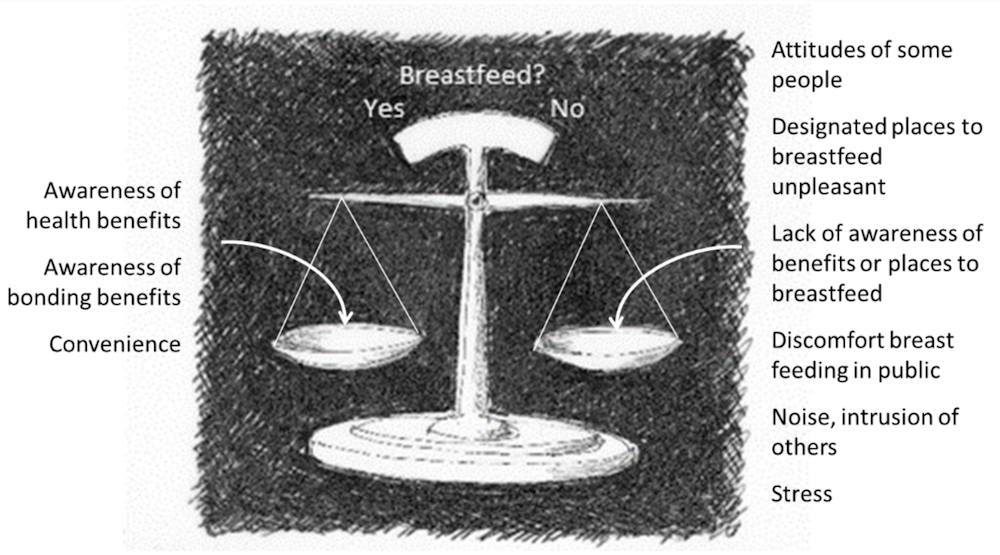 The physical environment can sway the balance of influences that determine whether a woman chooses to breastfeed or not.
Author provided
The physical environment can sway the balance of influences that determine whether a woman chooses to breastfeed or not.
Author provided
Our study reveals that the deterrents to breastfeeding can be diminished by “hardwiring” our towns and cities so mothers are more likely to feel confident that breastfeeding is a supported, realistic and pleasant option for them.
Read more: For breastfeeding in public, laws are not enough
This is a serious matter. Whether children are breastfed or not is a significant influence on the trajectory of their lives. It improves their rates of survival, and has been linked to increased IQ and reduced obesity in later life. It helps protect mothers from some cancers.
Breastfeeding helps broader society too. By reducing the incidence of many infant illnesses and chronic diseases, it eases the load on an overburdened healthcare system.
To achieve these benefits, UNICEF and WHO recommend exclusive breastfeeding from within an hour of birth until the baby is six months old. After that, breastfeeding should complement solid food for up to two years or beyond.
Read more: Breastfeeding has been the best public health policy throughout history
However, in Australia, although 96% of babies are breastfed at first, rates decline rapidly. Only 39% were exclusively breastfed to three months and only 15% were exclusively breastfed to five months.
If, as a society, we want to make sure the benefits of breastfeeding are spread as widely as possible, we need to look at what is bringing breastfeeding to a premature conclusion and what we can do about it.
What makes a place breastfeeding-friendly?
Breastfeeding-friendly towns and cities are communities where the imperatives of supporting women to breastfeed and participate in society can be reconciled with all the other things we look to our surroundings to provide. This has interlinked physical and emotional dimensions.
The ergonomics of physical comfort are quite well understood, but those of emotional comfort less so, although they have a significant bearing on breastfeeding. For example, if a mother feels unsafe or fears disapproval when breastfeeding in public, she is less likely to do so. However, if she feels it is important to breastfeed, this may be enough to overcome this disapproval or discomfort.
Our research found there is a “feedback loop” between building high-quality environments that support breastfeeding, and people’s attitudes. Many women find it reassuring to see other women breastfeed in a place, offering them evidence that they can too. As a participant in the consultation session in Bendigo said:
Seeing it happen more often helps.
For other women the presence of comfortable, pleasant and safe surroundings in a shared space may be the key requirement to breastfeed. A workshop participant in the Royal Women’s Hospital suggested:
All we need is somewhere nice to sit.
Thus, if we make places more physically comfortable and welcoming, these “pioneer” breastfeeding mothers may help change attitudes and embolden other women to choose to feed there.
Furthermore, we wear our surroundings like a cloak and its qualities or their absence say something about us. An investment in good design in the places where breastfeeding is particularly likely will foster the general view that breastfeeding is something the whole of society welcomes.
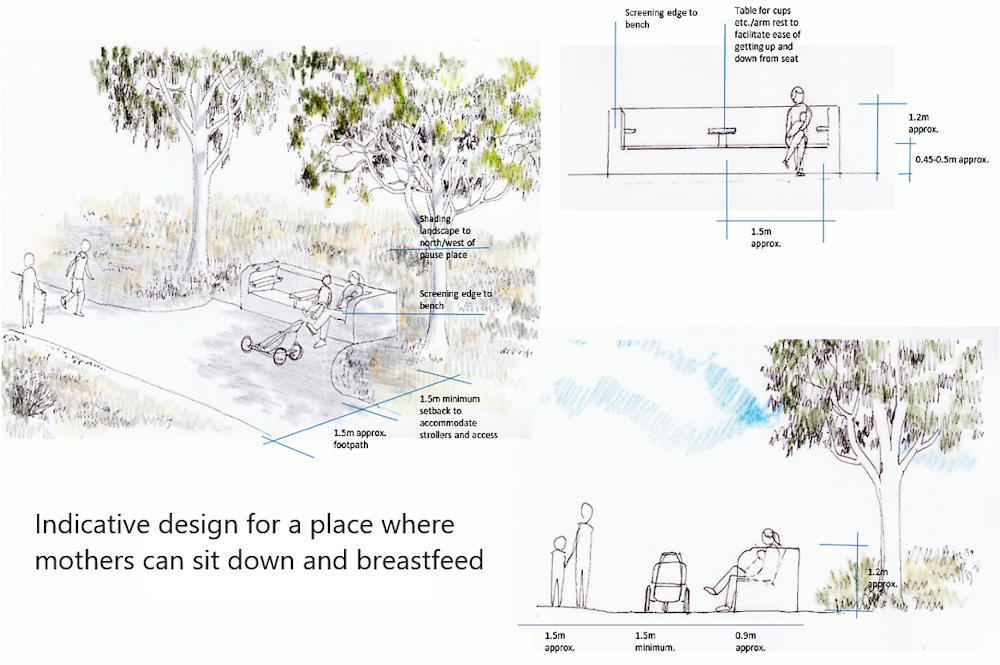 An example of how a day-to-day place can be designed to support breastfeeding mothers.
Jenny Donovan, Author provided
An example of how a day-to-day place can be designed to support breastfeeding mothers.
Jenny Donovan, Author provided
Read more: Want to breastfeed? These five things will make it easier
Changes on the ground, and in hearts and minds
Creating a sense that our towns and cities are breastfeeding-friendly requires cultivating change in people’s hearts and minds as much as it is about making changes on the ground.
This is a more than a matter of just improving the design of dedicated breastfeeding rooms. Although these provide a choice for women seeking privacy, such rooms keep breastfeeding a hidden activity. This leaves the balance of the public realm breastfeeding-unfriendly, requiring a mother to restrict her life to those places where these rooms can easily be found.
Equally, it is not practical to vastly increase the number of dedicated breastfeeding places. This would demand much space and resources that would otherwise be available to meet society’s other diverse needs.
Instead, breastfeeding-friendly towns and cities are places where, in addition to dedicated breastfeeding spaces, much of the infrastructure that enables people to participate in and enjoy community life (workplaces, parks, shopping centres, community buildings) can also be comfortably and discreetly used for breastfeeding. As the sequence below shows, this liberates mothers from a polarising mental map of a few scattered breastfeeding places in a vast area of breastfeeding-unfriendly ones.
Changing the messages feeding mothers get from their surroundings
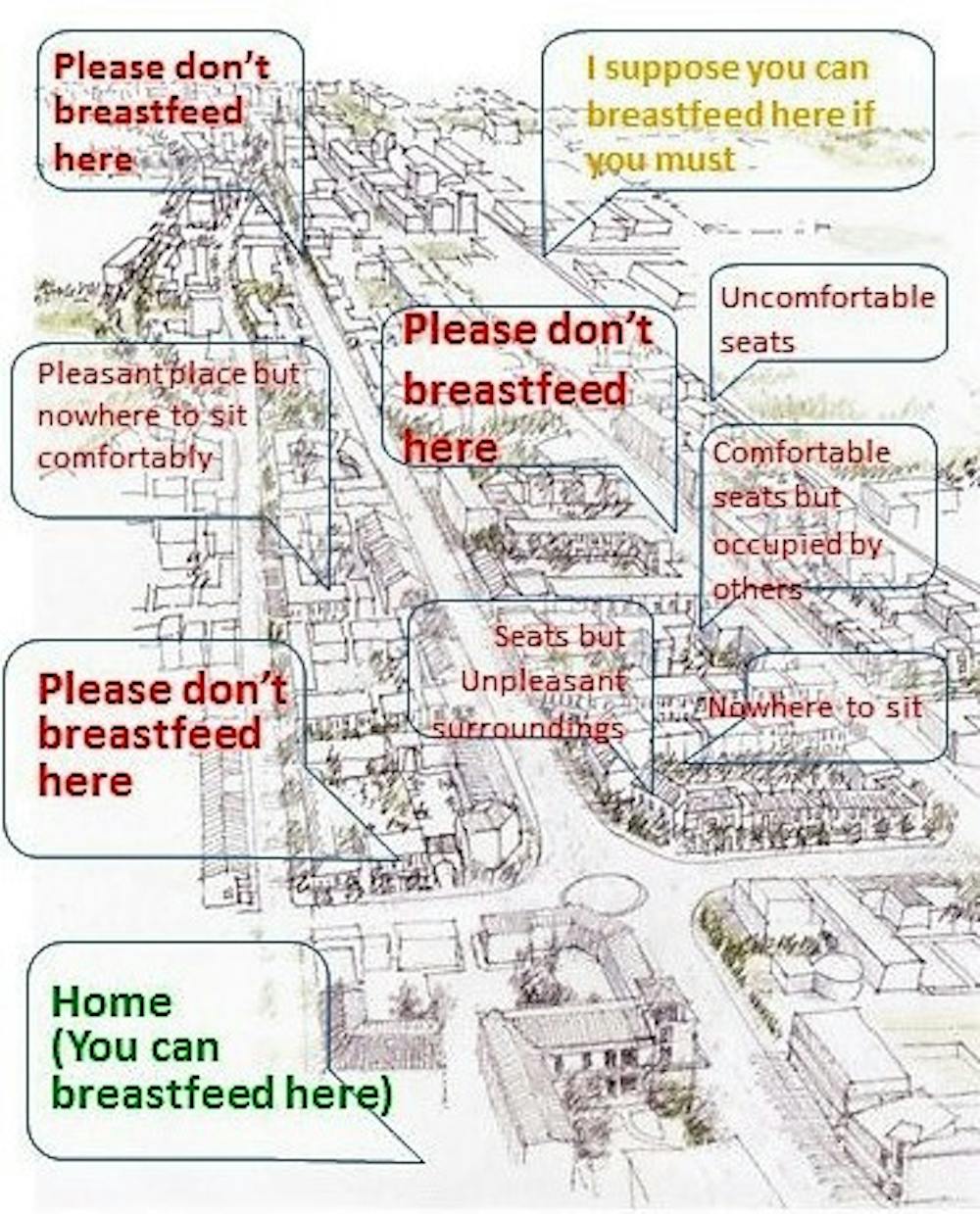 A breastfeeding-unfriendly environment where only at home do mothers feel comfortable.
Jenny Donovan, Author provided
A breastfeeding-unfriendly environment where only at home do mothers feel comfortable.
Jenny Donovan, Author provided
 A better, but still largely unfriendly environment.
Jenny Donovan, Author provided
A better, but still largely unfriendly environment.
Jenny Donovan, Author provided
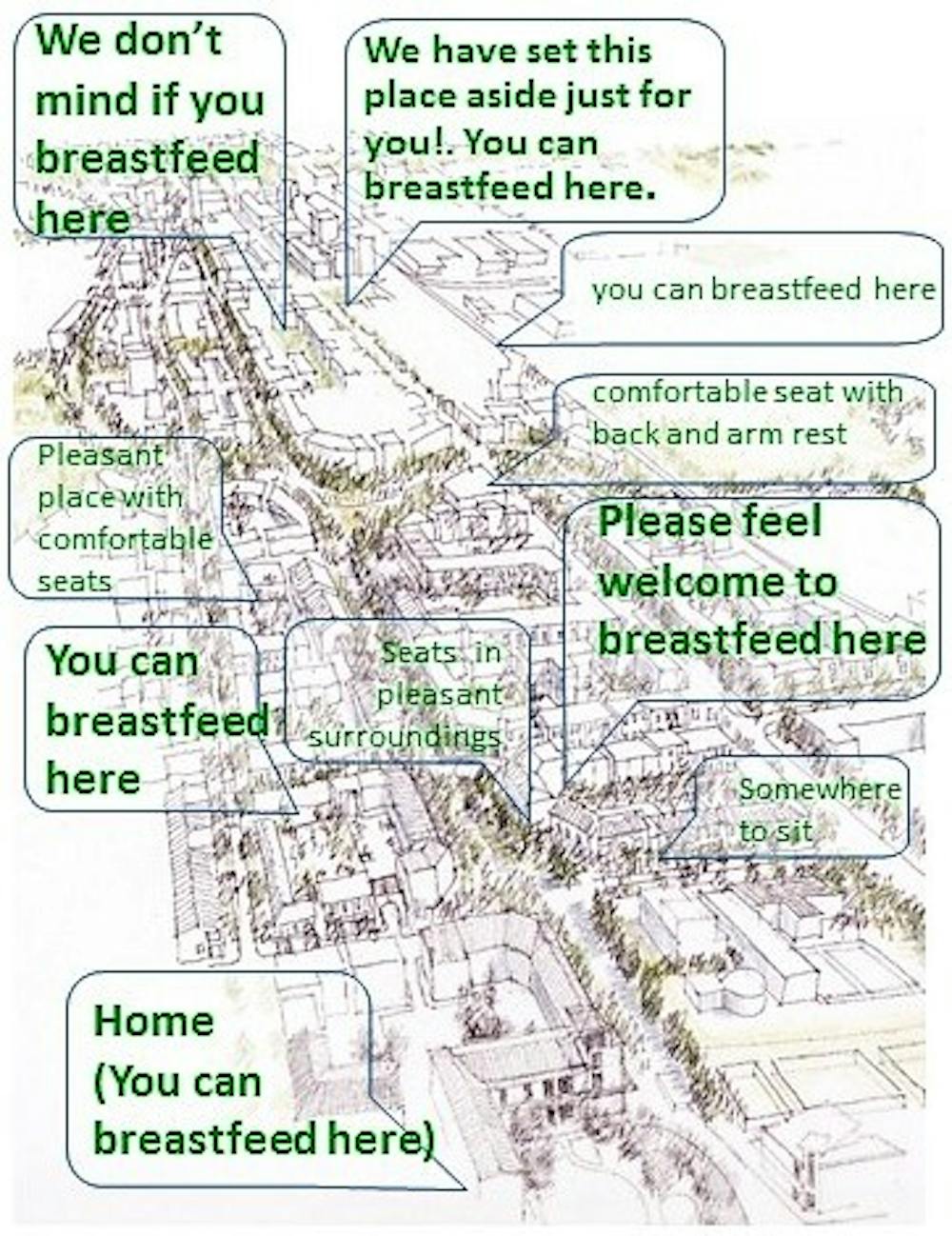 A consistently breastfeeding-friendly environment.
Jenny Donovan, Author provided
A consistently breastfeeding-friendly environment.
Jenny Donovan, Author provided
The design guidelines we prepared identify the qualities of spaces that we found are likely to invite women to breastfeed. These qualities can be interpreted as:
- dignified, safe and physically comfortable
- accessible
- compatible with their other needs and responsibilities
- offering a high level of amenity.
The guidelines identify how these qualities can be expressed in a range of places, as well as how the characteristics that deter breastfeeding can be excluded.
Authors: Jenny Donovan, Urban Designer and Sessional Lecturer, La Trobe University
Read more http://theconversation.com/heres-how-to-make-our-cities-breastfeeding-friendly-110176


 Daily Bulletin


