

'It felt like a prison' – too many young Australians are still stuck in nursing homes
- Written by: Libby Callaway, Senior Lecturer, Occupational Therapy Department, School of Primary and Allied Healthcare, Monash University
The Royal Commission into Aged Care Quality and Safety turns its attention this week to hearings focused on younger people with disabilities living in residential aged care facilities.
Around 6,000 Australians aged under 65 live in aged care, and numbers have only changed slightly in the last decade.
Young people most commonly enter aged care after acquiring a disability. This means they need support in everyday activities, as well as specialised equipment, home modifications or accessible housing.
Nursing homes are no place for young people who want to be independent or live with their family or peers, but who lack affordable and accessible housing options and coordinated support to do so. Aged care is distressing for these people and their families.
Read more: Young people in nursing homes denied basic human rights
A young person with disability needs highly specialised support, vastly different to that of an older person needing end-of-life care. The wrong type of support can lead to secondary physical and mental health problems, such as incontinence and depression.
This week’s royal commission hearings will give voice to younger Australians who have lived in aged care – people like Chris:
After experiencing a brain injury, and going through rehabilitation, at the age of 53 years and – having lived an independent life raising two children and working as a chef – I had no other option but to enter a nursing home. The nursing home felt like a prison to me.
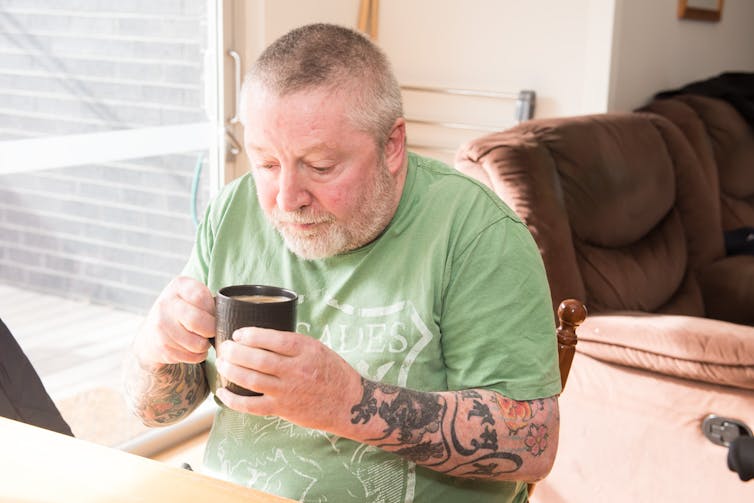 Chris had no other option but to enter a nursing home.
Chris Le Cerf, Author provided
Chris had no other option but to enter a nursing home.
Chris Le Cerf, Author provided
Since the launch of the National Disability Insurance Scheme (NDIS), many young people with a disability have had more timely access to equipment and support. But the lack of accessible and affordable housing remains an issue, as does obtaining streamlined NDIS access and coordinated support when leaving hospital.
When family members can no longer provide care or suitable housing, some people have no alternative other than a residential aged care facility.
Where are the gaps?
The NDIS – when delivered well – funds equipment, support and home modifications, and (for a smaller sub-group) Specialist Disability Accommodation.
NDIS Specialist Disability Accommodation payments offer funding for accessible housing, which is then coupled with shared or individualised support.
However, only people with the most extreme functional impairment (around 6% of NDIS participants) will get this funding. This leaves the remaining 94% to seek housing elsewhere.
Read more: NDIS needs the market to help make up at least 60% shortfall in specialist disability housing
In March this year, the Australian government announced a national action plan to halve the number of people under 65 entering aged care by 2025. The plan is to improve access to age-appropriate housing and supported living.
This group has also been prioritised for the new NDIS Complex Support Needs Pathway. This pathway includes specialised NDIS planning teams, National Disability Insurance Agency liaison, and support coordinators who understand the complex needs that may result from disability.
These are all positive steps. But policy failures in other areas will make this target difficult to achieve, including:
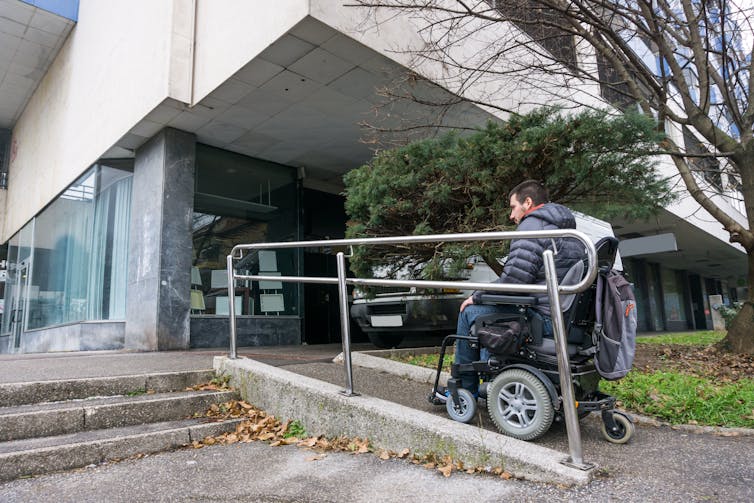 Too few new buildings meet the minimum standards for accessibility.
Grejak/Shutterstock
Too few new buildings meet the minimum standards for accessibility.
Grejak/Shutterstock
So what can we do?
Beyond continued development of the NDIS, five other key activities are required:
1) A seamless and coordinated pathway from the health system to community living for young people with disability. This should include ways to divert this group from aged care and monitor people at risk of being placed there.
2) Government investment in housing, shared home ownership schemes, and redeveloping housing (such as Victoria’s public housing renewal program). This will help grow affordable housing stock or pathways to home ownership for young people at risk of being placed in aged care.
3) Revision of the National Construction Code to ensure minimum accessibility in new housing. This would increase choice in the rental and home ownership market.
4) Coordination of the activities of the NDIS Quality and Safeguards Commission and the National Disability Insurance Agency. This will ensure regulatory activities aren’t duplicated, or affect the ability to provide a market of skilled NDIS providers for participants to buy services from; issues with NDIS implementation are minimised; and NDIS plans include flexible budgets for therapy, behaviour support, and disability support for everyday tasks.
5) Government commitment to focus on those areas of the current National Disability Strategy (2010-2020) yet to be achieved. This will lead to public transport, buildings, and public spaces designed for everyone (using universal design principles). It will also improve employment options and wages for people with disability.
Read more: How the NDIS is using the market to create housing for people with disability
What happened to Chris?
Chris is a real example of the change possible when government leadership, community partnerships, accessible home and community design, and strategic policy responses are delivered.
In 2015, Chris gained access to housing through a one-off federal government affordable and accessible housing program. In 2018, he became an NDIS participant.
After 18 months living in an aged care nursing home, Chris now lives in his own fully accessible unit, which has smart home automation and communication technologies. This technology allows Chris access to on-call support as needed, while offering privacy at home.
Chris’ unit is on the border of a university. So Chris can have additional support from health professional students for about 40 weeks a year. And Chris now contributes to both health professional student education and university research projects in paid roles.
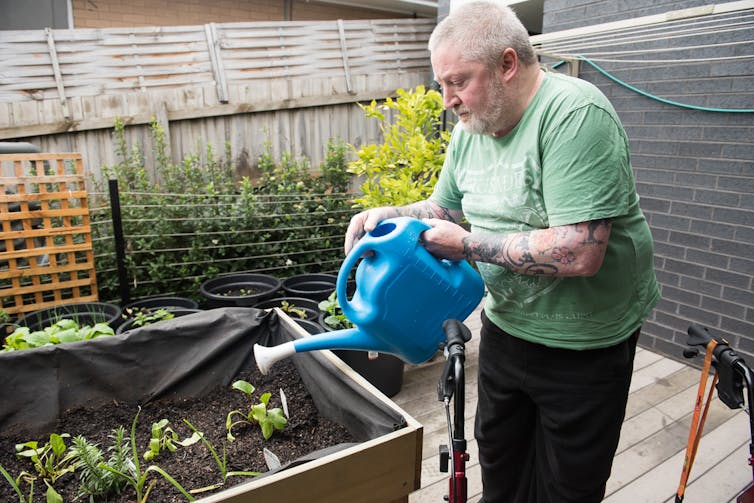 Chris now lives in his own home and has access to the support he requires.
Chris Le Cerf, Author provided
Chris now lives in his own home and has access to the support he requires.
Chris Le Cerf, Author provided
NDIS participant Chris Le Cerf co-authored this article.
Authors: Libby Callaway, Senior Lecturer, Occupational Therapy Department, School of Primary and Allied Healthcare, Monash University


 Daily Bulletin


