

We asked 13 economists how to fix things. All back the RBA governor over the treasurer
- Written by: Peter Martin, Visiting Fellow, Crawford School of Public Policy, Australian National University
Thirteen leading economists have declared their hands in the stand off between the government and the Governor of the Reserve Bank over the best way to boost the economy.
All 13 back Reserve Bank Governor Philip Lowe.
They say that, by itself, the Reserve Bank cannot be expected to do everything extra that will be needed to boost the economy.
All think that extra stimulus will be needed, and all think it’ll have to come from Treasurer Josh Frydenberg, as well as the bank.
All but two say the treasurer should be prepared to sacrifice his goal of an immediate budget surplus in order to provide it.
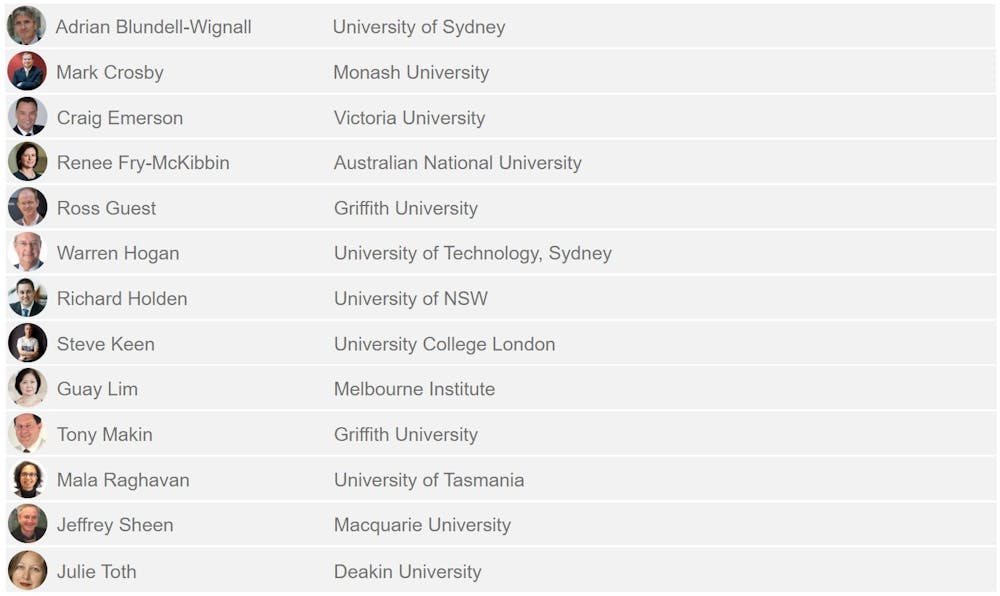
The 13 are members of the 20-person economic forecasting panel assembled by The Conversation at the start of this year.
All but one have been surprised by the extent of the economic slowdown.
The 13 represent ten universities in five states.
Among them are macroeconomists, economic modellers, former Treasury, IMF, OECD and Reserve Bank officials and a former government minister.
The Bank needs help
At issue is the government’s contention, spelled out by Frydenberg’s treasury secretary Steven Kennedy in evidence to the Senate last month, that there is usually little role for government spending and tax (“fiscal”) measures in stimulating the economy in the event of a downturn.
Absent a crisis, economic weakness was “best responded to by monetary policy”.
Monetary policy – the adjustment of interest rates by the Reserve Bank – is nearing the end of its effectiveness in its present form. The bank has already cut its cash rate to close to zero (0.75%) and will consider another cut on Tuesday.
It is preparing to consider so-called “unconventional” measures, including buying bonds in order to force longer-term interest rates down toward zero.
Read more: If you want to boost the economy, big infrastructure projects won't cut it: new Treasury boss
Governor Lowe has made the case for “fiscal support, including through spending on infrastructure” saying there are limits to what monetary policy can achieve.
The 13 economists unanimously back the Governor.
Seven of the 13 say what is needed most is fiscal stimulus (including extra government spending on infrastructure), three say both fiscal and monetary measures are needed, and three want government “structural reform”, including measures to help the economy deal with climate change and remove red tape.
None say the Reserve Bank should be left to fight the downturn by itself without further help from the government.
There is plenty of room for fiscal stimulus, particularly infrastructure spending – Mark Crosby, Monash University
I agree with the emerging consensus that monetary policy is no longer effective when interest rates are so low – Ross Guest, Griffith University
It is time for coordinated monetary and fiscal policies to boost domestic demand – Guay Lim, Melbourne Institute
The surplus can wait
Eleven of the 13 believe the government should abandon its determination to deliver a budget surplus in 2019-20.
 Renee Fry-McKibbin. Ease surplus at all costs.
ANU
Renee Fry-McKibbin. Ease surplus at all costs.
ANU
Economic modeller Renee Fry-McKibbin says the government should “ease its position of a surplus at all costs”.
Former Commonwealth Treasury and ANZ economist Warren Hogan says achieving a surplus in the current environment would have “zero value”.
Former OECD director Adrian Blundell-Wignall says that rather than aiming for an overall budget surplus, the government should aim instead for an “net operating balance”, a proposal that was put forward by Scott Morrison as treasurer in 2017.
The approach would move worthwhile infrastructure spending and borrowing onto a separate balance sheet that would not need to balance.
Political debate would focus instead on whether the annual operating budget was balanced or in deficit.
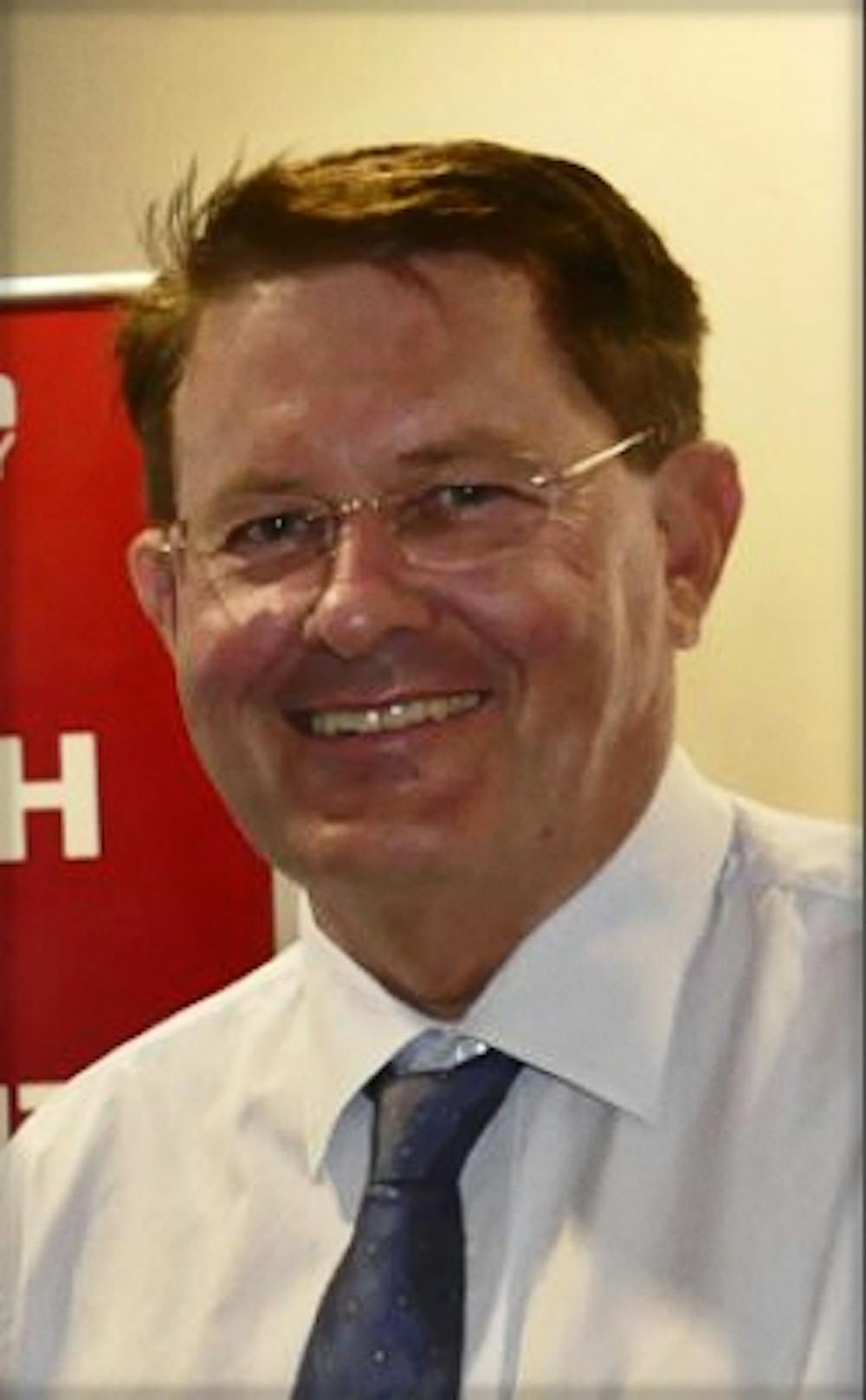
Former treasury and IMF economist Tony Makin is one of only two economists surveyed who backs the government’s continued pursuit of a surplus, saying annual interest payments on government debt have reached A$14 billion, “four times the foreign aid budget and almost twice as much as federal spending on higher education”.
 Tony Makin. Surplus needed for budget repair.
Griffith University
Tony Makin. Surplus needed for budget repair.
Griffith University
Further deterioration of the balance via “facile fiscal stimulus” would risk Australia’s creditworthiness.
However Makin doesn’t think the government should leave everything to the Reserve Bank.
He has put forward a program of extra spending on infrastructure projects that meet rigorous criteria, along with company tax cuts or investment allowances paid for by government spending cuts.
Former trade minister Craig Emerson also wants an investment allowance, suggesting businesses should be able to immediately deduct 20% of eligible spending.
It’s an idea put forward by Labor during the 2019 election campaign. Treasurer Josh Frydenberg has indicated something like it is being considered for the 2020 budget.
Emerson says it should be possible to deliver both the investment allowance and a budget surplus.
Quantitative easing would be a worry
Five of the 13 economists are concerned about the Reserve Bank adopting so-called “unconvential” measures such as buying government and private sector bonds in order to push long-term interest rates down toward zero, a practice known as quantitative easing.
Jeffrey Sheen and Renee Fry-McKibbin say it should be kept in reserve for emergencies.
Adrian Blundell-Wignall and Mark Crosby say it hasn’t worked in the countries that have tried it.
A quantitative easing avalanche policy by the European central bank larger than the entire UK economy has left inflation below target and growth fading. Quantitative easing destroys the interbank market, under-prices risk, and encourages leverage and asset speculation – Adrian Blundell-Wignall
Steve Keen says in both Europe and the United States quantitative easing enriched banks and drove up asset prices but did little to boost consumer spending, “because the rich don’t consume much of the wealth”.
The treasurer should step up
Taken together, the responses of the 13 economists suggest it is ultimately the government’s responsibility to ensure the economy doesn’t weaken any further, and that it would be especially unwise to palm it off on to the Reserve Bank at a time when the bank’s cash rate is close to zero and the effectiveness of the unconventional measures it might adopt is in doubt.
Measures the government could adopt include increasing the rate of the Newstart unemployment benefit, boosting funding for schools and skills training, borrowing for well-chosen infrastructure projects with a social rate of return greater than the cost of borrowing, further tax cuts that double as tax reform (including further tax breaks for business investment) and spending more on programs aimed at avoiding the worst of climate change and adapting to it.
The economists are backing the governor in his plea for help. They think he needs it.
The 13 economists surveyed
 Read more:
Buckle up. 2019-20 survey finds the economy weak and heading down, and that's ahead of surprises
Read more:
Buckle up. 2019-20 survey finds the economy weak and heading down, and that's ahead of surprises
Authors: Peter Martin, Visiting Fellow, Crawford School of Public Policy, Australian National University


 Daily Bulletin


