

Coronavirus is stressful. Here are some ways to cope with the anxiety
- Written by: Louise Stone, General practitioner; Clinical Associate Professor, ANU Medical School, Australian National University
One of our patients was recently talking about her anxiety around the coronavirus epidemic. This woman’s stress was understandable. She had survived a serious infection with swine flu, but only with a prolonged stay in intensive care.
I guess we all walk on the edge of a cliff […] anything can happen to anyone at any time. We are never really safe. But people like me? Now we know the edge of the cliff is right there, and we can’t help looking down.
Read more: 7 science-based strategies to cope with coronavirus anxiety
While some people may be more susceptible to becoming seriously ill with the coronavirus than others, none of us are immune to the pervading sense of anxiety that has taken hold around the world.
For Australians in particular, this crisis has come immediately after a horror summer of bushfires, which took their own toll on our collective mental health.
But there are some things we can keep in mind, and some practical steps we can take, to keep coronavirus-related anxiety under control.
A tangible threat versus an invisible enemy
It hasn’t been an easy start to the decade. In the face of the summer’s bushfires, many of us contended with threats to our health, our homes and even our lives.
Even those not directly affected were faced with constant images of charred bushland, injured wildlife, and homes burnt to the ground.
The bushfires put a strain on our collective mental health, and it’s very likely some people are still struggling.
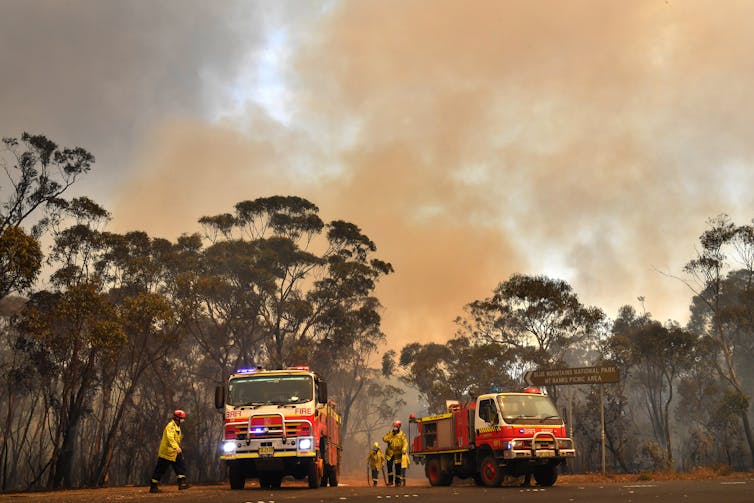 Australia’s unprecedented bushfires over recent months took a toll on people’s mental health.
Dean Lewins/AAP
Australia’s unprecedented bushfires over recent months took a toll on people’s mental health.
Dean Lewins/AAP
Natural disasters, though, are visible and tangible. There are things we can do to avoid the threat, manage the danger or mitigate the risk. We can see the smoke, check the app, buy an air purifier, prepare our homes. And despite the vivid images of floods, fires and cyclones, we know the storm will pass.
Epidemics are different. A novel epidemic is unknown, evolving and a global risk.
We are faced with a variety of information (and misinformation) online. Guidelines contradict each other, different states have different approaches, and experts disagree.
Meanwhile, infection rates climb as economies fall. We know we may contract the virus, and as yet we know there’s no vaccine to prevent it.
Read more: You're not the only one feeling helpless. Eco-anxiety can reach far beyond bushfire communities
While the bushfires united us, coronavirus seems to divide us
There’s an ugly side to ways we can deal with the stress of an unknown enemy like the coronavirus.
Some people blame potential carriers for their own illnesses, scapegoating people they see as high-risk. This is not helpful.
We also seek to manage our anxiety by trying to prepare ourselves and our families for the possibility of isolation or quarantine.
While this is reasonable to a degree, practices like stockpiling toilet paper and other goods can feed, rather than relieve, anxiety. Empty supermarket shelves can create panic, and further disadvantage people who might be living from week to week.
Epidemics isolate us from each other physically too, and this will only happen more and more.
So how can we put things into perspective?
We can take heart in knowing many people will develop only mild disease from the coronavirus.
There are of course vulnerable members of our community: those with compromised immune systems due to illness or age. We need to protect these people as a community by creating safe spaces for them to live, work and access health care, rather than fostering panic.
Our greatest asset lies in our own bodies. We may not understand how to best protect ourselves, but our bodies are experienced managers of novel immune challenges, and they will manage the risk as effectively as they can.
Ultimately, our best chance at surviving this virus relies on nurturing our bodies: avoiding exposure through hand-washing and isolation where appropriate, eating well, exercising, managing chronic illnesses, and getting enough sleep.
The anxiety a pandemic generates is inevitable. At the end of the day, we all need to learn to live with a degree of risk we can’t avoid.
Practical strategies to keep anxiety at bay
The World Health Organisation has developed some practical tips for dealing the stress of this outbreak. Here are a few of them:
accept that it’s normal to feel sad, stressed, confused, scared or angry during an outbreak
find ways to talk about how you feel with others, especially if you are in quarantine
remember to keep an eye out for your children during this time, and for loved ones who already have mental illness. They may need help dealing with this added anxiety
if you feel overwhelmed, seek support from a health professional
don’t use smoking, alcohol or other drugs to deal with your emotions. Keep your body as healthy as possible by eating well, exercising and getting enough sleep
limit worry by limiting media exposure to a few trusted sources
draw on skills you have used in the past that have helped you to get through difficult times.
Read more: 8 tips on what to tell your kids about coronavirus
If this article has raised issues for you, or if you’re concerned about someone you know, call Lifeline on 13 11 14.
Dr Wendy Burton, a GP in Brisbane, contributed to this article.
Authors: Louise Stone, General practitioner; Clinical Associate Professor, ANU Medical School, Australian National University


 Daily Bulletin


