

Acting selfishly has consequences right now – why ethical decision making is imperative in the coronavirus crisis
- Written by: Hugh Breakey, President, Australian Association for Professional & Applied Ethics. Senior Research Fellow, Moral philosophy, Institute for Ethics, Governance & Law, Law Futures Centre., Griffith University
As the country moves into lockdown mode in response to the COVID-19 pandemic, we are increasingly faced with serious ethical questions about what ordinary people should be obliged to do for others.
These challenges can perhaps best be seen in the outrage as people flocked to Bondi Beach and packed into pubs and cafes over the weekend, despite strict social-distancing rules.
This also helps explain the anger on social media over people lying about overseas travel in order to get doctors’ appointments, hoarding toilet paper and defying quarantine orders, even as they defend their conduct self-righteously.
People are even being met with disdain when they ask others to keep their distance.
Why is ethical action critical?
In the face of a pandemic, legislation and police enforcement can only do so much. Ethical decision-making by ordinary people becomes crucial.
While laws and policies can be slow to evolve, individuals can alter their behaviours instantaneously. Rules and bans can be ham-fisted or crude, but ethical decision-makers can respond intelligently to their own contexts.
Above all, ethical decision-makers can be intrinsically motivated to do right by the community, ensuring compliance of social-distancing rules in situations where effective policing is logistically impossible.
Even as Victorian Premier Daniel Andrews announced a special taskforce to enforce an immediate shutdown of venues and restrictions on gatherings, he appealed to people’s consciences in the strongest terms:
If you act selfishly, people will die.
This is why leaders have called for voluntary cooperation during the crisis. Laws and political action alone will not save us. An effective response to the pandemic requires ordinary people making sound ethical decisions.
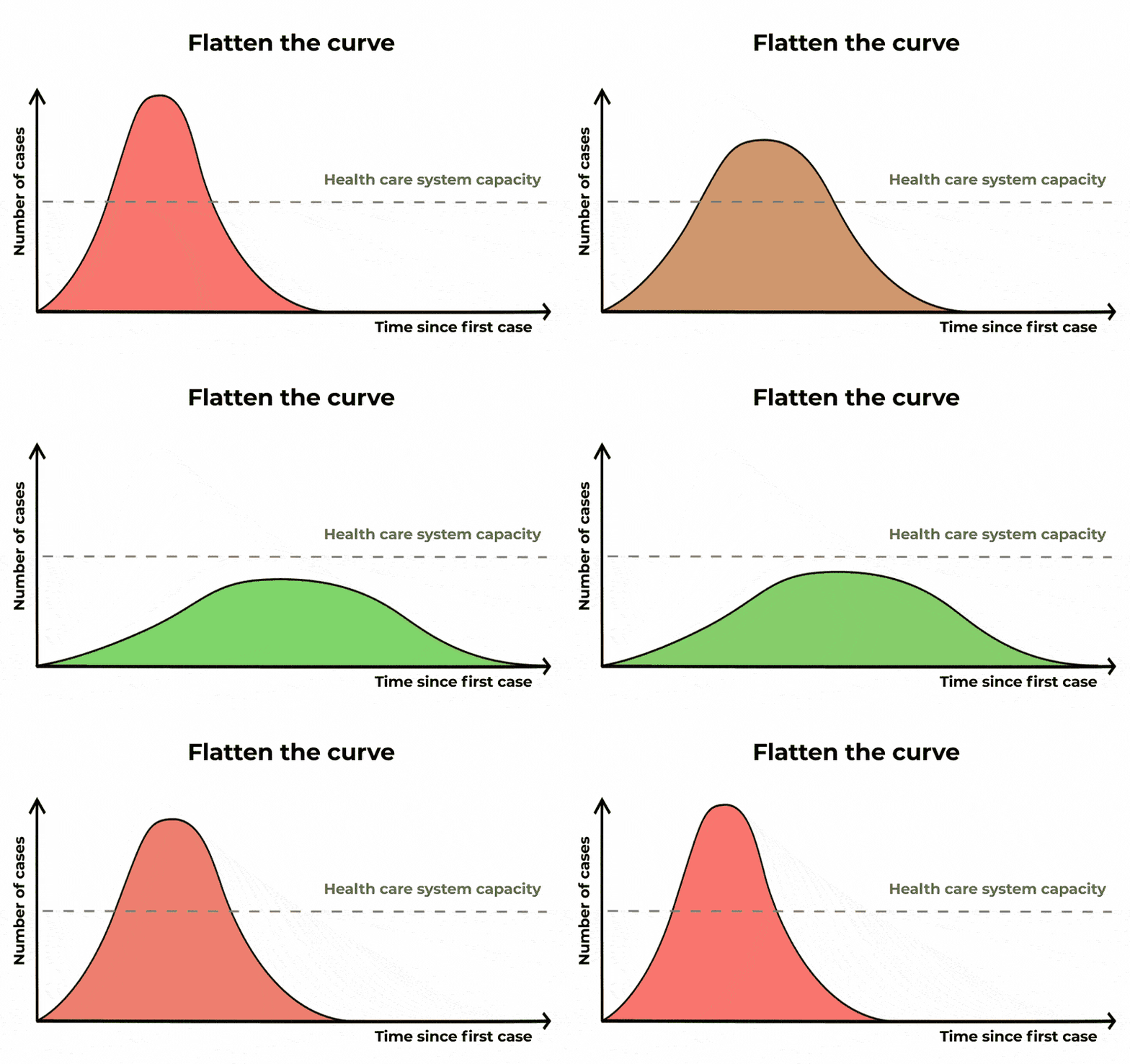 Flattening the curve is another way of saying slowing the spread. The epidemic is lengthened, but we reduce the number of severe cases, causing less burden on public health systems. The Conversation/CC BY ND
Why is this so challenging?
As we’ve seen from the images over the weekend, ethical decision-making in response to a pandemic is not easy. Many people are simply not taking the crisis seriously enough.
One of the reasons for this is confusion. Rules change almost daily, meaning some people won’t know the latest requirements. Others might not appreciate the stakes involved with their behaviours, and that it is not only their own health they are risking.
Also, rules can be ambiguous. For example, what happens if you’re keeping an appropriate distance from others at the beach or park, and it starts becoming crowded? Who should leave? Should those who arrived first have priority? Or should those who have had “their turn” move on?
In ambiguous situations, people take cues from those around them. If we saw others interacting normally at the park or pub (before they were closed), we could conclude it’s probably okay. We might also wonder if there’s any point in obeying the rules if others aren’t.
Read more: Why releasing some prisoners is essential to stop the spread of coronavirus
Furthermore, it’s easy to question the legitimacy of the new rules. Ordinarily, we judge rules based on many factors, such as:
In fluid situations, these conditions are hard to meet. Consider the case of casual workers with no paid sick leave who might not be able to pay rent or might lose their jobs if they comply with quarantine orders. Demanding they shoulder this burden can seem unfair.
Similarly, many teachers feel they are taking unfair risks to keep schools open.
In the most difficult cases, people must weigh up conflicting moral priorities. Do they support their elderly parents by visiting them, or is this risking infection?
For these reasons, even conscientious ethical decision-makers can struggle.
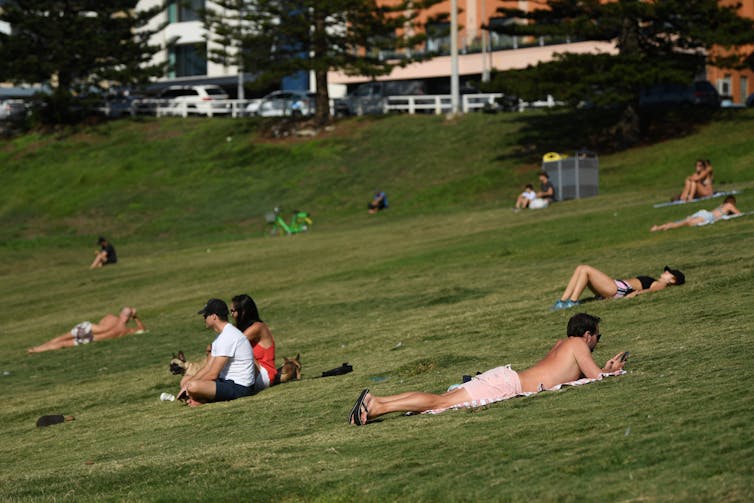 Park-goers took a more sensible approach at Bondi Beach on Sunday.
Joel Carrett/AAP
Park-goers took a more sensible approach at Bondi Beach on Sunday.
Joel Carrett/AAP
Why we might make poor decisions
Unfortunately, human beings suffer from decision-making biases.
For example, we often interpret expectations as entitlements. We convert our ordinary expectations about social, work, educational, religious and sporting routines into demands that these should continue.
This is one reason why some call for a “war footing”, urging people to acknowledge a “new normal”.
Read more: Explainer: what are the laws mandating self-isolation and how will they be enforced?
In addition, people tend to be self-interested and prioritise immediate goals. Abstract concerns about risks to community infection can seem less salient than the pressures of the moment.
This bias can affect ethical decision-making. It allows us to “neutralise” rules by inventing stories about why they don’t apply to us, given our special circumstances. These self-serving excuses are a classic source of serious moral error.
Some guidelines to follow
There are no easy answers to the myriad moral challenges that COVID-19 thrusts upon us. However, here are five rules of thumb:
Common sense ethics still applies – and the stakes make it more important than ever. Never lie about or conceal your history or infection status. Comply strictly with authoritative directives about quarantine.
Stay informed about the latest rules.
Never force your decisions on other people. Even if you aren’t personally concerned about social distancing, acknowledge that others are entitled to their space.
If others are behaving recklessly or inappropriately, try to engage with them constructively. Outrage can be appropriate, but understanding can be better at changing minds.
Gird yourself for the long haul. “Fatigue” can set in over long periods with changing rules. As the weeks in a state of emergency turn into months, we can be worn down and become less diligent in our ethical decision-making.
Finally, remember the positives. As the stakes rise, acts of kindness and support are more important than ever before.
Authors: Hugh Breakey, President, Australian Association for Professional & Applied Ethics. Senior Research Fellow, Moral philosophy, Institute for Ethics, Governance & Law, Law Futures Centre., Griffith University


 Daily Bulletin


