

Uncertain? Many questions but no clear answers? Welcome to the mind of a scientist
- Written by: Darren Saunders, Associate professor, UNSW
Watching the world adjust to the horrific new reality of the COVID-19 pandemic, has led me to contemplate a much more important lesson we might be learning together as we face this crisis.
We’ve all been ripped out of our comfort zones, with so much of the familiar rhythm of daily life suddenly replaced by a pervasive, visceral uncertainty.
So many questions without answers. So many experts with differing views. A brutal realisation that things don’t work the way we always thought. Seeing infinite shades of grey instead of that comforting black and white world.
Sound familiar?
Welcome to the mind of a scientist.
Uncertainty is unnerving – but you can learn to live with it
When this feeling dawned on me years ago on one of many early morning drives to Canberra during my PhD, it was almost crippling.
Digging deep into the mysteries of biochemistry and molecular biology – the ghosts in the machine of life itself – can do that. It can be an incredibly challenging, even unnerving experience.
But I learned to let that uncertainty wash over me. Like being caught in a rip in the surf, resistance just tires you out and makes things worse. After swimming around in it for a while I soon learned to float.
I even managed to crack a wave or two.
I wonder if this shows us one potential way through the viral-induced trauma surrounding us? We are all faced with rapidly shifting information and advice. What is true at 8am might not be by 6pm.
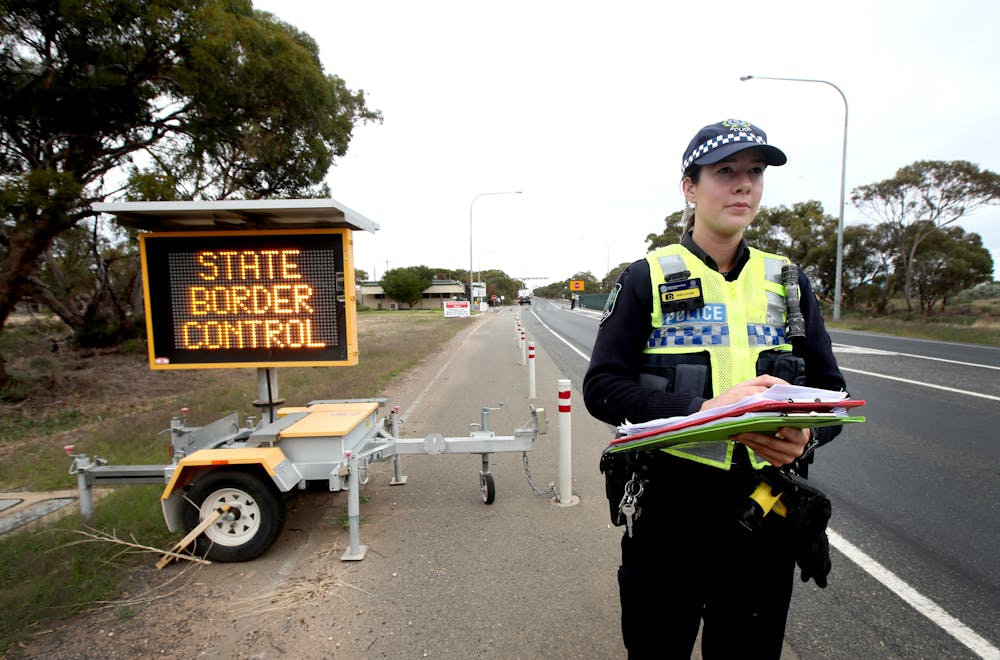 What is true in the morning may not be true by evening.
AAP/KELLY BARNES
What is true in the morning may not be true by evening.
AAP/KELLY BARNES
A role for scientists
Maybe scientists have a role to play here beyond the hard work going on to understand this new coronavirus, chasing vaccines and new drugs? We are comfortable swimming in the unfamiliar, we know how to float on a sea of uncertainty. We know it’s OK to say “I don’t know” or “good question”.
There’s an opportunity here for scientists to lead by example, both in the way we act and the way we communicate. To show the way in dealing with uncertainty, with changing information, and with appropriate responses.
But we need to start from a place of empathy. People are anxious and scared and we should acknowledge that. They want clear information and advice, based on best available data, not to be lectured or patronised. And scientists should be upfront about the fact that the advice may change – rapidly – or be slightly different to the next person’s.
Uncertainty and public messaging
We need, as a society, to become more comfortable with doubt and uncertainty in public, politics and business.
I’m OK with public messaging reflecting that. We’re so used to politicians holding a particular line on an issue, but the COVID-19 crisis has shown it doesn’t work when the situation is fluid and dynamic.
Maybe I’m just more comfortable with that as a scientist. Politicians absolutely have to be held to account but there should also be space for their positions to evolve – genuinely – with evidence.
We can change
Our sudden interest in disinfectants and hand washing, had me reflecting on my early days in a research lab.
Learning how to grow human cells without contamination by bacteria and yeast, or setting yourself on fire, takes some learning.
“Don’t touch that!”
“No, not that way!”
“What did you do that for?”
“No, hold it like this.”
It’s not intuitive. It takes real concentration – until it doesn’t anymore. Deeply ingrained habits and muscle memories have to be erased and rewritten. It’s hard, frustrating work.
It feels like the whole planet is sharing a similar experience now, but the stakes are much higher.
We can learn and change, until what was once difficult and uncomfortable becomes second nature. We’ve rapidly become much better, as a society, at things like handwashing and cough etiquette. Our relationship with uncertainty will have to change too.
Read more: In the age of coronavirus, only tiny weddings are allowed and the extended family BBQ is out
Authors: Darren Saunders, Associate professor, UNSW


 Daily Bulletin


