

There is no legal right to free quarantine — but there is a fair way to set the price
- Written by: Alexander Gillespie, Professor of Law, University of Waikato
Welcome home – now here’s your invoice.
The debate over whether New Zealand should charge arriving Kiwis for quarantine has divided opinion, but one thing is clear: citizens and permanent residents have the right to return home.
However, like many other liberties, this right can be subject to reasonable limits, especially during times of global emergency.
But it’s a surprisingly difficult issue. Despite all the newly minted law around COVID-19, the question of financial liability for isolation is not covered.
The challenge for the next government will be to balance rights and costs in a way that is seen to be fair.
Quarantine costs will rise
Right now, the 2020 Public Health Act Response Act authorises quarantines and control of our air and maritime borders. In short, anyone returning to New Zealand may be subject to mandatory medical examination, testing and isolation or quarantining.
That is, of course, if they can make it home. With inbound numbers regulated due to quarantine and isolation capacity, the first hurdle for many would-be returnees is getting a flight.
From March 26 to July 6, 26,414 people have been quarantined or in managed isolation at 26 different sites. On the last day of that period there were just under 5,700 under control.
We’ve already spent NZ$81 million on such operations. Another nearly NZ$300 million has been budgeted for the rest of the year.
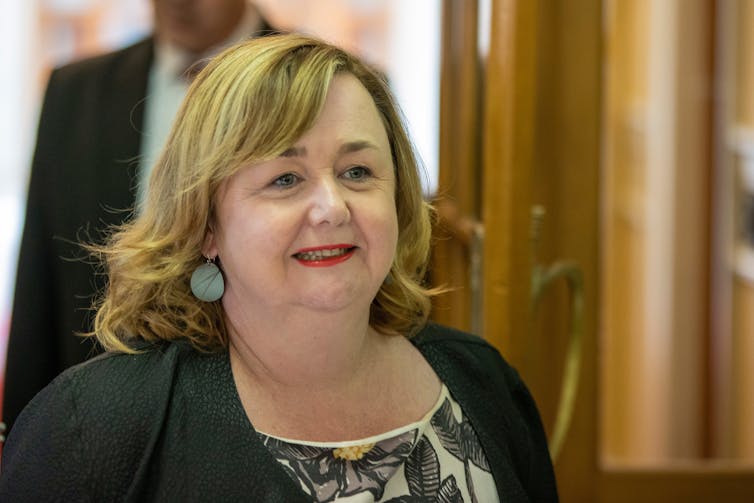 Border control minister Megan Woods: a ‘very complex’ issue.
AAP
Border control minister Megan Woods: a ‘very complex’ issue.
AAP
These costs will probably increase in 2021. Current trends suggest a growing, not diminishing, global pandemic. As the health and economic impacts of this wave crash over other countries, it’s likely many more Kiwis will want to return to their (hopefully) safe homeland.
Inevitably, then, quarantine standards (and costs) will grow too. The lessons from Victoria and our own experience of people abusing the system only reinforce the need for a fail-safe system.
Australia has also grappled with the question of who should pay and has concluded there is no federal right to free quarantine. Each state has the right to ask for a contribution to the cost of quarantine.
For New Zealand, there are two ways to think about this. One says free quarantine is a right and also a public good; if people have to pay for their isolation their right to return to New Zealand is threatened.
The other says that returning is a free choice with a financial cost. Both major political parties want to charge returnees, with the National Party putting a figure of NZ$3,000 on a single adult’s quarantine.
How to balance those views?
Entitlement versus privilege
The government has already spent, or plans to spend, an incredible NZ$62.1 billion on fighting COVID-19. It can be argued, then, that the cost of isolating our fellow Kiwis is the same as the cost of keeping people in work, creating new jobs, building infrastructure and propping up critical sectors of the economy.
Quarantine is therefore an entitlement, like the right to paid parental or sick leave, and should be free.
The opposing argument is that it is fair to require those who took advantage of a liberty to travel and return to pay the associated costs. Within two weeks of their return they will reap all of the benefits of being home in a COVID-free country.
This isn’t what they would experience if they had stayed abroad. A New Zealander requiring isolation overseas could expect consular assistance, including advice and help contacting family and insurance providers. But they would not have their quarantine paid for.
Similarly, in New Zealand there is actually no legal right to have quarantine paid for by the government.
Under the Health Act it is possible to charge a reasonable cost for isolation and also to exempt someone from having to pay. Legally, the government can demand payment but also, it can waive it.
This suggests a middle ground needs to be found based on what is fair.
A reasonable way forward
Potentially, some people should pay more than others. Those who travelled overseas after the pandemic was declared and then sought to return, or those who are coming home for a holiday or short-term respite from the horrors overseas could pay the full amount.
The government could offer a range of quarantine hotels at different prices. Those returning broke to their homeland should be given discounted rates and zero- or low-interest loans to pay for quarantine.
Should those required to pay the full cost expect preferential treatment and better accommodation? Does this open the door for private providers to exploit a growing quarantine market?
These questions undoubtedly help explain why the minister responsible for managed isolation and quarantine, Megan Woods, says it is a “very complex” issue.
It seems fair, though, that although there is no right to free quarantine, the price of rejoining the “team of 5 million” should be charged according to a person’s ability to pay.
Authors: Alexander Gillespie, Professor of Law, University of Waikato


 Daily Bulletin


