

Aussie Business Fleets Now Have a New, Sustainable Vehicle Option
- Written by: News Company
Businesses that own and operate fleets of vehicles in Australia face a raft of challenges to keep them on the road. First, and foremost, they have to try and keep costs in check. From conducting periodic and necessary maintenance on each vehicle to finding ways to secure fuel discounts to lower operating expenses – there's never any shortage of work to do.
But now, as Australia begins to feel the brunt of the early effects of global climate change, fleet operators face a new challenge: finding a path to a sustainable future. It's a challenge that offers no easy solutions. And despite the promise of electric vehicles providing a way forward, there's still an awfully long way to go before it can happen.
So, in the near-term, fleet operators have to find some intermediate steps to begin doing their part to reduce the carbon emissions and other pollutants that are threatening to make portions of Australia uninhabitable in the future. The good news is that some recent developments may be combining to provide a solid mid-term solution for fleet operators while they wait for an EV charging infrastructure to materialise nationwide. Here's what's happening and why it's significant for any business that maintains fleet vehicles.
A New Eco-Friendly Option
For quite a while, EVs remained the only realistic option for businesses looking to make their fleets more eco-friendly and sustainable. The problems, however, were many. First, the limited range of most EVs makes them hard to rely on as the backbone of a business fleet. And, the only way around that is to opt for small, hyper-efficient EVs – and even then, the lack of available charging stations makes it a risky proposition.
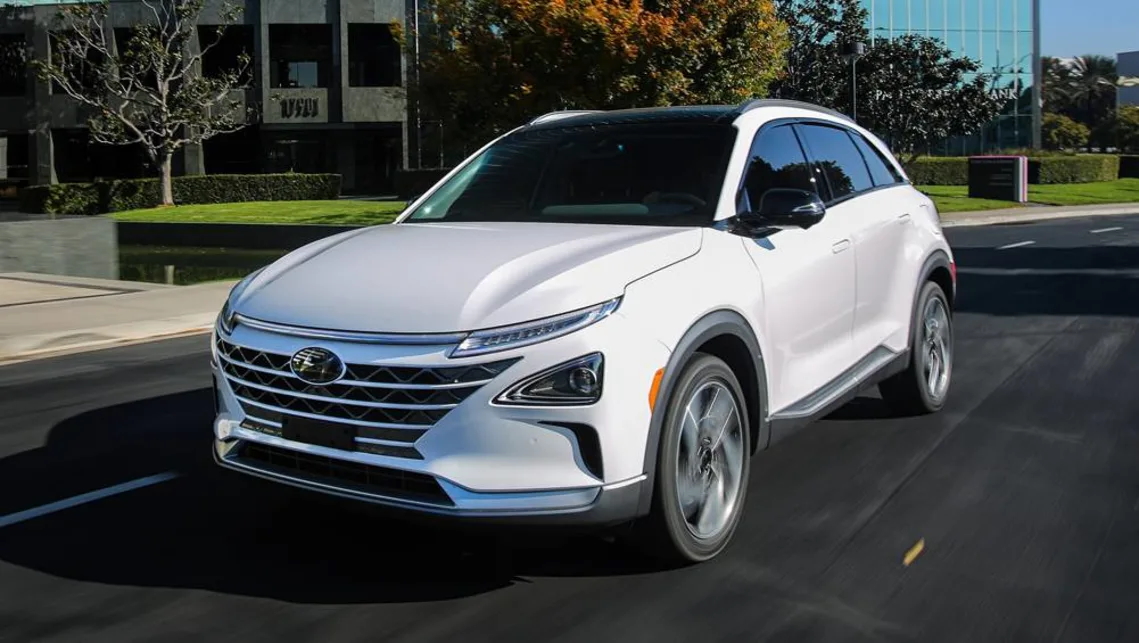
But now, Aussie fleet operators have a new eco-friendly option that doesn't come with the same kinds of trade-offs. It has arrived in the form of Hyundai's Nexo SUV. It operates using a hydrogen-powered fuel cell and is the first fuel cell electric vehicle (FCEV) certified for sale in the Australian market. The immediate advantages are obvious. It sports a range of 666km between refuelling, and it doesn't come at the cost of sacrificing space for passengers or cargo.
Plus, FCEVs like the Nexo offer refuelling times that are comparable to traditional gasoline-powered vehicles. That means no long periods of downtime to recharge, which is still a big drawback of the EVs on the market today. Much like rechargeable EVs, however, the refuelling infrastructure in Australia remains an issue. But there's movement on that front, too.
Rapid Infrastructure Expansion
Right now, Australia is stuck in something of a catch-22 when it comes to mass adoption of EVs, particularly by fleet operators. It's because the recharging infrastructure needed to support them is still quite limited, particularly once you leave the major urban areas. And when you combine that with their inherent short range, it makes for a severely limited operating radius.
But when it comes to the infrastructure that will be needed to support FCEVs, there are already efforts underway to make sure they face no such limitations. Recently, Australian energy infrastructure provider Jemena reached a deal to begin supplying sustainably-produced hydrogen to the Sydney area for use with FCEVs. Their efforts come at a time when the NSW government is pouring funding and effort into plans to expand the use of hydrogen as a green alternative energy source.
That means there's a high likelihood that the hydrogen infrastructure within Australia is going to be fast-tracked in a way that the EV infrastructure was not. And given that major government fleets are eyeing FCEVs as a long-term alternative to plug-in electric or other hybrid solutions, businesses can start to include FCEVs into their planning without much fear of getting ahead of the developments.
A Homemade Alternative
And, perhaps best of all, fleet operators in Australia are going to soon have far more FCEV options to choose from. They'll be coming from a domestic producer, too. A startup called H2X Australia recently unveiled an ambitious plan to begin producing commercial FCEVs by 2022, with their first Aussie-built model prototype to debut within the next few months.
The plan provides a glimpse into what's turning into a major wave of FCEV development – finally offering a realistic option for businesses looking for sustainable-yet-utilitarian vehicles to serve as the backbone of their fleets. It's significant because even now, examples of locally-designed and built EVs are few and far between. That means there's real and visible local momentum toward the technology, which provides the kind of long-term certainty fleet operators would need before moving toward FCEVs.
The bottom line is, Aussie businesses that own and operate significant quantities of vehicles might soon have a sustainable alternative to gasoline-powered vehicles that is far more practical than today's plug-in EVs. And unlike with those vehicles, they won't require trade-offs in range, size, or cargo capacity. Best of all, judging by the rapid pace of infrastructure development – they'll be able to deploy their new vehicles coast-to-coast without fear of range limitations very shortly.
And at a time when every Australian business is now acutely aware of how their operations impact our shared environment, FCEVs may be the solution many have been hoping for. And it's no mirage.


 Daily Bulletin


