

'Like finding life on Mars': why the underground orchid is Australia's strangest, most mysterious flower
- Written by: Mark Clements, Botanist, CSIRO
If you ask someone to imagine an orchid, chances are pots of moth orchids lined up for sale in a hardware store will spring to mind, with their thick shiny leaves and vibrant petals.
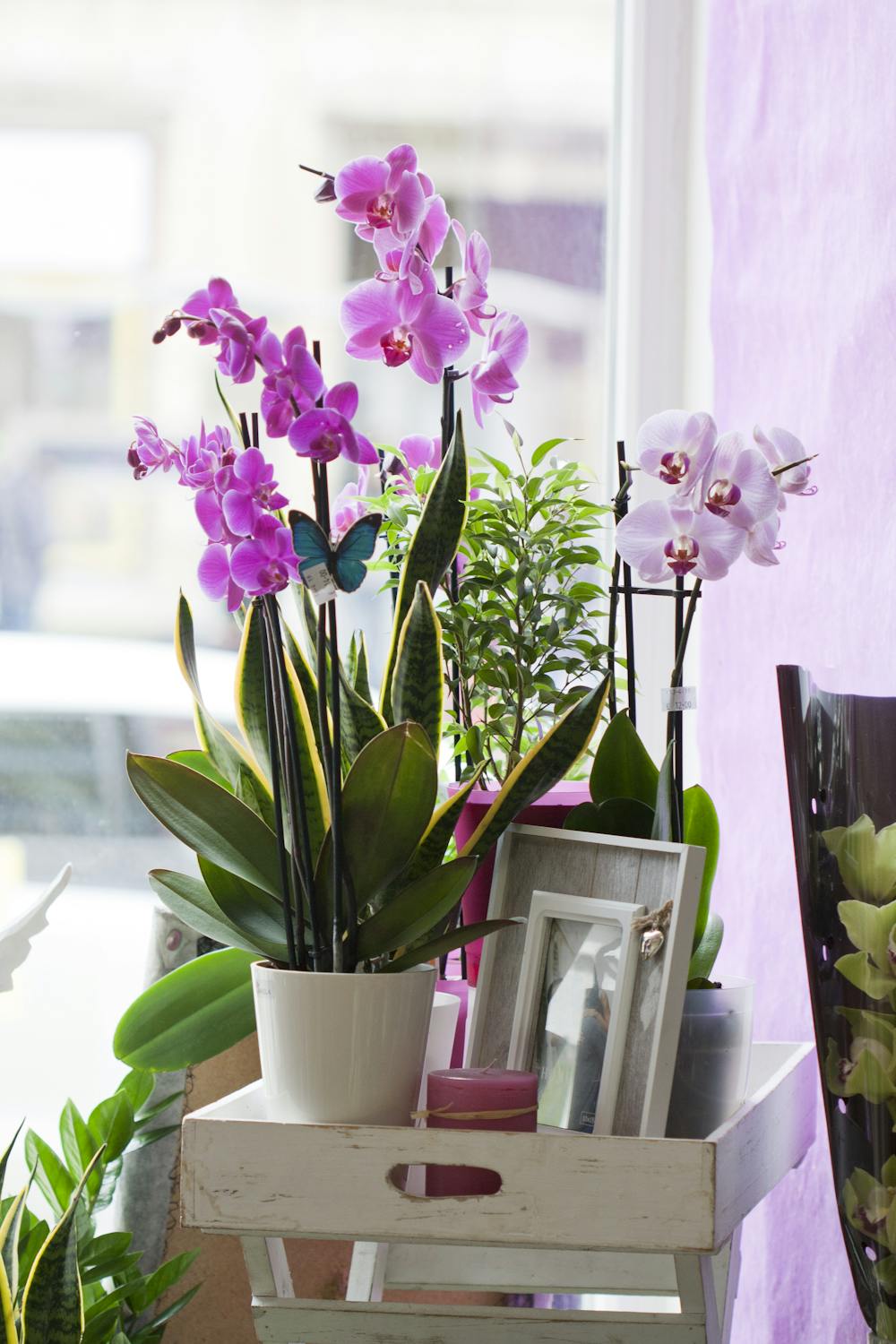 Orchids like this may be what comes to mind when you think of them, but there are actually more 30,000 different orchid species.
Shutterstock
Orchids like this may be what comes to mind when you think of them, but there are actually more 30,000 different orchid species.
Shutterstock
But Australia’s orchids are greater in number and stranger in form than many people realise. Rock orchids, fairy orchids, butterfly orchids, leek orchids and even onion orchids all look more or less the same. But would you recognise a clump of grass-like roots clinging to a tree trunk as an orchid?
What about a small, pale tuber that spends its whole life underground, blooms underground and smells like vanilla? This is the underground orchid, Rhizanthella, and it’s perhaps the strangest Australian orchid of them all.
Even to me, having spent a lifetime researching orchids, the idea of a subterranean orchid is like finding life on Mars. I never expected to even see one, let alone have the privilege of working on them.
Known for almost a century, but rarely seen
The family Orchidaceae is the largest group of flowering plants on Earth, comprising more than 30,000 species. Australia is home to around 1,550 species and 95% are endemic, meaning they don’t occur naturally anywhere else in the world.
Rhizanthella has been known to science since 1928, when a farmer in Western Australia who was ploughing mallee for wheat fields noticed a number of tuber-like plants among the roots of broom bushes. Recognising them as unusual, he sent some specimens to the Western Australian Herbarium.
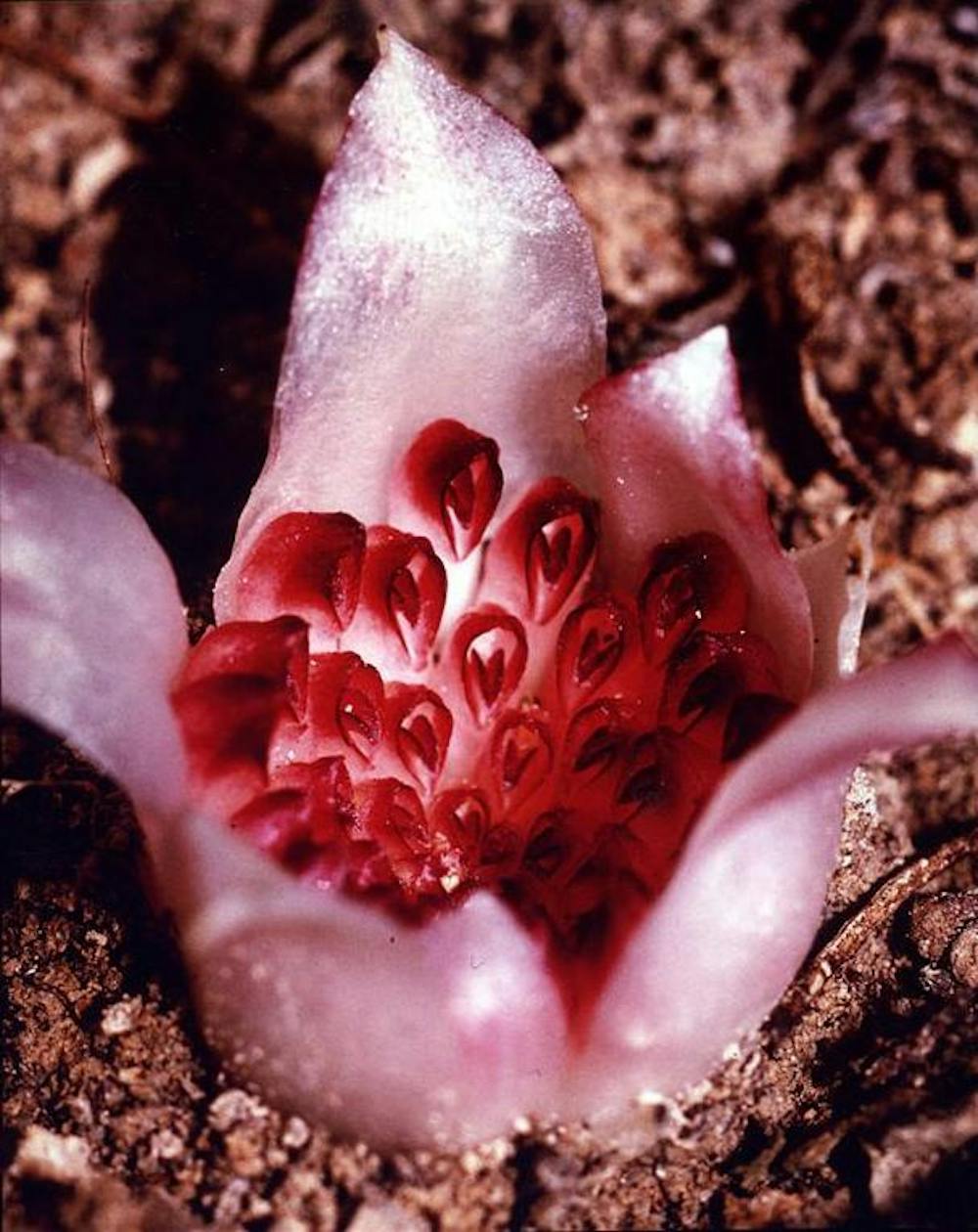 The species Rhizanthella gardneri occurs in Western Australia.
Fred Hort/Flickr, CC BY-SA
The species Rhizanthella gardneri occurs in Western Australia.
Fred Hort/Flickr, CC BY-SA
In 1931, another underground orchid was discovered in eastern Australia at Bulahdelah in NSW by an orchid hunter who was digging up a hyacinth orchid and found an unusual plant tangled in its roots. Three quarters of a century later, I was involved in conserving the population of Rhizanthella in this location when the Bulahdelah bypass was built.
And most recently, in September, I confirmed an entirely new species of underground orchid, named Rhizanthella speciosa, after science illustrator Maree Elliott first stumbled upon it four years ago in Barrington Tops National Park, NSW.
Elliott’s discovery brings the total number of Rhizanthella species known to science to five, with the other two from eastern Australia and two from Western Australia.
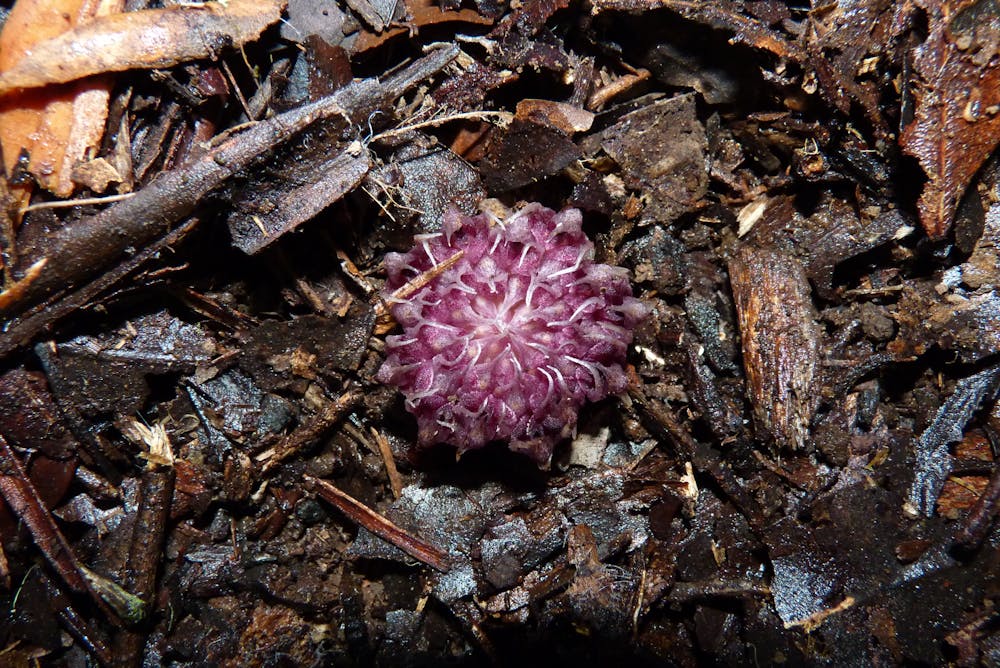 The newly discovered species, Rhizanthella speciosa, found in Barrington Tops.
Mark Clements, Author provided
The newly discovered species, Rhizanthella speciosa, found in Barrington Tops.
Mark Clements, Author provided
All species are vulnerable
For much of its life, an underground orchid exists in the soil as a small white rhizome (thickened underground stem). When it flowers, it remains hidden under leaf litter and soil close to the surface, its petals think and pink, its flower head a little larger than a 50 cent coin.
Its pollinator is probably a tiny fly that burrows down to lay eggs in the orchid, mistaking the flower for a fungus.
Today, all Rhizanthella species are vulnerable: the species R. gardneri and R. johnstonii are listed as critically endangered under national environment laws, while R. slateri and and R. omissa are listed as endangered. The most recently discovered species hasn’t yet been listed, but its scarcity means it’s probably highly vulnerable.
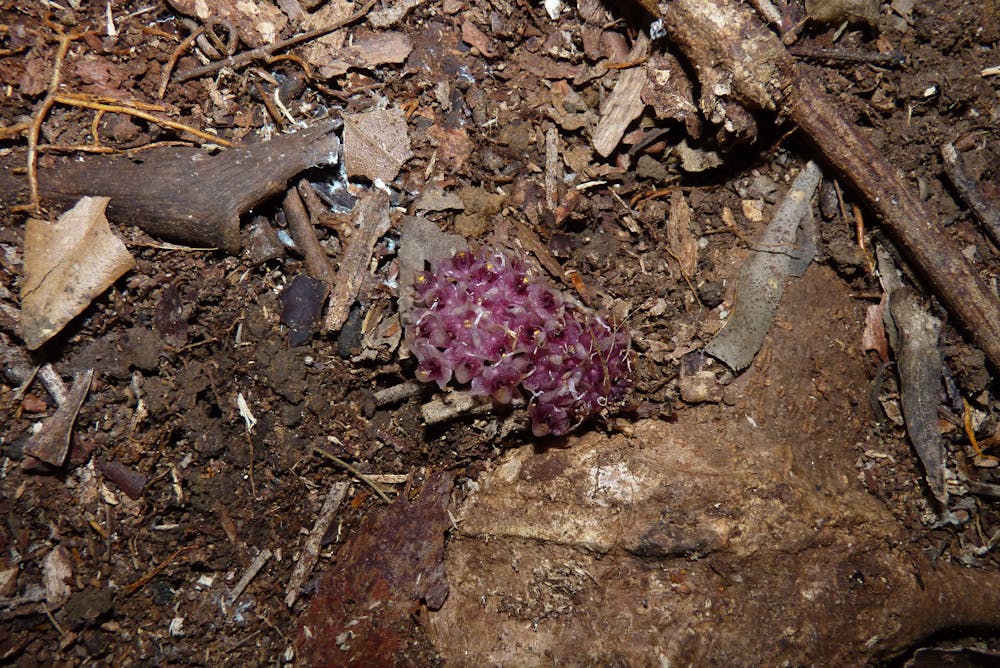 Rhizanthella speciosa. The seeds of underground orchids are like ball bearings, and the fruits smell like vanilla.
Mark Clements, Author provided
Rhizanthella speciosa. The seeds of underground orchids are like ball bearings, and the fruits smell like vanilla.
Mark Clements, Author provided
The conservation of the underground orchid is complicated. Knowing where it exists, and where it doesn’t, is one problem. Another is knowing how to grow it.
All orchid species need a buddy, a particular soil fungus, for their seeds to germinate, and Rhizanthella must have its habitat to survive. Unfortunately, it’s extremely difficult to just grow it in a pot.
Seeds like ball bearings
We also know very little about the biology of Rhizanthella. But here’s what we do know.
We’ve discovered the fungus that buddies up with underground orchids in Western Australia is indeed the same as that in eastern Australia. We know underground orchids tend to grow in wetter forests and that burning will kill them. And we know that after pollination, the seed head of an underground orchid takes 11 months to mature.
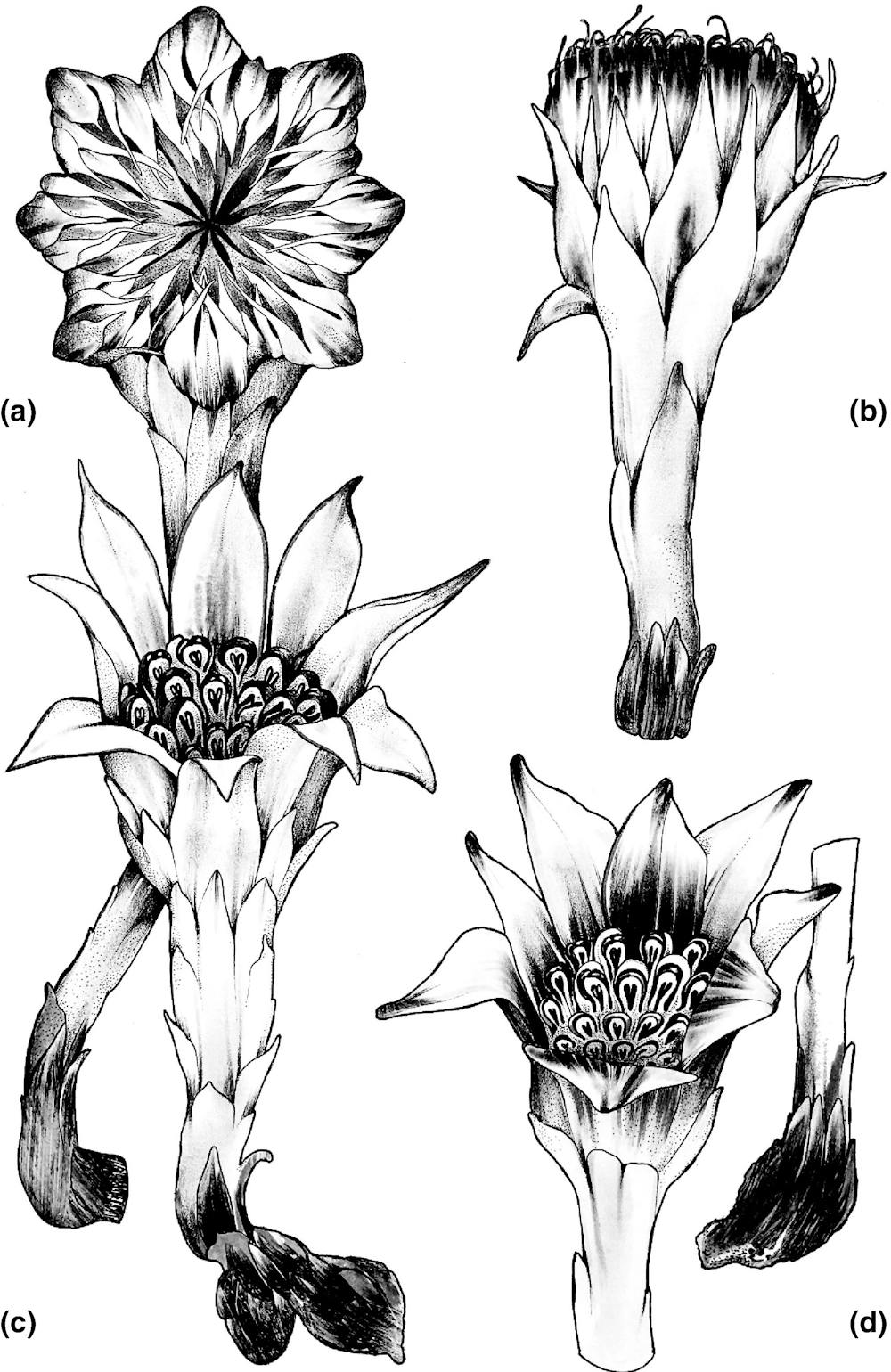 The floral structures of four described species of Rhizanthella: (a) R. slateri (b) R. omissa (c) R. johnstonii (d) R. gardneri
Chris J. Thorogood, Jeremy J. Bougoure et Simon J. Hiscock/Wikimedia, CC BY-SA
The floral structures of four described species of Rhizanthella: (a) R. slateri (b) R. omissa (c) R. johnstonii (d) R. gardneri
Chris J. Thorogood, Jeremy J. Bougoure et Simon J. Hiscock/Wikimedia, CC BY-SA
Most orchids have wind-dispersed seeds. Some are so light that drifting between Queensland and Papua New Guinea might be possible, and might explain its vast distribution.
The seeds of underground orchids, however, are like ball bearings and the fruits smell like the famous vanilla orchid of Mexico, whose seeds and pods add scent and flavour to everything from candles to ice cream.
In nature, bats disperse the seeds of the vanilla orchid. So we set up infra-red cameras in Bulahdelah as part of the bypass project to find out what animals might disperse the seeds of the underground orchid. We observed swamp wallabies and long-nosed bandicoots visiting the site where R. slateri grows.
We suspect they disperse the seeds of underground orchids via their excrement, finding the orchid among truffles and other goodies in the leaf litter and soil of the forest floor.
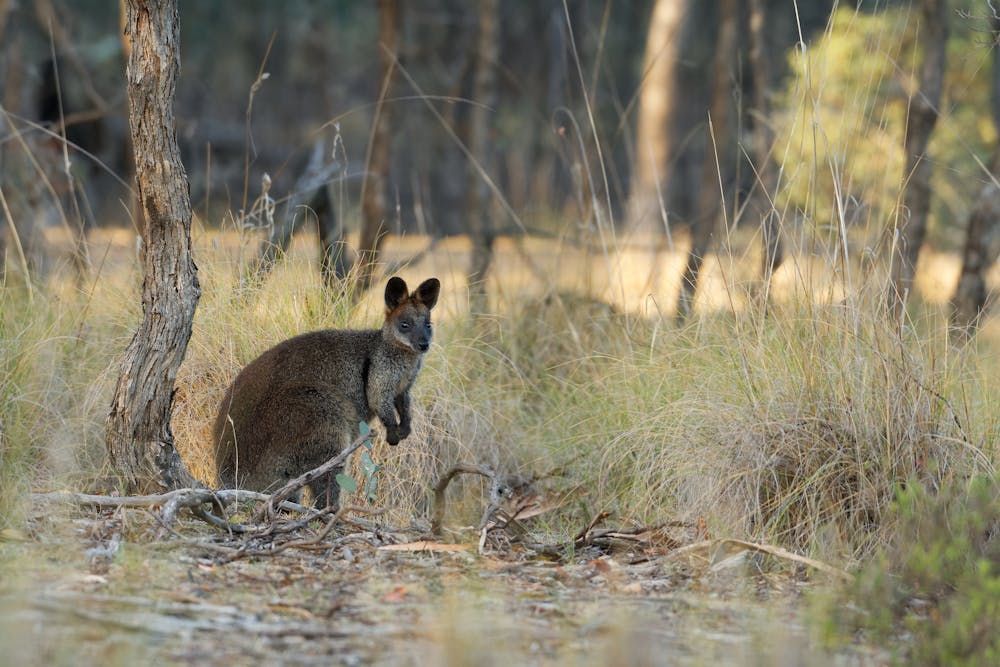 Swamp wallabies and long-nosed bandicoots may disperse the underground orchid seeds, but they’re locally extinct in WA.
Shutterstock
Swamp wallabies and long-nosed bandicoots may disperse the underground orchid seeds, but they’re locally extinct in WA.
Shutterstock
In Western Australia, these animals are locally extinct. Without bandicoots and wallabies to transport seeds away from the parent plant, the natural cycle of renewal and establishment of new plants has been broken. This cannot be good for the long-term survival of the two Western Australian Rhizanthella species.
An alien in the floral world
Conservation of the underground orchid might require intricate strategies, such as reintroducing bandicoots to a protected area, preventing bushfires and using alternatives to burning to manage the land.
An important first step is to find more populations of underground orchids to help us learn more about them.
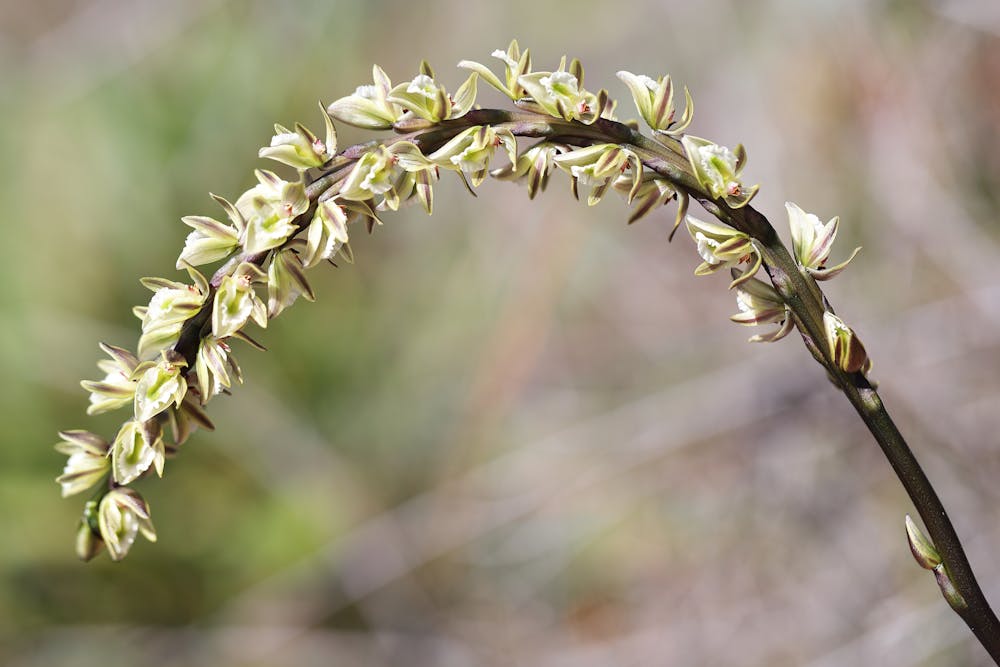 A leek orchid.
Shutterstock
A leek orchid.
Shutterstock
Our work with DNA has shown, in the orchid family tree, Rhizanthella is most closely related to leek orchids (Prasophyllum) and onion orchids (Microtis).
But as you can see from the photo of a leek orchid above, it bears no resemblance to a subterranean flower, like an alien in the floral world.
Read more: Leek orchids are beautiful, endangered and we have no idea how to grow them
Authors: Mark Clements, Botanist, CSIRO


 Daily Bulletin


