

RSV is a common winter illness in children. Why did it see a summer surge in Australia this year?
- Written by: Daniel Yeoh, Paediatrician and Infectious Diseases Physician, The University of Melbourne
Winter typically brings a surge in respiratory viral infections, when we see many children running around with runny noses and phlegmy coughs.
But the 2020 Australian winter was very different. Public health measures in place to control the spread of COVID-19 saw a major shift in the typical seasonal pattern of other respiratory viruses.
This has perhaps been most notable with respiratory syncytial virus (RSV), a very common cause of hospitalisation in young children over winter months in many parts of the world, including Australia.
But following an abnormal winter that saw a significant drop in rates of RSV — we found there were 98% fewer winter cases in Western Australian children — paediatric hospitals around Australia have seen unexpectedly large numbers of children presenting with RSV over summer.
So, what is RSV, and why are these changing trends important?
A winter lurgy
RSV typically circulates during winter in temperate climates, much like influenza.
It’s the major cause of lung infections in children, commonly causing bronchiolitis. Symptoms of RSV include a runny nose, cough, reduced feeding and fever. Complications include wheezing and difficulty breathing, which can develop into pneumonia.
Severe cases occasionally lead to death, predominantly in very young infants.
Almost all children have had an RSV infection by age two, but infants in their first year of life are more likely to experience severe infections requiring hospitalisation, because their airways are smaller. Babies have also not built up immunity to RSV from previous years (we call this being RSV-naïve).
RSV is spread through respiratory secretions, when an infected person sneezes or coughs. In this way it’s similar to COVID-19. But in contrast to the coronavirus, children are more vulnerable to RSV infection than adults. As a result, RSV is readily spread among children, especially at daycare, kindergarten and school.
Read more: Is it really the flu? The other viruses making you ill in winter
How is RSV treated?
Most children will recover without needing specialist care in hospital, and children with mild infection can be treated with rest at home.
However, many children, particularly young infants, those born prematurely, and children with underlying health issues, are admitted to paediatric wards with severe RSV every year.
Treatment for RSV is focused on helping children with their breathing (for example, giving them oxygen) and feeding (for example, administering fluids through a drip).
There’s no licensed vaccine for RSV, but the World Health Organization considers this a priority, and a number of vaccines are currently in development.
 Infants under one are more vulnerable to a serious case of RSV.
Shutterstock
Infants under one are more vulnerable to a serious case of RSV.
Shutterstock
What happened to RSV in 2020?
The stay-at-home orders across Australia from late March 2020, and the implementation of quarantine for international arrivals, coincided with the start of the usual RSV and influenza season in Australia.
With these measures in place, RSV and influenza cases dropped dramatically and remained very low throughout winter.
In Western Australia, despite a relaxation of COVID-related restrictions, including schools reopening from May 2020, there was still a dramatic reduction in RSV cases through winter. This suggests border closures were important in reducing transmission from arriving overseas travellers.
RSV cases remained low until late spring, when a large surge was observed in New South Wales and WA.
The speed and magnitude of this increase was greater than the usual winter peak of RSV.
More recently, other states including Victoria and Queensland have seen a similar unseasonal rise in RSV cases.
Read more: Why do kids tend to have milder COVID? This new study gives us a clue
It’s likely reductions in COVID-19 restrictions have opened the door for increased RSV spread. Reduced immunity to RSV may also have contributed through both an increase in number of RSV-naïve children and possibly waning RSV immunity in older children related to the delayed season.
Studies seeking to understand exactly why we’ve seen a rise in RSV cases are ongoing.
Why might the Australian surge be important elsewhere?
Australia’s experience may carry important lessons for Northern Hemisphere countries, including the United States and the United Kingdom, which saw similar reductions in RSV cases during their winter.
Relaxing of COVID restrictions, which is beginning in many Northern Hemisphere countries now, may provide an opportunity for rapid spread of RSV. Our experience should serve as a warning for paediatric hospitals in the Northern Hemisphere to ensure adequate staffing and available resources to meet the possible increased need.
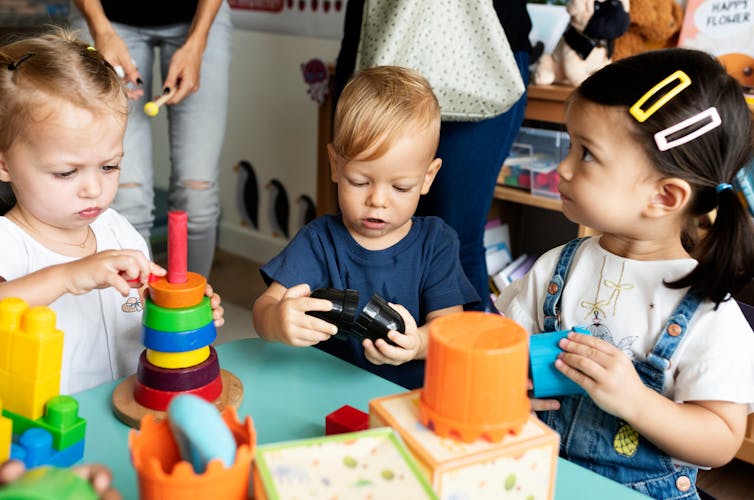 Children mixing less as a result of COVID-19 restrictions likely contributed to the drop in RSV cases during winter.
Shutterstock
Children mixing less as a result of COVID-19 restrictions likely contributed to the drop in RSV cases during winter.
Shutterstock
Our RSV experience may also be applicable to influenza, which still remains at very low levels globally. Reduced immunity to influenza due to the skipped 2020 season may result in a very severe season when influenza returns. Seasonal influenza vaccines could be particularly important in 2021 to protect against a possible large resurgence.
Let’s hold on to our good COVID habits
The COVID-19 pandemic has shown us the spread of respiratory viruses can be reduced by physical distancing and increased hygiene measures.
While we are (hopefully) unlikely to see prolonged stay-at-home orders again in Australia, ongoing basic measures including hand washing, cough etiquette and keeping snotty children at home can all help reduce the spread of RSV and influenza moving forward.
As we approach the 2021 Australian winter, by doing these simple things, as well as getting our flu vaccines, we can all help protect children, including those most vulnerable, from these important respiratory viruses.
Read more: Kids are more vulnerable to the flu – here's what to look out for this winter
Authors: Daniel Yeoh, Paediatrician and Infectious Diseases Physician, The University of Melbourne


 Daily Bulletin


