

After a year of pain, here's how the COVID-19 pandemic could play out in 2021 and beyond
- Written by: Michael Toole, Professor of International Health, Burnet Institute
One year ago today, the World Health Organization (WHO) declared COVID-19 a pandemic, the first caused by a coronavirus.
As we enter year two of the pandemic, let’s remind ourselves of some sobering statistics. So far, there have been more than 117.4 million confirmed cases of COVID-19 around the world; more than 2.6 million people have died. A total of 221 countries and territories have been affected. Some 12 of the 14 countries and territories reporting no cases are small Pacific or Atlantic islands.
Whether the race to end the pandemic will be a sprint or a marathon remains to be seen, as does the extent of the gap between rich and poor contestants. However, as vaccines roll out across the world, it seems we are collectively just out of the starting blocks.
Here are the challenges we face over the next 12 months if we are to ever begin to reduce COVID-19 to a sporadic or endemic disease.
Vaccines are like walking on the Moon
Developing safe and effective vaccines in such a short time frame was a mission as ambitious, and with as many potential pitfalls, as walking on the Moon.
Miraculously, 12 months since a pandemic was declared, eight vaccines against SARS-CoV-2, the virus that causes COVID-19, have been approved by at least one country. A ninth, Novavax, is very promising. So far, more than 312 million people have been vaccinated with at least one dose.
While most high-income countries will have vaccinated their populations by early 2022, 85 poor countries will have to wait until 2023.
Read more: 3 ways to vaccinate the world and make sure everyone benefits, rich and poor
This implies the world won’t be back to normal travel, trade and supply chains until 2024 unless rich countries take actions — such as waiving vaccine patents, diversifying production of vaccines and supporting vaccine delivery — to help poor countries catch up.
The vaccines have been shown to be safe and effective in preventing symptomatic and severe COVID-19. However, we need to continue to study the vaccines after being rolled out (conducting so-called post-implementation studies) in 2021 and beyond. This is to determine how long protection lasts, whether we need booster doses, how well vaccines work in children and the impact of vaccines on viral transmission.
What should make us feel optimistic is that in countries that rolled out the vaccines early, such as the UK and Israel, there are signs the rate of new infections is in decline.
Read more: Coronavirus might become endemic – here's how
What are the potential barriers to overcome?
One of the most salutary lessons we have learnt in the pandemic’s first year is how dangerous it is to let COVID-19 transmission go unchecked. The result is the emergence of more transmissible variants that escape our immune responses, high rates of excess mortality and a stalled economy.
Until we achieve high levels of population immunity via vaccination, in 2021 we must maintain individual and societal measures, such as masks, physical distancing, and hand hygiene; improve indoor ventilation; and strengthen outbreak responses — testing, contact tracing and isolation.
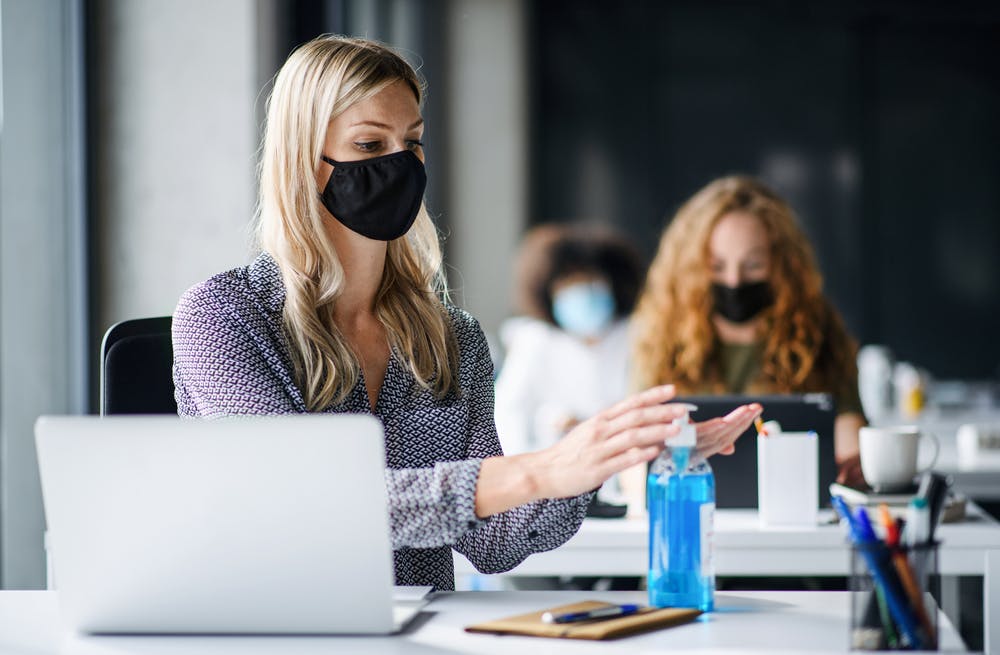 In 2021, we still need to wear masks, physically distance, clean our hands, and improve indoor ventilation.
from www.shutterstock.com
In 2021, we still need to wear masks, physically distance, clean our hands, and improve indoor ventilation.
from www.shutterstock.com
However, there are already signs of complacency and much misinformation to counter, especially for vaccine uptake. So we must continue to address both these barriers.
The outcomes of even momentary complacency are evident as global numbers of new cases once again increase after a steady two month decline. This recent uptick reflects surges in many European countries, such as Italy, and Latin American countries like Brazil and Cuba. New infections in Papua New Guinea have also risen alarmingly in the past few weeks.
Some fundamental questions also remain unanswered. We don’t know how long either natural or vaccine-induced immunity will last. However, encouraging news from the US reveals 92-98% of COVID-19 survivors had adequate immune protection six to eight months after infection. In 2021, we will continue to learn more about how long natural and vaccine-induced immunity lasts.
Read more: New research suggests immunity to COVID is better than we first thought
New variants may be the greatest threat
The longer the coronavirus circulates widely, the higher the risk of more variants of concern emerging. We are aware of B.1.1.7 (the variant first detected in the UK), B.1.351 (South Africa), and P.1 (Brazil).
But other variants have been identified. These include B.1.427, which is now the dominant, more infectious, strain in California and one identified recently in New York, named B.1.526.
Variants may transmit more readily than the original Wuhan strain of the virus and may lead to more cases. Some variants may also be resistant to vaccines, as has already been demonstrated with the B.1.351 strain. We will continue to learn more about the impact of variants on disease and vaccines in 2021 and beyond.
Read more: What's the difference between mutations, variants and strains? A guide to COVID terminology
A year from now
Given so many unknowns, how the world will be in March 2022 would be an educated guess. However, what is increasingly clear is there will be no “mission accomplished” moment. We are at a crossroads with two end games.
In the most likely scenario, rich countries will return to their new normal. Businesses and schools will reopen and internal travel will resume. Travel corridors will be established between countries with low transmission and high vaccine coverage. This might be between Singapore and Taiwan, between Australia and Vietnam, and maybe between all four, and more countries.
Read more: Even with a vaccine, we need to adjust our mindset to playing the COVID-19 long game
In low- and middle-income countries, there may be a reduction in severe cases, freeing them to rehabilitate health services that have suffered in the past 12 months. These include maternal, newborn, and child health services, including reproductive health; tuberculosis, HIV and malaria programs; and nutrition. However, reviving these services will need rich countries to commit generous and sustained aid.
The second scenario, which sadly is unlikely to occur, is unprecedented global cooperation with a focus on science and solidarity to halt transmission everywhere.
This is a fragile moment in modern world history. But, in record time, we have developed effective tools to eventually control this pandemic. The path to a post-COVID-19 future can perhaps now be characterised as a hurdle race but one that presents severe handicaps to the world’s poorest nations. As an international community, we have the capacity to make it a level playing field.
Authors: Michael Toole, Professor of International Health, Burnet Institute


 Daily Bulletin


