

Screwed over: how Apple and others are making it impossible to get a cheap and easy phone repair
- Written by: Ritesh Chugh, Senior Lecturer – Information Systems and Analysis, CQUniversity Australia
If Apple and other tech companies have their way, it will only become harder to have our phones and other devices repaired by third-party businesses.
Smartphones and many other tech devices are increasingly being designed in ways that make it challenging to repair or replace individual components.
This might involve soldering the processor and flash memory to the motherboard, gluing components together unnecessarily, or using non-standard pentalobe screws which make replacements problematic.
Many submissions to an Australian “right to repair” inquiry have called on tech manufacturers to provide a fair and competitive market for repairs, and produce products that are easily repairable.
The right to repair refers to consumers’ ability to have their products repaired at a competitive price. This includes being able to choose a repairer, rather than being forced by default to use the device manufacturer’s services.
But it seems Apple doesn’t want its customers to fix their iPhones or Macbooks themselves. The company has lobbied against the right to repair in the United States and has been accused of deliberately slowing down iPhones with older batteries.
Opposition against the right to repair from tech companies is to be expected. Cornering consumers into using their service centres increases their revenue and extends their market domination.
Read more: Apple, Google and Fortnite's stoush is a classic case of how far big tech will go to retain power
In its defence, Apple has said third-party repairers could use lower quality parts and also make devices vulnerable to hackers.
It also defended its battery warning indication as a “safety” feature, wherein it started to alert users if their phone’s replacement battery hadn’t come from a certified Apple repairer.
In the US, Apple’s independent repair provider program grants certain providers access to the parts and resources needed to fix its devices. Independent repair shops in 32 countries can now apply, but the scheme has yet to extend outside the US.
Impact on users
With the iPhone 12 — the latest iPhone offering — Apple has made it even harder for third-party repairers to fix the device, thereby increasing users’ reliance on its own services.
Apple has hiked its repair charges for iPhone 12 by more than 40%, compared with the iPhone 11. It is charging more than A$359 to fix an iPhone 12 screen outside of warranty and A$109 to replace the battery.
Historically, third-party repairers have been a cheaper option. But using a third-party repairer for an iPhone 12 could render some phone features, such as the camera, almost inoperable.
According to reports, fixing the iPhone 12’s camera requires Apple’s proprietary system configuration app, available only to the company’s own authorised technicians.
It’s not just Apple, either. Samsung’s flagship phones are also quite tricky for third-party repairers to fix.
Impact on environment
When certain parts for repairs aren’t available, manufacturers will produce new phones instead, consuming more energy and resources. In fact, manufacturing one smartphone consumes as much energy as using it for ten years.
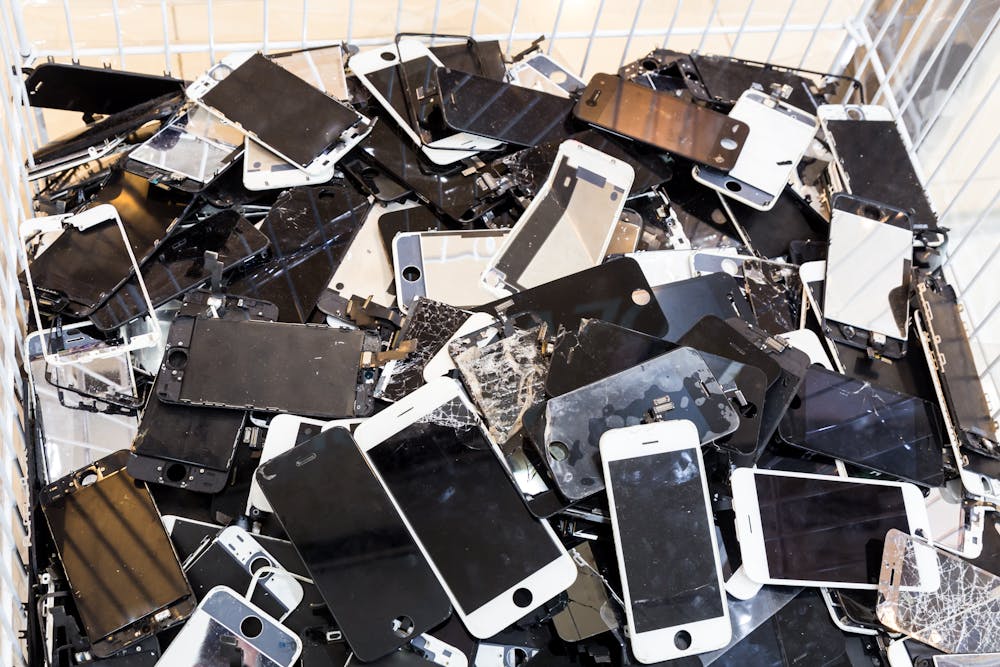 With smartphones and computers becoming harder and more expensive to repair, consumers may be more likely to dispose of their device when something goes wrong.
Shutterstock
With smartphones and computers becoming harder and more expensive to repair, consumers may be more likely to dispose of their device when something goes wrong.
Shutterstock
As smartphones become harder to repair, electronic waste will grow. Apple and Samsung both cited environmental benefits when they announced they would no longer ship chargers with their phones.
Yet, they’ve turned a blind eye to the environmental damage that would arise from completely cornering the repair market.
Read more: Apple's iPhone 12 comes without a charger: a smart waste-reduction move, or clever cash grab?
The average Australian home has 6.7 devices, including televisions, personal computers, laptops, tablets and smartphones. With diminishing opportunities for repair, the environmental burden from disposing of these devices will increase.
What is being done?
Phone giants make it tough for third-party repairers to do their job in a variety of ways. This includes constantly changing designs, adding hurdles to the repair process, and restricting access to parts, diagnostic software and repair documentation.
Meanwhile, consumers are left with broken phones and huge repair bills — and repairers are left with less business.
The fight to remove barriers to repair is gaining momentum outside Australia, too, in countries including Canada, the United Kingdom and the United States. Legislative reforms have been introduced in the European Union and Massachusetts.
France has introduced a Repairability Index requiring electrical and electronic equipment companies to inform consumers about their products’ repairability on a scale of one to ten.
This takes into account the ease of repairability, availability and price of spare parts and availability of technical repair documents.
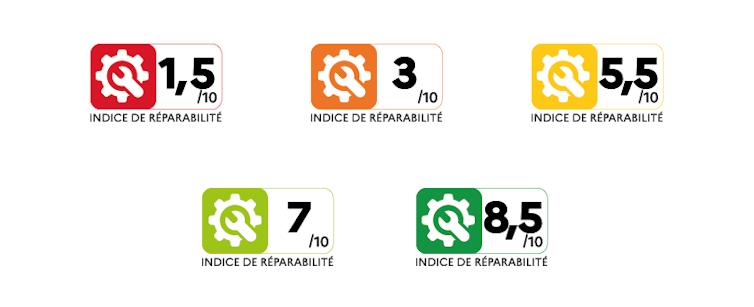 France’s Repairability Index tool is designed to help consumers make informed choices about which device they purchase.
France Ministry of Ecological Transition
France’s Repairability Index tool is designed to help consumers make informed choices about which device they purchase.
France Ministry of Ecological Transition
The path moving forward
Until the push for right to repair legislative reform gathers pace globally, consumers will have little choice but to pay up to big companies to access their authorised repair services.
If they don’t, they may risk losing their warranty, ending up with a non-functional device and even infringing upon the manufacturers’ software copyrights.
Ideally, phone companies (and others) would assist users with the repair process by providing replacement parts, repair documentation and diagnostic tools to third-party repairers.
This would also help Apple and Samsung reduce their carbon footprint and achieve their environmental goals.
Although the way things are going, it’s unlikely tech companies will be able to escape their self-inflicted repair obligations. In the past, Apple CEO Jeff Williams has said:
we believe the safest and most reliable repair is one handled by a trained technician using genuine parts that have been properly engineered and rigorously tested.
But with only so much workforce available even to Apple, sharing the load with smaller repairers will help.
And for consumers’ benefit, the right to repair legislation must be taken seriously, with consistent repairability scores developed across the globe.
Authors: Ritesh Chugh, Senior Lecturer – Information Systems and Analysis, CQUniversity Australia


 Daily Bulletin


