

A great start, but still not enough: why Victoria's new climate target isn't as ambitious as it sounds
- Written by: Anita Foerster, Senior Lecturer, Monash University
In a great start towards net zero emissions by 2050, the Victorian Government recently released their Climate Change Strategy, committing to halving greenhouse emissions by 2030.
Victoria’s leadership, alongside commitments from other Australian states and territories, stands in stark contrast to the poor climate performance of our federal government.
But is it enough? Climate scientists are urging Australia to do more to reduce emissions and to do it quicker if we’re going to avert dangerous global warming. In fact, a recent Climate Council report claims achieving net zero emissions by 2050 is at least a decade too late.
We think the Victorian government has the legal mandate to do more. But we also recognise that ambitious climate action at the state level is hindered by a lack of commitment at the federal level.
Using law to drive emissions reductions
Victoria’s new strategy was developed under the Climate Change Act 2017, state legislation requiring the government to set interim emissions reduction targets on the way to net zero by 2050.
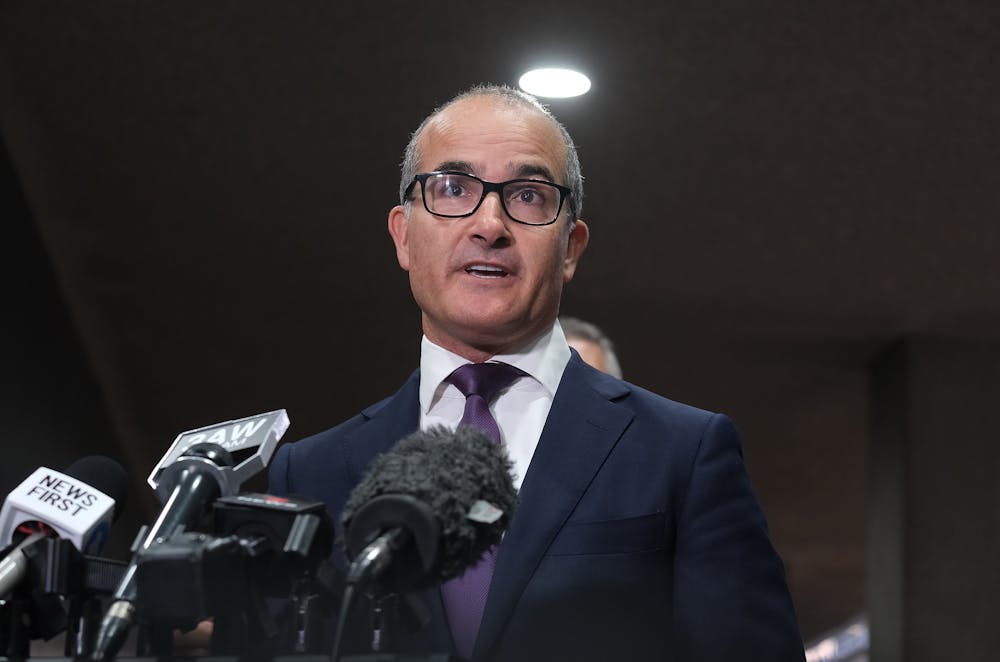 The Victorian Government wants to reduce emissions by 45-50% on 2005 levels by 2030.
AAP Image/Luis Ascui
The Victorian Government wants to reduce emissions by 45-50% on 2005 levels by 2030.
AAP Image/Luis Ascui
It spreads the job of achieving these targets across the economy, with different ministers responsible for pledging emissions reductions actions and reporting on progress over time.
Laws like this are emerging around the world to set targets and hold governments accountable for delivering on them. They’re a key tool to deliver on international commitments under the Paris Agreement to limit global warming to well below 2℃.
Although Australia has set a national target for emissions reduction under the Paris Agreement, it’s widely considered to be inadequate, and there’s currently no framework climate law at the national level. Independent Zali Steggall introduced such a bill in 2020, but the Morrison government hasn’t supported it.
Victoria’s new strategy lacks detail
Victoria’s Climate Change Strategy contains many exciting climate policy announcements, including:
renewable energy zones and big batteries in the regions
all government operations including schools and hospitals powered by 100% renewables by 2025
targets and subsidies for electric vehicle uptake
commitments to support innovation in hard-to-abate sectors such as agriculture.
It also recognises the need to phase out natural gas and accelerate Victoria’s renewable hydrogen industry.
These policies are designed to reduce emissions while supporting economic growth and job creation. Yet they are scant on detail.
There’s heavy reliance on achieving emissions reductions in the energy sector — arguably, this is the low-hanging fruit. Policies in transport and agriculture are far less developed, with no quantification of targeted emissions reductions to 2030.
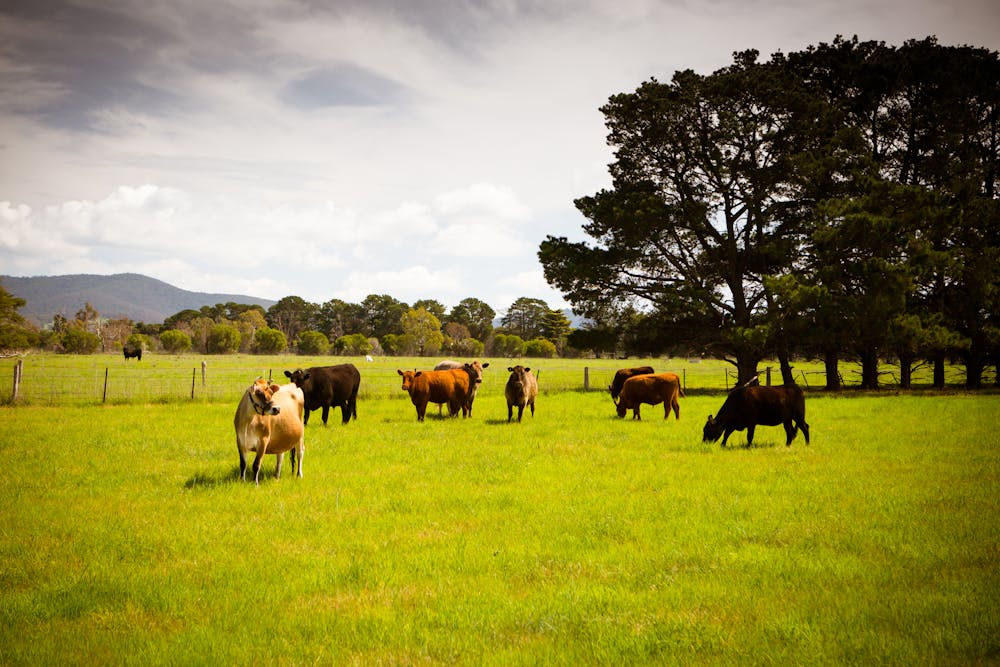 Victoria has committed to support innovation in hard-to-abate sectors such as agriculture.
Shutterstock
Victoria has committed to support innovation in hard-to-abate sectors such as agriculture.
Shutterstock
This makes it difficult to assess whether the sector pledges will drive enough change to achieve the government’s interim targets (ambitious or otherwise) and support a trajectory to net zero.
It has taken several years to develop the Climate Change Strategy. This makes the lack of detail and the undeveloped nature of some pledges a big concern.
There are also few safeguards in the Climate Change Act to ensure pledges add up to achieving targets, or that ministers across sectors deliver on them. Much depends on the political will of the government of the day.
Why Victoria’s targets aren’t enough
The Victorian Government proposes targets to reduce emissions by 28–33% on 2005 levels by 2025, and by 45–50% on 2005 levels by 2030.
The government claims these targets are ambitious. Compared to current federal government targets, this is true.
However, the target ranges are lower than those recommended in 2019 by the Independent Expert Panel, established under the Climate Change Act to advise the government on target setting.
The panel recommended targets of 32–39% by 2025 and 45–60% by 2030 as Victoria’s “fair share” contribution to limiting warming to well below 2℃ in accordance with Paris Agreement goals. And it acknowledged these recommended ranges still wouldn’t be enough to keep warming to 1.5℃, in the context of global efforts.
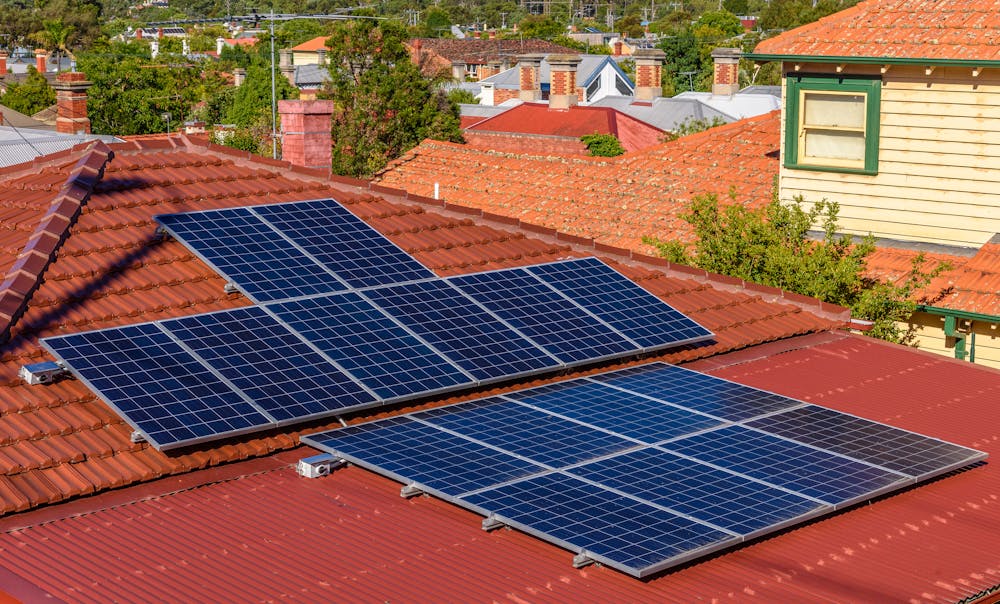 Reducing emissions in the energy sector is low-hanging fruit.
Shutterstock
Reducing emissions in the energy sector is low-hanging fruit.
Shutterstock
Ultimately, Victoria’s targets don’t match what scientists are now telling us about the importance of cutting emissions early to avoid the worst impacts of climate change.
A pragmatic approach or a missed opportunity?
In setting the targets, the state government has clearly taken a politically pragmatic approach.
The government claims the targets are achievable and suggests they would’ve set more ambitious targets if the federal government made a stronger commitment to climate action.
Yes, the current lack of climate ambition at the federal level in Australia is a very real constraint on progress in some areas such as energy, where a coordinated approach is crucial. But this shouldn’t outweigh aligning to best available science.
State governments have many regulatory, policy and economic levers at their disposal, with opportunities to drive significant change and innovation. And Victoria has already demonstrated strong progress in emissions reduction and renewables in the energy sector, easily meeting and exceeding previous targets.
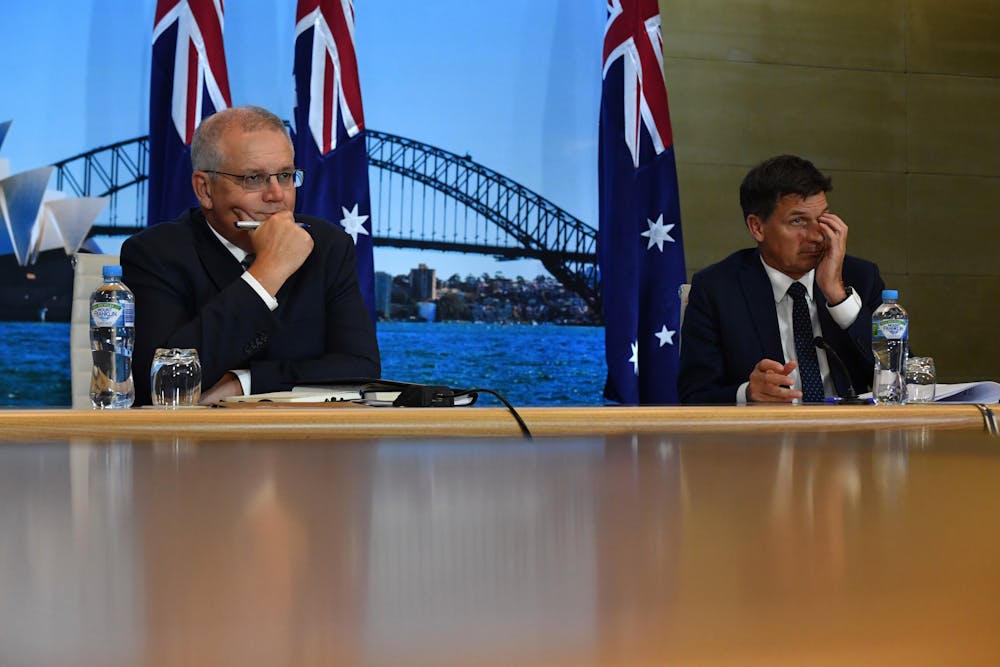 Ambitious climate action at the state level is hindered by a lack of federal commitment.
AAP Image/Mick Tsikas
Ambitious climate action at the state level is hindered by a lack of federal commitment.
AAP Image/Mick Tsikas
Under the Climate Change Act, the Victorian Government will need to set new, more ambitious targets in five years.
But waiting five years goes against Victoria’s aim to lead the nation on climate action and contribute fairly to global efforts to mitigate global warming. More ambitious, science-aligned targets now would’ve been a valuable signal for industry and a sign of real climate leadership.
We need stronger laws
Without doubt, the new Climate Change Strategy is a significant step forward on an issue that’s plagued Australian politics for years. Victoria has showed framework climate laws can drive government action on climate change.
But there are also opportunities to bolster the Climate Change Act by aligning targets to science, strengthening legal obligations to drive timely progress, and including an ongoing role for independent experts to advise on target setting and oversee progress.
Finally, it’s important to get on with the job at a federal level.
Zali Steggall’s Climate Change Bill 2020 picks up on best practice climate laws from around the world. It’s also supported by industry groups and investors.
Victoria’s experience suggests it’s surely time for Australia to take this important step.
Authors: Anita Foerster, Senior Lecturer, Monash University


 Daily Bulletin


