

Mounting evidence suggests COVID vaccines do reduce transmission. How does this work?
- Written by: Jennifer Juno, Senior research fellow, The Peter Doherty Institute for Infection and Immunity
Since COVID-19 vaccines began rolling out across the world, many scientists have been hesitant to say they can reduce transmission of the virus.
Their primary purpose is to prevent you from getting really sick with the virus, and it quickly became clear the vaccines are highly efficient at doing this. Efficacy against symptoms of the disease in clinical trials has ranged from 50% (Sinovac) to 95% (Pfizer/BioNTech), and similar effectiveness has been reported in the real world.
However, even the best vaccines we have are not perfect, which means some vaccinated people still end up catching the virus. We call these cases “breakthrough” infections. Indeed, between April 10 and May 1, six people in hotel quarantine in New South Wales tested positive for COVID-19, despite being fully vaccinated.
But how likely are vaccinated people to actually pass the virus on, if they do get infected? Evidence is increasing that, not only do COVID-19 vaccines either stop you getting sick or substantially reduce the severity of your symptoms, they’re also likely to substantially reduce the chance of transmitting the virus to others.
But how does this work, and what does it mean for the pandemic?
Vaccinated people are much less likely to pass on the virus
Early evidence from testing in animals, where researchers can directly study transmission, suggested immunisation with COVID-19 vaccines could prevent animals passing on the virus.
But animals are not people, and the scientific community has been waiting for more conclusive studies in humans.
In April, Public Health England reported the results of a large study of COVID-19 transmission involving more than 365,000 households with a mix of vaccinated and unvaccinated members.
It found immunisation with either the Pfizer or AstraZeneca vaccine reduced the chance of onward virus transmission by 40-60%. This means that if someone became infected after being vaccinated, they were only around half as likely to pass their infection on to others compared to infected people who weren’t vaccinated.
One study from Israel, which leads the world in coronavirus vaccinations, gives some clues about what’s behind this reduced transmission. Researchers identified nearly 5,000 cases of breakthrough infection in previously vaccinated people, and determined how much virus was present in their nose swabs. Compared to unvaccinated people, the amount of virus detected was significantly lower in those who got vaccinated.
More virus in the nose has been linked to greater infectiousness and increased risks of onward transmission.
These studies show vaccination is likely to substantially reduce virus transmission by reducing the pool of people who become infected, and reducing virus levels in the nose in people with breakthrough infections.
Why does this matter?
If COVID-19 vaccines reduce the chances of transmitting the virus, then each person who is vaccinated protects not only themselves, but also people around them. Breaking chains of transmission within the community and limiting onward spread is critical to help protect people who may respond poorly to immunisation or may not be able to get vaccinated themselves, such as children, some older people, and some people who are immunocompromised.
This also greatly increases the opportunity to achieve some degree of population (or “herd”) immunity, and a faster easing of social restrictions.
But what about the limits of vaccines?
Reducing the risk of transmitting the coronavirus relies on developing strong immunity against the virus. But immunity, even from the vaccines, fades over time. Scientists are actively monitoring people who’ve had COVID-19 vaccines to understand how long vaccine immunity is likely to last, and if and when booster shots will be required.
Read more: Why do we need booster shots, and could we mix and match different COVID vaccines?
Variants of the coronavirus are also concerning. These are strains of the SARS-CoV-2 virus that carry changes which make them harder to control by immunisation. Such variants present two major challenges: they can evade vaccine immunity and, in some cases, are also more transmissible.
Although variants have spread widely throughout the world, there are several pieces of good news on this front. Countries with advanced vaccine rollouts are maintaining good control over the virus. For example, Israel began its mass vaccination campaign during their third wave, and quickly saw a decline in new cases.
What’s more, companies like Moderna are developing updated vaccines to specifically target these variants, with positive early results.
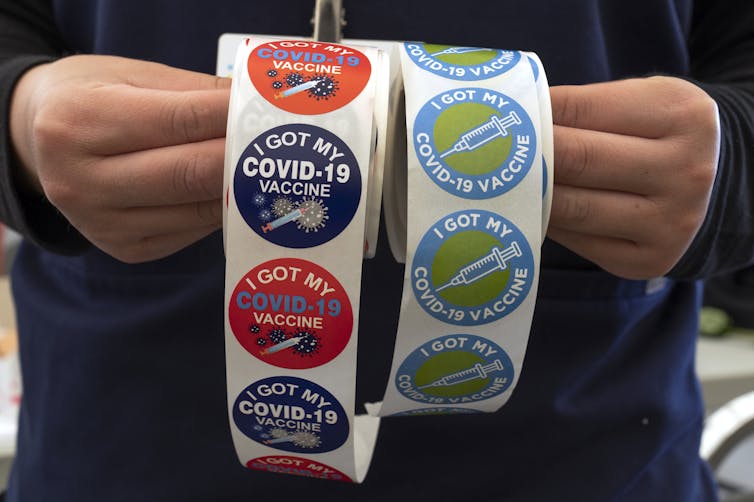 Even though variant strains of the virus are concerning, vaccine companies are already working on booster shots to cover them.
AP/AAP
Even though variant strains of the virus are concerning, vaccine companies are already working on booster shots to cover them.
AP/AAP
Vaccines don’t mean we should stop preventative behaviours
Right now, the global pandemic is complex. Many countries are quickly rolling out available vaccines, and there are a wide variety of lockdowns and social measures in place.
Yet, the number of new infections each day across the world is at an all-time high and concerning variants are circulating.
As people are vaccinated, there’s a temptation to stop or reduce some important social behaviours such as mask wearing or physical distancing. But, importantly, less transmission is not no transmission.
While vaccinated individuals most likely have a smaller chance of passing on the virus, it’s still important to keep up responsible behaviours into the immediate future to protect those who have not, will not, or cannot be immunised.
Authors: Jennifer Juno, Senior research fellow, The Peter Doherty Institute for Infection and Immunity


 Daily Bulletin


