

Nobody cares about ugly flowers. Scientists pay more attention to pretty plants
- Written by: Kingsley Dixon, John Curtin Distinguished Professor, Curtin University
We all love gardens with beautiful flowers and leafy plants, choosing colourful species to plant in and around our homes. Plant scientists, however, may have fallen for the same trick in what they choose to research.
Our research, published today in Nature Plants, found there’s a clear bias among scientists toward visually striking plants. This means they’re more likely chosen for scientific study and conservation efforts, regardless of their ecological or evolutionary significance.
To our surprise, colour played a major role skewing researcher bias. White, red and pink flowers were more likely to feature in research literature than those with dull, or green and brown flowers. Blue plants — the rarest colour in nature — received most research attention.
But does this bias matter? Plants worldwide are facing mass extinction due to environmental threats such as climate change. Now, more than ever, the human-induced tide of extinction means scientists need to be more fair-handed in ensuring all species have a fighting chance at survival.
Hidden plants in carpets of wildflowers
I was part of an international team that sifted through 280 research papers from 1975 to 2020, and analysed 113 plant species found in the southwestern Alps in Europe.
The Alps is a global biodiversity hotspot and the subject of almost 200 years of intensive plant science. But climate change is now creating hotter conditions, threatening many of its rarest species.
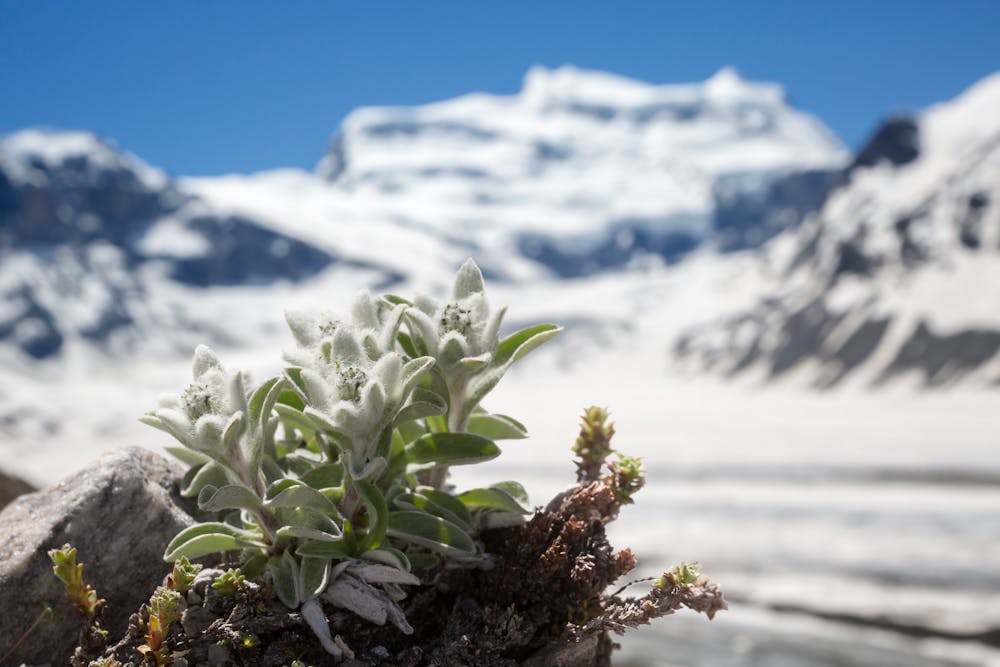 Edelweiss is a charismatic plant of the Alps that heralds spring.
Shutterstock
Edelweiss is a charismatic plant of the Alps that heralds spring.
Shutterstock
Carpeted in snow for much of the year, the brief yet explosive flowering of Europe’s alpine flora following the thaw is a joy to behold. Who was not bewitched when Julie Andrews danced in an alpine meadow in its full spring wildflower livery in The Sound of Music? Or when she sung “edelweiss”, one of the charismatic plants of the Alps that heralds spring?
Read more: People are 'blind' to plants, and that's bad news for conservation
Hidden in these carpets of bright blue gentians and Delphiniums, vibrant daisies and orchids, are tiny or dull plants. This includes small sedges (Carex species), lady’s mantle (Alchemilla species) or the snake lily (Fritillaria) with its sanguine drooping flowers on thin stems.
Many of these “uncharismatic plants” are also rare or important ecological species, yet garner little attention from scientists and the public.
 Bellflowers (Campanula) are conspicuous and prominent in the Alps.
Martino Adamo, Author provided
Bellflowers (Campanula) are conspicuous and prominent in the Alps.
Martino Adamo, Author provided
The plants scientists prefer
The study asked if scientists were impartial to good-looking plants. We tested whether there was a relationship between research focus on plant species and characteristics, such as the colour, shape and prominence of species.
Along with a bias towards colourful flowers, we found accessible and conspicuous flowers were among those most studied (outside of plants required for human food or medicine).
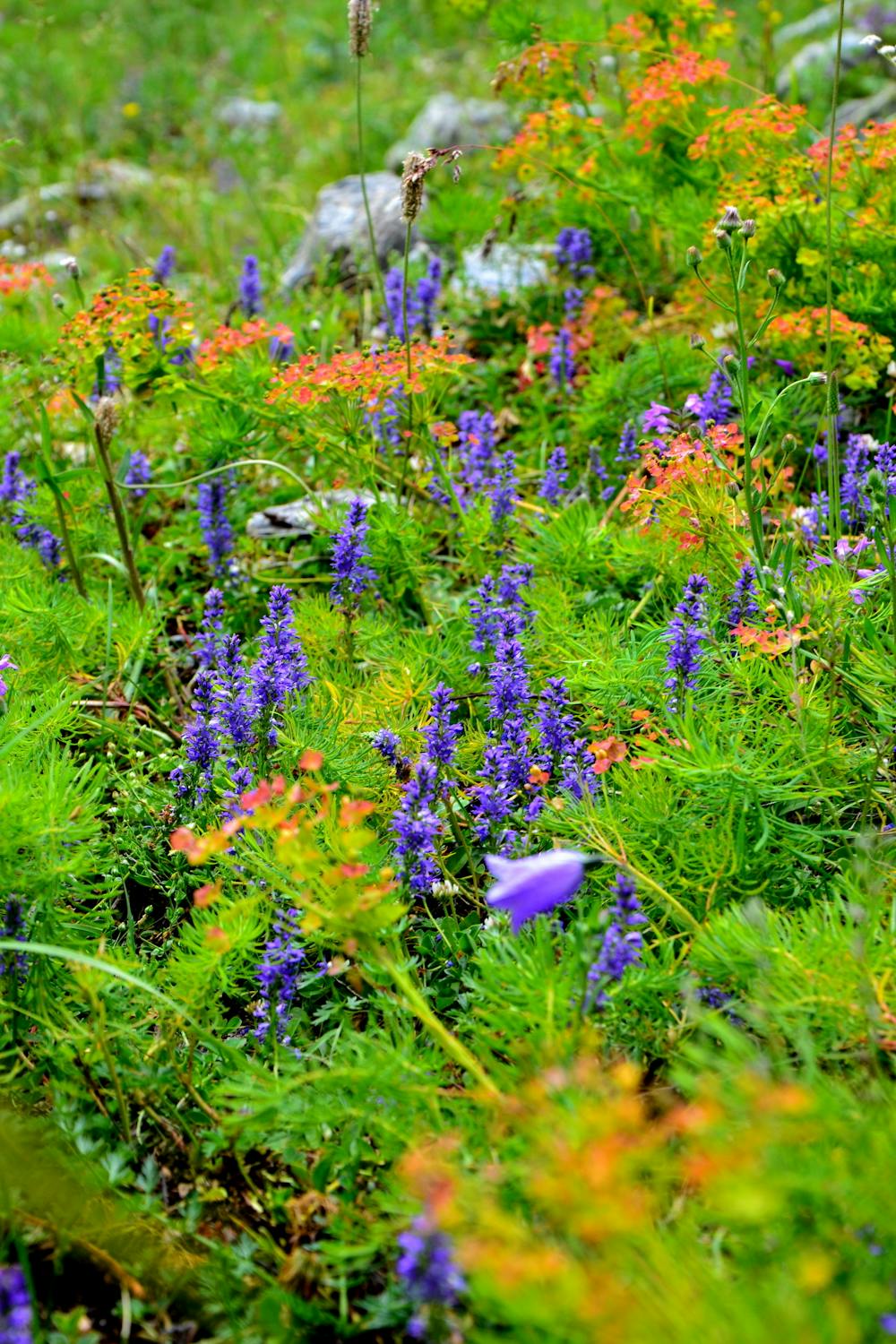 Bold and beautiful flowers in alpine meadows win scientific attention.
Martino Adamo, Author provided
Bold and beautiful flowers in alpine meadows win scientific attention.
Martino Adamo, Author provided
This includes tall, prominent Delphinium and larkspurs, both well-known garden delights with well-displayed, vibrant flowers that often verge on fluorescent. Stem height also contributed to how readily a plant was researched, as it determines a plant’s ability to stand out among others. This includes tall bellflowers (Campanula species) and orchids.
But interestingly, a plant’s rarity didn’t significantly influence research attention. Charismatic orchids, for example, figured prominently despite rarer, less obvious species growing nearby, such as tiny sedges (Cypreaceae) and grass species.
The consequences of plant favouritism
This bias may steer conservation efforts away from plants that, while less visually pleasing, are more important to the health of the overall ecosystem or in need of urgent conservation.
In this time of urgent conservation, controlling our bias in plant science is critical. While the world list of threatened species (the IUCN RED List) should be the basis for guiding global plant conservation, the practice is often far from science based.
 Mat rushes are home for rare native sun moths.
Shutterstock
Mat rushes are home for rare native sun moths.
Shutterstock
We often don’t know how important a species is until it’s thoroughly researched, and losing an unnoticed species could mean the loss of a keystone plant.
In Australia, for example, milkweeds (Asclepiadaceae) are an important food source for butterflies and caterpillars, while grassy mat rushes (dull-flowered Lomandra species) are now known to be the home for rare native sun moths. From habitats to food, these plants provide foundational ecological services, yet many milkweed and mat rush species are rare, and largely neglected in conservation research.
Likewise, we can count on one hand the number of scientists who work on creepy fungal-like organisms called “slime molds”, compared to the platoons of scientists who work on the most glamorous of plants: the orchids.
Yet, slime molds, with their extraordinary ability to live without cell walls and to float their nuclei in a pulsating jelly of cytoplasm, could hold keys to all sorts of remarkable scientific discoveries.
 Slime molds could hold the key to many scientific discoveries, but the organisms are understudied.
Shutterstock
Slime molds could hold the key to many scientific discoveries, but the organisms are understudied.
Shutterstock
We need to love our boring plants
Our study shows the need to take aesthetic biases more explicitly into consideration in science and in the choice of species studied, for the best conservation and ecological outcomes.
While our study didn’t venture into Australia, the principle holds true: we should be more vigilant in all parts of the conservation process, from the science to listing species for protection under the law. (Attractiveness bias may affect public interest here, too.)
So next time you go for a bushwalk, think about the plants you may have trodden on because they weren’t worth a second glance. They may be important to native insects, improve soil health or critical for a healthy bushland.
Read more: These 3 tips will help you create a thriving pollinator-friendly garden this winter
Authors: Kingsley Dixon, John Curtin Distinguished Professor, Curtin University


 Daily Bulletin


