

New research finds native forest logging did not worsen the Black Summer bushfires
- Written by: David Bowman, Professor of Pyrogeography and Fire Science, University of Tasmania
The Black Summer bushfires shocked the world and generated enormous global media interest. Fire scientists like myself found themselves filling a role not unlike sport commentators, explaining the unfolding drama in real time.
Scientists who engaged with the media during the crisis straddled two competing imperatives. First was their duty to share their knowledge with the community while knowing their understanding is imperfect. Second was the ethical obligation to rigorously test hypotheses against data analysis and peer review – the results of which could only be known long after the fires were out.
One area where this tension emerged was around the influential idea that logging exacerbated the bushfire disaster. During the fire crisis and in the months afterwards, some scientists suggested logging profoundly affected the fires’ severity and frequency. There were associated calls to cease native forestry and shift wood production to plantations.
But there is no scientific consensus about the possible effects of logging on fire risk. In fact, research by myself and colleagues, published in Nature Ecology and Evolution today, shows logging had little if any effect on the Black Summer bushfires. Rather, the disaster’s huge extent and severity were more likely due to unprecedented drought and sustained hot, windy weather.
These findings are significant for several reasons. Getting to the bottom of the bushfires’ cause is essential for sustainable forest management. And, more importantly, our research confirms the devastating role climate change played in the Black Summer fires.
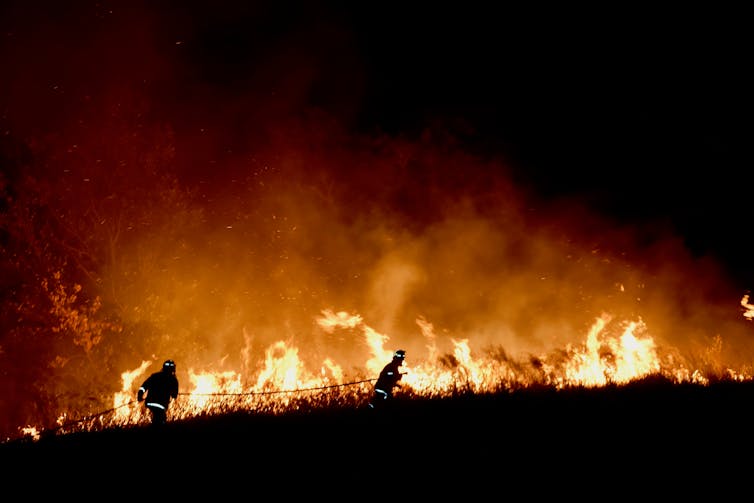
 Firefighters recover after battling blazes at Kangaroo Island on 10 January 2019.
David Mariuz/AAP
Firefighters recover after battling blazes at Kangaroo Island on 10 January 2019.
David Mariuz/AAP
Looking for patterns
Our research focused on 7 million hectares of mostly eucalyptus forests, from the subtropics to temperate zones, which burned between August 2019 and March 2020.
There is some evidence to suggest logged areas are more flammable that unlogged forests. Proponents of this view say logging regimes make the remaining forests hotter and drier, and leave debris on the ground that increases the fuel load.
In our research, we wanted to determine:
the relative roles logging and other factors such as climate played in fires that destroyed or completely scorched forest canopies
whether plantations are more vulnerable to canopy scorch than native forests.
To do so, we used landscape ecology techniques that could compare very large areas with different patterns of land use and fire severity. We sampled 32% of the area burnt in three regions spanning the geographic range of the fires.
 The research used landscape ecology techniques to compare large areas.
Shutterstock
The research used landscape ecology techniques to compare large areas.
Shutterstock
What we found
Fire intensity is classified according to the vertical layer of vegetation burnt. A scorched tree canopy suggests the most intense type of fire, where the heat extended from the ground to the treetops.
We found several predictors of canopy damage. First, completely scorched canopy, or canopy consumed by fire, typically occurred across connected swathes of bushland. This most likely reflected instances where the fire made a “run”, driven by localised winds.
Extreme weather fire conditions were the next most important predictor of canopy damage. The drought had created vast areas of tinder-dry forests. Temperatures during the fire season were hot and westerly winds were strong.
Southeast Australia’s climate has changed, making such extreme fire weather more frequent, prolonged and severe.
Logging activity in the last 25 years consistently ranked “low” as a driver of fire severity. This makes sense for several reasons.
As noted above, fire conditions were extraordinarily extreme. And there was mismatch between the massive area burnt and the comparatively small areas commercially logged in the last 25 years (4.5% in eastern Victoria, 5.3% in southern NSW and 7.8% in northern NSW).
Fire severity is also related to landscape features: fire on ridges is generally worse than in sheltered valleys.
Our research also found timber plantations were as prone to severe fire as native forestry areas. In NSW (the worst-affected state) one-quarter of plantations burned – than 70% severely. This counteracts the suggestion using plantations, rather than logging native forest, can avoid purported fire hazards.
Read more: Australia, you have unfinished business. It's time to let our 'fire people' care for this land
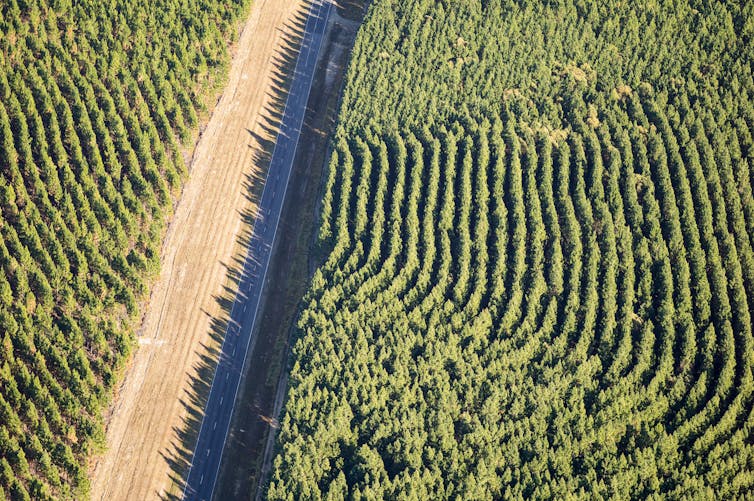 Plantation forests were found to be highly flammable.
Shutterstock
Plantation forests were found to be highly flammable.
Shutterstock
A challenge awaits
Our findings are deeply concerning. They signal there is no quick fix to the ongoing fire crisis afflicting Australia and other flammable landscapes.
The crisis is being driven by relentless climate change. Terrifyingly, it has the potential to turn forests from critical stores of carbon into volatile sources of carbon emissions released when vegetation burns.
Under a rapidly warming and drying climate, fuel loads are likely to become less important in determining fire extent and severity. This will make it increasingly difficult, if not impossible, to lower fuel loads in a way that will limit bushfire severity.
A massive challenge awaits. We must find socially and environmentally acceptable ways to make forests more resilient to fire while the also produce sustainable timber products, store carbon, provide water and protect biodiversity.
The next step is a real-world evaluation of management options. One idea worth exploring is whether the fire resistance of native forests can be improved in specific areas by altering tree density, vegetation structure or fuel loads, while sustaining biodiversity and amenity.
Commercial forestry could potentially do this, with significant innovation and willingness to let go of current practices.
Through collective effort, I’m confident we can sustainably manage of forests and fire. Our study is but a small step in a much bigger, zig-zagging journey of discovery.
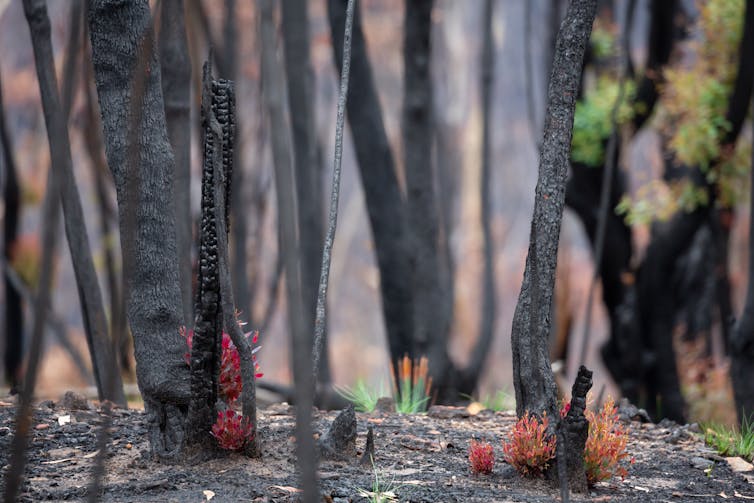 Forests must become fire-resilient while performing other functions.
Shutterstock
Forests must become fire-resilient while performing other functions.
Shutterstock
Authors: David Bowman, Professor of Pyrogeography and Fire Science, University of Tasmania


 Daily Bulletin


