

How to tackle Australia's plastic pandemic from home
- Written by: BRITA
BRITA AND PLASTIC FREE JULY TACKLE AUSTRALIA’S PLASTIC PANDEMIC
Partnership between BRITA and Plastic Free July encourages Aussies to cut down on single-use plastic consumption at home, currently at 1 million households per day
Partnership between BRITA and Plastic Free July encourages Aussies to cut down on single-use plastic consumption at home, currently at 1 million households per day
Plastic waste is a growing issue in Australia, with new insights from BRITA IPSOS research uncovering that almost 2 million Aussies consumed more single-use plastic during 2020, because of spending more time at home1.
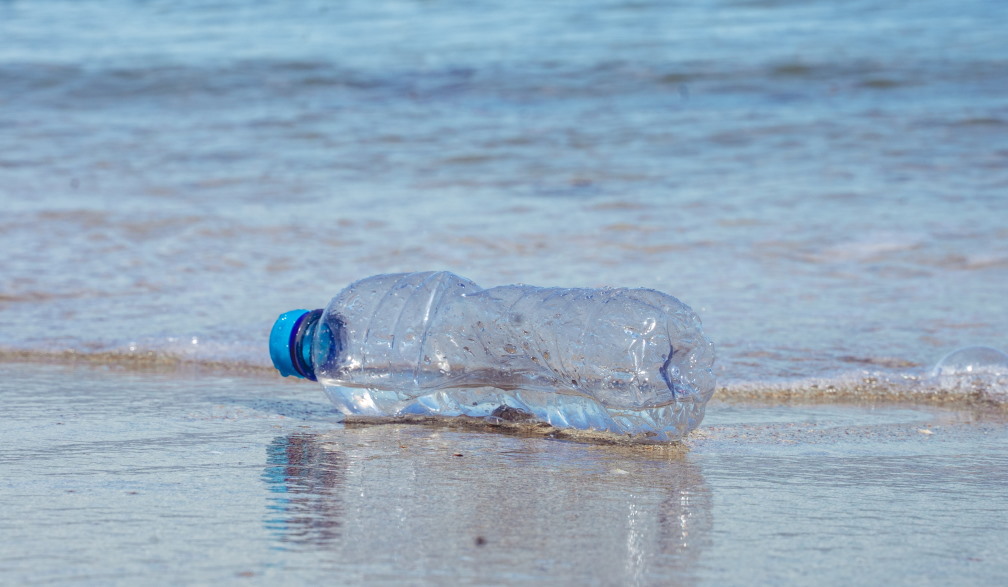
This new data is shining a spotlight on Australia’s very real “plastic pandemic”, which sees that more than 1 million Aussie households primarily drink bottled water at home2, with over 2.8 million individuals saying they bought more bottled water in 2020 to stay hydrated3. Plastic bottles are a dominant pollutant, and the uptick in purchasing bottled water for home use results in over 6.5 million bottles used at home per day4
BRITA has partnered with Plastic Free July, a global movement for people to refuse or reduce their single-use plastic waste, with a vision of a world without plastic waste. Through this partnership, BRITA wishes to urge Australians to make a simple switch from drinking water in single use plastic bottles to a more sustainable choice. By using a BRITA Jug instead of bottled water, consumers can reduce their plastic waste. The goal of the partnership is to prevent 50,000 single-use plastic water bottles from being wasted, by calling on Aussies to take the #FilterForGood pledge via BRITA.com.au and give up using single-use plastic water bottles at home or on the go. If all households who only drink bottled water at home pledged not to do so for just one day, we will have saved over 6.5 million single-use plastic bottles (1L) from being discarded in Australia2.
The pledge is in response to the insights from BRITA’s research, undertaken by IPSOS in February 2021, which found that our once good behaviour towards plastic had unravelled in 2020. The pandemic resulted in a rise of single-use plastic – cafes and restaurants offered “hands-free” takeaways in disposable packaging again, and the demand for single-use personal protection equipment (PPE) in the health system grew exponentially. This all contributed to Australia’s annual plastic waste total which was already at 3.5 million tonnes in 2018-20195.
The research also found apathy towards this issue is rife, with almost 10 million Australians not concerned at all about the nation’s plastic waste6, and only 62% of people wanting to take action6. Millennial respondents (aged 18 – 34) are most concerned (65%) followed by Gen X (61%), and Baby Boomers the most apathetic totalling 41% as not concerned7. Across the states, Northern Territorians are the most concerned state (74%) with Tasmanians the least concerned (48%)7.
The good news is that almost 7 million Aussies responded that they want to reduce their plastic waste by 80%6, with Aussies planning to be more sustainable through recycling (62%) and reducing their soft/single use plastic waste (45%)6.
Rebecca Prince-Ruiz, Founder of Plastic Free July, says that reducing plastic waste at home by switching to refillables, like a BRITA jug, and avoiding plastic packaging, is a great way to start these changes at home; “According to BRITA’s research, there are 16 million Australians who are concerned about the nation’s plastic waste6, and we are encouraging these individuals, and others, to join over 300 million people worldwide and choose to reduce and refuse single-use plastic this July.”
“In 2020, 3 million Australians joined an estimated 326 million people worldwide who took part in Plastic Free July, on average reducing their household waste by 5% (21 kg) per year. Since last year, we’ve made great progress by continuing to change our habits and remembering to take reusable shopping bags and using containers to store food in the fridge to avoid plastic wrap. However, it’s time to take the next steps and avoid single-use bottled drinks, pre-packed produce and refusing plastic straws. Together we can make a real difference,” adds Ms Prince-Ruiz.
Aussies who join the #FilterForGood pledge should make the switch from drinking bottled water at home to filtering their tap water with a BRITA jug – another simple change to help reduce individual contribution to plastic waste in the community. Globally, BRITA filter jugs replace over 4 billion single-use plastic bottles every year with a goal to replace 5.5 billion annually by 2023.
Peter Harley, Managing Director at BRITA Australia shares the company’s sustainability mission. “At BRITA, we stand for cleaner, great tasting water. We are the custodian of the brand vision to change the way people drink water sustainably and are targeting in-home bottled water drinking occasions and want to convert them from using single-use plastic bottles at home for their drinking water consumption. By using a BRITA jug you don’t have to choose between better drinking water and a better planet, and you can have great tasting tap water that tastes as good as bottled water.”
“This year, we’re proud to be partnering with Plastic Free July, working with them to continue driving positive change through simple solutions that help communities live more sustainably. With our #FilterForGood pledge we’re encouraging Australians not to use single-use plastic bottles at home. Together, we’re confident we can reach our goal of preventing 50,000 plastic bottles from waste, and make a real difference,” adds Mr Harley.
As the global expert in water filtration systems, each cartridge within a BRITA jug can filter approximately 100Litres of tap water, which eliminates the need for up to 100 one-litre single-use plastic bottles. BRITA understands its responsibility as a business to reduce its impact on the environment and as part of the company’s sustainability measures, BRITA also proudly offers customers a national recycling solution for its filters via TerraCycle. The recycling program accepts BRITA MAXTRA+ filters and their soft plastic packaging.
To help educate Aussies on how they can reduce their individual plastic waste contribution through simple changes, BRITA and Plastic Free July share these 10 tips;
About the research
BRITA’s #FilterForGood research, was undertaken by IPSOS in February 2021, surveying 1,001 Australians aged 18 – 75 years old. The survey was conducted via quantitative ad-hoc online interviews and tracking survey from 23 February – 11 March 2021.
Additional data has been included from the latest BIS Oxford Economics, Australia's leading provider of industry research, analysis and forecasting services. The report ‘The Domestic Water Filters Market In Australia 2020’ was overlayed with the number of people per household based on the 2016 Australian census.
On the BRITA Group:
With total sales of 617 million euros in business year 2020 and 2,124 employees worldwide (of which 1,247 are in Germany) at the end of 2020, the BRITA Group is one of the leading companies in drinking water optimisation and individualisation. Its long-established brand BRITA has a leading position in the global water filter market. The family-owned company based in Taunusstein near Wiesbaden is represented by 30 national and international subsidiaries and branches as well as shareholdings, distribution and industrial partners in 70 countries on all five continents. It has production sites in Germany, the UK, Italy and China. Founded in 1966, today the inventor of the household water filter jug develops, produces and distributes a wide range of innovative drinking water optimisation solutions for private (water filter jugs, on-tap systems and BRITA Integrated Solutions for small and large electric appliances by renowned manufacturers) and commercial use (hotel sector, restaurants, catering and vending) plus mains-fed water dispensers for offices, schools, restaurants and the hygiene-sensitive care sector (hospitals, care homes). Since 2016 BRITA has been working with Whale and Dolphin Conservation (WDC) to protect the world’s oceans from plastic waste, thereby helping to protect whales and dolphins. Further information: www.brita.net.
About the Plastic Free July® challenge
Plastic Free July is designed to help people refuse single-use plastic and improve recycling practices. The challenge continues to drive positive change through simple solutions that help communities live more sustainably for example using reusable cups, water bottles and plastic bags, and refusing to buy produce wrapped in plastic. From humble beginnings in 2011, the award-winning Plastic Free July campaign is the result of years of hard work. Started by Rebecca Prince-Ruiz and a small team in local government in Western Australia, and is now one of the most influential environmental campaigns in the world. Millions of people across the globe take part every year, with many committing to plastic reduction far beyond the month of July. On a larger scale, Plastic Free July challenge aims to kick-start long-lasting solutions and influence business and governments to take action to:
About the Plastic Free Foundation
The Plastic Free Foundation is a global not-for-profit organisation which delivers the annual Plastic Free July challenge and works with communities to achieve a world without plastic waste. The Foundation was established in 2017 and operates across the globe. The Foundation is a registered charity with the Australian Charities and Not-for-Profits Commission (ACNC) and the Charities Aid Foundation of America (CAF). As a registered not-for-profit, donations will help the Foundation to continue to help millions of people and organisations across the world make change. The Plastic Free Foundation’s Executive Director, Rebecca Prince-Ruiz, is available for speaking opportunities at events or conferences.
This new data is shining a spotlight on Australia’s very real “plastic pandemic”, which sees that more than 1 million Aussie households primarily drink bottled water at home2, with over 2.8 million individuals saying they bought more bottled water in 2020 to stay hydrated3. Plastic bottles are a dominant pollutant, and the uptick in purchasing bottled water for home use results in over 6.5 million bottles used at home per day4
BRITA has partnered with Plastic Free July, a global movement for people to refuse or reduce their single-use plastic waste, with a vision of a world without plastic waste. Through this partnership, BRITA wishes to urge Australians to make a simple switch from drinking water in single use plastic bottles to a more sustainable choice. By using a BRITA Jug instead of bottled water, consumers can reduce their plastic waste. The goal of the partnership is to prevent 50,000 single-use plastic water bottles from being wasted, by calling on Aussies to take the #FilterForGood pledge via BRITA.com.au and give up using single-use plastic water bottles at home or on the go. If all households who only drink bottled water at home pledged not to do so for just one day, we will have saved over 6.5 million single-use plastic bottles (1L) from being discarded in Australia2.
The pledge is in response to the insights from BRITA’s research, undertaken by IPSOS in February 2021, which found that our once good behaviour towards plastic had unravelled in 2020. The pandemic resulted in a rise of single-use plastic – cafes and restaurants offered “hands-free” takeaways in disposable packaging again, and the demand for single-use personal protection equipment (PPE) in the health system grew exponentially. This all contributed to Australia’s annual plastic waste total which was already at 3.5 million tonnes in 2018-20195.
The research also found apathy towards this issue is rife, with almost 10 million Australians not concerned at all about the nation’s plastic waste6, and only 62% of people wanting to take action6. Millennial respondents (aged 18 – 34) are most concerned (65%) followed by Gen X (61%), and Baby Boomers the most apathetic totalling 41% as not concerned7. Across the states, Northern Territorians are the most concerned state (74%) with Tasmanians the least concerned (48%)7.
The good news is that almost 7 million Aussies responded that they want to reduce their plastic waste by 80%6, with Aussies planning to be more sustainable through recycling (62%) and reducing their soft/single use plastic waste (45%)6.
Rebecca Prince-Ruiz, Founder of Plastic Free July, says that reducing plastic waste at home by switching to refillables, like a BRITA jug, and avoiding plastic packaging, is a great way to start these changes at home; “According to BRITA’s research, there are 16 million Australians who are concerned about the nation’s plastic waste6, and we are encouraging these individuals, and others, to join over 300 million people worldwide and choose to reduce and refuse single-use plastic this July.”
“In 2020, 3 million Australians joined an estimated 326 million people worldwide who took part in Plastic Free July, on average reducing their household waste by 5% (21 kg) per year. Since last year, we’ve made great progress by continuing to change our habits and remembering to take reusable shopping bags and using containers to store food in the fridge to avoid plastic wrap. However, it’s time to take the next steps and avoid single-use bottled drinks, pre-packed produce and refusing plastic straws. Together we can make a real difference,” adds Ms Prince-Ruiz.
Aussies who join the #FilterForGood pledge should make the switch from drinking bottled water at home to filtering their tap water with a BRITA jug – another simple change to help reduce individual contribution to plastic waste in the community. Globally, BRITA filter jugs replace over 4 billion single-use plastic bottles every year with a goal to replace 5.5 billion annually by 2023.
Peter Harley, Managing Director at BRITA Australia shares the company’s sustainability mission. “At BRITA, we stand for cleaner, great tasting water. We are the custodian of the brand vision to change the way people drink water sustainably and are targeting in-home bottled water drinking occasions and want to convert them from using single-use plastic bottles at home for their drinking water consumption. By using a BRITA jug you don’t have to choose between better drinking water and a better planet, and you can have great tasting tap water that tastes as good as bottled water.”
“This year, we’re proud to be partnering with Plastic Free July, working with them to continue driving positive change through simple solutions that help communities live more sustainably. With our #FilterForGood pledge we’re encouraging Australians not to use single-use plastic bottles at home. Together, we’re confident we can reach our goal of preventing 50,000 plastic bottles from waste, and make a real difference,” adds Mr Harley.
As the global expert in water filtration systems, each cartridge within a BRITA jug can filter approximately 100Litres of tap water, which eliminates the need for up to 100 one-litre single-use plastic bottles. BRITA understands its responsibility as a business to reduce its impact on the environment and as part of the company’s sustainability measures, BRITA also proudly offers customers a national recycling solution for its filters via TerraCycle. The recycling program accepts BRITA MAXTRA+ filters and their soft plastic packaging.
To help educate Aussies on how they can reduce their individual plastic waste contribution through simple changes, BRITA and Plastic Free July share these 10 tips;
- Make the switch to a BRITA filter jug instead of drinking single-use bottles of water at home or at the office
- Choose alternatives such as beeswax wraps or reusable containers instead of plastic food wrap
- Try a bamboo toothbrush instead of a plastic one
- Skip the (plastic straw) or buy stainless steel straws to reduce plastic waste caused by used straws
- Purchase powdered laundry detergent that comes in a box instead of laundry liquid in plastic bottles
- Swap plastic bin liners for newspaper or certified compostable ones instead
- Avoiding pre-packaged foods by choosing bulk or loose food; better yet, take in your own jars
- Use soap bars instead of liquid soap in plastic containers
- Use your own cutlery when ordering takeaway food, instead of plastic ones
- Always consider the three R’s for a better planet – reduce, reuse, recycle.
For further information, please visit:
https://www.brita.com.au/
https://www.facebook.com/
@BRITA.ANZ
#FILTERFORGOOD
https://www.brita.com.au/
https://www.facebook.com/
@BRITA.ANZ
#FILTERFORGOOD
About the research
BRITA’s #FilterForGood research, was undertaken by IPSOS in February 2021, surveying 1,001 Australians aged 18 – 75 years old. The survey was conducted via quantitative ad-hoc online interviews and tracking survey from 23 February – 11 March 2021.
Additional data has been included from the latest BIS Oxford Economics, Australia's leading provider of industry research, analysis and forecasting services. The report ‘The Domestic Water Filters Market In Australia 2020’ was overlayed with the number of people per household based on the 2016 Australian census.
On the BRITA Group:
With total sales of 617 million euros in business year 2020 and 2,124 employees worldwide (of which 1,247 are in Germany) at the end of 2020, the BRITA Group is one of the leading companies in drinking water optimisation and individualisation. Its long-established brand BRITA has a leading position in the global water filter market. The family-owned company based in Taunusstein near Wiesbaden is represented by 30 national and international subsidiaries and branches as well as shareholdings, distribution and industrial partners in 70 countries on all five continents. It has production sites in Germany, the UK, Italy and China. Founded in 1966, today the inventor of the household water filter jug develops, produces and distributes a wide range of innovative drinking water optimisation solutions for private (water filter jugs, on-tap systems and BRITA Integrated Solutions for small and large electric appliances by renowned manufacturers) and commercial use (hotel sector, restaurants, catering and vending) plus mains-fed water dispensers for offices, schools, restaurants and the hygiene-sensitive care sector (hospitals, care homes). Since 2016 BRITA has been working with Whale and Dolphin Conservation (WDC) to protect the world’s oceans from plastic waste, thereby helping to protect whales and dolphins. Further information: www.brita.net.
About the Plastic Free July® challenge
Plastic Free July is designed to help people refuse single-use plastic and improve recycling practices. The challenge continues to drive positive change through simple solutions that help communities live more sustainably for example using reusable cups, water bottles and plastic bags, and refusing to buy produce wrapped in plastic. From humble beginnings in 2011, the award-winning Plastic Free July campaign is the result of years of hard work. Started by Rebecca Prince-Ruiz and a small team in local government in Western Australia, and is now one of the most influential environmental campaigns in the world. Millions of people across the globe take part every year, with many committing to plastic reduction far beyond the month of July. On a larger scale, Plastic Free July challenge aims to kick-start long-lasting solutions and influence business and governments to take action to:
- Improve recycling: Follow local recycling guides and put items in the right bin. Advocate for governments to require businesses to use recycled plastic in their products and packaging.
- Embrace a circular economy: Encourage businesses and organisations to move away from the concept of ‘take, make and throw away’, towards a circular economy that promotes recycling and the reuse of materials.
- Extended producer responsibility (EPR): Push businesses to own the product management lifecycle. This involves producers considering the end-of-life of the products they sell, and making it easy for customers to dispose of products thoughtfully. Container deposit schemes are a good example of this – they reduce beverage container litter by an average of 40% and increase recycling too.
About the Plastic Free Foundation
The Plastic Free Foundation is a global not-for-profit organisation which delivers the annual Plastic Free July challenge and works with communities to achieve a world without plastic waste. The Foundation was established in 2017 and operates across the globe. The Foundation is a registered charity with the Australian Charities and Not-for-Profits Commission (ACNC) and the Charities Aid Foundation of America (CAF). As a registered not-for-profit, donations will help the Foundation to continue to help millions of people and organisations across the world make change. The Plastic Free Foundation’s Executive Director, Rebecca Prince-Ruiz, is available for speaking opportunities at events or conferences.
1IPSOS and BRITA Market Intelligence Report Australia. Conducted in April 2021. Page 37. Figure calculated based on percentage of respondents consuming more plastics in 2020 against current Australian population^
2Figure based on the 10.1514% of Australian household who mainly drink bottled water at home* against the total number of Australian households** consuming the recommended 2.5l per day^^
3IPSOS and BRITA Market Intelligence Report Australia. Conducted in April 2021. Page 39. Figure calculated based on percentage of respondents against current Australian population^
4Figure based on Australian households* who drink bottled water at home, getting the recommended daily consumption of 2.5L^^
5Department of the Environment and Energy. 2018-19 Australian Plastics Recycling Survey National Report
https://www.environment.gov.
6IPSOS and BRITA Market Intelligence Report Australia. Conducted in April 2021. Page 42. Figure calculated based on percentage of respondents against current Australian population^
7IPSOS and BRITA Market Intelligence Report Australia. Conducted in April 2021. Raw data
*BIS Oxford Economics. The Domestic Water Filters Market In Australia 2021.
**2016 Australian census https://quickstats.censusdata.
^Australian Bureau of Statistics. National, state and territory population. 30 September 2020 https://www.abs.gov.au/
^^ABC News, How much water do we need to drink a day? October 2017. https://www.abc.net.au/news/
2Figure based on the 10.1514% of Australian household who mainly drink bottled water at home* against the total number of Australian households** consuming the recommended 2.5l per day^^
3IPSOS and BRITA Market Intelligence Report Australia. Conducted in April 2021. Page 39. Figure calculated based on percentage of respondents against current Australian population^
4Figure based on Australian households* who drink bottled water at home, getting the recommended daily consumption of 2.5L^^
5Department of the Environment and Energy. 2018-19 Australian Plastics Recycling Survey National Report
https://www.environment.gov.
6IPSOS and BRITA Market Intelligence Report Australia. Conducted in April 2021. Page 42. Figure calculated based on percentage of respondents against current Australian population^
7IPSOS and BRITA Market Intelligence Report Australia. Conducted in April 2021. Raw data
*BIS Oxford Economics. The Domestic Water Filters Market In Australia 2021.
**2016 Australian census https://quickstats.censusdata.
^Australian Bureau of Statistics. National, state and territory population. 30 September 2020 https://www.abs.gov.au/
^^ABC News, How much water do we need to drink a day? October 2017. https://www.abc.net.au/news/


 Daily Bulletin


