

Many of us want to take our dogs on public transport, but others shudder at the thought — what's the solution?
- Written by: Jennifer Kent, Senior Research Fellow in Urbanism, University of Sydney
We’ve been looking at the ways people travel with dogs and what it says about attempts to shift towards a more sustainable and healthier transport system. Our research first established that trips with dogs in Australia are both common and car-dependent. This is because Australia has some of the highest rates of dog ownership in the world but we are relatively unusual compared to other countries in that we restrict people taking dogs on public transport.
We are interested in how this situation might be changed. Our recent research explores why some people might not want dogs on public transport, and how these concerns can be managed.
This research, published in the International Journal of Sustainable Transportation, reports the results of an analysis of 163 comments made on a Conversation article about dogs on public transport. About 40% of comments supported the idea. A similar proportion expressed disapproval.
Read more: Riding in cars with dogs: millions of trips a week tell us transport policy needs to change
The trouble with dogs
Many of the negative comments included simple statements about the smell of dogs. Others referenced more complex concerns such as hygiene and disease.
Several focused on the impact on people with allergies to dogs. These comments often pointed out that the rights of people with allergies and of those who do not like dogs should take precedence over the rights of dogs and dog owners.
Some comments referred specifically to concerns about the operation of the transport system. They raised issues such as the increased cleaning workload for facilities, the need to replace upholstery more regularly, as well as concern about who would pay the costs of accommodating dogs on public transport.
There were several passionate comments about dog attacks. Statements that dogs are dirty and dangerous often either implicitly or explicitly referenced the notion that dog owners cannot be trusted to control, or minimise the impact of, their dog.
Many claimed that canine and transport contexts are different in Australia, suggesting a policy that works in, for example, a European country would not work in Australia. Sentiment that Australia is somehow “behind” countries in Europe often underpinned these comments.
Read more: Australians love their pets, so why don't more public places welcome them?
We need to listen to objections, but there are solutions
Many of the comments contained opinions that were obviously posted with some emotion. Dogs are, indeed, a polarising issue. This polarity reflects the common perception that there are “dog people”. Policy change proposals must consider the opinions of those who support pets on public transport and those who don’t.
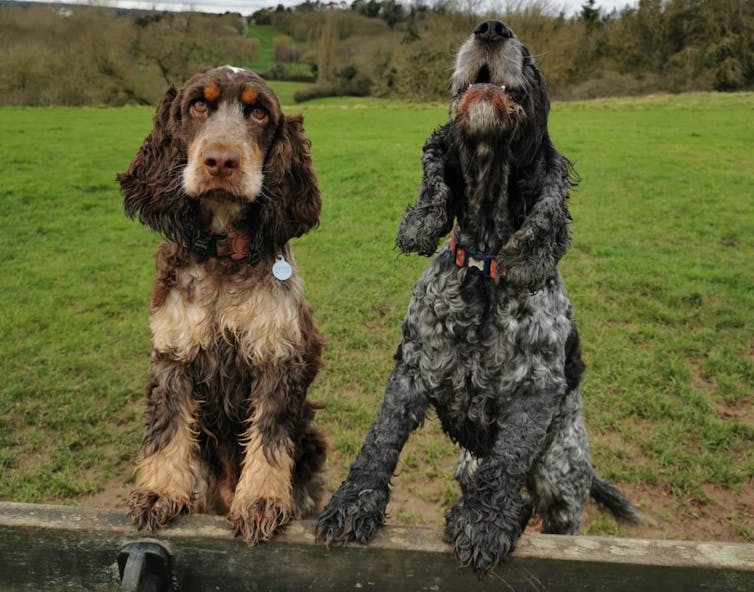 Dogs can evoke very different responses in people, from finding them cute to seeing them as dirty and dangerous.
Author provided
Dogs can evoke very different responses in people, from finding them cute to seeing them as dirty and dangerous.
Author provided
Our analysis, however, does provide several reasons Sydney’s public transport agencies should consider a policy to allow dogs to travel on public transport.
First, negative comments were more likely to demonstrate unfamiliarity with the operational details of a policy that permits dogs to travel on public transport. For example, physical separation of those travelling with dogs could overcome many of the concerns about smell and even allergies. This separation is easily attainable on trains and also possible on buses.
Similarly, concerns about payment could be resolved by ensuring a ticket must be bought for dogs prior to travel, with the fare based on the cost to the system. This may also go part way to alleviating the sense that allowing dogs on transport is a clash of rights between dog owners and non-owners.
Third, negative comments suggesting Australia’s dogs and dog owners are somehow less responsible than their European counterparts are not supported by empirical evidence. Positive local experiences of travelling with well-behaved dogs could soften negative perceptions.
Read more: We need a better understanding of how we manage dogs to help them become better urban citizens
What might a policy change look like?
The analysis does suggest opposition could be allayed in time. However, the policy would have to be applied with care.
Other cities that have managed this shift could be consulted for strategies to ensure the policy works well in practice. In Milan, Italy, for example, dogs are allowed only on the first and last carriages of the metro. No more than two dogs are allowed on a bus at any one time.
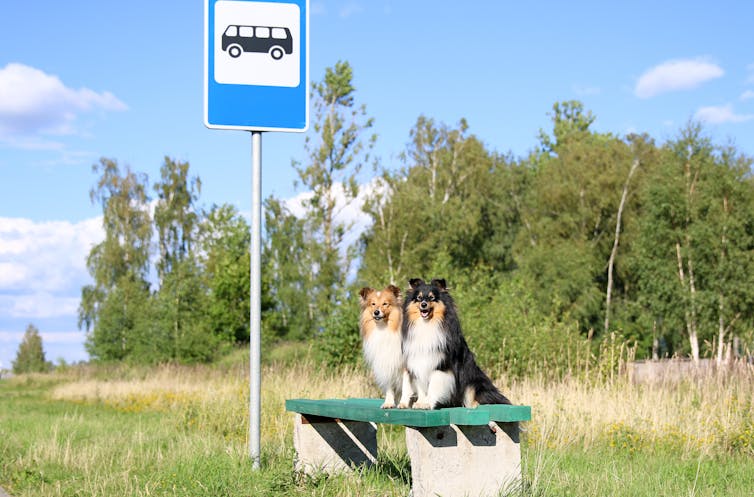 Dogs are allowed on buses in Rome, Italy, but no more than two at a time.
Shutterstock
Dogs are allowed on buses in Rome, Italy, but no more than two at a time.
Shutterstock
In Gothenberg, Sweden, only one dog is allowed per bus and the dog must board at the rear of the bus. On trains, dogs are permitted to travel in the last carriage only. In Dublin, Ireland, dogs over a certain size must travel near the guard’s bay on trains.
Read more: Curious Kids: is it true dogs don't like to travel?
It’s not just about the dogs
Travel with dogs might not seem like a priority issue for public transport systems. We argue, though, that Australia’s heavily car-dependent cities need public transport that meets our need for the less obvious, “messy” trips that make up modern lives in cities. By looking beyond the car for these trips, we can develop a system that Australians can use for more than just the journey to work.
This analysis, however, demonstrates the complexity of dragging our public transport systems up to the task of competing with the private car.
Authors: Jennifer Kent, Senior Research Fellow in Urbanism, University of Sydney


 Daily Bulletin


