

Teens should have a say in whether they get a COVID vaccine
- Written by: Melissa Kang, Clinical Associate Professor, University of Sydney
The Delta variant has taken hold in NSW and Victoria, which are both in lockdown, and now in South Australia too, which will enter a lockdown tonight.
The World Health Organization has predicted Delta will become the dominant variant globally.
A concerning feature of Delta is the number of children and adolescents becoming infected. Earlier in the pandemic, Australians were able to feel reassured that transmission in schools was negligible. But Delta is already proving different, with some evidence of transmission among school children, teachers and their households emerging in Australia.
Those who’ve been vaccinated against COVID-19 have been less likely to be infected with the Delta strain. If infected, they’re less likely to require hospitalisation.
There’s now a sense of urgency surrounding Australia’s COVID vaccine rollout, which ranks last among OECD countries.
Some experts are calling for vaccination of children and adolescents to be a high priority as well.
Australia’s drug regulator, the Therapeutic Goods Administration (TGA), may soon approve the Pfizer and Moderna COVID vaccines for adolescents aged 12-15.
If the vaccines are approved for this age group, how might we undertake mass vaccination of adolescents in Australia? And who will be involved in decisions about consent?
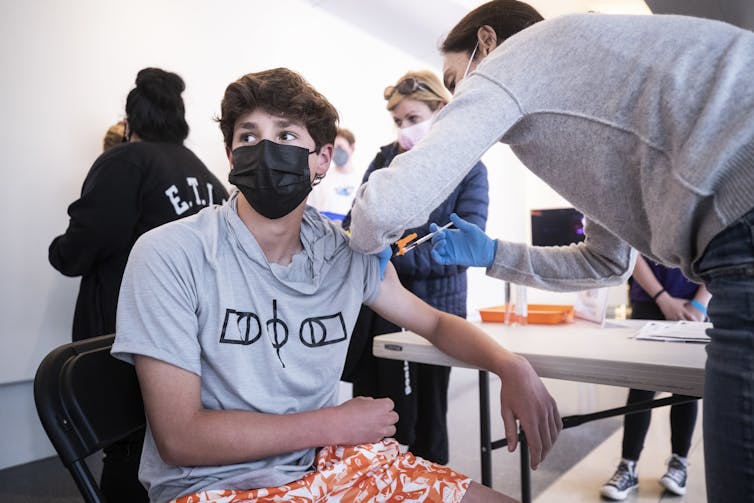 COVID vaccines are already being given to adolescents over 12 in some countries, like the United States.
Etienne Laurent/EPA/AAP
COVID vaccines are already being given to adolescents over 12 in some countries, like the United States.
Etienne Laurent/EPA/AAP
How can we vaccinate teens?
Adolescent vaccinations have been effectively delivered in Australian states and territories for many decades, via immunisation programs at schools.
The National Immunisation Program is funded by the federal government, which means vaccines listed in the schedule are provided for free.
Vaccines are given in high schools by nurse immunisers. If a dose is missed at school, adolescents are eligible to “catch-up” via their GP (meaning the vaccine is still free).
The current schedule for adolescents includes vaccines against HPV (human papillomavirus), the “dTpa” (diphtheria, tetanus, pertussis) booster and meningococcal ACWY disease.
It makes good sense to include COVID vaccines as part of the tried and trusted school-based immunisation program.
Who gives consent?
Because these immunisations are given through schools, adolescent vaccination in Australia is a partnership between health and education departments.
Written parental or guardian consent is required prior to the administration of vaccines.
This differs to what’s done through health settings, such as general practice, where adolescent “competency to consent” is an important consideration.
“Competency to consent” refers to the capacity of someone under 18 to consent to or refuse medical treatment. It signifies the minor has reached sufficient intelligence and understanding to fully understand the proposed treatment. The seriousness of the treatment is taken into consideration and capacity is assessed by individual health professionals. If deemed competent, then there’s no legal requirement for parental or guardian consent. Although, parental consent in addition to adolescent consent is encouraged as best practice.
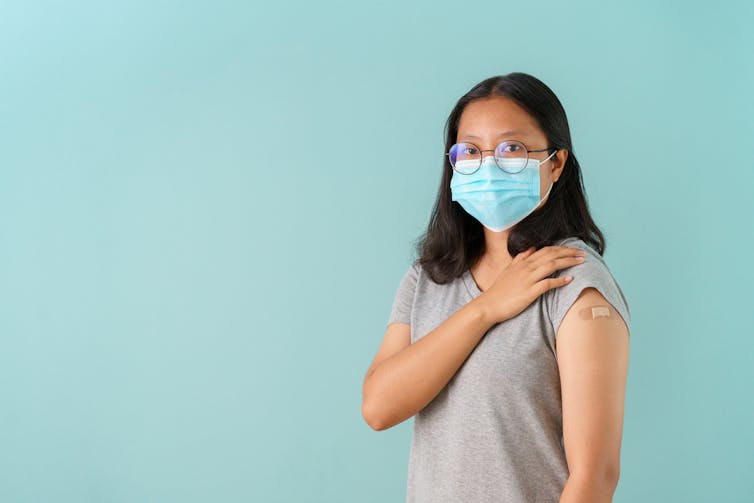 Currently, adolescents need written parental or guardian consent to get vaccinated through high school immunisation programs.
Shutterstock
Currently, adolescents need written parental or guardian consent to get vaccinated through high school immunisation programs.
Shutterstock
2 approaches to adolescent COVID vaccination
First, we must improve adolescents’ understanding of vaccination to support their involvement in decision-making. In our own research about HPV vaccination, we found information designed specifically for adolescents is important. Adolescents otherwise have limited understanding of the vaccines they receive, or the diseases they prevent.
Even if consent from a parent or guardian is required as it is in the school-based program, promoting vaccine literacy among adolescents is appropriate and ethical. Understanding the purpose and process of vaccination increases vaccine confidence and reduces fear and anxiety.
Read more: Young people are anxious about coronavirus. Political leaders need to talk with them, not at them
Second, we need to acknowledge adolescents’ legal right to consent where they are competent to do so. This is pertinent where parental consent isn’t obtained, often due to a simple failure to return a consent form in time.
Where this happens, a GP can obtain informed consent in the usual way for medical treatment.
However, the requirement to access a GP practice presents other barriers for mature minors (those under 18 years who are competent to consent), which may impede vaccine uptake.
The national imperative is to achieve as high coverage of COVID vaccination as possible across the population. To achieve this and reduce the impact of the pandemic on young people’s health, we must work with young people.
What do young people think?
The National Health and Medical Research Council (NHMRC) has established a network of researchers who champion adolescent health, called the Wellbeing Health & Youth Centre.
This network has created the WH&Y Commission, which includes the voices of young people. Its goal is to ensure adolescent health research and policymaking are guided by young people themselves.
We asked three young WH&Y Commissioners what they thought about the issue of COVID vaccines and adolescents.
Here’s what they had to say
Young people should be given unbiased, accurate information about the benefits and risks associated with COVID vaccines.
Young people understand that because it’s a new vaccine, there will inevitably be scepticism. They’re aware family members may be hesitant or hold opposing views, which could deny young people their right to be fully informed. They want transparent instruction and information to be a huge priority for governments.
Young people deemed competent should be afforded their legal right to consent to a COVID vaccine. This would acknowledge the autonomy of, and trust placed in, young people to make their own medical decisions. There should be appropriate structures in place to protect young people’s privacy in their decision-making process. This is important to avoid stigmatisation based on their choice.
Australian Common Law reflects the understanding that over the second decade of life, young people gain autonomy over their lives and are capable of making decisions about their own health care. For the majority, this will involve conversations with, and support from, parents and guardians.
From early adolescence, scientific information about COVID vaccine benefits and risks should be provided in a way young people understand.
Ideally, adolescents should also be granted the legal and ethical right to make their own decisions, as would ordinarily happen for medical interventions of low risk. — WH&Y Commissioners Anhaar Kareem, Jenon Castro and Aish Naidu.
This article was co-authored with WH&Y Commissioners Anhaar Kareem, Jenon Castro and Aish Naidu.
Authors: Melissa Kang, Clinical Associate Professor, University of Sydney
Read more https://theconversation.com/teens-should-have-a-say-in-whether-they-get-a-covid-vaccine-164388


 Daily Bulletin


