

Ivermectin shows us how hard it is to use old drugs for COVID. Here's how to do better next time
- Written by: Jonathan Baell, Research Professor in Medicinal Chemistry and Drug Discovery, Monash Institute of Pharmaceutical Sciences, Monash University
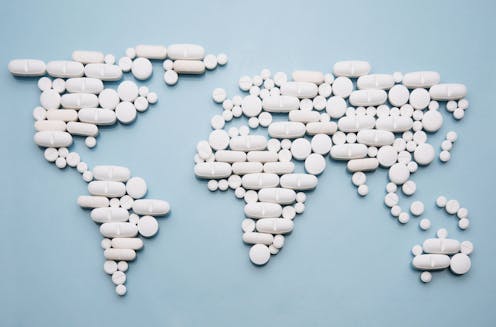
Many hopes have been pinned on repurposing existing drugs, such as ivermectin and hydroxychloroquine, to treat COVID-19. However, we shouldn’t be too surprised these drugs haven’t yet lived up to the hype.
Our study, published today in Science Translational Medicine, shows it’s notoriously difficult to repurpose existing drugs for new diseases or for new uses.
Here’s what we need to consider for this pandemic — and the next.
Read more: A major ivermectin study has been withdrawn, so what now for the controversial drug?
Repurposing old drugs may sound great
Repurposing existing drugs may sound attractive, during a pandemic or not. Doctors are used to prescribing them, we know a lot about how safe they are for existing conditions and patients generally tolerate them well.
There are also well-publicised success stories of repurposed drugs that skew our perception of how hard this is to actually pull off. For instance, thalidomide was released in the 1950s as a sedative and repurposed to be used against cancer 50 years later.
But we show this example is the rare exception rather than the rule.
Read more: Thalidomide: the drug with a dark side but an enigmatic future
Oh, but it’s great in the test tube
Let’s say an antidepressant drug kills a virus in a test tube. But this antiviral activity, picked up in a laboratory assay (or test), will likely be misleading.
Many drugs may well kill the virus in such an assay but this is only at concentrations much higher than those used to treat the condition for which the drug was initially developed. Humans often cannot tolerate these higher concentrations.
At these high concentrations, drugs also display all sorts of biological activities that may appear useful but are just noise and destined for repurposing failure.
Yet these sneaky drugs, including those that sound promising for COVID-19, can end up in peer-reviewed publications.
Or let’s say you find an anticancer drug that kills a virus in a test-tube assay. Do not assume it is immediately useful and safe to treat viral infections in humans.
Drugs are only approved for specific uses after analysing the relationship between how the body treats the drug (pharmacokinetics) and how the drug treats the body (pharmacodynamics). Experts call this PK-PD.
The same drug can give very different PK-PD profiles depending on the dose, how often it is given, and whether the drug is administered by mouth, intravenously, or under the skin.
Drug concentrations safe and effective for one disease may not immediately translate to another. Higher, more frequent doses may be required, with increased risk of unintended toxicity or even death.
So drugs intended for repurposing still need to be thoroughly studied in animals and clinical trials to make sure a new dosing regime is safe and effective. Repurposing may not be the short cut you think it is.
Read more: The fascinating history of clinical trials
Oh, I forgot about the intellectual property
It’s not just the virus that kills: intellectual property barriers could also stop repurposing dead in its tracks.
The ultimate test that a drug is safe and effective is a phase 3 clinical trial. This costs a median of around US$19 million.
Assuming the new antiviral activity you discovered for the anticancer drug is both potent and “real”, there may be no way to proceed with essential and costly clinical trials without a patent.
That’s because pharmaceutical companies and investors are businesses. They need to legally possess the rights to the drug so they can make a return on their investment into high-risk clinical trials essential for marketing approval.
If you don’t have patent rights to the drug but want to commercialise your antiviral discovery, you will need to negotiate some complex agreements with the patent owner with no guarantee of success.
If the anticancer drug you hope to repurpose has been on the market for more than 20 years, the patent may have expired so you don’t need to negotiate — there is no patent owner.
That’s great, but finding investment to fund well-designed clinical trials will be difficult because investors, keen on a financial return, won’t go ahead without patent protection in place.
A little tweak here and another tweak there
This is where “molecular engineering” or medicinal chemistry comes into its own. This is when existing drugs are tweaked — a new atom here, a new bond there.
This allows researchers to find improved, novel and patentable versions of the initial drug.
This is no longer repurposing, but more useful.
That said, a pandemic is a special case where even an old, out-of-patent drug could attract governmental and philanthropic funding for clinical trials, if it truly has promise.
Don’t always believe what you see
If you test large numbers of drugs and find antiviral activity, you should assume this activity is misleading until proven otherwise. These signals are likely “false positives”, especially at higher testing concentrations.
Any chemical compound, including herbal supplements, can also generate false positive results.
In the US alone, supplements such as curcumin (found in turmeric) have attracted more than US$150 million of federal funding and studied in more than 120 clinical trials. Not surprisingly there’s no tangible evidence curcumin can be used to treat any human affliction.
Don’t always believe what you read
The explosion of research in the race to be the first to discover new drugs for COVID-19 has led to some poor-quality studies published in peer reviewed journals.
Now with social media amplifying those results, misinformation has become extreme.
So it’s easy for non-experts to latch onto preliminary or unsubstantiated research about repurposed drugs and give this more prominence than it deserves.
Read more: Why is it so hard to stop COVID-19 misinformation spreading on social media?
There are other ways
We know of successful and well-practised ways of developing new drugs. This includes screening many compounds at once (known as high-throughput screening), then intensive optimisation (tweaking) using medicinal chemistry.
Yet many labs around the world daily are testing known drugs with the hope of repurposing, perhaps under perceived pressure by funding providers. Seldom anything eventuates except flawed publications.
With the right approach, drug repurposing can work and provide new medicines for unmet needs and there are actually some good examples of this, beyond thalidomide. For example the veterinary antiparasitic drug moxidectin was repurposed to treat river blindness.
But for repurposing to work, there needs a considered and specialised scientific and commercial approach, specific to each drug and problem being solved.
It is too easy to focus on the relatively few repurposing successes to jump to the conclusion drug repurposing is a panacea for all ills.
Authors: Jonathan Baell, Research Professor in Medicinal Chemistry and Drug Discovery, Monash Institute of Pharmaceutical Sciences, Monash University


 Daily Bulletin


