

Missing out on PE during lockdowns means students will be playing catch-up
- Written by: Jora Broerse, Research Fellow in Health Policy, Mitchell Institute for Education and Health Policy, Victoria University
International evidence suggests children have poorer movement skills as a result of COVID-related lockdowns that reduced physical activity at school, socially and in the community. In parts of Australia, learning from home replaced face-to-face classroom teaching for months at a time.
Thousands of primary school children in Victoria and New South Wales are now returning to full-time onsite learning. It’s likely they will be playing catch-up after missing out on fundamental health and physical education (HPE) experiences.
Read more: PE can do much more than keep children fit – but its many benefits are often overlooked
What impacts have lockdowns had?
Students aged 4-12 in the Netherlands have been reported to have significantly reduced movement skills after lockdown. The study found the largest differences before and after lockdown were in the youngest children.
The Dutch lockdown (98 days plus 49 days with some access to physical education and organised sport) is comparable with NSW’s lockdown (107 days in Sydney), but shorter than in Victoria (77 days in Melbourne’s sixth lockdown, 262 days in total).
Physical educators struggled to provide appropriate support for students during lockdowns around the world. Studies from Czech Republic, Portugal and Spain, among many countries, have reported similar negative impacts on children’s development and health.
A Tasmanian-based study found HPE simply did not happen in times of remote teaching or was reduced to a movement break between other subjects that were seen as more important.
Read more: Physical Education is just as important as any other school subject
The study concludes that online delivery reduced the educative purpose of the subject – the “E” in HPE did not occur. Instead, the focus was on physical activity tasks.
This effect on physical education was found in Tasmania despite only limited periods of COVID-19 restrictions and no full state-wide lockdown. The impact is likely to be much greater in NSW and Victoria.
During preparations for our current research, two Melbourne primary school teachers told us they are concerned about their students’ reduced physical activity in lockdowns. Grace, who teaches years 4/5 in the city’s north, said:
“We have noticed a massive lack of physical activity in the students. Some do say they went to the park or played basketball in the backyard, but a lot talk about being on their devices. We have certainly noticed over the past year that students have put on weight.”
Frances, a year prep teacher in Melbourne’s west, said:
“The emphasis has been on the social-emotional well-being of students, which is extremely important. However, surely a decrease in physical activity has an impact on a student’s social-emotional well-being.”
Read more: Move it, move it: how physical activity at school helps the mind (as well as the body)
Why does missing out on HPE matter?
In the Australian Curriculum, Health and Physical Education is designed to provide the foundation of lifelong physical activity. Through HPE, students develop their movement skills by taking part in a range of structured physical activities, which in turn enhances their safety and well-being.
Lockdowns over the past two years mean much of the national HPE time allocation of 80 hours a year has been lost. Monitoring student activity against these guidelines is not mandatory and rarely completed in schools.
Primary school students in particular have missed out on many hours per week of physical activity and the critical early educational experiences it provides.
Grace said:
“Our sport teacher usually assesses using anecdotal notes, but who knows what assessments she has completed this year due to all the interruptions?”
Children miss out on more than HPE classes
For children aged 5-17 years, the Australian Physical Activity Guidelines recommend several hours of light activity a day. This should include at least 60 minutes a day of moderate to vigorous activity.
The Australian Institute of Health and Welfare (AIHW) reports only 26% of children aged 5-12 and 10% of 13-to-17-year-olds met the guidelines before the pandemic. However, due to differences in survey questions, definitions of “sufficient physical activity”, data collection methods and timeframes, it is difficult to determine compliance with the guidelines in these age groups.
Data from the national tracking survey AusPlay show children’s participation in organised out-of-school sport at least once a week declined nationally from 55% in 2019 to 43% in 2020 after the pandemic hit. Time spent indoors and screen time increased, according to AIHW data.
Walking to school, carrying a schoolbag, play time during lesson breaks and HPE classes also help children meet physical activity guidelines. Lockdowns have reduced all these activities to nothing.
In contrast, informal play in parks (where accessible) and streets increased during lockdowns.
Missing out on HPE increases children’s risk of not meeting physical activity guidelines. The children at most risk include those with lower pre-pandemic developmental skills and those living in low socio-economic areas that have fewer opportunities for organised physical activities.
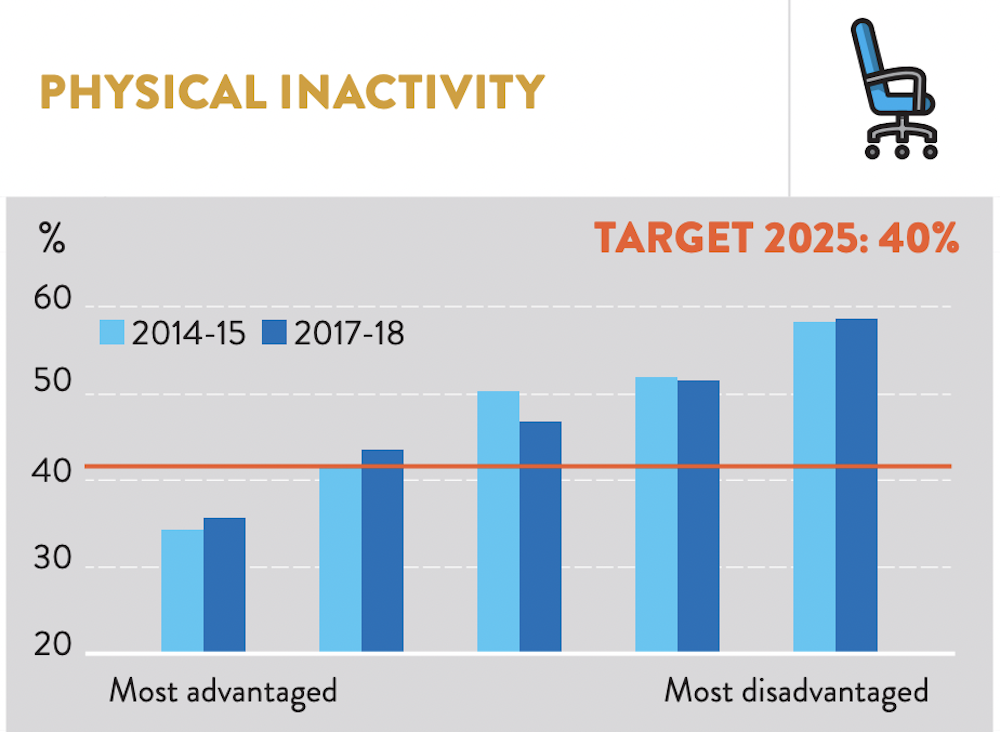
Meeting physical activity guidelines is a key factor in promoting overall population health. Physical inactivity increases the risk of developing chronic diseases. It’s typically more of a problem in areas with low socio-economic profiles.
Where to from here?
In a context where foundational HPE “simply did not happen” for many months, we urge schools to think about its role in a crowded curriculum. HPE is vital for student well-being and public health priorities.
Regular monitoring of movement skills in schools is important to respond to changing circumstances, such as long periods of limited or no access to HPE and community sports.
Physical educators will need support to re-introduce their students to physical education and help them catch up on what they have missed. They will have to cater for the diverse range of physical activity experiences that children bring to primary HPE. Long lockdowns are likely to have increased disparities among children.
Extra support will be needed from schools and governments. It’s particularly important for preschoolers and other priority populations.
In years to come, better equipping educators with remote HPE delivery and digital technologies will be essential in dealing with similar situations across Australia. This offers the opportunity to explore new movement cultures as part of HPE.
Authors: Jora Broerse, Research Fellow in Health Policy, Mitchell Institute for Education and Health Policy, Victoria University


 Daily Bulletin


