

Read The Times Australia

Daily Bulletin

If all 2030 climate targets are met, the planet will heat by 2.7℃ this century. That's not OK

  • Written by: Andrew King, ARC DECRA fellow, The University of Melbourne
If all 2030 climate targets are met, the planet will heat by 2.7℃ this century. That's not OK

If nations make good on their latest promises to reduce emissions by 2030, the planet will warm by at least 2.7℃ this century, a report by the United Nations Environment Programme (UNEP) has found. This overshoots the crucial internationally agreed temperature rise of 1.5℃.

Released today, just days before the international climate change summit in Glasgow begins, UNEP’s Emissions Gap Report works out the difference between where greenhouse emissions are projected to be in 2030 and where they should be to avoid the worst climate change impacts.

It comes as the Morrison government yesterday officially committed to a target of net-zero emissions by 2050. The government made no changes to its paltry 2030 target to reduce emissions by between 26% and 28% below 2005 levels, but announced that Australia is set to beat this, and reduce emissions by up to 35%.

The UNEP report was conducted before Australia’s new 2050 target was announced, but even with this new pledge, global pledges will undoubtedly still be short of what’s needed.

The report found global targets for net-zero emissions by mid-century could cut another 0.5℃ off global warming. While this is a big improvement, it will still see temperatures rise to 2.2℃ this century. If we don’t close the global emissions gap, what will Australia, and the rest of world, be forced to endure?

Pledges are falling short

As of August 30 (the date the UNEP report reviewed to), 120 countries had made new or updated pledges and announcements to cut emissions.

The US, for example, has set an ambitious new target of reducing emissions by 50-52% below 2005 levels in 2030. Similarly, the European Union will cut carbon emissions by at least 55% by 2030, compared with 1990 levels.

But the UNEP report shows all these pledges are falling short. It finds we must take an extra 28 million tonnes of carbon dioxide equivalent off annual emissions by 2030, over what’s already promised.

Read more: Morrison's climate plan has 35% 2030 emissions reduction 'projection' but modelling underpinning 2050 target yet to be released

The UNEP also found that while effectively delivering on net-zero targets by mid-century could mitigate the predicted temperature rise, current plans are vague, with many delaying action until after 2030, which is too late. These net-zero targets, including Australia’s, are also based on technologies that don’t exist on a large-scale yet, such as carbon capture and storage.

UNEP’s findings echo a briefing note by Australian climate scientists on Monday, who say even if global emissions reach net-zero by mid-century, there’s still a high chance temperatures will exceed 2℃ this century if we neglect to increase short-term action.

When the UNEP report was conducted, 49 countries plus the EU had pledged a net-zero target, which accounts for a third of the global population and half of global emissions. Eleven of these targets are enshrined in law, which accounts for 12% of global emissions.

Emissions Gap Report 2021/The Conversation, CC BY-ND Did COVID-19 make a difference? While carbon emissions fell by 5-6% in 2020, this was due to widespread lockdowns and other restrictions worldwide, rather than long-lived changes in how society functions. The report notes that as restrictions ease, emissions are expected to sharply rise again this year to a level only slightly lower than in 2019. To avoid the worst climate change effects, a sustainable year-on-year reduction in carbon emissions is required. What does this mean for Australia? To date, the world has warmed by about 1.2℃ since pre-industrial levels, and we’re already experiencing significant climate change impacts and worsening extreme weather events. The western North America heatwave in late June this year saw temperature records and heat-related deaths spike. This event would have been virtually impossible without human-caused greenhouse gas emissions warming the planet. Similarly, the extreme rainfall that led to recent floods in central Europe which tore through towns in July were very likely enhanced by global warming.
Large parts of western Germany and central Europe were hit by flash floods in the night of 14 to 15 July, following days of continuous rain that destroyed buildings and swept away cars. EPA/SASCHA STEINBACH

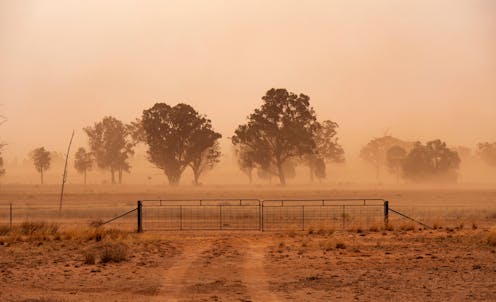
In Australia, we’ve seen our own share of extreme events in recent years that were intensified by climate change, including record hot summers and the devastating bushfires of 2019 and 2020.

Meeting the Paris Agreement and keeping global warming below 2℃ or even 1.5℃ would still lead to continued sea level rise and worsening heatwaves on land and in our oceans.

If we fail to meet the Paris Agreement and warm the world by closer to 3℃ by 2100, then the impacts of climate change worsen considerably.

Read more: Seriously ugly: here's how Australia will look if the world heats by 3°C this century

Warm water coral reefs, including the Great Barrier Reef, are already stressed by frequent bleaching events and might be on the brink already. Most coral reefs would likely not survive sustained 1.5℃ warming, much less likely 2℃ global warming, let alone 3℃ of warming. However, limiting warming to 1.5℃ rather 2℃ makes a huge difference for many other ecosystems.

Historically hot summers, such as the Angry Summer of 2012 and 2013 and the Black Summer of 2019 and 2020, would be cooler than most Australian summers in a 2-3℃ warmer world. Parts of Sydney and Melbourne would likely see 50℃ temperatures during heatwaves.
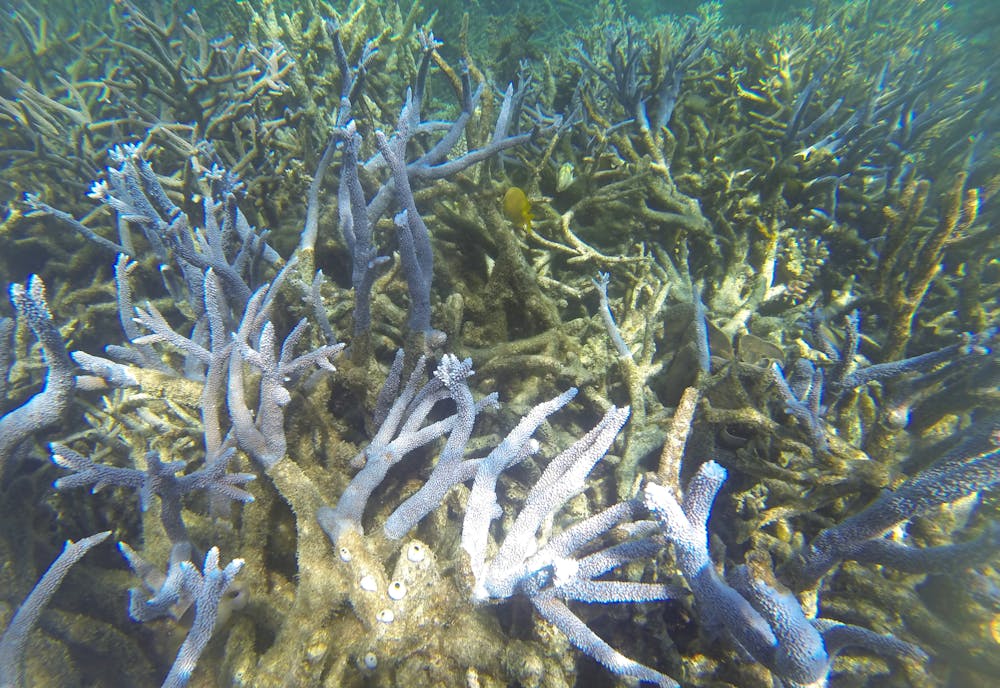
Corals will not likely survive more than 2℃ global warming. Shutterstock

And at 2-3℃ global warming, most of the continent would experience more short bursts of extreme rainfall that causes flash flooding, Meanwhile, droughts are projected to worsen, especially in the southwest and southeast of the continent.

While Australia would experience major climate change impacts if the world fails to meet the Paris Agreement, the outlook is much worse and more devastating for less wealthy nations. Intensified heatwaves, more extreme rain events and droughts would make life harder for many, as developing nations don’t have the resources to adapt.

A big task for COP26

It is imperative we avoid the impacts of climate change that come with a 2 to 3℃ average temperature rise.

To have any chance at meeting the goals of the Paris Agreement, all countries will need to significantly increase their ambition and pledge much greater reductions in carbon emissions in Glasgow.

Wealthy, high-emitting countries should lead the way with stronger pledges, and agree on terms to finance climate mitigation and adaptation in developing countries.

Time is fast running out to avert more dangerous climate changes, and the world cannot afford a missed opportunity at COP26.

Read more: A successful COP26 is essential for Earth's future. Here's what needs to go right

Authors: Andrew King, ARC DECRA fellow, The University of Melbourne

Read more https://theconversation.com/if-all-2030-climate-targets-are-met-the-planet-will-heat-by-2-7-this-century-thats-not-ok-170458

Business News

How Telematics Helps Australian Companies Improve Productivity

Operating a commercial fleet in Australia is a uniquely demanding endeavour. Between the sprawling urban sprawl of cities like Sydney and Melbourne and the immense, unforgiving stretches of the Outb...

Daily Bulletin - avatar Daily Bulletin

Inside the Icon: The BridgeMuseum Officially Opens at the Sydney Harbour Bridge

A bold new way to experience one of Australia’s most recognisable landmarks has arrived, with BridgeClimb Sydney officially opening the all-new BridgeMuseum.  Located inside the Sydney Harbour Bridge...

Daily Bulletin - avatar Daily Bulletin

Is Your Brand Showing Up in AI Search? Most Melbourne Brands Aren't.

The New Front Door Nobody Told You About Something changed. Quietly. Without a press release. The way buyers find businesses in Australia has been rewired. Not replaced, rewired. Google isn't dead...

Daily Bulletin - avatar Daily Bulletin

How Australian Businesses Can Measure SEO ROI

SEO can feel vague when you are staring at a dashboard full of numbers that do not clearly connect to revenue. The key is to measure the right signals in the right order, then tie them back to outcome...

Daily Bulletin - avatar Daily Bulletin

How Commercial Roller Shutters Improve Site Security Without Slowing Operations

Security upgrades can be frustrating when they make everyday work harder. A door that takes too long to open, creates bottlenecks at shift change, or fails at the worst time can turn “better protectio...

Daily Bulletin - avatar Daily Bulletin

Why a Document Destruction Service Still Matters for Modern Businesses

Businesses generate large volumes of information every day, from staff records and contracts to invoices, reports and customer files. While attention often focuses on how documents are stored, the way...

Daily Bulletin - avatar Daily Bulletin

Bicycle Rack Safety and Space-Smart Storage

Bike storage problems usually show up as small annoyances first: tangled handlebars, scratched frames, and bikes that topple when you pull one out. Over time, those issues become safety risks, especia...

Daily Bulletin - avatar Daily Bulletin

How to Tell if a Childcare Centre Is a Good Fit for Your Child

Choosing childcare can feel like you’re making a huge decision with limited information. Tours are short, centres are often on their best behaviour, and your child might act differently in a new space...

Daily Bulletin - avatar Daily Bulletin

Car Import Timeline: What Usually Happens at Each Stage

Importing a car into Australia can feel confusing because multiple agencies and checkpoints are involved, and the timeline is shaped as much by paperwork quality as it is by shipping speed. The most u...

Daily Bulletin - avatar Daily Bulletin

The Daily Magazine

Gold Migration Lawyers in Liquidation: How the Closure Affects Your ART Appeal

If your appeal was with Gold Migration Lawyers, a recent change to how the Tribunal decides cases ...

The pressure cooker: life in urban Australia in 2026

Australian cities have always been demanding. Long commutes, rising housing costs, busy schedules a...

What Actually Makes a Good Criminal Lawyer in Melbourne

Most people only think about this question once. That is usually too late. Most people charged wi...

Why Working With A Chatswood Tutor Can Improve Academic Performance

Academic expectations continue increasing for students across primary school, high school, and senio...

Is It Worth Getting Solar Panels in Melbourne?

The real question is not whether solar works in Melbourne. It works. The question is what it is co...

How A Diploma Of Project Management Builds Practical Skills For Modern Work Environments

Developing the ability to plan, execute, and deliver outcomes efficiently is a key requirement in to...

How to Choose the Right Football for Every Level

Choosing a football may seem straightforward, but the right option depends on who will be using it a...

What to Ask a Wedding Photographer Before You Book

Booking a wedding photographer can feel deceptively simple: you like the photos, you like the vibe...

Why Stress Relief For Dogs Is Essential For Emotional Balance And Long-Term Wellbeing

Managing emotional health is just as important as physical care when it comes to pets, which is why ...