

Australia’s net-zero plan fails to tackle our biggest contribution to climate change: fossil fuel exports
- Written by: Jeremy Moss, Professor of Political Philosophy, UNSW
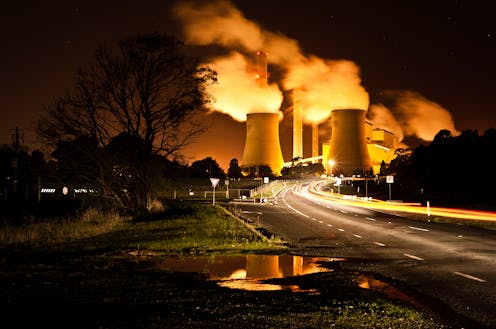
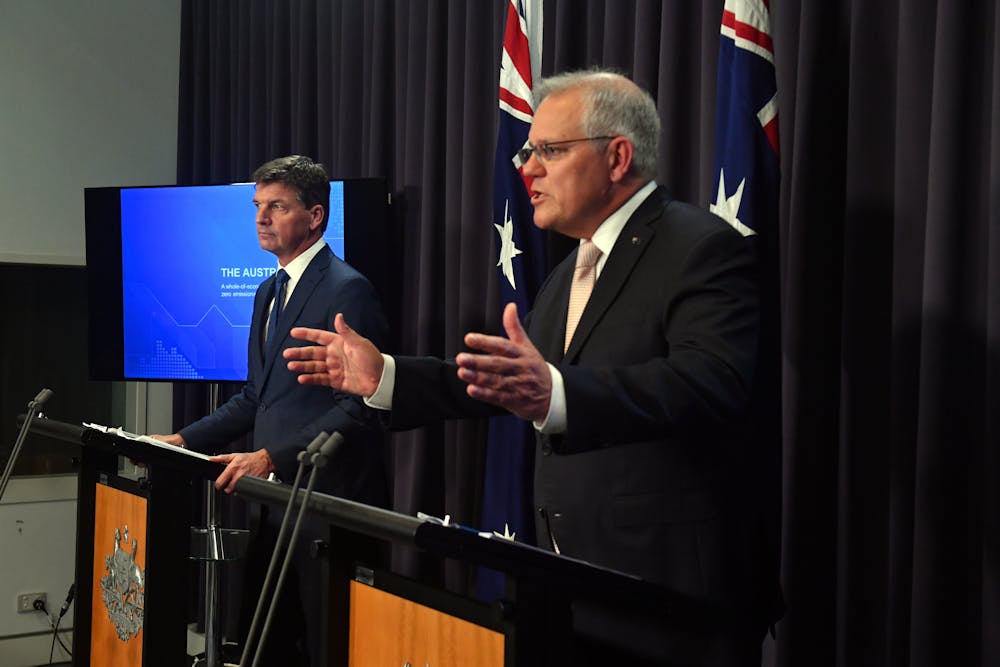
The Morrison government’s eleventh hour commitment to net zero by 2050 is a monumental failure.
Critics rightly point out the government’s plan involves no increase to Australia’s 2030 climate target, no new funding or policies and few concrete details of how reductions will be achieved – except a heavy reliance on technological solutions not yet invented.
What we do know is not encouraging. The questionable focus on subsidising technologies such as carbon capture and storage seems designed to allow the fossil fuel industry to keep operating for decades to come. There is also no detail on how the promised jobs and economic growth will be achieved, nor any plan to legislate the projected reductions in emissions.
But the most glaring gap is a complete failure to tackle Australia’s biggest contribution to climate change: our coal, gas and oil exports. What’s more, the government’s “technology not taxes” mantra belies the fact taxpayers, not big business, will incur a multi-billion dollar bill for emissions reduction.
No net-zero without exports
The government’s plan contains no credible strategy to reduce the enormous emissions produced by Australia’s fossil fuel industry, especially the export industry.
Australia’s fossil fuel exports have more than doubled since 2005. We are the world’s largest exporter of metalurgical coal and the third largest exporter of fossil fuels overall.
Read more: Between the lines, Morrison's plan has coal on the way out, with the future bright
The emissions caused by other countries burning Australia’s exported fossil fuels are more than double Australia’s domestic emissions.
Annual domestic greenhouse gas emissions in 2020 were around 494 million tonnes of carbon dioxide equivalent. Yet the emissions from exported coal and liquefied natural gas (LNG) alone were 1,073 million tonnes, according to my calculations using standard conversion factors. This is more than the emissions caused by the 2019-2020 bushfires.
For a net-zero plan not to include a strategy to phase out this enormous contribution to climate change is an abrogation of responsibility.
Australia is not responsible for all of the emissions produced by exported fossil fuels – after all other countries consume them. Still, Australia must take a high degree of responsibility given the billions of dollars in subsidies and environmental approvals that allow the industry to exist.
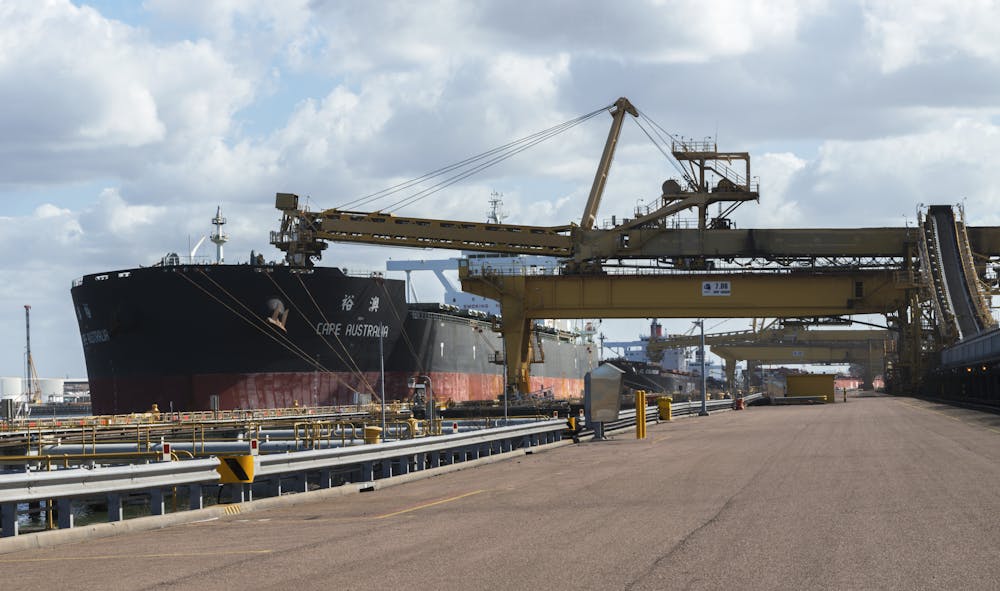 Australia is the world’s third largest fossil fuel exporter.
Shutterstock
Australia is the world’s third largest fossil fuel exporter.
Shutterstock
The supply of cheap, subsidised fossil fuels to global markets significantly worsens climate change, even if not all of the emissions from those exported fuels are Australia’s responsibility.
The government is asking the wrong questions. Instead of asking how it can reduce domestic emissions, it should be asking: what is Australia’s contribution to climate change and how can it be reduced? Given the combined emissions from Australia’s exported fossil fuels and domestic emissions are around 3-4% of global emissions, this must be addressed.
And there is clear evidence Australia’s fossil fuel industry will continue to enjoy strong support.
The net zero plan includes directing the Clean Energy Finance Corporation and the Australian Renewable Energy Agency to fund technologies like carbon capture and storage – the process of capturing carbon emissions from the source and storing in the ground – which will channel more taxpayer dollars into the fossil fuel industry.
The federal government also continues to grant approvals for new fossil fuel developments that will create millions of tonnes of CO₂ equivalent. This includes three new coal mines and a new major gas power plant in Kurri Kurri in the Hunter Valley.
These actions are not consistent with a real commitment to reducing Australia’s contribution to climate change.
 Emissions from our exports were far greater than emissions released in the 2019-2020 bushfires.
Shutterstock
Emissions from our exports were far greater than emissions released in the 2019-2020 bushfires.
Shutterstock
Technology via taxation
The support the fossil fuel industry will receive under the government’s plan also means the government mantra of “technology not taxes” is highly misleading.
The commitment in the government’s new plan to spend A$20 billion of taxpayer money on new technologies is using taxes to pay for climate action. Any subsidy for fossil fuel production, the development of new carbon capture and storage technologies or other low emissions technology, comes from taxation revenue.
There are many policies that would shift the burden of climate action away from taxpayers and onto the companies responsible for the pollution. This includes extracting the full historical social cost of carbon from big polluters or legislating a carbon price.
But as we all know, the Coalition scrapped the Gillard government’s carbon price in 2014 and such a policy is now considered political poison.
The bulk of federal tax revenue comes from individual taxpayers. The majority of the big fossil fuel exporters such as Shell or ExxonMobil, which have contributed huge volumes of greenhouse gases, pay little or no corporate tax. And under the Morrison plan they will not have to pay for their pollution.
The plan procrastinates on climate action
The timing of this plan is also deeply flawed. Even with Australia’s projected (not legislated) emissions reduction of 30-35% by 2030, this still leaves around 70% of the emissions reductions to happen after 2030. Given the urgency of the problem, the proportions ought to be the other way around.
In a briefing note released Monday by the ARC Centre of Excellence, Australian climate scientists say even if global emissions do reach net-zero by mid-century, temperatures are still likely to exceed 2℃ this century if short-term action doesn’t increase.
Read more: If all 2030 climate targets are met, the planet will heat by 2.7℃ this century. That's not OK
Australia’s weak targets are made worse by the fact our per capita emissions at 22 tonnes of CO₂ equivalent are double the OECD average. Australia’s long history of high domestic and exported emissions means we ought to be on top of the list of emission reducers, not at the bottom.
The position Australia finds itself in on the eve of the COP26 negotiations could not be more stark. We can either join the ranks of the climate ambitious and come up with a real plan with substantial interim targets. Or, we can join with the likes of Saudi Arabia and delay action further.
But we cannot claim to be taking climate action while simultaneously being one of the world’s largest coal exporters – and pretending it makes no contribution to climate change.
Authors: Jeremy Moss, Professor of Political Philosophy, UNSW


 Daily Bulletin


