

Invasive species are threatening Antarctica's fragile ecosystems as human activity grows and the world warms
- Written by: Dana M Bergstrom, Principal Research Scientist, University of Wollongong
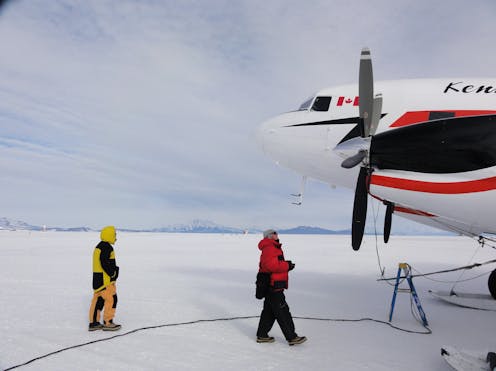
We tend to think Antarctica is isolated and far away – biologically speaking, this is true. But the continent is busier than you probably imagine, with many national programs and tourist operators crisscrossing the globe to get there.
And each vessel, each cargo item, and each person could be harbouring non-native species, hitchhiking their way south. This threat to Antarctica’s fragile ecosystem is what our new evaluation, released today, grapples with.
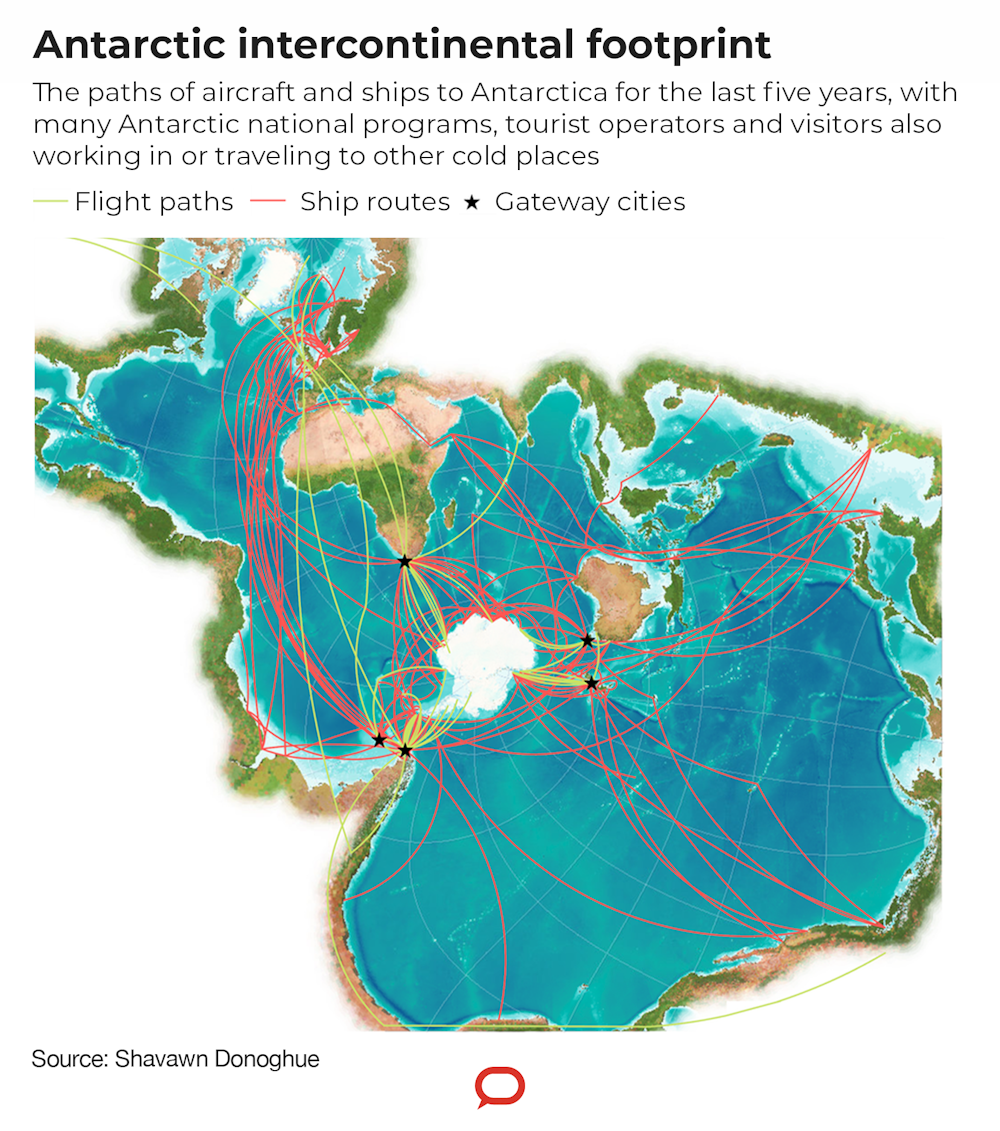
We mapped the last five years of planes and ships visiting the continent, illuminating for the first time the extent of travel across the hemispheres and the potential source locations for non-native species, as the map below shows. We found that, luckily, while some have breached Antarctica, they generally have yet to get a stranglehold, leaving the continent still relatively pristine.
But Antarctica is getting busier, with new research stations, rebuilding and more tourism activities planned. Our challenge is to keep it pristine under this growing human activity and climate change threat.
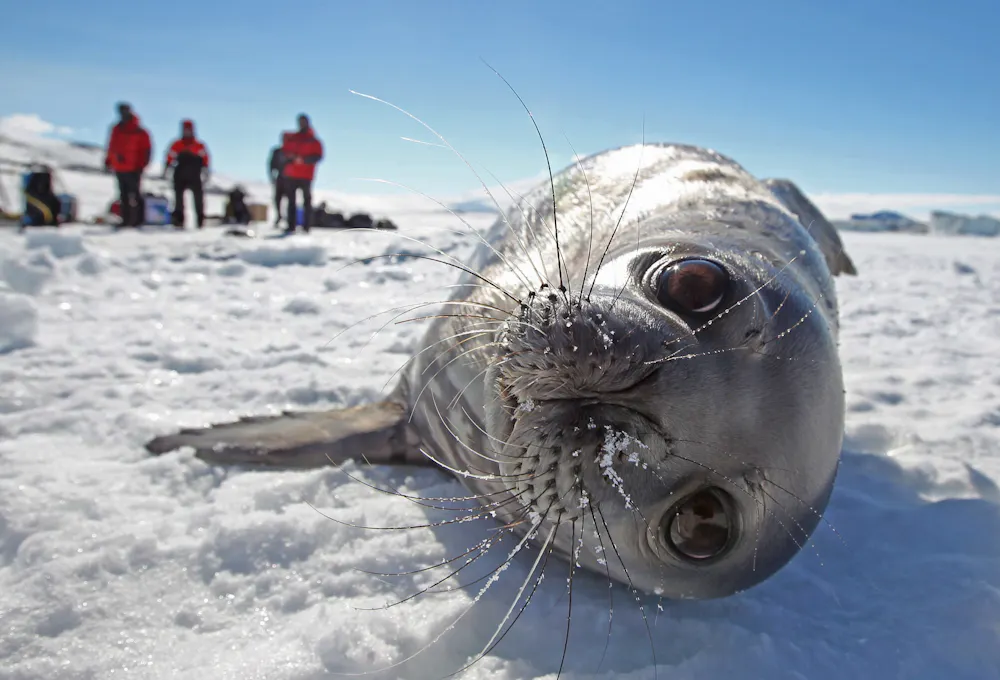 The endemic Antarctic Weddell seal resting on sea ice.
EPA/YONHAP
When the Southern Ocean was formed some 30 million years ago, natural barriers were created with the rest of the world. This includes the Antarctic Circumpolar Current, the strongest ocean current on the planet, and its associated strong westerly surface winds, icy air and ocean temperatures.
This means life in Antarctica evolved in isolation, with flora and fauna that commonly exist nowhere else and can cope with frigid conditions. But the simplicity of Antarctica’s food webs can often mean there are gaps in the ecosystem that other species from around the world can fill.
Read more:
Explainer: how the Antarctic Circumpolar Current helps keep Antarctica frozen
In May 2014, for example, routine biosecurity surveillance detected non-native springtails (tiny insect-like invertebrates) in a hydroponic facility at an Australian Antarctic station.
This station, an ice-free oasis, previously lacked these interlopers, and they had the potential to alter the local fragile ecosystem permanently. Thankfully, a rapid and effective response successfully eradicated them.
The endemic Antarctic Weddell seal resting on sea ice.
EPA/YONHAP
When the Southern Ocean was formed some 30 million years ago, natural barriers were created with the rest of the world. This includes the Antarctic Circumpolar Current, the strongest ocean current on the planet, and its associated strong westerly surface winds, icy air and ocean temperatures.
This means life in Antarctica evolved in isolation, with flora and fauna that commonly exist nowhere else and can cope with frigid conditions. But the simplicity of Antarctica’s food webs can often mean there are gaps in the ecosystem that other species from around the world can fill.
Read more:
Explainer: how the Antarctic Circumpolar Current helps keep Antarctica frozen
In May 2014, for example, routine biosecurity surveillance detected non-native springtails (tiny insect-like invertebrates) in a hydroponic facility at an Australian Antarctic station.
This station, an ice-free oasis, previously lacked these interlopers, and they had the potential to alter the local fragile ecosystem permanently. Thankfully, a rapid and effective response successfully eradicated them.
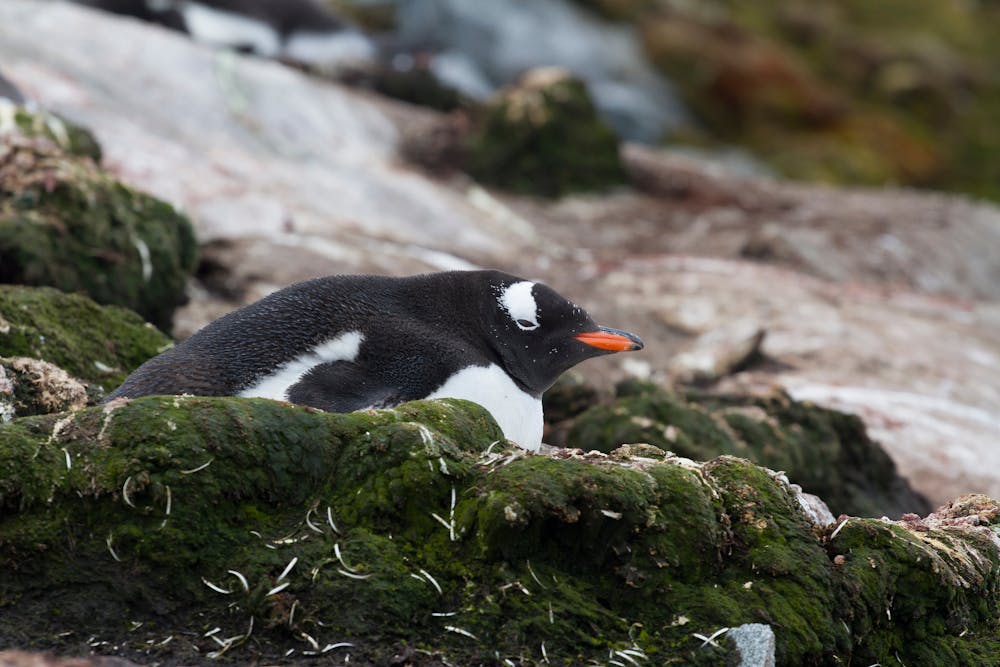 Gentoo penguin on a bed of algae, Antarctica
Shutterstock
Pressures from climate change are exacerbating the challenges of human activity on Antarctica, as climate change is bringing milder conditions to these wildlife-rich areas, both on land and sea.
As glaciers melt, new areas are exposed, which allows non-Antarctic species greater opportunity to establish and possibly outcompete locals for resources, such as nutrients and precious, ice-free space.
So far, we’ve been lucky
Our past research focused on non-native propagules – things that propagate like microbes, viruses, seeds, spores, insects and pregnant rats – and how they entrain themselves into Antarctica.
They can be easily caught on people’s clothing and equipment, in fresh food, cargo and machinery. In fact, research from the last decade found that visitors who hadn’t cleaned their clothing and equipment carried on average nine seeds each.
Gentoo penguin on a bed of algae, Antarctica
Shutterstock
Pressures from climate change are exacerbating the challenges of human activity on Antarctica, as climate change is bringing milder conditions to these wildlife-rich areas, both on land and sea.
As glaciers melt, new areas are exposed, which allows non-Antarctic species greater opportunity to establish and possibly outcompete locals for resources, such as nutrients and precious, ice-free space.
So far, we’ve been lucky
Our past research focused on non-native propagules – things that propagate like microbes, viruses, seeds, spores, insects and pregnant rats – and how they entrain themselves into Antarctica.
They can be easily caught on people’s clothing and equipment, in fresh food, cargo and machinery. In fact, research from the last decade found that visitors who hadn’t cleaned their clothing and equipment carried on average nine seeds each.
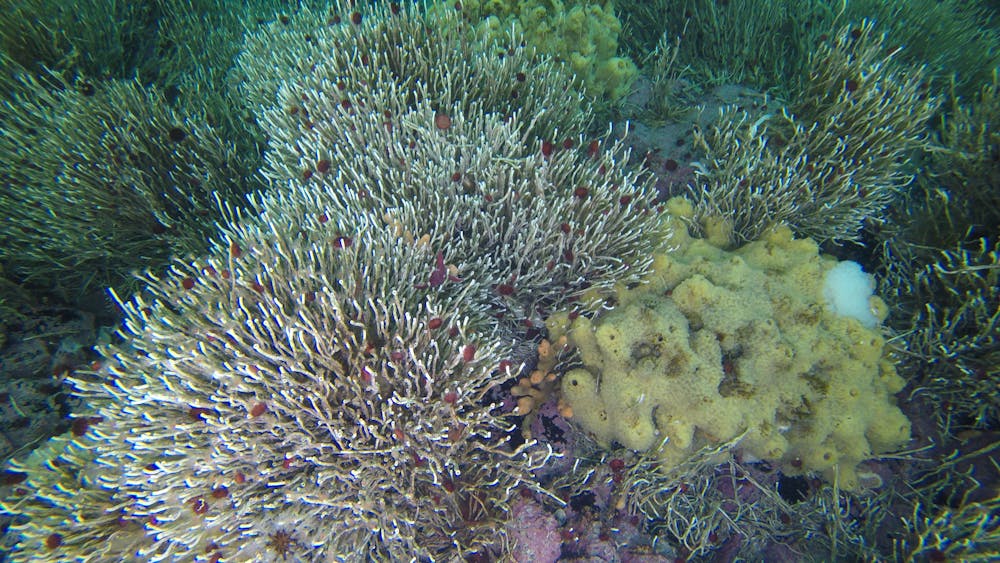 Antarctica’s coral reefs? Extensive shallow water, polychete colonies form fragile reefs that act as marine animal forests, hosting a diverse and abundant community of associated plants and animals.
Jonny Stark/ AAD
What do we do about it?
Three factors have helped maintain Antarctica’s near-pristine status: the physical isolation, cold conditions and co-operation between nations through the Antarctic Treaty. The Treaty is underpinned by the Environmental Protocol, which aims to prevent and respond to threats and pressures to the continent.
There is unanimous commitment from Antarctic Treaty nations towards preventing the establishment of non-native species. This includes adopting a science-based, non-native species manual, which provides guidance on how to prevent, monitor, and respond to introductions of non-native species.
Read more:
'Existential threat to our survival': see the 19 Australian ecosystems already collapsing
But time is of the essence. We must better prepare for the inevitable arrival of more non-native species to prevent them from establishing, as we continue to break the barriers protecting Antarctica. One approach is to tailor the newly developed 3As approach to environmental management: Awareness of values, Anticipation of the pressures, Action to stem the pressures.
This means ramping up monitoring, taking note of predictions of what non-native species could sneak through biosecurity and establish under new conditions, and putting in place pre-determined response plans to act quickly when they do.
Authors: Dana M Bergstrom, Principal Research Scientist, University of Wollongong
Antarctica’s coral reefs? Extensive shallow water, polychete colonies form fragile reefs that act as marine animal forests, hosting a diverse and abundant community of associated plants and animals.
Jonny Stark/ AAD
What do we do about it?
Three factors have helped maintain Antarctica’s near-pristine status: the physical isolation, cold conditions and co-operation between nations through the Antarctic Treaty. The Treaty is underpinned by the Environmental Protocol, which aims to prevent and respond to threats and pressures to the continent.
There is unanimous commitment from Antarctic Treaty nations towards preventing the establishment of non-native species. This includes adopting a science-based, non-native species manual, which provides guidance on how to prevent, monitor, and respond to introductions of non-native species.
Read more:
'Existential threat to our survival': see the 19 Australian ecosystems already collapsing
But time is of the essence. We must better prepare for the inevitable arrival of more non-native species to prevent them from establishing, as we continue to break the barriers protecting Antarctica. One approach is to tailor the newly developed 3As approach to environmental management: Awareness of values, Anticipation of the pressures, Action to stem the pressures.
This means ramping up monitoring, taking note of predictions of what non-native species could sneak through biosecurity and establish under new conditions, and putting in place pre-determined response plans to act quickly when they do.
Authors: Dana M Bergstrom, Principal Research Scientist, University of Wollongong


 Daily Bulletin


