

Read The Times Australia

Daily Bulletin

Convenience, comfort, cost and carbon: what's the best way to travel, save money and cut emissions?

  • Written by: Ralph Sims, Emeritus Professor, Energy and Climate Mitigation, Massey University
Convenience, comfort, cost and carbon: what's the best way to travel, save money and cut emissions?

As New Zealanders plan their summer holiday trips, it’s worth considering different travel options and their respective cost, both to the budget and the environment.

I’ve compared several travel modes (with all assumptions made found here) — a small diesel car, electric car, bus, train or plane — for a door-to-door 300km return journey. The process has identified limitations for each mode, which may help policymakers better understand the challenges involved in developing a low-carbon transport system.

New Zealand’s annual transport emissions have nearly doubled since 1990 and account for more than a fifth of total greenhouse gas emissions.

Emissions from cars, utes and vans have continued to increase even though the NZ Emissions Trading Scheme has been in place for 14 years and has added a “carbon levy” of around 10-15 cents per litre to petrol and diesel.

The Climate Change Commission has recommended the government should:

  • reduce the reliance on cars (or light vehicles) and support people to walk, cycle and use public transport

  • rapidly adopt electric vehicles

  • and enable local government to play an important role in changing how people travel.

But is it realistic to expect governments to change how people travel? Providing information is perhaps the key.

Read more: We transformed a London borough into a game to get fewer people travelling by car -- here's what happened

Transport comparisons

A person’s choice of transport mode is based on a mixture of cost, comfort and convenience as well as speed and safety. But most New Zealanders choose their car out of habit rather than from any analytical reasoning.

Carbon dioxide emissions are rarely a factor in their choice. Although more people now agree that climate change is a major issue, few have been willing or able to take steps to significantly reduce their transport-related carbon footprint.

This analysis is based on my personal experiences travelling between my house on the outskirts of the city of Palmerston North to attend a meeting in the centre of Wellington. It relates to any other similar journey with a choice of transport modes, although the details will vary depending on the specific circumstances.

I compared a 1500cc diesel car I owned for ten years with an electric car which has a 220km range and is mainly charged at home, using rooftop solar. The airport is 8km away from the house, the railway station 7km and the bus station 5km. I included “first and last mile” options when comparing total journey time, cost, carbon emissions, comfort and convenience.

Things to consider before a trip

Travelling by car for one person is relatively costly but has good door-to-door convenience and can be quicker than the bus, train or plane, except during times of traffic congestion. Comfort is reasonable but the driver cannot read, work or relax as they can on a train.

Car drivers usually consider the cost of fuel when planning a journey, but few consider the costs of depreciation, tyre wear, repairs and maintenance as included here. Should more than one person travel in the car, the costs and carbon emissions will be lower per passenger.

Woman taking picture from small plane
A short plane journey, if nearly full, can have lower emissions per passenger than one person going by road in a diesel car. Shutterstock/Peter Gudella

Taking a short-haul flight over this distance is relatively costly and the journey is no quicker since there is considerable inconvenience getting to and from the airports. The carbon dioxide emissions per passenger can be lower than for a diesel car (with just the driver), assuming the plane has around 80% occupancy.

For one person, taking a bus or train can be significantly cheaper than taking a car and also offers lower emissions. However, the longer overall journey time and the hassles getting to and from the stations are deterrents. Infrequent bus and train services, often at inconvenient times, can also be disincentives to choosing these modes.

Going electric

Car park reserved for electric cars to recharge
Electric cars offer convenience and low emissions. Shutterstock/Ed Goodacre

The electric car has low carbon emissions, especially if charged from a domestic solar system. Coupled with reasonable comfort and convenience and the lowest journey cost per person when carrying two or more passengers, this supports the government’s policy to encourage the deployment of EVs.

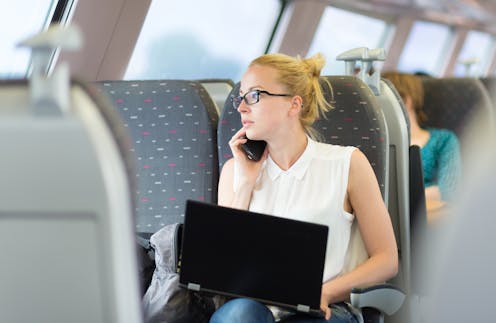
Travelling by train is perhaps the best option overall for one person making this journey. The total cost is less than half that of taking a car. Emissions are around a third of the diesel car. Comfort is good, with the opportunity to work or relax.

Read more: Electric cars alone won’t save the planet. We'll need to design cities so people can walk and cycle safely

Making the whole journey more convenient will help encourage more people to travel by train and help reduce transport emissions. But this will require national and local governments to:

  • encourage Kiwirail to provide more frequent services

  • electrify all lines

  • provide cheap and efficient “first-and-last-mile” services to railway stations

  • undertake a major education campaign to illustrate the full cost, carbon emissions and convenience benefits resulting from leaving the car at home.

Authors: Ralph Sims, Emeritus Professor, Energy and Climate Mitigation, Massey University

Read more https://theconversation.com/convenience-comfort-cost-and-carbon-whats-the-best-way-to-travel-save-money-and-cut-emissions-165526

Business News

Inside the Icon: The BridgeMuseum Officially Opens at the Sydney Harbour Bridge

A bold new way to experience one of Australia’s most recognisable landmarks has arrived, with BridgeClimb Sydney officially opening the all-new BridgeMuseum.  Located inside the Sydney Harbour Brid...

Daily Bulletin - avatar Daily Bulletin

Is Your Brand Showing Up in AI Search? Most Melbourne Brands Aren't.

The New Front Door Nobody Told You About Something changed. Quietly. Without a press release. The way buyers find businesses in Australia has been rewired. Not replaced, rewired. Google isn't dead...

Daily Bulletin - avatar Daily Bulletin

How Australian Businesses Can Measure SEO ROI

SEO can feel vague when you are staring at a dashboard full of numbers that do not clearly connect to revenue. The key is to measure the right signals in the right order, then tie them back to outcome...

Daily Bulletin - avatar Daily Bulletin

How Commercial Roller Shutters Improve Site Security Without Slowing Operations

Security upgrades can be frustrating when they make everyday work harder. A door that takes too long to open, creates bottlenecks at shift change, or fails at the worst time can turn “better protectio...

Daily Bulletin - avatar Daily Bulletin

Why a Document Destruction Service Still Matters for Modern Businesses

Businesses generate large volumes of information every day, from staff records and contracts to invoices, reports and customer files. While attention often focuses on how documents are stored, the way...

Daily Bulletin - avatar Daily Bulletin

Bicycle Rack Safety and Space-Smart Storage

Bike storage problems usually show up as small annoyances first: tangled handlebars, scratched frames, and bikes that topple when you pull one out. Over time, those issues become safety risks, especia...

Daily Bulletin - avatar Daily Bulletin

How to Tell if a Childcare Centre Is a Good Fit for Your Child

Choosing childcare can feel like you’re making a huge decision with limited information. Tours are short, centres are often on their best behaviour, and your child might act differently in a new space...

Daily Bulletin - avatar Daily Bulletin

Car Import Timeline: What Usually Happens at Each Stage

Importing a car into Australia can feel confusing because multiple agencies and checkpoints are involved, and the timeline is shaped as much by paperwork quality as it is by shipping speed. The most u...

Daily Bulletin - avatar Daily Bulletin

Portable Toilet Hygiene Standards Explained: Clean vs Sanitised vs Disinfected

In portable toilet servicing, the words clean, sanitised, and disinfected often get used as if they mean the same thing. They don’t. And that difference matters because a unit can look tidy and still ...

Daily Bulletin - avatar Daily Bulletin

The Daily Magazine

What Actually Makes a Good Criminal Lawyer in Melbourne

Most people only think about this question once. That is usually too late. Most people charged wi...

Why Working With A Chatswood Tutor Can Improve Academic Performance

Academic expectations continue increasing for students across primary school, high school, and senio...

Is It Worth Getting Solar Panels in Melbourne?

The real question is not whether solar works in Melbourne. It works. The question is what it is co...

How A Diploma Of Project Management Builds Practical Skills For Modern Work Environments

Developing the ability to plan, execute, and deliver outcomes efficiently is a key requirement in to...

How to Choose the Right Football for Every Level

Choosing a football may seem straightforward, but the right option depends on who will be using it a...

What to Ask a Wedding Photographer Before You Book

Booking a wedding photographer can feel deceptively simple: you like the photos, you like the vibe...

Why Stress Relief For Dogs Is Essential For Emotional Balance And Long-Term Wellbeing

Managing emotional health is just as important as physical care when it comes to pets, which is why ...

Australia’s Best Walking Trails and the Shoes You Need to Tackle Them

Australia is not short on spectacular walks. You can follow ocean cliffs in Victoria, cross ancien...

Why Pre-Purchase Building Inspections Are Essential Before Buying a Home in Australia

source Have you ever walked through an open home and started picturing your furniture, family d...