

Remaking history: how recreating early daguerreotype photographs gave us a window to the past
- Written by: Elisa deCourcy, Australian Research Council DECRA Fellow 2020-2023, Research School of Humanities and the Arts, Australian National University
In this new series, Remaking History, academics take a look at the ways they are recreating historical practices, and how this impacts their research today.
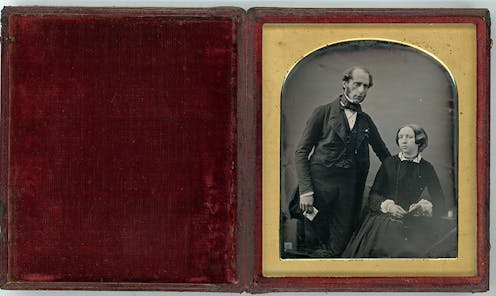
Cased daguerreotypes are among the oldest photographic images in Australian gallery, library and museum collections.
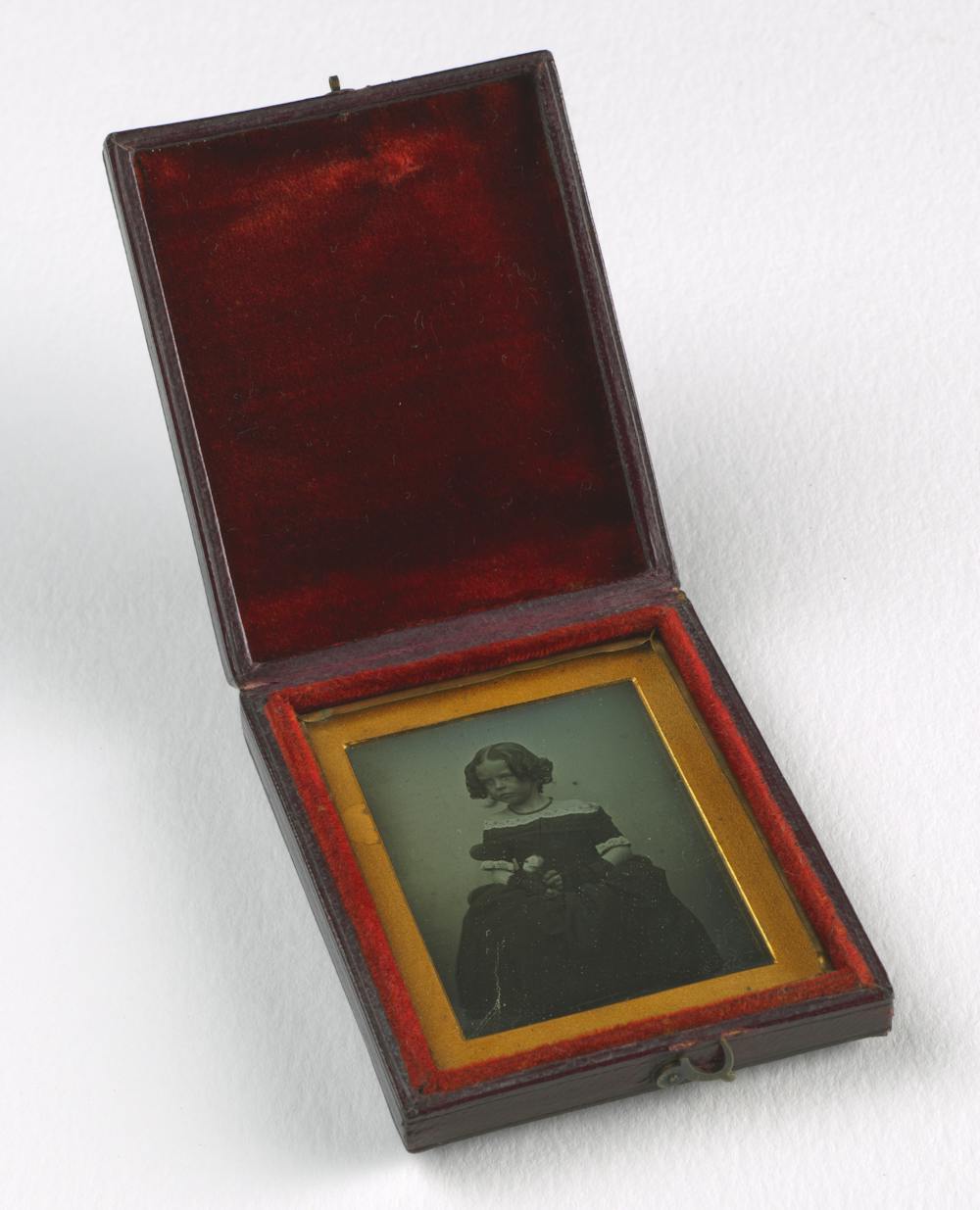
These tiny, pocket-sized photographs look quite foreign to us today. Their mirror-like surfaces make their subjects appear ethereal and other-worldly – but they are also sharp images often with incredible detail.
The daguerreotype was used internationally during the 1840s and for much of 1850s concurrently to the paper-based calotype and, later, the collodion-on-glass ambrotype.
The first photographs of First Nations people were taken with daguerreotype technology. And, the earliest colonial exhibitions of photography, in Adelaide, Kaurna Country in 1845 and Sydney, Gadigal Country, in 1848, were of daguerreotypes.
By the mid-1850s, there were daguerreotype studios in all colonial Australian capitals with many itinerant photographers travelling to offer daguerreotype portraits in regional centres.
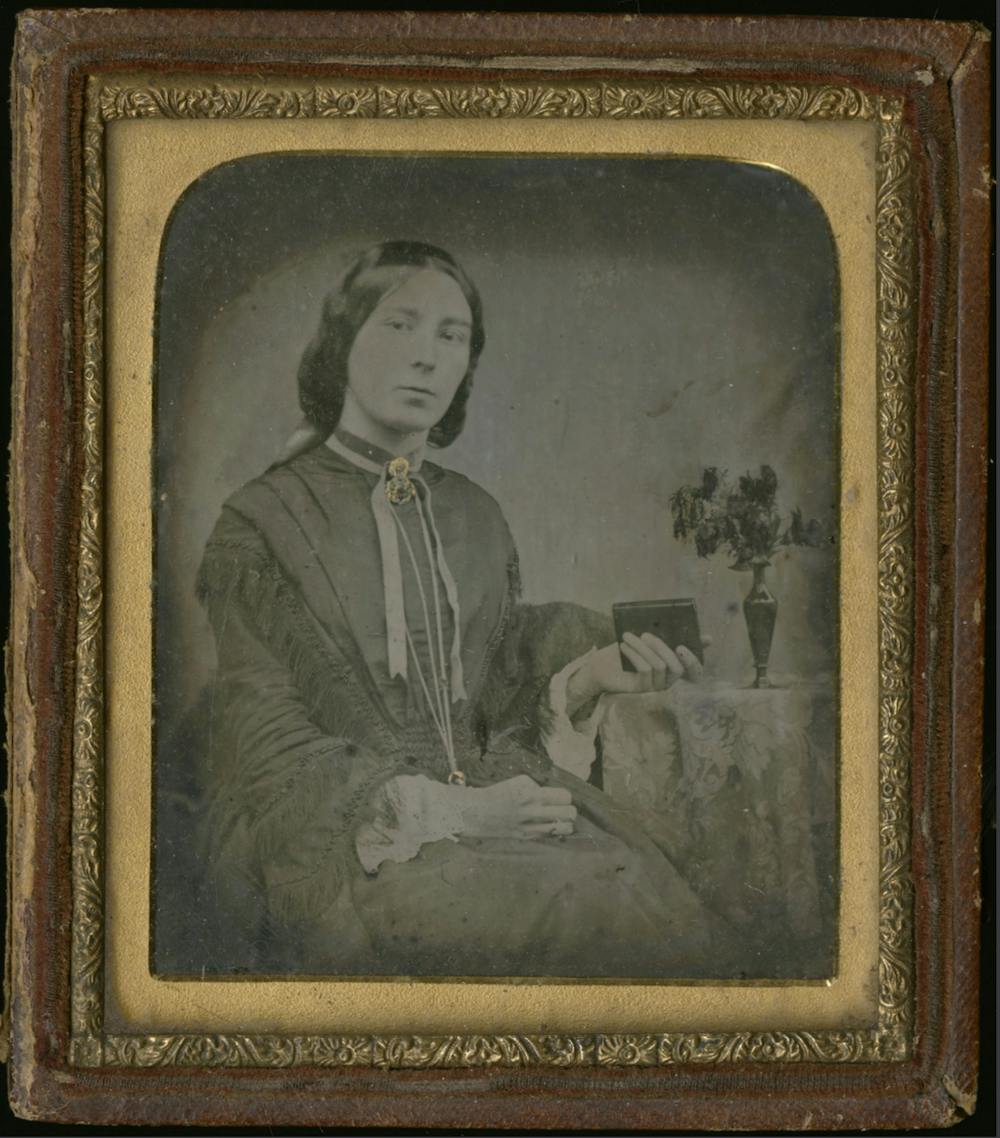 Unknown photographer, ‘Emily Meredith neé Allport’, sixth-plate, cased daguerreotype with gold tinting, late 1840s- early 1850s, Adelaide, Kaurna Country.
Held by the State Library of South Australia, Kaurna Country.
Unknown photographer, ‘Emily Meredith neé Allport’, sixth-plate, cased daguerreotype with gold tinting, late 1840s- early 1850s, Adelaide, Kaurna Country.
Held by the State Library of South Australia, Kaurna Country.
The experience of early photography
My research is interested in the experience of early photography. What was it like to be photographed? How did the cumbersome technology and volatile chemistry influence the kinds of photographs made? What stories about the colonial past are represented in daguerreotypes we now have in public collections?
As humanities researchers, we traditionally look to diaries, letters, trade manuals, historic newspapers, solvency listings and, of course, photographs to answer these questions.
These sources provide us with an archival trace to the past – but they can only partially evoke the experience of early photography. It is hard to retrieve a comprehensive sense of the negotiations happening across the camera and photo chemistry.
To supplement and extend conventional research, I led a collaboration last year which made a series of seven daguerreotype portraits, following the 180-year-old process.
I wanted to understand the embodied nature of this early photographic experience.
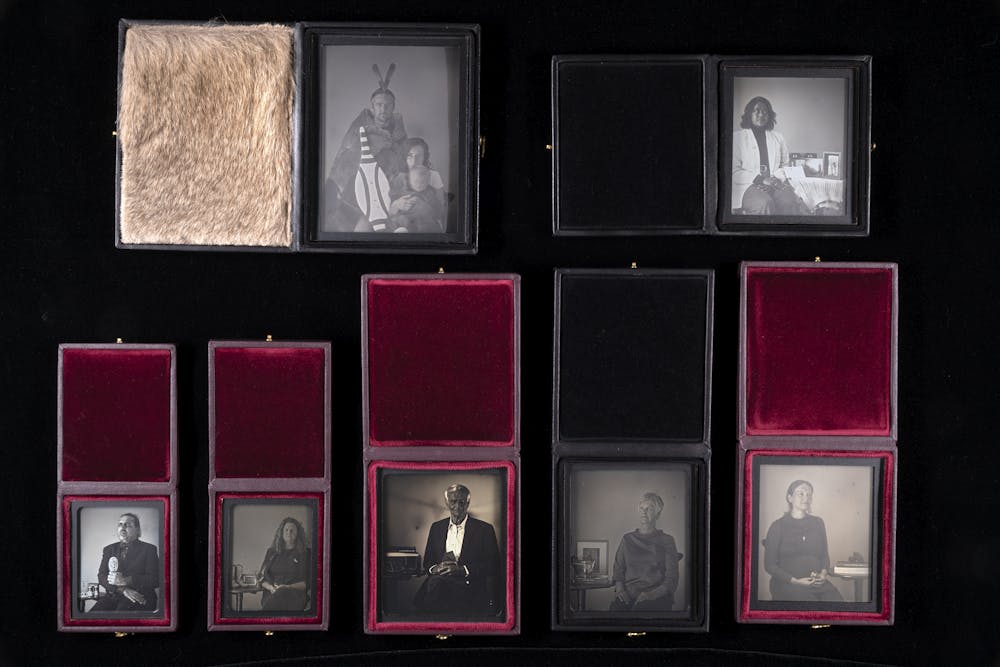 Contemporary daguerreotype series. Elisa deCourcy, Craig Tuffin and James Tylor, Ngunnawal and Ngambri Country, Canberra, 2021.
Author provided (no reuse)
Contemporary daguerreotype series. Elisa deCourcy, Craig Tuffin and James Tylor, Ngunnawal and Ngambri Country, Canberra, 2021.
Author provided (no reuse)
My collaborators and I also used the project to think more carefully about conversations around colonisation, photography and collecting begun in the 1840s, and how these historic circumstances influence our understanding of the past and underpin historic collections today.
I invited people to participate in making the portraits on account of their professional and personal connection with early colonial Australian photography. I worked with historic processes photographer Craig Tuffin and, for one portrait, Kaurna First Nations artist James Tylor. Tylor’s practice spans historic and modern photographic technologies, and combines photography with carved, engraved and cast media.
Reactivating the daguerreotype process
To make a daguerreotype, the photographer takes a slim sheet of copper coated with a thin layer of silver. The silver surface is polished and then fumed in the dark with iodine and bromine, which makes the surface light sensitive.
After sensitisation, the photographer has about an hour before the chemistry on the plate begins to degrade. The plate is placed in a darkened carrier ready to be inserted into the back of a large box camera.
The sitters in historic photographs often appear sombre or stern. This affect comes less from a universal displeasure with being photographed and more from the concentration required not to move during the photograph and blur the image.
The exposure of a daguerreotype is a protracted moment. In the case of a portrait, the sitter must remain completely still for approximately 20 seconds, depending on light conditions.
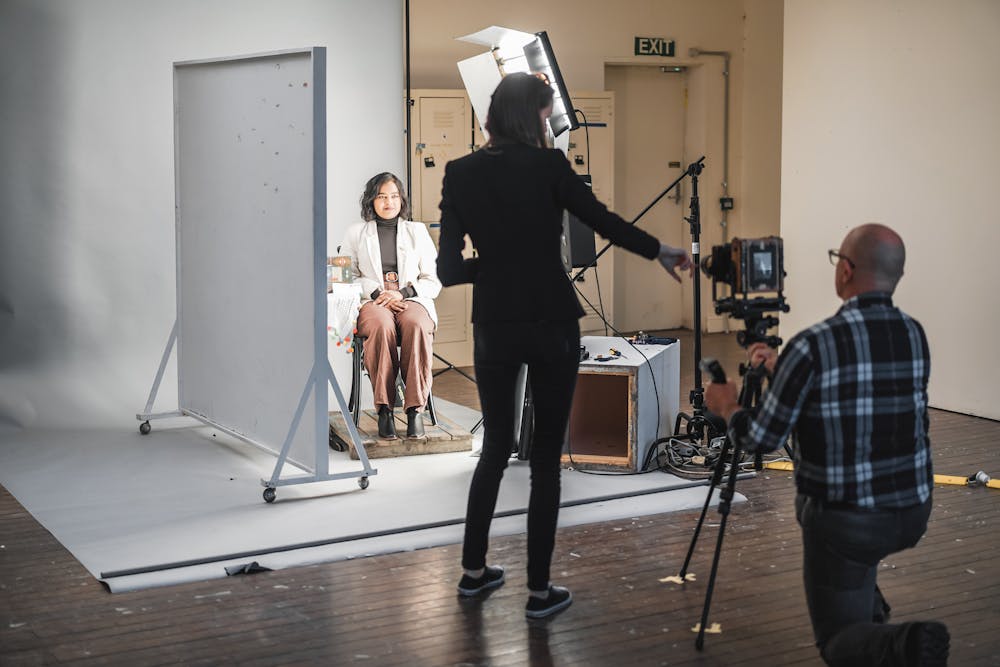 Setting up for a daguerreotype photograph.
Amr Tawik, Author provided (no reuse)
Setting up for a daguerreotype photograph.
Amr Tawik, Author provided (no reuse)
We asked our contemporary sitters to hold their breath for the length of the exposure to lessen incidental movement in the upper body that unconsciously occurs when inhaling and exhaling.
The daguerreotype is developed (and its sensitivity to light stopped) with mercury vapour. The plate is heated and bathed in a gold-chloride solution to both enhance and protect the delicate image. Then, especially in cases of portraiture, the copper photographic plate is sandwiched behind a piece of glass and wedged into a leather case.
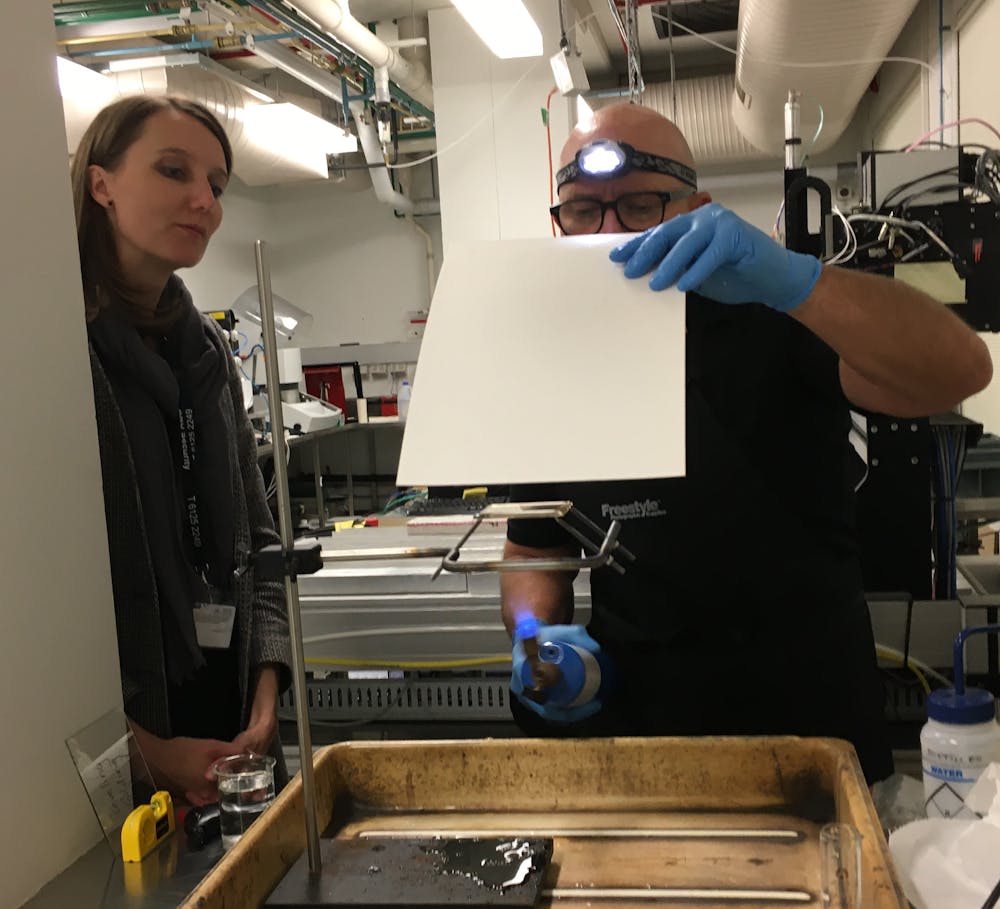 The daguerreotype is gilded with gold-chloride.
Martyn Jolly, Author provided (no reuse)
The daguerreotype is gilded with gold-chloride.
Martyn Jolly, Author provided (no reuse)
Lessons in the details
Following a historic process excavates knowledge known to early photographers, which has rarely survived in the archives.
Imperfections and mistakes are rarely preserved. In the mid 19th century, over-exposed plates were repolished to be used again. Plates where dust and debris upset chemical preparation were similarly repolished or discarded.
It is focused, sharp images, the ones that left the studio with patrons, which have made their way into our public collections.
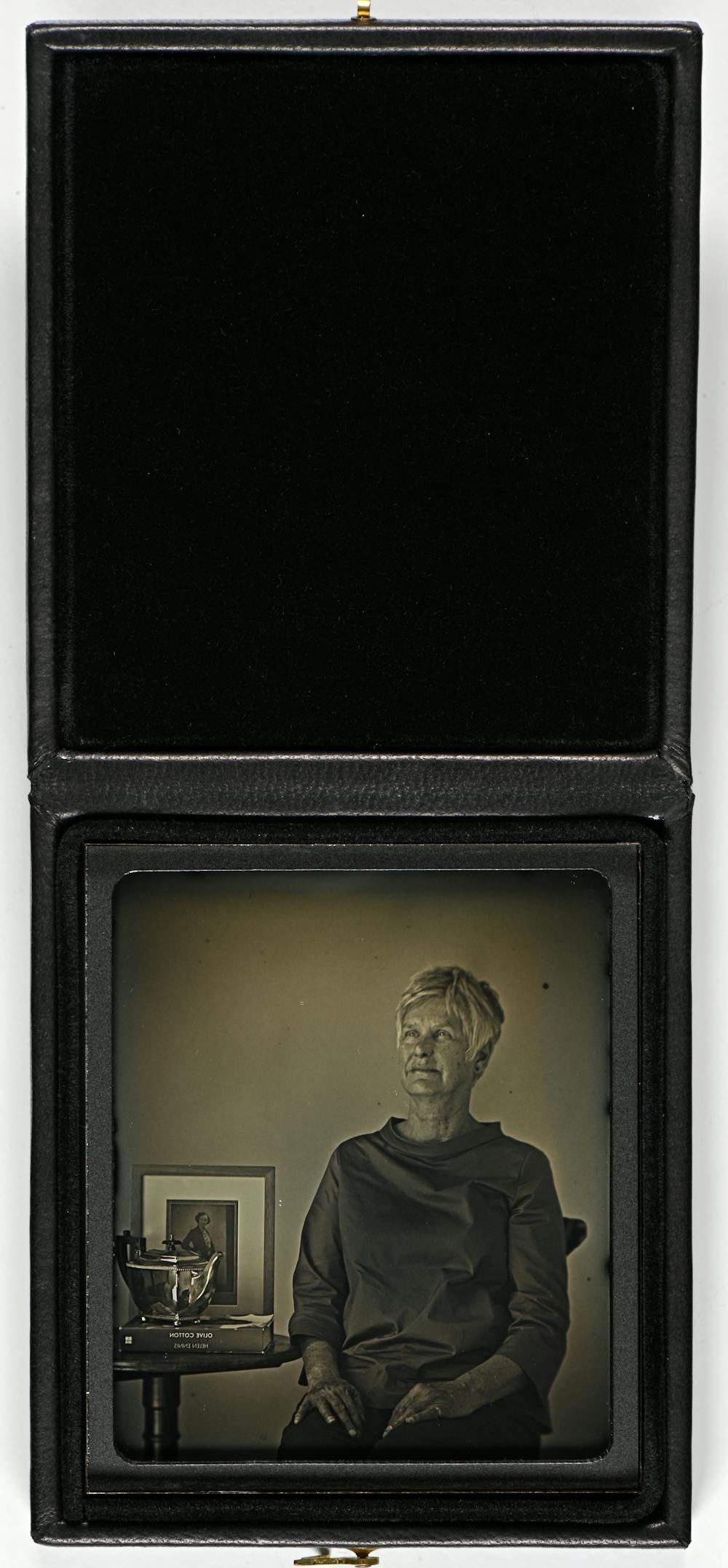 Elisa deCourcy and Craig Tuffin, ‘Helen’, sixth-plate, cased daguerreotype, April 2021, Ngunnawal and Ngambri Country, Canberra.
Author provided (no reuse)
Elisa deCourcy and Craig Tuffin, ‘Helen’, sixth-plate, cased daguerreotype, April 2021, Ngunnawal and Ngambri Country, Canberra.
Author provided (no reuse)
In recreating this process, I learnt how the inevitable chemical failures and the cost of materials needed to be factored into the early photographer’s business model.
This investment and expenditure underpinned an itinerancy among early photographers in the Australian colonies, whose businesses’ survival was predicated on constant flow of new customers.
Historic daguerreotype sitters brought significant objects with them to the studio: books, letters from loved ones, cloaks, shields, heirlooms and even other daguerreotypes.
Sitters in this project brought with them objects to narrate their biographies as descendants of the subjects in historic daguerreotypes; as artists and curators who work with interpreting and responding to historic Australian photography; and as people whose families’ migration mirrored or deviated from migratory “highways” of the mid-19th century.
Buried stories
As a historian of photography, I learnt how the composure and investment of sitter, as much as the technical skill of the daguerreotype photographer, contributed to the success of the final image.
Daguerreotype photography was not a prescriptive exercise or passive undertaking on the part of the sitter. It was contingent on a two-way dialogue.
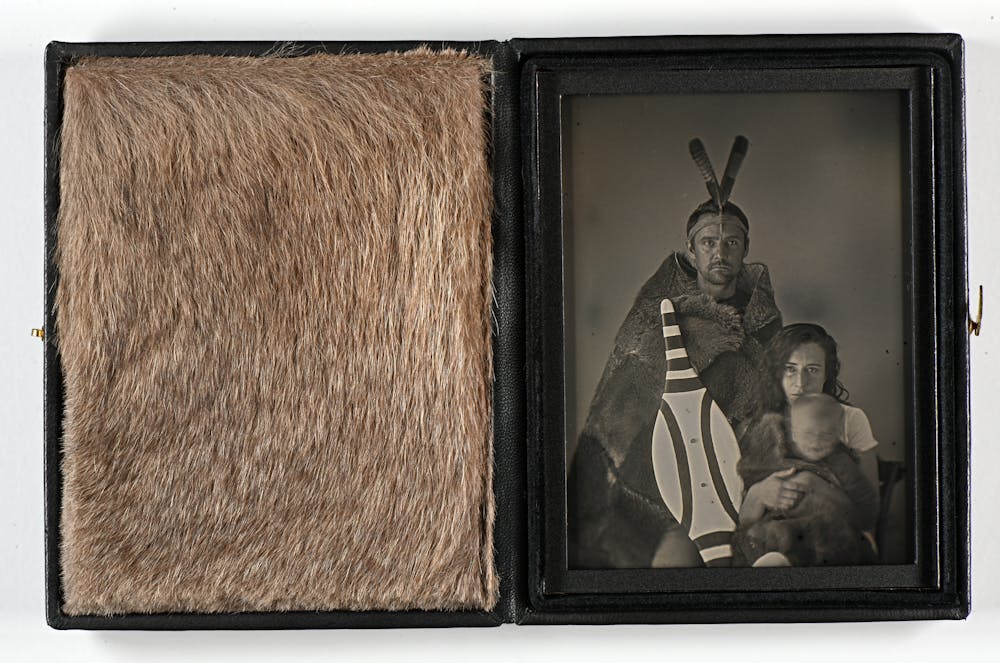 James Tylor, Elisa deCourcy and Craig Tuffin, ‘James, Rebecca and Sam Mapu’, quarter-plate, cased daguerreotype lined with Nantu Watpa Grey Kangaroo, April 2021, Ngunnawal and Ngambri Country, Canberra.
Author provided (no reuse)
James Tylor, Elisa deCourcy and Craig Tuffin, ‘James, Rebecca and Sam Mapu’, quarter-plate, cased daguerreotype lined with Nantu Watpa Grey Kangaroo, April 2021, Ngunnawal and Ngambri Country, Canberra.
Author provided (no reuse)
The colonial context in which historic daguerreotypes were made affected their custodianship, use and display – all of which resonated with the exploitative and damaging relationships of colonisation.
But the experience of photography in the studio was much more dynamic.
This contemporary series is a conversation with the past. It is an effort to portray and emphasise the nature of early photography where images were made in collaboration, and it is an effort to consider how those negotiations get muddied, buried and hidden in our archives.
The contemporary daguerreotypes were made at the School of Art and Design ANU and the National Portrait Gallery, Canberra, and plates were prepared and developed at the ANU Research School of Physics. The series will be exhibited in Canberra and at a number of regional galleries over 2022-2023.
Authors: Elisa deCourcy, Australian Research Council DECRA Fellow 2020-2023, Research School of Humanities and the Arts, Australian National University


 Daily Bulletin


