

Read The Times Australia

Daily Bulletin

What are the rights of children at the parliament protest – and who protects them?

  • Written by: Claire Breen, Professor of Law, University of Waikato
What are the rights of children at the parliament protest – and who protects them?

Children have participated in protests against nuclear weapons, wars, the loss of Māori land and customary rights, racism and child poverty. Young people themselves led the School Strike 4 Climate marches.

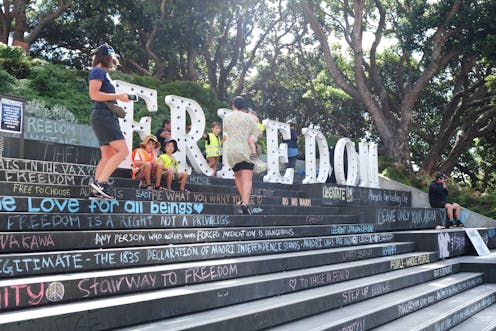
But the continuing presence of children at the sometimes violent occupation of parliament grounds has concerned many, from police to the prime minister and children’s commissioner.

So the question now becomes, should children even be allowed to participate in such events? Those who answer “no” may argue children (especially younger ones) cannot understand the nature of the debate, are being manipulated by adults, and are physically and emotionally vulnerable.

Others might argue young people’s voices should be heard, and that children are capable of grasping the meaning of protest action. And even if young people don’t understand an issue, it could be argued some adults should be prevented from protesting on the same basis.

An alternative view is that children have been, and will continue to be, heavily affected by pandemic restrictions and lockdowns. For that reason, they have a vested interest in being able to exercise their rights to gather and protest peacefully.

But with children potentially caught up in the less peaceful side of the parliament protest, it’s imperative they and their rights are understood and protected.

What does the law say?

Children, like adults, have the rights to freedom of movement, association and peaceful assembly – rights that underpin the right to (peaceful) protest. These rights are protected by the Universal Declaration of Human Rights and the ensuing framework of human rights treaties, including the UN Convention on the Rights of the Child.

Whether they are exercised by adults or children, these rights aren’t absolute and can be limited. According to the international legal framework of human rights, however, such limitations must be based in law and in the interests of a democratic society. Restrictions can be imposed for reasons such as public safety, public order, or the protection of public health.

Read more: The Wellington protest is testing police independence and public tolerance – are there lessons from Canada’s crackdown?

But there are other balancing acts when it comes to children’s rights, including their right to protest. The Convention on the Rights of the Child says the best interests of the child, and their right to have their opinions heard, should guide decision-making where children are involved.

In Aotearoa New Zealand, the New Zealand Bill of Rights Act 1990 guarantees the rights to freedom of expression, association and peaceful assembly, subject to the same reasonable limits that exist in international law.

Who is responsible for child protesters?

Young protesters are at greater risk from harm than adults because they are physically smaller and therefore generally more vulnerable.

So the issue of who is responsible for the safety of children within the protest at parliament raises a number of complicated questions for the government, police, parents – and, of course, the young people themselves.

There are no clear answers in this type of situation.

The Convention on the Rights of the Child recognises, among other things, that parents have the primary responsibility for the upbringing and development of their children, and that children must be protected from violence.

Read more: To protect children during Aotearoa's Omicron outbreak, we need to consider their families, not just schools

New Zealand’s Care of Children Act 2004 states that the welfare and best interests of a child must be the first and paramount consideration. Children must be protected from all forms of violence, and the primary responsibility for their care lies with their parents.

The Oranga Tamariki Act 1989 promotes the well-being and protection from harm of children and young people, and Oranga Tamariki itself has said it was working with police and other partners to address any child protection concerns at the Wellington protest.

Challenges for police and the law

Against this legal framework, the challenge (especially for the police) is how to manage a sometimes unruly crowd that contains significant numbers of children.

This has undoubtedly already influenced the police’s response, and the fate of the protest in general hinges to some extent on guarding the children’s best interests and well-being and ensuring they are protected from harm.

Read more: The occupation of NZ’s parliament grounds is a tactical challenge for police, but mass arrests are not an option

Failure to do this could mean the children at parliament grounds could be injured, and their rights to protest and to be protected from violence undermined.

Beyond these immediate concerns, though, the presence of children at parliament grounds should remind us again of the impact the pandemic in general has had on the hopes and dreams of young people.

These protests will eventually end, but ensuring the voices of children and young people are heard must be part of efforts to mitigate the consequences of the pandemic in the months and years to come.

Authors: Claire Breen, Professor of Law, University of Waikato

Read more https://theconversation.com/what-are-the-rights-of-children-at-the-parliament-protest-and-who-protects-them-177356

Business News

Why Choosing a Professional Florist Melbourne Makes Flower Delivery Impactful

Flowers have a great power to speak when humans cannot express their feelings with right words. Flowers are the best gifts when you are celebrating a birthday or welcoming a newborn child into your fa...

Daily Bulletin - avatar Daily Bulletin

The Business Case for Choosing Australian Fabricators Over Imported Alternatives

For a long time, you might have defaulted to overseas suppliers when sourcing fabricated metal components for a project. The unit price was lower on paper, and the maths seemed straightforward. That...

Daily Bulletin - avatar Daily Bulletin

Australian organisations are relying on business continuity plans built for a far more predictable world

Tariff escalations, supply chain fragility, geopolitical events, and the ongoing threat of cyber disruption have reshaped the risk environment facing Australian organisations. The problem is that ma...

Daily Bulletin - avatar Daily Bulletin

How to Rent a Car for Uber in Melbourne: What Every New Driver Needs to Know

Starting out as an Uber driver in Melbourne is not as complicated as it sounds but getting the vehicle right is where most new drivers get stuck. Uber has strict requirements around vehicle age, condi...

Daily Bulletin - avatar Daily Bulletin

When Should You Speak to a Lawyer About a Legal Issue?

Legal issues can begin with a simple question, then become harder to manage once formal steps are involved. Many people wait until a matter feels urgent before seeking guidance, even though earlier ...

Daily Bulletin - avatar Daily Bulletin

The strategic rise of Bali as Australia’s next essential healthcare support hub

As Australian healthcare providers grapple with unprecedented operational bottlenecks, a new nearshore model is quietly transforming patient care delivery. Forward-thinking organisations,  including...

Daily Bulletin - avatar Daily Bulletin

Cost Savings and Benefits of Using Used Pallets in Logistics

In today’s competitive logistics and supply chain industry, businesses are constantly looking for ways to reduce operational costs without compromising efficiency and reliability. One of the most prac...

Daily Bulletin - avatar Daily Bulletin

How Fulfilment Services in Australia Help Businesses Scale Efficiently

The growth of e-commerce and modern retail has transformed customer expectations. Consumers now expect fast shipping, accurate order processing, and seamless delivery experiences regardless of where...

Daily Bulletin - avatar Daily Bulletin

Practical Ways Australian Workplaces Can Reduce Operating Costs

Reducing business costs doesn’t always mean cutting staff, shrinking services or making the workplace feel bare-bones. In many cases, the smarter savings are hiding in everyday operations: the light...

Daily Bulletin - avatar Daily Bulletin

The Daily Magazine

Why Every Workplace Should Take Emergency Preparedness Seriously

Emergency planning is one of those things many workplaces know they should think about, but it oft...

Why Clearer Communication Still Matters in a Digital-First Business

It’s never been easier for businesses to communicate, but that doesn’t mean they’re always communica...

What Happens After You Lodge a BYDA Enquiry? The Step Most Excavation Projects Miss

Every excavation project in Australia — from a backyard deck footing to a multi-storey commercial bu...

How to Choose the Right Dentist on the Gold Coast

Finding a dentist you trust is one of those decisions that quietly affects your health for years, ...

The Hidden Engineering Problem Inside Australia's Older Housing Stock

A significant share of Australian homes were built for a way of living that no longer exists. Houses...

DIY Rodent Control Vs Professional Help: When Is It Time To Call The Experts?

Rodents are one of the most frustrating pest problems for Australian property owners. Rats and mic...

Lighting Shop in Perth: How The Right Lighting Can Transform Your Home And Business

The right lighting can completely change the look, feel, and functionality of any space. Whether it ...

Traffic Light System Solutions For Safer And More Efficient Traffic Management

Modern cities and growing communities rely heavily on effective traffic management to ensure safety...

Gold Migration Lawyers in Liquidation: How the Closure Affects Your ART Appeal

If your appeal was with Gold Migration Lawyers, a recent change to how the Tribunal decides cases ...