

Budget cuts to the Australian Human Rights Commission couldn't have come at a worse time
- Written by: Amy Maguire, Associate Professor in Human Rights and International Law, University of Newcastle
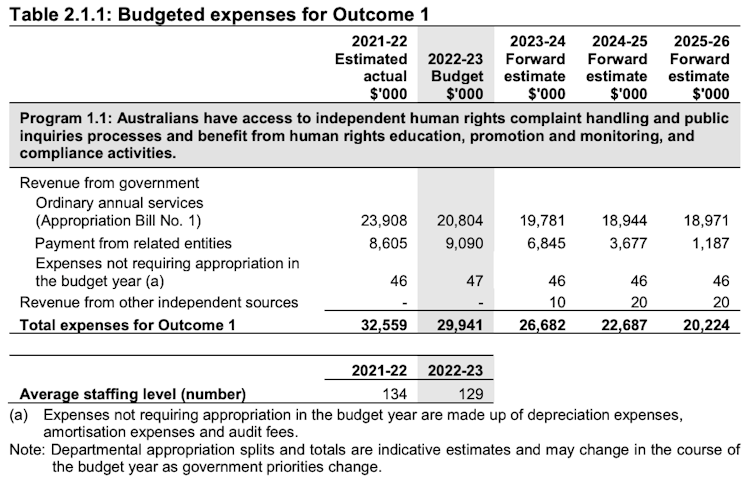
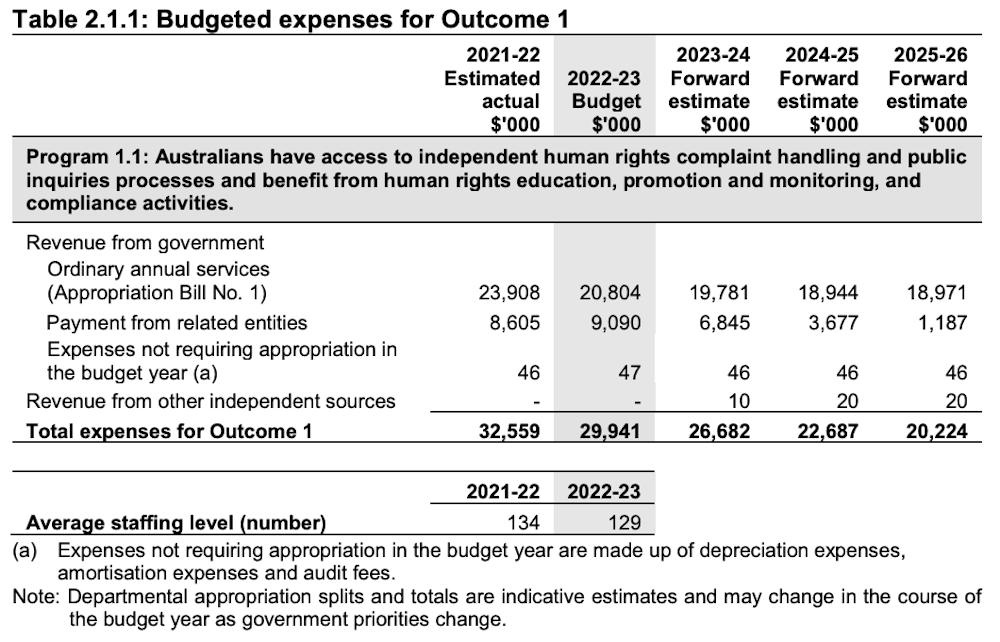
The budget for Australia’s national human rights institution, the Australian Human Rights Commission, will fall significantly over the next four years.
These cuts are outlined in the budget statements from the attorney-general’s portfolio:
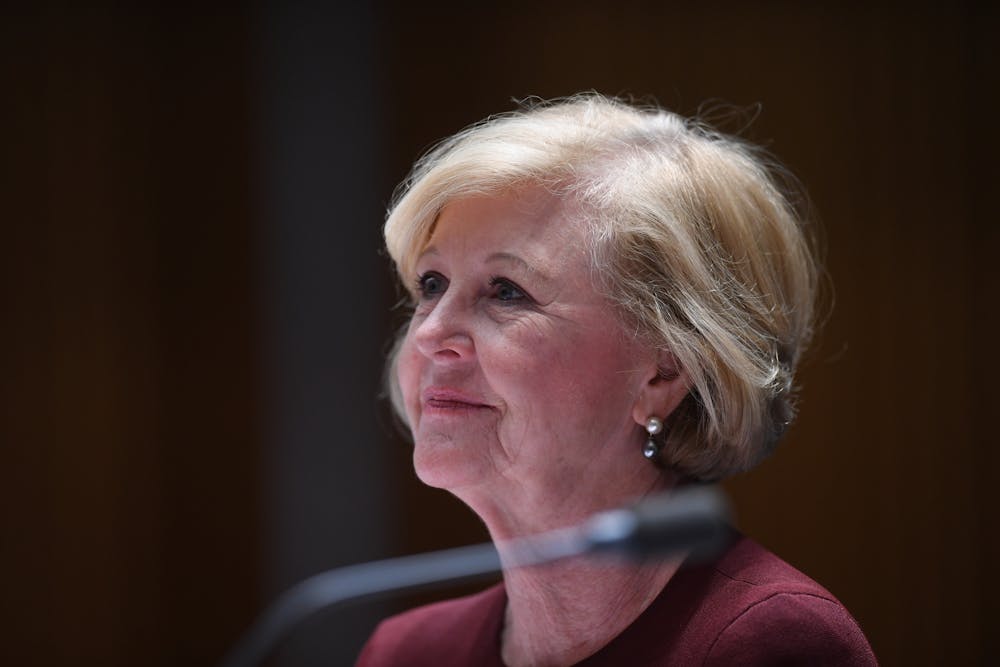 Former Australian Human Rights Commission president, Gillian Triggs, was subjected to extraordinary attacks from government ministers.
AAP Image/Lukas Coch
In recent years, the Australian government has more than once handpicked a new commissioner for the Australian Human Rights Commission, rather than complying with the obligation to run a transparent, merit-based appointment process.
Former Australian Human Rights Commission president Gillian Triggs was subjected to extraordinary attacks from government ministers – including former prime minister Tony Abbott – particularly in response to a report it released criticising the treatment of children in immigration detention.
Former attorney-general George Brandis was later censured by the Senate over his failure to defend Triggs or the independence of the commission, and for trying to induce her to resign as president.
As she left office, Triggs called the government “ideologically opposed to human rights”.
All of these developments undermine a central pillar of Australia’s voluntary commitments to the UN Human Rights Council, when it commenced its first ever term as a member state on that body in 2018.
Australia pledged to build capacity and strengthen national human rights institutions, particularly in the Indo-Pacific region.
Twin crises
The Australian Human Rights Commission now faces twin crises of insufficient funding and threats to its global standing. The potential consequences are not only reputational.
If the Australian Human Rights Commission is downgraded to a “B status” institution, it will lose its right to vote or hold office in the Global Alliance of National Human Rights Institutions.
It will be restricted to observer status before the UN Human Rights Council, and stripped of its current independent participation rights across UN human rights institutions.
Having made an historic commitment to human rights leadership through its 2018-20 Human Rights Council term, Australia is increasingly sending an opposite message at home regarding its interest in the protection and promotion of human rights.
Since this article was first published, The Conversation received the following comment from the office of the attorney-general, Michaelia Cash:
As is the case with most agencies, funding varies over the forward estimates due to time-limited projects that are funded at particular points.
The reductions in the “ordinary annual services” funding relate to terminating measures that fund the Commission to:
* the completion of the Parliamentary Workplaces Review (ending in 2021-22)
* support the Age Discrimination Commissioner in delivering on her key priorities as part of the aged care reform agenda (ending in 2022-23)
* support business to respond and support people who may wish to come forward with historical complaints of sexual harassment (ending in 2023-24).
The appropriation of the Commission to perform its core functions is more or less steady over the forward estimates.
Any suggestion that the conclusion of a time-limited project amounts to a cut in the AHRC’s budget does not accord with the basic tenets of accounting and gives the perverse incentive to have finitely timed projects with infinite resources.
Read more:
Josh Frydenberg’s budget is an extraordinary turnaround – but leaves a $40 billion problem
Authors: Amy Maguire, Associate Professor in Human Rights and International Law, University of Newcastle
Former Australian Human Rights Commission president, Gillian Triggs, was subjected to extraordinary attacks from government ministers.
AAP Image/Lukas Coch
In recent years, the Australian government has more than once handpicked a new commissioner for the Australian Human Rights Commission, rather than complying with the obligation to run a transparent, merit-based appointment process.
Former Australian Human Rights Commission president Gillian Triggs was subjected to extraordinary attacks from government ministers – including former prime minister Tony Abbott – particularly in response to a report it released criticising the treatment of children in immigration detention.
Former attorney-general George Brandis was later censured by the Senate over his failure to defend Triggs or the independence of the commission, and for trying to induce her to resign as president.
As she left office, Triggs called the government “ideologically opposed to human rights”.
All of these developments undermine a central pillar of Australia’s voluntary commitments to the UN Human Rights Council, when it commenced its first ever term as a member state on that body in 2018.
Australia pledged to build capacity and strengthen national human rights institutions, particularly in the Indo-Pacific region.
Twin crises
The Australian Human Rights Commission now faces twin crises of insufficient funding and threats to its global standing. The potential consequences are not only reputational.
If the Australian Human Rights Commission is downgraded to a “B status” institution, it will lose its right to vote or hold office in the Global Alliance of National Human Rights Institutions.
It will be restricted to observer status before the UN Human Rights Council, and stripped of its current independent participation rights across UN human rights institutions.
Having made an historic commitment to human rights leadership through its 2018-20 Human Rights Council term, Australia is increasingly sending an opposite message at home regarding its interest in the protection and promotion of human rights.
Since this article was first published, The Conversation received the following comment from the office of the attorney-general, Michaelia Cash:
As is the case with most agencies, funding varies over the forward estimates due to time-limited projects that are funded at particular points.
The reductions in the “ordinary annual services” funding relate to terminating measures that fund the Commission to:
* the completion of the Parliamentary Workplaces Review (ending in 2021-22)
* support the Age Discrimination Commissioner in delivering on her key priorities as part of the aged care reform agenda (ending in 2022-23)
* support business to respond and support people who may wish to come forward with historical complaints of sexual harassment (ending in 2023-24).
The appropriation of the Commission to perform its core functions is more or less steady over the forward estimates.
Any suggestion that the conclusion of a time-limited project amounts to a cut in the AHRC’s budget does not accord with the basic tenets of accounting and gives the perverse incentive to have finitely timed projects with infinite resources.
Read more:
Josh Frydenberg’s budget is an extraordinary turnaround – but leaves a $40 billion problem
Authors: Amy Maguire, Associate Professor in Human Rights and International Law, University of Newcastle


 Daily Bulletin


