

Two-up, Gallipoli and the ‘fair go’: why illegal gambling is at the heart of the Anzac myth
- Written by: Bruce Moore, Honorary Associate Professor in the School of Literature, Languages, and Linguistics, Australian National University
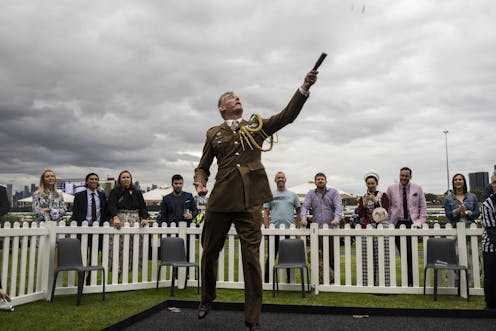
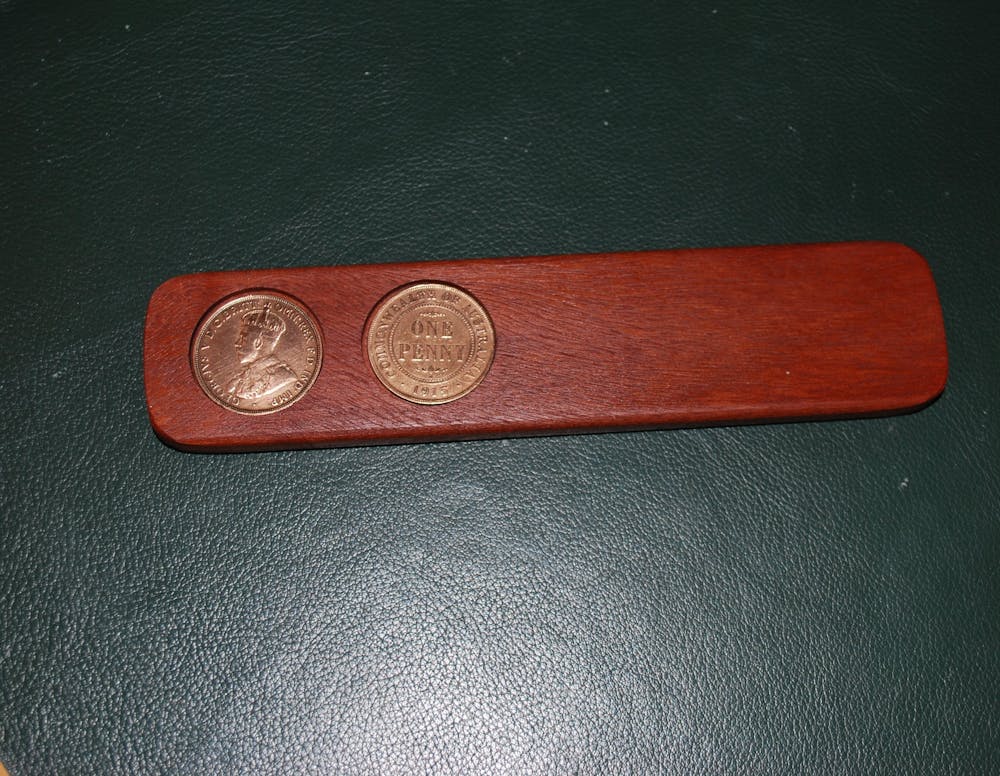
Two-up is an Australian gambling game in which two coins are placed on a small piece of wood called a “kip” and tossed into the air. Bets are laid as to whether both coins will fall with heads or tails uppermost. It is one of the core activities of Anzac Day celebrations - and a beloved tradition.
The word ANZAC was created in 1915 as an acronym from Australian and New Zealand Army Corps. By 1916 it was being used emblematically to reflect the traditional view of the virtues displayed by those in the Gallipoli campaign, especially as these are seen as national characteristics. This cluster of national characteristics includes mateship, larrikin daredevilry, anti-authoritarianism, and egalitarianism.
The game of two-up became indicative of these qualities. Mateship was evident in the way the game brought together people of disparate backgrounds. Larrikinism was evident in the defiant rejection of authority and convention.
Two-up was always illegal, because the game is an unregulated form of gambling (although from the 1980s it became legal in most Australian states on Anzac Day). But in spite of the illegality, it was widely regarded as the fairest of gambling games, and at the time of the First World War the verbal command for the coins to be spun was not “come in spinner” (as it is now) but “fair go”. Indeed, the important Australian concept of the “fair go” was in part cemented by its role in the game.
Two-up was the common pastime of the urban working-class man, and it feeds into the elements of egalitarianism and anti-authoritarianism that are central to both the Anzac myth and the Australian myth.
Two-up and wartime life
From the very early period of the First World War, two-up assumed great importance among the Australian troops. Soldiers reported that two-up was played on the battlefield during the Gallipoli campaign, even when under shellfire. As the war dragged on, numerous stories were told about Australian soldiers’ obsession with playing it.
In 1918 the war correspondent Charles Bean studied the daily life of a company of Australian soldiers stationed at a brewery in Querrieu in northern France. He places great emphasis on two-up, writing in his diary in 1918:
Two-up’ is the universal pastime of the men. … It is a game which starts in any quarter of an hour’s interval or lasts the whole afternoon. The side road outside becomes every evening a perfect country fair with groups playing these games in it - a big crowd of 70 or 80 at the bottom the street, in the middle of the road; a smaller crowd of perhaps twenty on a doorstep further up. … The game is supposed to be illegal, I think; but at any rate in this company they wink at it.
Two-up was important not just in taking soldiers’ minds off the realities of the war, but also in creating a strong sense of community. Photographs from the war that show the men playing two-up reveal how it brought them together physically in a communal activity.
This helps explains why men, who in civilian life may have had little or no interest in gambling, joined in the camaraderie and fun of the two-up fair, and by so doing blotted out the boredom, isolation, and loneliness of much wartime experience.
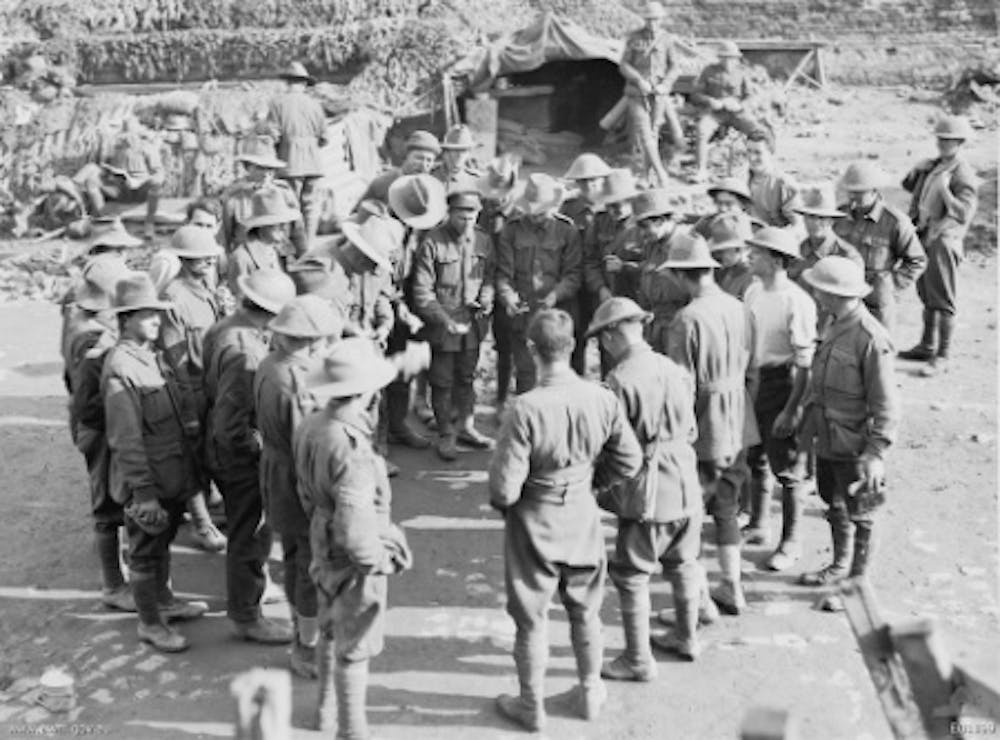 Australian soldiers playing two-up during World War I at the front near Ypres, 23 December 1917.
Australian War Memorial Museum
Australian soldiers playing two-up during World War I at the front near Ypres, 23 December 1917.
Australian War Memorial Museum
Anzac Day and tradition
Playing two-up became an integral part of the diggers’ memories of the experience of war, especially when commemorated on Anzac Day. By the 1930s the playing of two-up outdoors after the Anzac Day march had become an entrenched tradition.
As the ranks of diggers from the two world wars declined, so the structure of Anzac Day changed in emphasis. In recent years the Dawn Service has increased greatly in popularity, while the Anzac Day march has suffered from dwindling numbers of veterans. The streets of Sydney and similar cities are no longer dotted with two-up games in the afternoon. The games have shifted to pubs and clubs, and they are largely played by people with no experience of war.
Those people who play the game on this day do so not for any deep-seated gambling impulse or because they would love to play the game on every other day of the year. They play two-up because it has become part of the meaning of Anzac Day.
Anzac Day has always combined solemnity and festivity. The Dawn Service commemorates the landing at Gallipoli, and the sacrifices that ensued. Its mood is solemn.
Read more: Let's honour the Anzacs by making two-up illegal again
In the past, returned soldiers reminisced, told war yarns, drank, and played two-up. The soldiers have passed on, but their larrikinism survives in the tradition of the game they have bequeathed to their descendants.
We should not underestimate the significance of rituals of this kind—the playing of two-up is a way in which Australians can become not just observers of, but participants in, their history and their myths. Two-up is a ritual that links the present with the past on this one day of the year.
Authors: Bruce Moore, Honorary Associate Professor in the School of Literature, Languages, and Linguistics, Australian National University


 Daily Bulletin


