

A year of hunger: how the Russia-Ukraine war is worsening climate-linked food shortages
- Written by: Ro McFarlane, Assistant Professor in Ecological Public Health, University of Canberra
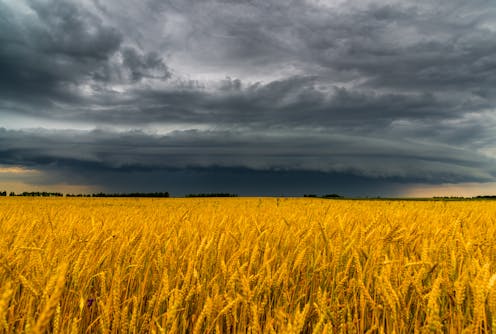
Global wheat prices have soared since Russia invaded Ukraine in February. The two nations account for 30%of the world’s wheat exports.
That means many low-income nations who are net food importers are bracing for a year of hunger. The disruption of war compounds existing drops in food production linked to climate change. On a global scale, climate change has already cut global average agricultural production by at least one-fifth.
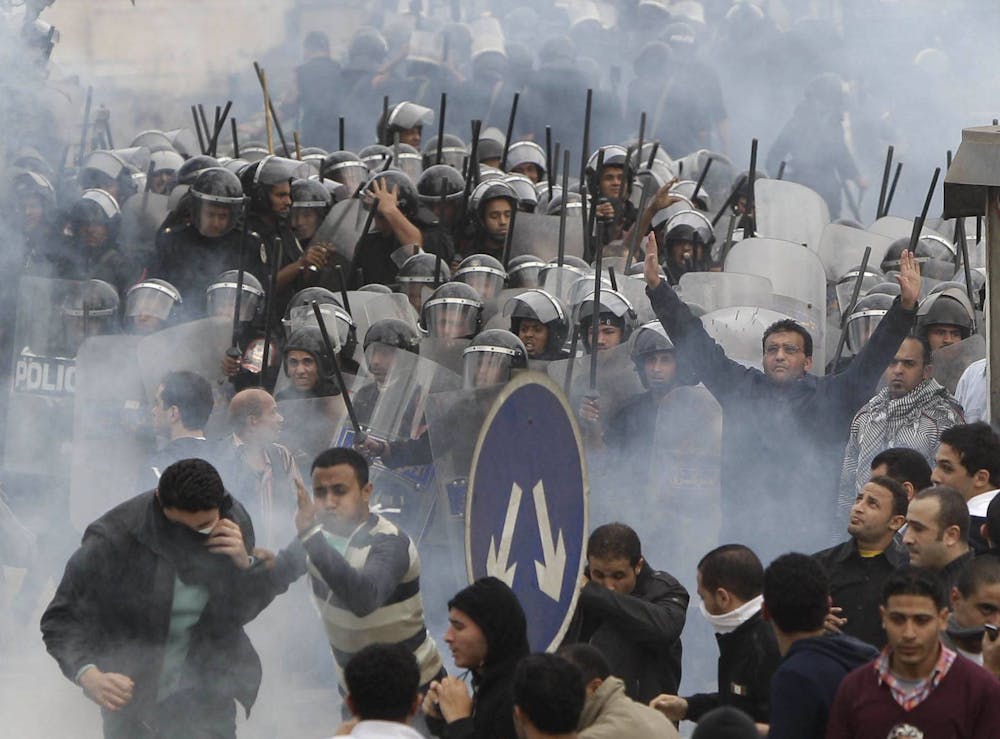
Food insecurity often translates to widespread social unrest, as we saw in the 2011 Arab Spring protests, which came after major food price rises.
Countries in the Middle East and North Africa are likely to be hit hardest in the short term, given they are the major importers of Ukrainian wheat and have major food security issues. Countries dependent on specific commodities and which can’t switch to alternative food sources are also at risk.
As many nations face hunger and worsening food security, it is time to redouble our efforts on climate change. Climate change is the great risk multiplier, worsening all existing global crises.
What effect is the war having?
The world produces enough food to feed everyone. Hunger persists due to the critical factors of distribution and access.
We can add war and climate change to this list too. The current wheat price spikes are driven by a combination of war pressures and market speculation.
The world’s largest wheat importer is Egypt, which buys in over half of its calories. At the same time, it exports rice.
This is a dangerous combination. Much of Egypt’s population lives in poverty, with a high reliance on wheat. Civil unrest took root when bread prices rose by almost 40% in 2007-08 due to droughts in food producing nations and oil price rises.
 Egypt’s poor rely on imported wheat to make flatbread and other staples.
Amr Nabil/AP
Egypt’s poor rely on imported wheat to make flatbread and other staples.
Amr Nabil/AP
Climate change, conflict and food security will keep compounding
The world’s current 1.2℃ of warming has already slashed the world’s average agricultural production by at least 21%.
To date, rich countries have not seen much effect. But the rest of the world has. In Africa, Central and South America, food insecurity and malnutrition have risen sharply due to floods and droughts damaging crops.
The world’s poor live where land is cheapest and most vulnerable to climatic extremes. They often have sporadic or no access to health care, education, transport, meaningful employment, food and water. Each of these factors amplifies others, which intensifies the underlying disadvantage and can fuel conflict. Climate change can worsen all of these factors.
In 2022, a war between two nations is directly influencing global food, fuel and fertiliser supplies and prices. As the world warms and our agricultural systems begin to fail in some areas, it is a certainty that climate, food insecurity and war will combine to produce more suffering.
Rich countries are not immune
Rich countries like Australia are learning food insecurity can affect everyone. The pandemic years have led to heightened financial vulnerability and food insecurity among more Australians than ever.
The pandemic comes on top of climate change-linked weather events disrupting food supply due to unprecedented bushfires and floods. The record-breaking rains have made it harder to sell recent bumper grain crops at a good price due to water damage to crops as well as export infrastructure damaged by the previous prolonged drought cycle.
Australia exports enough food for 70 million people. That can give a false sense of security. In reality, our position as the most arid inhabited continent in a steadily warming world has led to drops of up to 35% in farm profitability since 2000.
What can be done?
For many in Ukraine, other conflict zones and refugee camps, life becomes a question of knowing how and when the next meal will come.
People who have experienced true hunger know the memory will linger even after living in a food-rich country for decades, as one author knows from living through the war in former Yugoslavia.
Knowledge about food is critical to resilience: food production and preserving skills, diversity of edible weeds and foraging opportunities, how supply chains work and the consequences of trading food in the face of hunger.
To build resilience in the face of these intensifying and overlapping threats, we must move away from our current dependence on wheat, corn and rice for fully 40% of our calories. Of the world’s thousands of plant species, we farm around 170 on a commercial basis. And of these, about a dozen supply most of our needs.
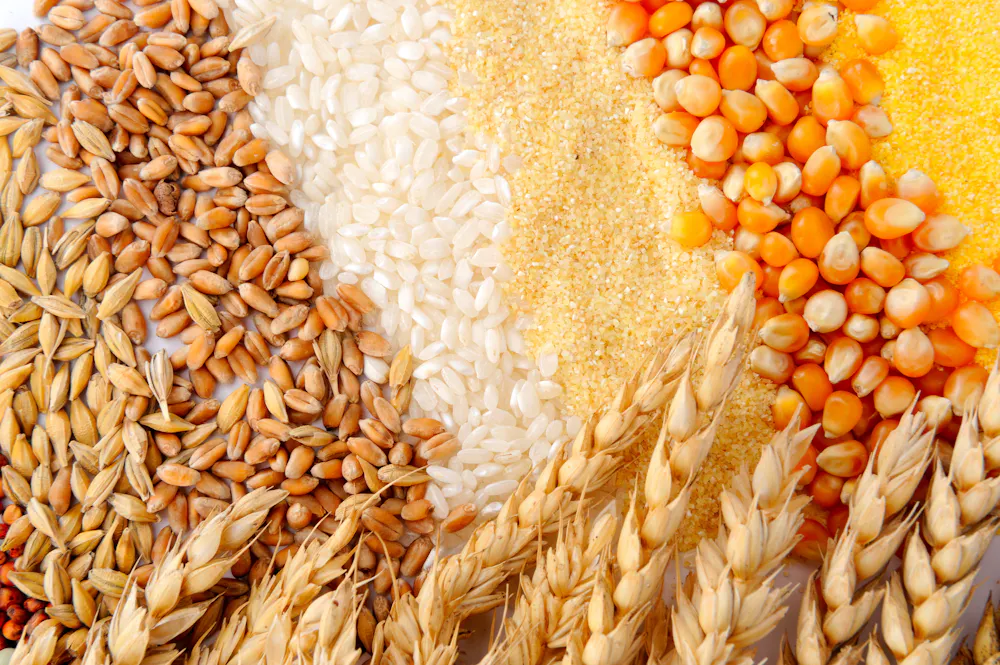 Wheat, corn and rice supply a surprisingly high proportion of all calories consumed by humans.
Shutterstock
Wheat, corn and rice supply a surprisingly high proportion of all calories consumed by humans.
Shutterstock
As the threats to food security intensify, we will also need to question why basic foodstuffs are commodities of profit. A radical but widely advocated approach is the model in which foods are traded equitably to address need. Access to food is, after all, a human right.
If we can embed more equitable and resilient food systems, we will be better placed to adapt to climate change already locked in by previous emissions, as well as dampen the sparks of conflict. Improving the way we produce food can also help us tackle climate change and biodiversity loss.
We are heartened by growing interest in urban food production, efforts to reimagine distribution as well as regenerative agriculture and technological innovations on farms. Taken together, these changes can shorten supply chains and increase food diversity and resilience.
Why does that matter? Because producing food closer to home reduces the risk of food insecurity linked to climate change, war and other disruptions.
As more and more of us move to cities, we will have to embrace greater urban production of food and support for the family farms and smallholders who still, to this day, produce more than half of every calorie consumed by humanity.
We have a real opportunity – and need – to rethink how we produce and distribute the food we rely on. We still have a chance to head off some of the suffering heading our way.
Authors: Ro McFarlane, Assistant Professor in Ecological Public Health, University of Canberra


 Daily Bulletin


