

Read The Times Australia

Daily Bulletin

Māori hold a third of NZ’s fishing interests, but as the ocean warms and fish migrate, these rights don't move with them

  • Written by: Maui Hudson, Associate Professor, Director of Te Kotahi Research Institute, University of Waikato
Māori hold a third of NZ’s fishing interests, but as the ocean warms and fish migrate, these rights don't move with them

Record high ocean temperatures and marine heatwaves have become increasingly common in the waters off New Zealand in the past decade.

During the same period, commercial fisheries have landed lower volumes for several fish stocks, including hoki and tarakihi.

Māori hold almost a third of commercial fisheries interests in Aotearoa, but these are constrained to certain areas. The impacts of warming seas on Māori communities’ cultural and economic future well-being are not well understood.

For many Māori, fisheries are the most significant assets. With my colleagues Tony Craig and Katherine Short at Terra Moana, we explored how changing ocean temperatures may affect Māori commercial fisheries as part of the Moana Project.

Most of the fish species of interest to New Zealand’s commercial, recreational and customary fishers are managed under the government’s Quota Management System (QMS).

It was introduced in 1986 and determines allowable fish harvests, known as “total allowable catch” (TAC). The system replaced open access with set catch limits and transferable quota rights, which means quota holders can trade and sell their catch allowance.

The impacts of climate change on the marine environment are well documented in the latest report by the Intergovernmental Panel on Climate Change (IPCC). They include marine heatwaves, more severe storms, rising sea levels and changes in salinity, stratification, circulation, oxygen levels and acidity.

Read more: Putting the community back into business: what te ao Māori can teach us about sustainable management

As our moana (ocean) changes, so will the distribution of fish species.

Recent reviews analysed the effects of climate change on New Zealand’s commercial fisheries and found most fished species to be vulnerable to changes in temperature.

Any geographical expansion or shift in fish stocks will have major implications for Māori commercial seafood interests, given quota ownership is limited to specified management areas.

The distribution of fisheries is changing

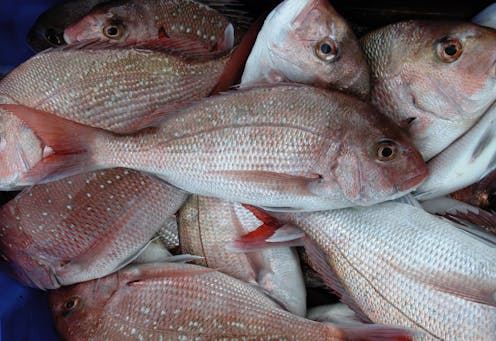
Snapper, for example, prefer waters of 12-21℃. This correlates with better survival rates of larval and subsequent life stages.

This also matches with fishers’ observations of significant increases in snapper in Te Moana-a-Toi/Bay of Plenty where sea surface temperatures reached up to 2.4℃ above average in the first six months of 2022.

Snapper
Snapper are most common in warmer waters around New Zealand. Getty Images

Recent declines in tarakihi in Te Moana-a-Toi have largely been attributed to overfishing. But given this migratory fish is known to travel from Banks Peninsula in the south to Te Moana-a-Toi in the north, it is also feasible that changing temperatures have affected the locations of spawning, which is usually triggered when temperatures are below 16℃, and restricted the species’ migratory journey.

Fishers have also recently caught snapper and kingfish around Rakiura/Stewart Island, an area previously considered too cold for these species. What if finding snapper around Rakiura represents both an expansion in the species’ distribution and a geographical shift?

Read more: Why Indigenous knowledge should be an essential part of how we govern the world's oceans

The quota system is not set up for a changing ocean

In the negotiations between Māori and the Crown leading up to the 1992 Fisheries Settlement, climate variability from El Niño and La Niña weather patterns was considered, but little thought was given to the implications of climate change.

New Zealand’s exclusive economic zone is divided into ten fisheries management areas (FMAs). Based on the known biological distribution of QMS fish stocks, quota management areas (QMAs) were defined for individual species. Some align with FMAs, but with environmental change and fish movement related to climate change, the future footprint of fisheries may differ considerably from the time QMAs were defined.

Climate change will affect Māori fisheries and aquaculture ownership rights and interests. If fished species move into new areas, this will affect the rights of individual iwi under the fisheries settlement. The allocation of quota under the settlement will be affected over time by the relationship between static iwi land interests and mobile fish stocks.

Two species, hoki and snapper, illustrate how this could play out.

Maps of quota management areas fro hoki and snapper.
NIWA Excluding the Kermadec Islands where neither species is caught, hoki can be considered as having a single QMA (left map above). This means that quota ownership is not likely to be affected by any climate-related geographical shift as any stock movement remains within one QMA. Conversely, snapper (right map above) is fished in five quota management areas, and any geographical change could have major consequences for individual area-based quota allocations. Of the fished areas, the Snapper 1 (SNA1) fishery is by far the biggest, with a total allowable catch of 8,050 metric tons (mt) allocated annually between commercial (4,500mt), recreational (3,500mt) and customary (50mt) interests. Quota value changes over time To understand the potential implications of geographical shifts of fished species, we determined the changes in quota values for some species over the past ten years. How science and policy respond to the potential implications of climate change will be critical for iwi interests. Māori now own 33% of New Zealand’s fishing quota volume (47% of value). These iwi revenue streams are vulnerable to climate change, rendering the fisheries settlements less timeless than intended. It is critical for iwi to understand how their rights and interests in the marine environment are likely to evolve. To uphold iwi interests, we need economic analysis alongside the science exploring the effects of climate change on stocks. This will better enable iwi, as kaitiaki and right holders, to participate in the marine reform agenda announced last year to ensure the long-term health and resilience of ocean and coastal ecosystems, including fisheries. Tony Craig and Katherine Short, at Terra Moana, carried out the primary research. Maui Hudson leads the research within the Moana Project, where this work was completed.

Authors: Maui Hudson, Associate Professor, Director of Te Kotahi Research Institute, University of Waikato

Read more https://theconversation.com/maori-hold-a-third-of-nzs-fishing-interests-but-as-the-ocean-warms-and-fish-migrate-these-rights-dont-move-with-them-186284

Business News

The strategic rise of Bali as Australia’s next essential healthcare support hub

As Australian healthcare providers grapple with unprecedented operational bottlenecks, a new nearshore model is quietly transforming patient care delivery. Forward-thinking organisations,  including...

Daily Bulletin - avatar Daily Bulletin

Cost Savings and Benefits of Using Used Pallets in Logistics

In today’s competitive logistics and supply chain industry, businesses are constantly looking for ways to reduce operational costs without compromising efficiency and reliability. One of the most prac...

Daily Bulletin - avatar Daily Bulletin

How Fulfilment Services in Australia Help Businesses Scale Efficiently

The growth of e-commerce and modern retail has transformed customer expectations. Consumers now expect fast shipping, accurate order processing, and seamless delivery experiences regardless of where...

Daily Bulletin - avatar Daily Bulletin

Practical Ways Australian Workplaces Can Reduce Operating Costs

Reducing business costs doesn’t always mean cutting staff, shrinking services or making the workplace feel bare-bones. In many cases, the smarter savings are hiding in everyday operations: the light...

Daily Bulletin - avatar Daily Bulletin

Executive Recruitment Solutions That Help Organisations Secure Exceptional Leaders

Leadership has a direct impact on organisational performance, employee engagement, strategic growth, and long-term success. Businesses operating in increasingly competitive environments require experi...

Daily Bulletin - avatar Daily Bulletin

Why A WooCommerce Website Designer Matters For Online Growth

Running an online store today requires more than simply listing products and waiting for customers to arrive. Businesses need a website that is fast, reliable, easy to navigate, and designed to suppor...

Daily Bulletin - avatar Daily Bulletin

Turning Your Empty Tables into Revenue

The rise of AI demand tools in hospitality, the EatClub–CommBank partnership, and seven trends reshaping Australian dining  A growing number of Australian venues are turning to AI-powered demand mana...

Daily Bulletin - avatar Daily Bulletin

High-Impact Dental Marketing Strategies That Are Driving Real Practice Growth Today

The landscape of dental practice growth in Australia has shifted dramatically over recent years. Standard, broad-spectrum advertising campaigns no longer yield the return on investment they once did. ...

Daily Bulletin - avatar Daily Bulletin

How Telematics Helps Australian Companies Improve Productivity

Operating a commercial fleet in Australia is a uniquely demanding endeavour. Between the sprawling urban sprawl of cities like Sydney and Melbourne and the immense, unforgiving stretches of the Outb...

Daily Bulletin - avatar Daily Bulletin

The Daily Magazine

Lighting Shop in Perth: How The Right Lighting Can Transform Your Home And Business

The right lighting can completely change the look, feel, and functionality of any space. Whether it ...

Traffic Light System Solutions For Safer And More Efficient Traffic Management

Modern cities and growing communities rely heavily on effective traffic management to ensure safety...

Gold Migration Lawyers in Liquidation: How the Closure Affects Your ART Appeal

If your appeal was with Gold Migration Lawyers, a recent change to how the Tribunal decides cases ...

The pressure cooker: life in urban Australia in 2026

Australian cities have always been demanding. Long commutes, rising housing costs, busy schedules a...

What Actually Makes a Good Criminal Lawyer in Melbourne

Most people only think about this question once. That is usually too late. Most people charged wi...

Why Working With A Chatswood Tutor Can Improve Academic Performance

Academic expectations continue increasing for students across primary school, high school, and senio...

Is It Worth Getting Solar Panels in Melbourne?

The real question is not whether solar works in Melbourne. It works. The question is what it is co...

How A Diploma Of Project Management Builds Practical Skills For Modern Work Environments

Developing the ability to plan, execute, and deliver outcomes efficiently is a key requirement in to...

How to Choose the Right Football for Every Level

Choosing a football may seem straightforward, but the right option depends on who will be using it a...