

There's a smart way to push Labor harder on emissions cuts – without reigniting the climate wars
- Written by: Adam Simpson, Senior Lecturer, International Studies, University of South Australia
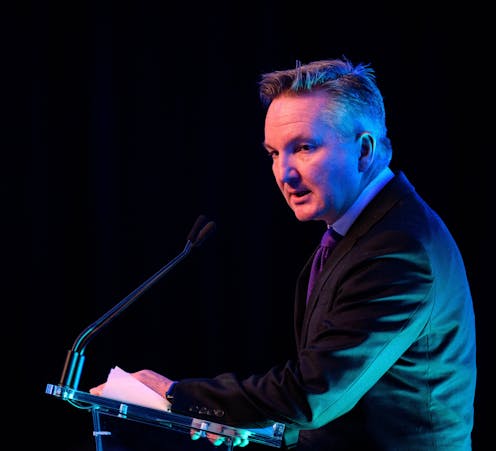
The fate of Labor’s 2030 climate policy hangs in the balance as the Greens and other climate-conscious crossbenchers this week consider pushing the government harder on emissions reduction.
But trying to force Labor to go beyond its election commitment is a high-risk strategy that threatens to ignite a new round of Australia’s climate wars. The key question on the minds of progressive MPs and senators should be: how do we get the best climate outcome from this government’s term in office?
Labor has pledged to reduce Australia’s greenhouse gas emissions by 43% by 2030, based on 2005 levels. But there’s been very little media or political discussion of what Australia should be aiming for in 2035. This is baffling.
Pressuring Labor to adopt a higher 2035 target could have the same effect as increasing the 2030 target, without engaging in the frustrating wedge politics that has bedevilled climate action in Australia.
Avoiding another decade of disappointment
The teal independents, Greens and other crossbenchers are this week examining a draft of the climate legislation Labor will introduce when parliament resumes.
The Coalition looks set to oppose the climate bill. So Labor needs the Greens and another independent, probably the progressive senator David Pocock, to ease the policy through the Senate.
The Greens have called for emissions reductions of 75% by 2030 and many teal candidates want at least a 60% cut. In recent days, Greens leader Adam Bandt declared the Greens would push Labor to improve the bill, saying it:
allows future climate-wrecking governments to announce lower targets, doesn’t seem to require the government to actually do anything to cut pollution and allows more coal and gas projects, which will put even this weak target out of reach.
But Bowen says Labor “will not be walking away” from the 43% pledge it took to the election. High in Bowen’s mind, no doubt, is the Gillard Labor government’s experience in minority government in 2010.
As part of negotiations with the Greens to form government, Labor agreed to introduce a carbon price – a move some interpreted as a broken election promise.
The Abbott Coalition relentlessly pursued Labor over the policy all the way to the 2013 election, when it knocked Labor out of office.
Now back in power, Labor wants only to deliver on its climate pledge, and no more. The party must also appease its traditional voter base in coal-reliant seats in New South Wales and Queensland.
Similarly, the Greens were painted as wreckers on climate action after the party blocked the Rudd government’s proposed carbon pollution reduction scheme in 2009, saying it lacked ambition.
The Greens are presumably keen to avoid the label again. But they also have to deliver for their voters, as do the teals.
The Greens say they’re willing to negotiate with Labor over the bill, although the Greens’ call for a ban on new coal projects is a likely sticking point.
Prime Minister Anthony Albanese says the 43% emission target is “a floor, not a ceiling”. Pocock has indicated he may support Labor’s proposal if that’s the case.
Adding the words “at least” to the figure of 43%, which is currently missing, would ensure the target was indeed a floor, not a ceiling. It would also mean any government of the day would not have to return to parliament to increase the target at a later date.
After this should come a second step. The Greens and teals should demand that the legislation includes a strong interim target: at least 60% emissions reduction by 2035.
Filling the policy gap
Australia is scheduled to reach net-zero carbon emissions by 2050. But as it stands, Labor’s bill provides very little indication of the path to get there.
This leaves a policy gap the progressives should seek to fill. Australia needs an ambitious target for 2030, but we shouldn’t fixate on this date alone.
Interim emissions reduction targets are key to nations meeting their obligations under the Paris Agreement – and Australia needs such targets at regular intervals between now and 2050 to ensure long term and sustainable climate action.
One of Europe’s most progressive pieces of climate legislation, in Denmark, requires interim targets be set every five years, a decade in advance, to drive change.
Similarly in Australia at the state level, Victoria has a legislated requirement to set new interim targets every five years and has asked an expert panel to advise on an interim 2035 goal.
Think tanks in Australia have also been active on the target. Both the Climate Council and the Climateworks Centre have called on Australia to achieve net-zero by 2035.
And last year, a report by the expert Climate Targets Panel found Australia should reduce emissions by 67% by 2035, to do its fair share of limiting global warming below 2℃.
However, 2035 targets have been largely absent from national political discussion. The Greens want Australia to reach net-zero in that timeframe, but haven’t advertised it widely.
A strong 2035 emissions target would enable Labor to deliver on its election promise. The teals and Greens could also argue they’d significantly improved Labor’s climate policy.
And the target would shift the dial on political discourse over emissions reduction. In turn, corporate strategies, state government plans and investment momentum would shift to reflect the new ambition.
Seizing the moment
With a new Labor government, the crossbench must use this pivotal moment to shift the goalposts towards stronger climate action.
The teals and the Greens should accept Labor’s proposed 43% emission reduction target for 2030, while ensuring that the legislation includes a target of at least 60% in 2035.
The next political fight will be how Australia reaches the new target – and how fast we move away from coal and gas.
But as the new Labor government finds its feet, it’s crucial the crossbench seizes this opportunity to enshrine more ambitious emissions targets in law, to address the threats of a warming planet.
Read more: Pacific Islands are back on the map, and climate action is not negotiable for would-be allies
Authors: Adam Simpson, Senior Lecturer, International Studies, University of South Australia


 Daily Bulletin


