

Deconstructing the cult of Winston Churchill: racism, deification and nostalgia for empire
- Written by: Benjamin T. Jones, Senior Lecturer in History, CQUniversity Australia
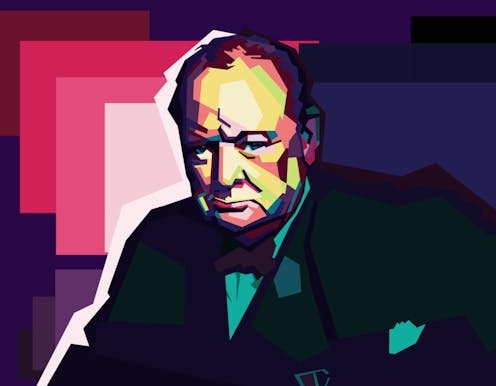
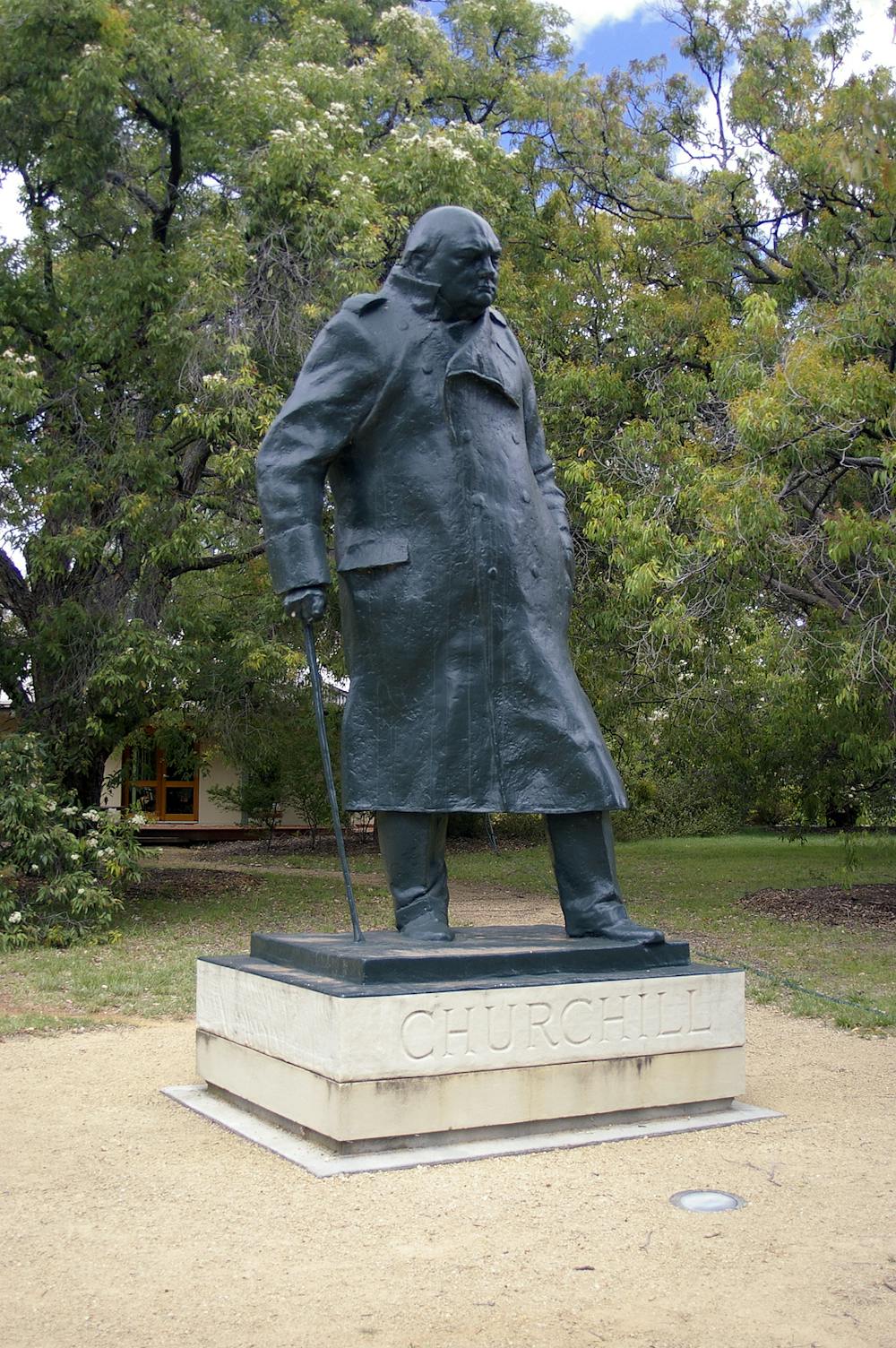
Only one prime minister is honoured with a statue on the grounds of the Australian National University. Despite the university’s name, it is not an Australian. Rather, the stern face of Britain’s war-time prime minister Winston Churchill greets students on the Canberra campus. Although the ANU was founded in 1946, the Churchill statue is not a gesture of post-war admiration. A replica of a statue in Parliament Square, London, it is owned by the Winston Churchill Trust and was erected in 1985.
Review: Winston Churchill: His Times, His Crimes - Tariq Ali (Verso)
Why would the ANU decide to honour a British prime minister two decades after his death? According to author Tariq Ali, excessive admiration of Churchill, which he calls a cult, is not a result of his wartime leadership in the 1940s but was deliberately cultivated, in Britain and the wider English-speaking world, by his Conservative successors in the wake of the 1982 Falklands War.
For Ali, an Oxford-educated journalist and film maker and towering figure in the international left, the cult reflects a nostalgia for empire. It is now, he argues, virtually uncontested with support from “all three [UK] political parties and the large trade unions”.
A long-standing contributor to the Guardian and editor of the New Left Review, Ali is a prolific and iconoclastic author who has written scathing accounts of US Presidents George W. Bush and Barack Obama. In Winston Churchill: His Times, His Crimes, Ali turns his attention not so much to the historical Churchill as his legacy and place in public memory.
Ali’s book is not a conventional biography. He explains that library shelves already groan under the weight of Churchill biographies, several of which, in his opinion, amount to hagiography. Rather the book serves as one long argument (at over 400 pages perhaps unnecessarily long) that the lionising of Churchill’s legacy in books and film is not only historically problematic but deleterious for modern politics.
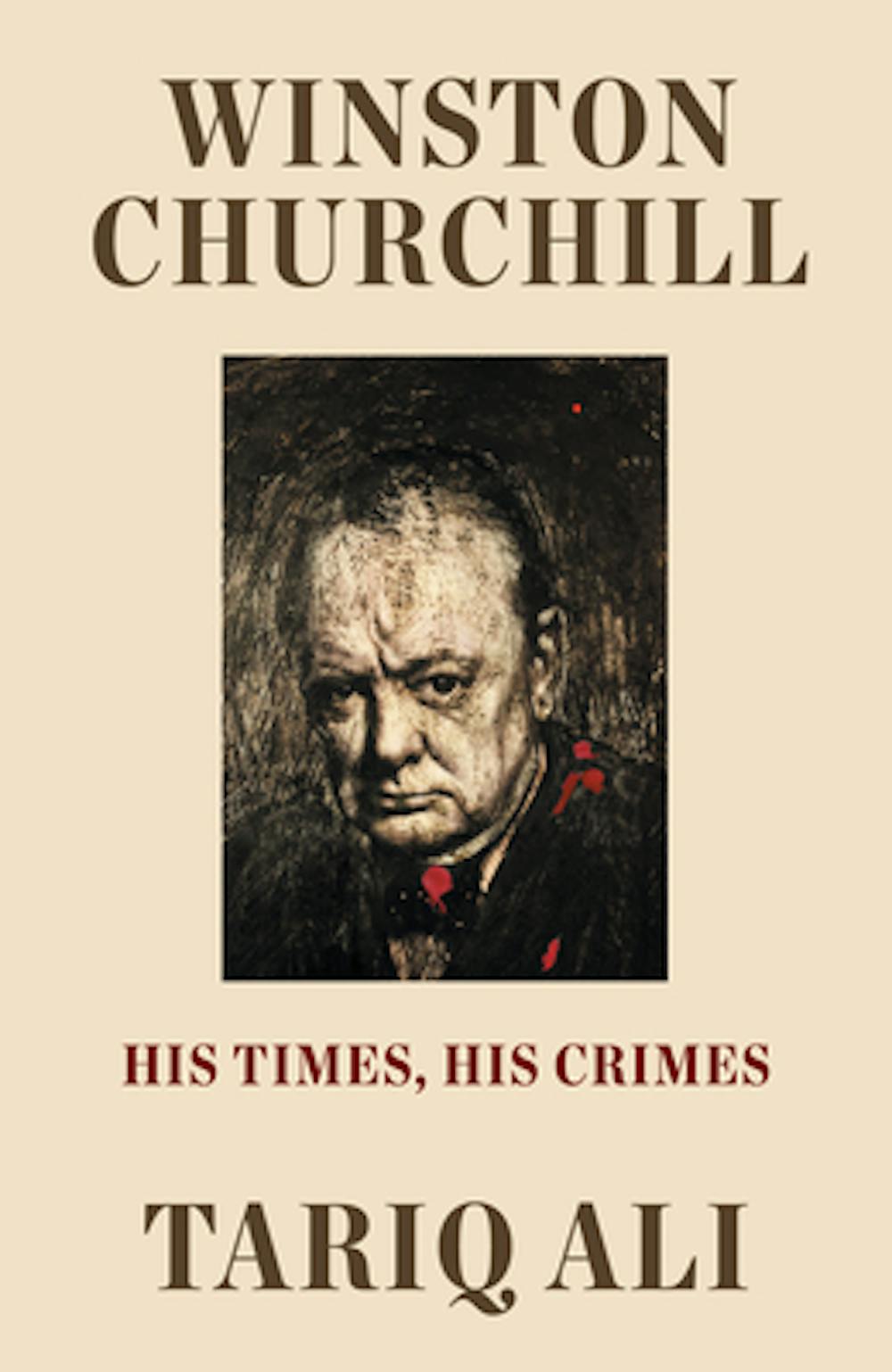 Ali asserts, “that Churchill was a racist is indisputable”. He has plenty of primary material to sustain this claim. Instead of the usual blurb, the book’s back cover consists of a series of racist and sexist comments attributed to Churchill.
He informed the 1937 Peel Report on the British mandate in Palestine that First Nations in North America and Australia had been colonised by “a stronger race, a higher-grade race”.
According to former British PM Harold Macmillan, Churchill floated “Keep England White” as a campaign slogan for the 1955 election. Perhaps most damning is the recollection of Churchill’s friend, the politician Violet Bonham Carter: when asked his opinion on China in 1954, he reportedly replied, “I hate people with slit eyes and pigtails”.
Ali asserts, “that Churchill was a racist is indisputable”. He has plenty of primary material to sustain this claim. Instead of the usual blurb, the book’s back cover consists of a series of racist and sexist comments attributed to Churchill.
He informed the 1937 Peel Report on the British mandate in Palestine that First Nations in North America and Australia had been colonised by “a stronger race, a higher-grade race”.
According to former British PM Harold Macmillan, Churchill floated “Keep England White” as a campaign slogan for the 1955 election. Perhaps most damning is the recollection of Churchill’s friend, the politician Violet Bonham Carter: when asked his opinion on China in 1954, he reportedly replied, “I hate people with slit eyes and pigtails”.
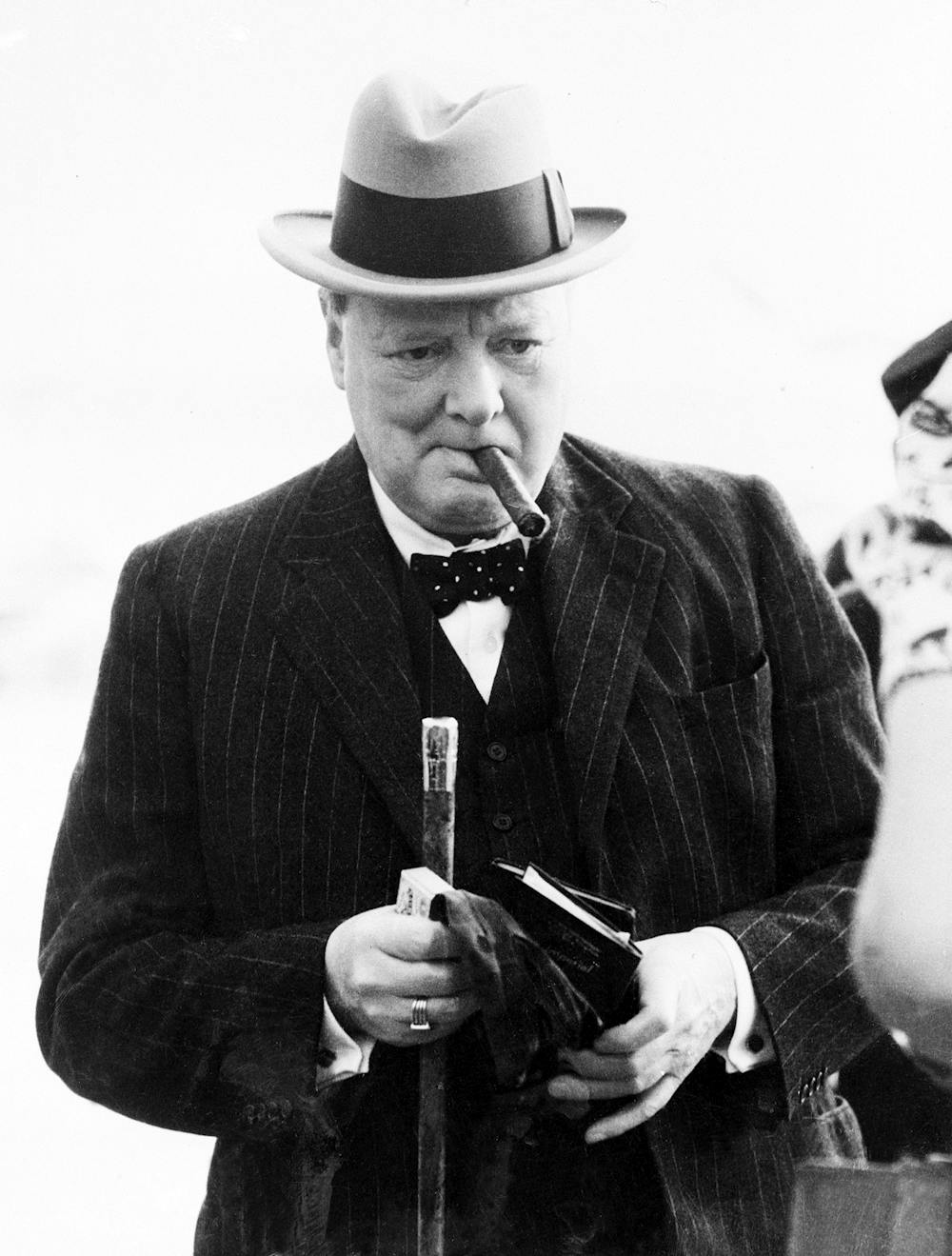 Churchill in Paris in 1947.
AP
For Ali, it is not Churchill’s racist views but the way they informed his policies that demands more attention. In popular memory, Churchill’s leadership in the second world war attracts the most praise. Ali joins a growing body of literature calling for a reassessment of Churchill’s legacy in light of the 1943 Bengal Famine where more than 3 million Indians (Ali claims 5 million) starved to death under British administration.
Churchill’s view that “Indians breed like rabbits” was surely relevant to his decision not to deliver food supplies to Bengal during this famine as a matter of urgency.
Read more:
Churchill and India: imperial chauvinism left a bitter legacy
Another of Churchill’s “crimes” for Ali was the brutal suppression of the largely communist Greek Resistance to the Nazis. Stalin and Churchill had agreed that Greece should remain within the western sphere of influence after the second world war but this decision led to the Greek Civil War, which raged from 1944-49 and cost over half a million lives.
In one bloody episode in Athens on 3 December 1944, the British army fired on partisan civilians, many of whom had fought with the Allies against the Nazis. For Ali, “the British Army and its Greek auxiliaries were guilty of serious war crimes, some bordering on genocide”.
Unsurprisingly, these violent episodes are missing from films like 2017’s Darkest Hour which focused narrowly on Churchill’s refusal to negotiate with the Nazis, climaxing with his famous “fight them on the beaches” speech.
Ali does not suggest that Churchill is solely responsible for complex tragedies like the Bengal Famine or Greek Civil War but he argues that it is common practice to assign individual blame to Stalin for the Five Year Plan or Mao for the Great Leap Forward. It follows, he suggests, that Churchill should at least be “added to the list” of those responsible for these deaths. Some might dismiss this as specious logic but Ali challenges the reader to ask if Churchill’s popular veneration in books and films omits important details.
The trailer for Darkest Hour.If Ali’s goal is to write a coruscating account of Churchill’s life to balance the flattering ones, he is most effective in the first substantive chapter.
Born into an aristocratic family in Oxfordshire in 1874, Churchill grew up in Ireland where his grandfather was Viceroy. Ali portrays young Churchill as a victim of “parental neglect” who found solace in dreams of imperial glory. Desperate for his father’s elusive approval, he trained for a military career and saw action in the late 19th century both as a journalist and officer.
Churchill in Paris in 1947.
AP
For Ali, it is not Churchill’s racist views but the way they informed his policies that demands more attention. In popular memory, Churchill’s leadership in the second world war attracts the most praise. Ali joins a growing body of literature calling for a reassessment of Churchill’s legacy in light of the 1943 Bengal Famine where more than 3 million Indians (Ali claims 5 million) starved to death under British administration.
Churchill’s view that “Indians breed like rabbits” was surely relevant to his decision not to deliver food supplies to Bengal during this famine as a matter of urgency.
Read more:
Churchill and India: imperial chauvinism left a bitter legacy
Another of Churchill’s “crimes” for Ali was the brutal suppression of the largely communist Greek Resistance to the Nazis. Stalin and Churchill had agreed that Greece should remain within the western sphere of influence after the second world war but this decision led to the Greek Civil War, which raged from 1944-49 and cost over half a million lives.
In one bloody episode in Athens on 3 December 1944, the British army fired on partisan civilians, many of whom had fought with the Allies against the Nazis. For Ali, “the British Army and its Greek auxiliaries were guilty of serious war crimes, some bordering on genocide”.
Unsurprisingly, these violent episodes are missing from films like 2017’s Darkest Hour which focused narrowly on Churchill’s refusal to negotiate with the Nazis, climaxing with his famous “fight them on the beaches” speech.
Ali does not suggest that Churchill is solely responsible for complex tragedies like the Bengal Famine or Greek Civil War but he argues that it is common practice to assign individual blame to Stalin for the Five Year Plan or Mao for the Great Leap Forward. It follows, he suggests, that Churchill should at least be “added to the list” of those responsible for these deaths. Some might dismiss this as specious logic but Ali challenges the reader to ask if Churchill’s popular veneration in books and films omits important details.
The trailer for Darkest Hour.If Ali’s goal is to write a coruscating account of Churchill’s life to balance the flattering ones, he is most effective in the first substantive chapter.
Born into an aristocratic family in Oxfordshire in 1874, Churchill grew up in Ireland where his grandfather was Viceroy. Ali portrays young Churchill as a victim of “parental neglect” who found solace in dreams of imperial glory. Desperate for his father’s elusive approval, he trained for a military career and saw action in the late 19th century both as a journalist and officer.
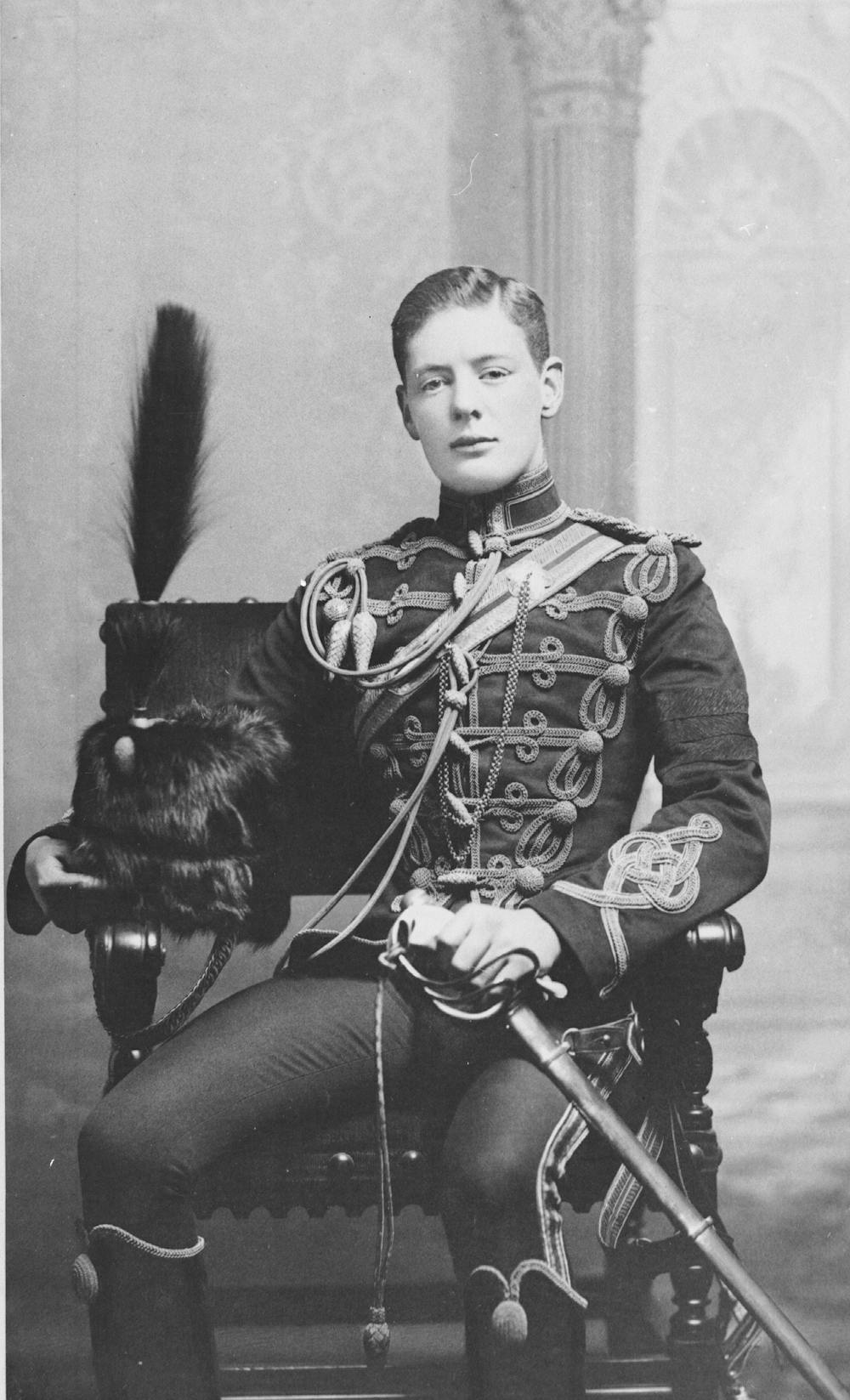 Second Lieutenant Winston Churchill of the 4th Queen’s Own Hussars in 1895.
Wikimedia Commons
From Cuba to India, Sudan to South Africa, Ali provides extended extracts from Churchill’s letters and memoirs to show a consistent enthusiasm for European imperialism and a profound disgust for those he felt should be ruled over.
For instance, when the 22 year old Churchill discovered the mutilated bodies of British soldiers in northwest India (today Pakistan), he denounced the Pashtun perpetrators in his diary as “miserable and brutal creatures” and “pernicious vermin”. There was no reflection on the violence the British army had carried out on the Pashtun or why British rule might be resisted. Churchill is portrayed as the epitome of Rudyard Kipling’s “White Man’s Burden” justifying all acts of military cruelty as part of a perceived civilising mission.
There is little original research in this work, or new historical insight on Churchill’s career, but Ali makes his opinion of the existing literature clear. He approves of Clive Ponting’s 1994 revisionist biography, which was one of the first to challenge the the Churchill “myth” of the 1980s, calling it the “most objective” and quoting from it liberally. He is more critical of the biographies written by Liberal politician Roy Jenkins in 2017 and historian Andrew Roberts in 2019. Both, according to Ali, downplay Churchill’s fondness for Mussolini and “tend to side-step his more gory effusions”.
A recent phenomenon
Churchill had a long career and his biographies tend to be necessarily lengthy. Following his military career in the late 19th century he entered parliament as a Conservative in 1900, switching to the Liberals in 1904. He was First Lord of the Admiralty during the first world war but was compelled to resign in 1915 following a series of military disasters culminating in the bungled Gallipoli campaign. A tenacious politician, he switched his allegiance back to the Conservatives in 1924. Following Neville Chamberlain’s resignation, Churchill became Prime Minister from 1940-45 and again from 1951-55. He died in 1965.
While Churchill received a state funeral and tributes from around the world, Ali is quick to point out that against a backdrop of international decolonisation, he had his critics too. Ali quotes from Howard Brenton’s 1974 production, the Churchill Play, which opens with a debate about his legacy. “But ‘e won the war” opines one mourner. “People won the war. He just got pissed with Stalin,” comes the reply.
One of the most useful aspects of Ali’s book is highlighting how recently the cult of Churchill formed. He notes that, “rather than a subject of intense historical scrutiny, Churchill has become a burnished icon …”
Ali follows the lead of writer Anthony Barnett who argued in a 1982 issue of New Left Review that the new enthusiasm can be called “Churchillism”. The “Churchill industry” is so successful that a 2002 nationwide BBC poll voted him the “greatest Briton” ahead of Shakespeare, Darwin or Elizabeth I.
Ali estimates there are more than 1600 biographies of Churchill, most produced after 1982. Within this cult, Churchill embodies the British fighting spirit and a rugged determination to stand up to evil. Tony Blair presented a bust of Churchill to George W. Bush in 2001 in an attempt to draw parallels to the War on Terror. After Obama moved it, Donald Trump symbolically returned the bust to the Oval Office.
But the cult remains most potent in the UK. Boris Johnson’s 2014 book The Churchill Factor was an unsubtle but ultimately successful attempt to gain political capital from this legacy.
Second Lieutenant Winston Churchill of the 4th Queen’s Own Hussars in 1895.
Wikimedia Commons
From Cuba to India, Sudan to South Africa, Ali provides extended extracts from Churchill’s letters and memoirs to show a consistent enthusiasm for European imperialism and a profound disgust for those he felt should be ruled over.
For instance, when the 22 year old Churchill discovered the mutilated bodies of British soldiers in northwest India (today Pakistan), he denounced the Pashtun perpetrators in his diary as “miserable and brutal creatures” and “pernicious vermin”. There was no reflection on the violence the British army had carried out on the Pashtun or why British rule might be resisted. Churchill is portrayed as the epitome of Rudyard Kipling’s “White Man’s Burden” justifying all acts of military cruelty as part of a perceived civilising mission.
There is little original research in this work, or new historical insight on Churchill’s career, but Ali makes his opinion of the existing literature clear. He approves of Clive Ponting’s 1994 revisionist biography, which was one of the first to challenge the the Churchill “myth” of the 1980s, calling it the “most objective” and quoting from it liberally. He is more critical of the biographies written by Liberal politician Roy Jenkins in 2017 and historian Andrew Roberts in 2019. Both, according to Ali, downplay Churchill’s fondness for Mussolini and “tend to side-step his more gory effusions”.
A recent phenomenon
Churchill had a long career and his biographies tend to be necessarily lengthy. Following his military career in the late 19th century he entered parliament as a Conservative in 1900, switching to the Liberals in 1904. He was First Lord of the Admiralty during the first world war but was compelled to resign in 1915 following a series of military disasters culminating in the bungled Gallipoli campaign. A tenacious politician, he switched his allegiance back to the Conservatives in 1924. Following Neville Chamberlain’s resignation, Churchill became Prime Minister from 1940-45 and again from 1951-55. He died in 1965.
While Churchill received a state funeral and tributes from around the world, Ali is quick to point out that against a backdrop of international decolonisation, he had his critics too. Ali quotes from Howard Brenton’s 1974 production, the Churchill Play, which opens with a debate about his legacy. “But ‘e won the war” opines one mourner. “People won the war. He just got pissed with Stalin,” comes the reply.
One of the most useful aspects of Ali’s book is highlighting how recently the cult of Churchill formed. He notes that, “rather than a subject of intense historical scrutiny, Churchill has become a burnished icon …”
Ali follows the lead of writer Anthony Barnett who argued in a 1982 issue of New Left Review that the new enthusiasm can be called “Churchillism”. The “Churchill industry” is so successful that a 2002 nationwide BBC poll voted him the “greatest Briton” ahead of Shakespeare, Darwin or Elizabeth I.
Ali estimates there are more than 1600 biographies of Churchill, most produced after 1982. Within this cult, Churchill embodies the British fighting spirit and a rugged determination to stand up to evil. Tony Blair presented a bust of Churchill to George W. Bush in 2001 in an attempt to draw parallels to the War on Terror. After Obama moved it, Donald Trump symbolically returned the bust to the Oval Office.
But the cult remains most potent in the UK. Boris Johnson’s 2014 book The Churchill Factor was an unsubtle but ultimately successful attempt to gain political capital from this legacy.
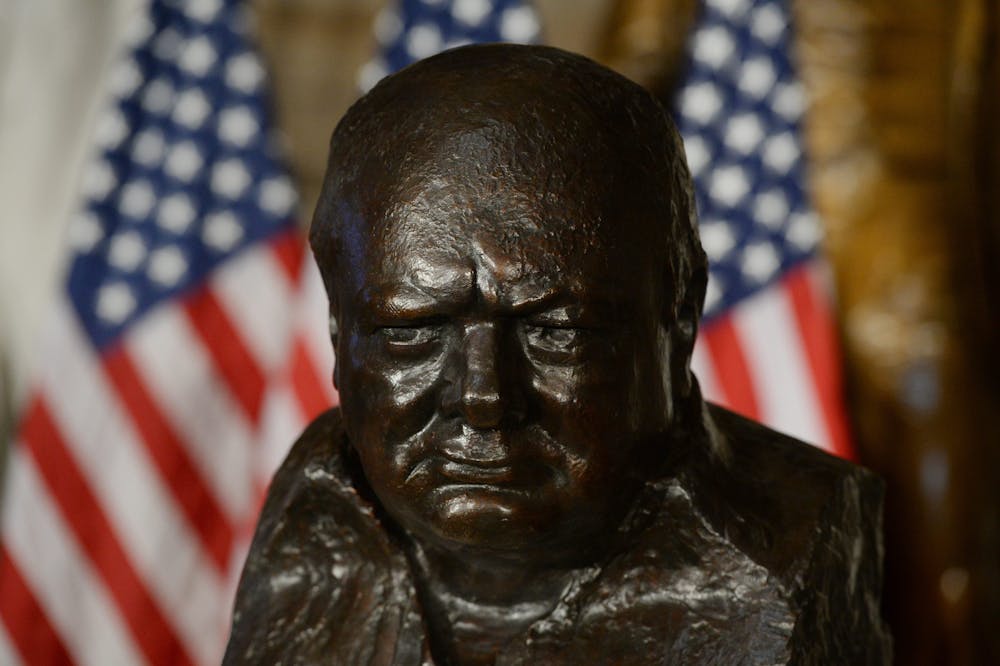 A Churchill bust at the US Congress.
Michael Reynolds/AP
The structure of Ali’s book roughly follows Churchill’s career but Ali frequently goes off on lengthy tangents that do not necessarily strengthen his case, from a verbose discussion on Vladimir Lenin and Rosa Luxemburg to a potted history of Irish republicanism to nearly 10 pages on the history of Zionism. These digressions are interesting, if contested, but come at the expense of a tighter focus on the book’s subject. The chapter on Japanese imperialism barely mentions Churchill at all except to say he underestimated the military threat Japan posed during the second world war.
Read more:
World politics explainer: The atomic bombings of Hiroshima and Nagasaki
This is not an academic publication and while the book includes footnotes rather than end-notes (usually a virtue for this reader), they are so sparsely used it is not always clear where the information is coming from. The index is also poor. There is no entry for “Gallipoli” despite Ali placing great importance on Churchill’s mishandling of the campaign. The book is also littered with excessively long quotes, not just from relevant primary sources but extended extracts from other writers too. Several page-long poems also seem to serve no real purpose.
Ali finishes his book with a general assessment of modern international relations. He argues that the US has inherited the British imperial mission and the UK is now “little more than a US satrapy”. For Ali, despite the setback in Vietnam, the US used its military might to preserve the architecture of white supremacy. In a vivid metaphor, the UK and Australia are described as “two-testicle states” for their firm support of the US against China.
A Churchill bust at the US Congress.
Michael Reynolds/AP
The structure of Ali’s book roughly follows Churchill’s career but Ali frequently goes off on lengthy tangents that do not necessarily strengthen his case, from a verbose discussion on Vladimir Lenin and Rosa Luxemburg to a potted history of Irish republicanism to nearly 10 pages on the history of Zionism. These digressions are interesting, if contested, but come at the expense of a tighter focus on the book’s subject. The chapter on Japanese imperialism barely mentions Churchill at all except to say he underestimated the military threat Japan posed during the second world war.
Read more:
World politics explainer: The atomic bombings of Hiroshima and Nagasaki
This is not an academic publication and while the book includes footnotes rather than end-notes (usually a virtue for this reader), they are so sparsely used it is not always clear where the information is coming from. The index is also poor. There is no entry for “Gallipoli” despite Ali placing great importance on Churchill’s mishandling of the campaign. The book is also littered with excessively long quotes, not just from relevant primary sources but extended extracts from other writers too. Several page-long poems also seem to serve no real purpose.
Ali finishes his book with a general assessment of modern international relations. He argues that the US has inherited the British imperial mission and the UK is now “little more than a US satrapy”. For Ali, despite the setback in Vietnam, the US used its military might to preserve the architecture of white supremacy. In a vivid metaphor, the UK and Australia are described as “two-testicle states” for their firm support of the US against China.
 British Prime Minister Winston Churchill, left, reviews American troops at a base in England on the eve of D-Day, June 1944, during World War II.
AP
Ali is highly critical of the 2003 War in Iraq and argues an “extreme centre” has taken over politics in many western countries with increasing numbers of young people not seeing any point in voting. Ali draws a link between the War in Iraq and Churchill, arguing that:
it’s being carried out in different times and different circumstances, but its aims are no different to that of Churchill’s empire.
Ironies
Ironically, by seeing Churchill’s long hand as something that continues to shape modern politics, Ali makes him a larger figure than even the high priests of his cult. There would have been more merit in a shorter and more tightly focused book which held up the actual historical Churchill to the romanticised patriot imagined in the 1980s.
Ali is strongest when using primary material to paint Churchill as a racist opportunist. He is weakest when suggesting that his mission was to create an “umbilical chord made of piano wire” so the Americans would continue his work in perpetuity.
Ali’s book is polemical and will have a ready-made audience with those who already see Churchill as a symbol of British imperialism. It is not a balanced (or complete) overview of Churchill’s life but the author will see his scathing account as a needed correction to the plentiful supply of fawning biographies.
British Prime Minister Winston Churchill, left, reviews American troops at a base in England on the eve of D-Day, June 1944, during World War II.
AP
Ali is highly critical of the 2003 War in Iraq and argues an “extreme centre” has taken over politics in many western countries with increasing numbers of young people not seeing any point in voting. Ali draws a link between the War in Iraq and Churchill, arguing that:
it’s being carried out in different times and different circumstances, but its aims are no different to that of Churchill’s empire.
Ironies
Ironically, by seeing Churchill’s long hand as something that continues to shape modern politics, Ali makes him a larger figure than even the high priests of his cult. There would have been more merit in a shorter and more tightly focused book which held up the actual historical Churchill to the romanticised patriot imagined in the 1980s.
Ali is strongest when using primary material to paint Churchill as a racist opportunist. He is weakest when suggesting that his mission was to create an “umbilical chord made of piano wire” so the Americans would continue his work in perpetuity.
Ali’s book is polemical and will have a ready-made audience with those who already see Churchill as a symbol of British imperialism. It is not a balanced (or complete) overview of Churchill’s life but the author will see his scathing account as a needed correction to the plentiful supply of fawning biographies.
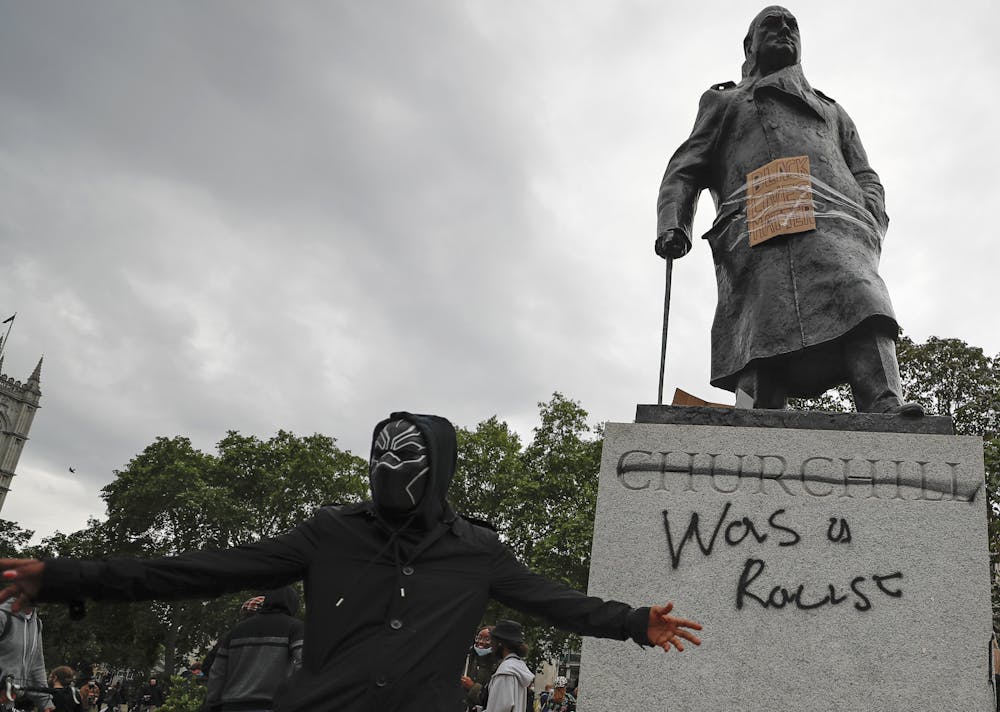 Protesters gather around the Winston Churchill statue in Parliament Square during a Black Lives Matter rally in London, Sunday, June 7, 2020.
Frank Augstein/AP
The Churchill statue in London was vandalised in anti-capitalism protests in 2000, anti-student fee protests 2010, and Black Lives Matter protests in 2020. In Canberra, the replica has been the target of increased protest since 2020. The Winston Churchill Trust recently came to an agreement with the ANU BIPOC department to install a critical plaque as well as a “counter-monument”.
Debates over Churchill’s life and legacy will continue in Britain and around the world. While the contribution to historical scholarship is minimal, Ali’s book is an important addition to the Churchill debates and a warning against political deification.
Authors: Benjamin T. Jones, Senior Lecturer in History, CQUniversity Australia
Protesters gather around the Winston Churchill statue in Parliament Square during a Black Lives Matter rally in London, Sunday, June 7, 2020.
Frank Augstein/AP
The Churchill statue in London was vandalised in anti-capitalism protests in 2000, anti-student fee protests 2010, and Black Lives Matter protests in 2020. In Canberra, the replica has been the target of increased protest since 2020. The Winston Churchill Trust recently came to an agreement with the ANU BIPOC department to install a critical plaque as well as a “counter-monument”.
Debates over Churchill’s life and legacy will continue in Britain and around the world. While the contribution to historical scholarship is minimal, Ali’s book is an important addition to the Churchill debates and a warning against political deification.
Authors: Benjamin T. Jones, Senior Lecturer in History, CQUniversity Australia


 Daily Bulletin


