

Read The Times Australia

Daily Bulletin

People who lived in the UK in the 'mad cow disease' years may now be able to give blood. The risk of vCJD is tiny

  • Written by: Hamish McManus, Biostatistician, Kirby Institute, UNSW Sydney
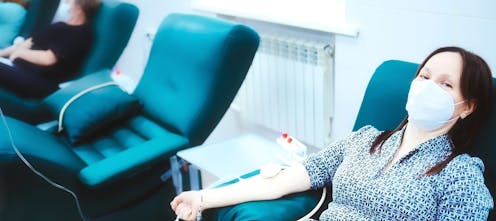
People who lived in the UK in the 'mad cow disease' years may now be able to give blood. The risk of vCJD is tiny

From today, eligible people who were in the United Kingdom in the 80s and 90s will be able to donate blood in Australia again.

That’s because the risk of acquiring variant Creutzfeldt-Jakob disease (vCJD) from blood transfusions in Australia is incredibly tiny.

We calculated that risk was about one in 1.4 billion, publishing our research in the journal Vox Sanguinis.

The removal of restrictions, which have been in place for more than 20 years, means about 750,000 more Australians can now potentially donate blood.

This is at a time when there is a shortage of blood donations due to donors sick with COVID or flu.

Remind me again, what is vCJD?

Researchers identified vCJD as a new and emerging fatal neurological disease in 1996. It has since been associated with 233 cases worldwide, with 178 of those in the UK.

Once infected, people show no symptoms for many years. But when they do, there are psychiatric symptoms, such as depression. Then there are sensory symptoms, such as pain, followed by neurological abnormalities. People usually die about a year after symptoms start.

Transmission has been mainly via eating beef from cattle with bovine spongiform encephalitis (or BSE, commonly referred to as “mad cow disease”) in the UK during the 80s and 90s.

Mad cow disease had been spread by contaminated stock feed (cattle had been fed with contaminated beef products) before regulations were tightened and implemented, from 1996.

Over this time, an estimated 180,000 infected cattle had entered the UK human food chain.

Read more: Rare and deadly, Creutzfeldt-Jakob disease remains a bit of a medical mystery

How is this connected to giving blood?

There is no easy test for vCJD and infected people don’t know they have it until they have symptoms. This pre-symptomatic phase can be as long as several decades. So there was speculation there could be unidentified people with vCJD, but exactly how many was unclear.

This is a potential public health issue as people who don’t know they have vCJD could transmit to others through blood, or tissue and organ donations.

This is why people who were in the UK between 1980 and 1996 for six months or more have been unable to give blood in Australia, since December 2000. Other countries had similar bans.
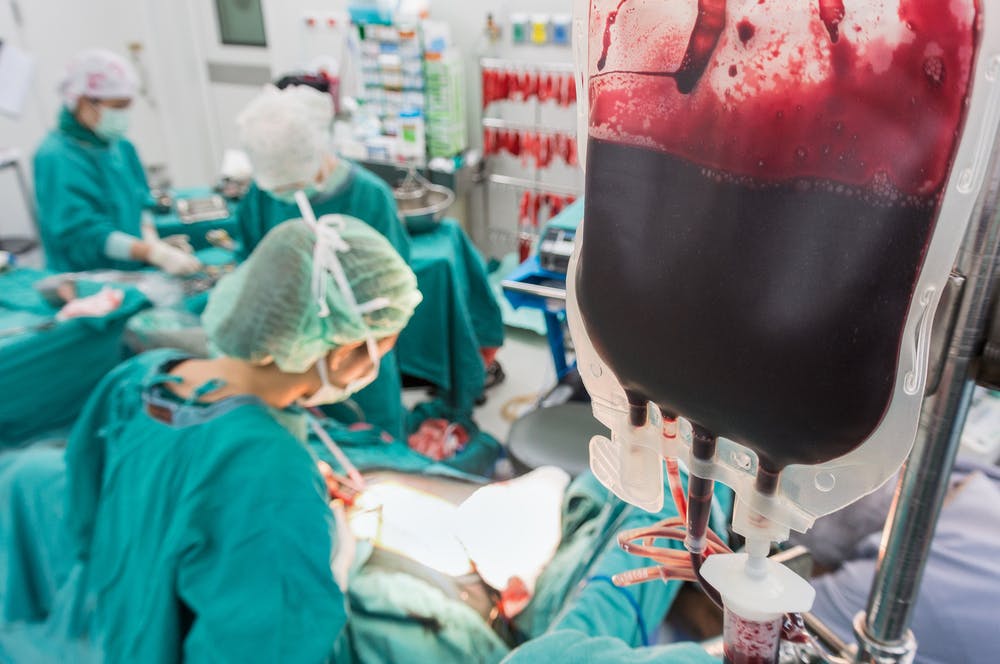
Blood bag hanging in operating theatre while surgeons operating
People who didn’t know they had vCJD could have transmitted to others via a blood transfusion. Shutterstock

Read more: From animal experiments to saving lives: a history of blood transfusions

So what’s changed?

Since the peak of the vCJD epidemic in 2000, when there were 28 deaths in the UK, there has been a rapid decline in recorded cases, with only two worldwide since 2015. These numbers are much lower than modelled predictions.

Because there have been no BSE or vCJD cases in Australia, lower-than-predicted vCJD case numbers generally, and the ongoing change in the proportion of people in Australia who were exposed to vCJD, we recently reassessed the risk of vCJD in Australian blood donors.

Read more: Australia’s ethnic face is changing, and so are our blood types

The risk is tiny, the benefits large

We looked at a range of scenarios, including different assumptions about the numbers of people with vCJD, infectiousness and incubation periods.

Using modelling, we predicted a blood donation from an Australian with vCJD would occur once every 65 years, but this rate decreases over time.

If that donated blood was used in a transfusion today, there would be about a one in 1.4 billion chance of the recipient developing vCJD.

In other words, there is virtually no increased risk of vCJD transmission via transfusion (and this is decreasing). Lifting the ban on UK donors would increase the donor pool by 750,000 newly eligible people.

Assuming donation at the current rate, this would result in a gain of around 58,000 blood donations annually.

Our research was instrumental in supporting today’s opening up of blood donations, as approved by the Therapeutic Goods Administration earlier this year and subsequently supported by Australian governments.

The Food and Drug Administration has also recommended removing similar restrictions on blood donors in the United States.

The authors acknowledge the assistance of Veronica Hoad and Alison Gould from Lifeblood in drafting and reviewing the article.

Contact Lifeblood to donate blood in Australia.

Authors: Hamish McManus, Biostatistician, Kirby Institute, UNSW Sydney

Read more https://theconversation.com/people-who-lived-in-the-uk-in-the-mad-cow-disease-years-may-now-be-able-to-give-blood-the-risk-of-vcjd-is-tiny-183521

Business News

Designing Eco-Friendly Custom Water Bottles for Your Next Event

The Evolution of Sustainable Event Merchandise Event planning has undergone a massive transformation over the last decade. Gone are the days when organizers could hand out cheap, single use plastic...

Daily Bulletin - avatar Daily Bulletin

Why Choosing a Professional Florist Melbourne Makes Flower Delivery Impactful

Flowers have a great power to speak when humans cannot express their feelings with right words. Flowers are the best gifts when you are celebrating a birthday or welcoming a newborn child into your fa...

Daily Bulletin - avatar Daily Bulletin

The Business Case for Choosing Australian Fabricators Over Imported Alternatives

For a long time, you might have defaulted to overseas suppliers when sourcing fabricated metal components for a project. The unit price was lower on paper, and the maths seemed straightforward. That...

Daily Bulletin - avatar Daily Bulletin

Australian organisations are relying on business continuity plans built for a far more predictable world

Tariff escalations, supply chain fragility, geopolitical events, and the ongoing threat of cyber disruption have reshaped the risk environment facing Australian organisations. The problem is that ma...

Daily Bulletin - avatar Daily Bulletin

How to Rent a Car for Uber in Melbourne: What Every New Driver Needs to Know

Starting out as an Uber driver in Melbourne is not as complicated as it sounds but getting the vehicle right is where most new drivers get stuck. Uber has strict requirements around vehicle age, condi...

Daily Bulletin - avatar Daily Bulletin

When Should You Speak to a Lawyer About a Legal Issue?

Legal issues can begin with a simple question, then become harder to manage once formal steps are involved. Many people wait until a matter feels urgent before seeking guidance, even though earlier ...

Daily Bulletin - avatar Daily Bulletin

The strategic rise of Bali as Australia’s next essential healthcare support hub

As Australian healthcare providers grapple with unprecedented operational bottlenecks, a new nearshore model is quietly transforming patient care delivery. Forward-thinking organisations,  including...

Daily Bulletin - avatar Daily Bulletin

Cost Savings and Benefits of Using Used Pallets in Logistics

In today’s competitive logistics and supply chain industry, businesses are constantly looking for ways to reduce operational costs without compromising efficiency and reliability. One of the most prac...

Daily Bulletin - avatar Daily Bulletin

How Fulfilment Services in Australia Help Businesses Scale Efficiently

The growth of e-commerce and modern retail has transformed customer expectations. Consumers now expect fast shipping, accurate order processing, and seamless delivery experiences regardless of where...

Daily Bulletin - avatar Daily Bulletin

The Daily Magazine

NDIS Support Coordination Explained: What Does a Support Coordinator Actually Do?

NDIS support coordination explained means understanding how a professional can help participants n...

When Should You Speak with Divorce Lawyers in Sydney?

Divorce involves more than completing an online application. It can affect parenting arrangements, p...

How to Choose a Reliable Hot Water System Installer on the Gold Coast

Choosing a reliable installer is just as important as choosing the right hot water system. A qualifi...

How Microtask Platforms Support Modern Digital Promotion

Digital promotion has become increasingly complex. Businesses communicate with customers through w...

Cosmetic Dentistry Options From a Brisbane-Based Dental Team

You cover your mouth when you laugh. You skip the group photo. Maybe you edit pictures to soften a...

Essential Steps to Handle Sudden Tooth Pain and Dental Crises

A sudden, throbbing toothache can totally stop your whole day, with no warning. When severe pain, ...

Different Types of Power Poles Used in Australia

Power poles are easy to overlook until one needs replacing, starts leaning, or sits directly in the ...

From Application To Court: How Family Violence Orders Work In Victoria

Most people don't learn how the intervention order process works until they're already inside it. So...

Why Businesses Are Choosing Virtual Reception Services

In today’s fast-paced digital world, businesses are constantly evolving to meet the needs of their...