

Is the James Webb Space Telescope finding the furthest, oldest, youngest or first galaxies? An astronomer explains
- Written by: Michael J. I. Brown, Associate Professor in Astronomy, Monash University
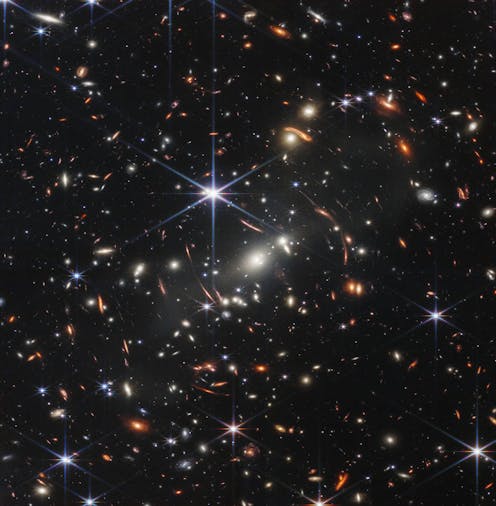
We’ve now seen the first data from the James Webb Space Telescope. It has observed the atmospheres of distant planets, groups of nearby galaxies, galaxy light bent by unseen dark matter, and clouds of gas and dust in stellar nurseries.
We have also seen headlines claiming Webb has found “the oldest galaxies we have ever seen”, but what does that mean?
I’m a professional astronomer who studies old galaxies, and even I find this a little puzzling.
Looking far, looking back
One of the key science goals of Webb is to peer back in time and observe the early Universe. Webb can do this because, like all telescopes, it is a time machine.
Light travels at 300,000 kilometres per second, so when we look at the Moon we are seeing it as it was a second ago. As the planets of our Solar System are millions or billions of kilometres away, we see them as they were minutes or hours ago.
Going further still, when we look at distant galaxies with telescopes we are often looking at light that has taken millions or billions of years to reach us. This means we are seeing these galaxies as they were millions or billions of years ago.
Read more: When you look up, how far back in time do you see?
What has James Webb seen?
The James Webb Space Telescope is able to see more distant galaxies than other telescopes, including the Hubble Space Telescope.
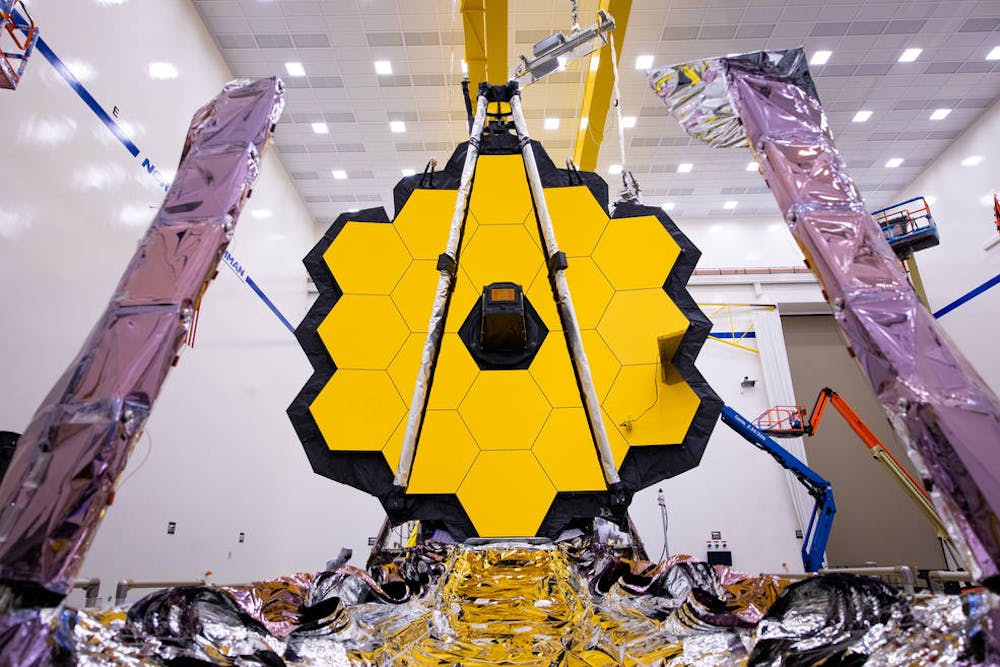
Like Hubble it is above the glowing and turbulent atmosphere of the Earth. However, whereas Hubble has a 2.3 metre mirror for focusing light, Webb has a vast 6.5 metre mirror formed from 18 hexagonal segments. Finally, Webb is optimised to detect infrared light, which is what we observe from the most distant galaxies as the expansion of the Universe has stretched ultraviolet and infrared light into the infrared.
Among the first data obtained by Webb were infrared images looking towards a cluster of galaxies called SMACS 0723.
The light from SMACS 0723 has taken 4.6 billion years to reach us, so we are seeing it as it was 4.6 billion years ago. That’s slightly older than the Sun and the Earth, which only formed 4.56 billion years ago.
In recent weeks, galaxies far beyond SMACS 0723 have gained attention. Webb has detected a number of galaxies in the direction of SMACS 0723 and other regions that could be so distant their light has taken 13.5 billion years to reach us.
I say “could” because more data will be needed to absolutely confirm their distances, but some of these galaxies are very compelling candidates (others less so).
As the light has taken 13.5 billion years to reach us, we are seeing these galaxies as they were 13.5 billion years ago. The Universe itself is 13.8 billion years old, so we could be seeing galaxies as they were just a few hundred million years after the Big Bang.
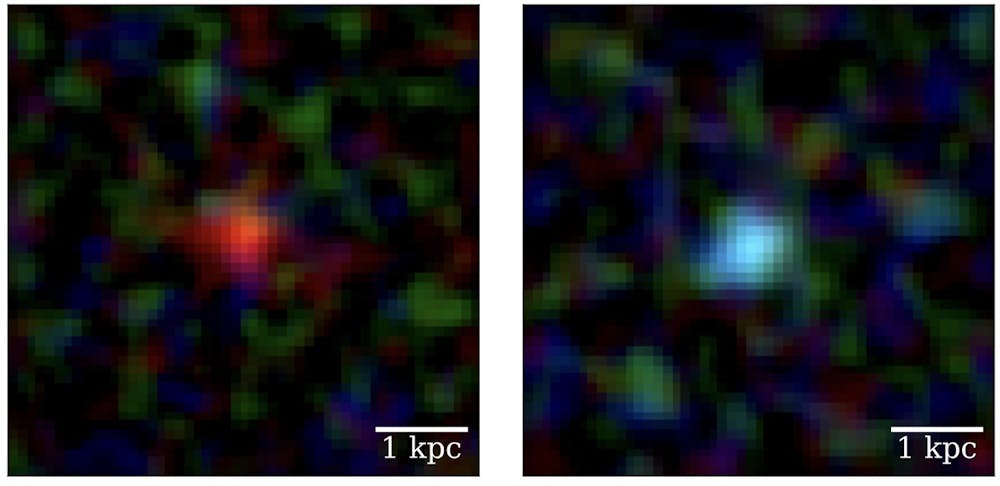 Maisie’s Galaxy may be one of the most distant celestial objects yet observed.
Steve Finkelstein/Twitter
Maisie’s Galaxy may be one of the most distant celestial objects yet observed.
Steve Finkelstein/Twitter
Young, old or early?
While these very distant galaxies have been advertised as the “oldest galaxies”, I find this a little confusing. We are actually seeing these galaxies as they appeared when they were very young, perhaps a hundred million years old or so.
It is true that these galaxies will be old now, but our own Milky Way galaxy is very old now too. While our Sun is 4.56 billion years old, many stars in our galaxy are 10 billion years old and some stars in the Milky Way are 13 billion years old.
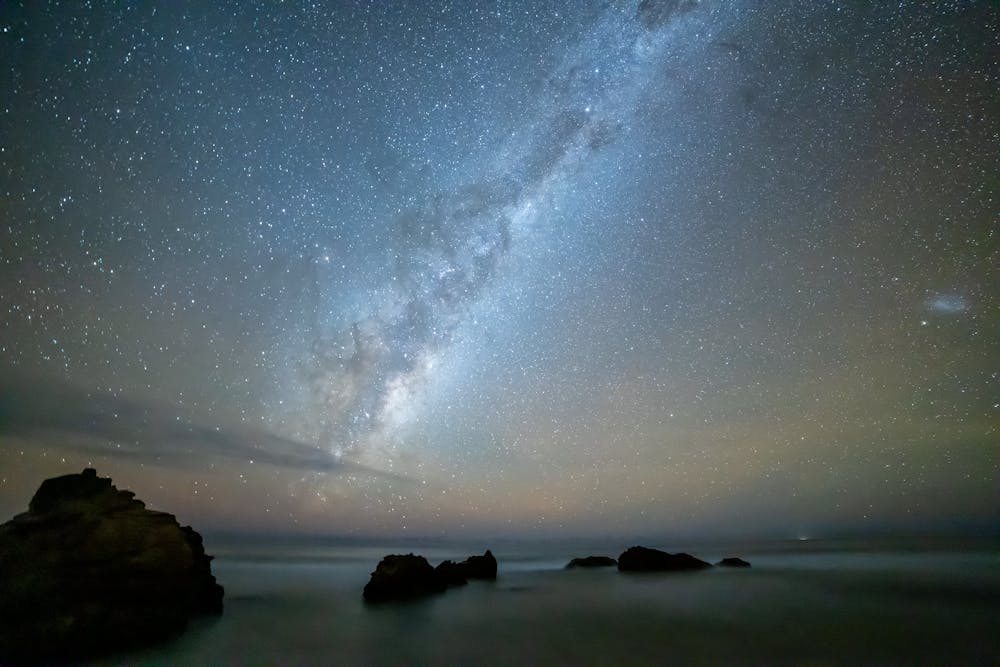 The galaxy we live in, the Milky Way, is billions of years old.
Caroline Jones/Flickr
The galaxy we live in, the Milky Way, is billions of years old.
Caroline Jones/Flickr
Furthermore, the very distant galaxies Webb has spotted will look very different today. Galaxies grow by acquiring gas and dark matter, forming new stars and merging with other galaxies.
A small galaxy that was vigorously forming stars soon after the Big Bang may have ended up being the seed of a galaxy that today is very massive and stopped forming stars long ago. That small galaxy and its old stars could also have ended up being just part of a larger galaxy formed relatively recently by merging galaxies together.
A record set to fall
So should we call these most distant galaxies young or old? Perhaps neither.
James Webb is seeing the earliest galaxies yet observed – some of the first galaxies that formed soon after the Big Bang.
I have thrown in one last caveat – “yet observed”. Webb has only just begun its mission, and current analyses are based on data collected over hours.
With days’ worth of data, Webb will push its view out to fainter and further objects, and see yet-more-distant galaxies. The record for the most distant and thus earliest observed galaxy will probably tumble a few times before the year is out.
Authors: Michael J. I. Brown, Associate Professor in Astronomy, Monash University


 Daily Bulletin


