

Susan Varga's Hard Joy explores the possibilities and limits of memoir
- Written by: Alice Grundy, PhD Candidate, Australian National University
Historically, memoir has been a genre for older authors, reflecting back on their lives, but in recent years there has been an increase in life writing that is tied to a set of ideas or a political agenda.
Some memoirs are reckonings, such as Kathryn Heyman’s Fury and Bri Lee’s Eggshell Skull, both of which confront the spectre of sexual assault. Chloe Higgins’ The Girls and Lech Blaine’s Car Crash face the authors’ extraordinary grief. A number of writers have addressed the relationship between the medical system and women’s health, including Natalie Kon-Yu’s The Cost of Labour and Sarah Sentilles’ Stranger Care.
These are just a handful of examples – memoir continues to be prominent in bookstores. The benefit for publishers with these books is that they afford a certain sort of publicity campaign. They work well for literary festival appearances, radio interviews and excerpts in news media.
Review: Hard Joy: Life and Writing – Susan Varga (Upswell)
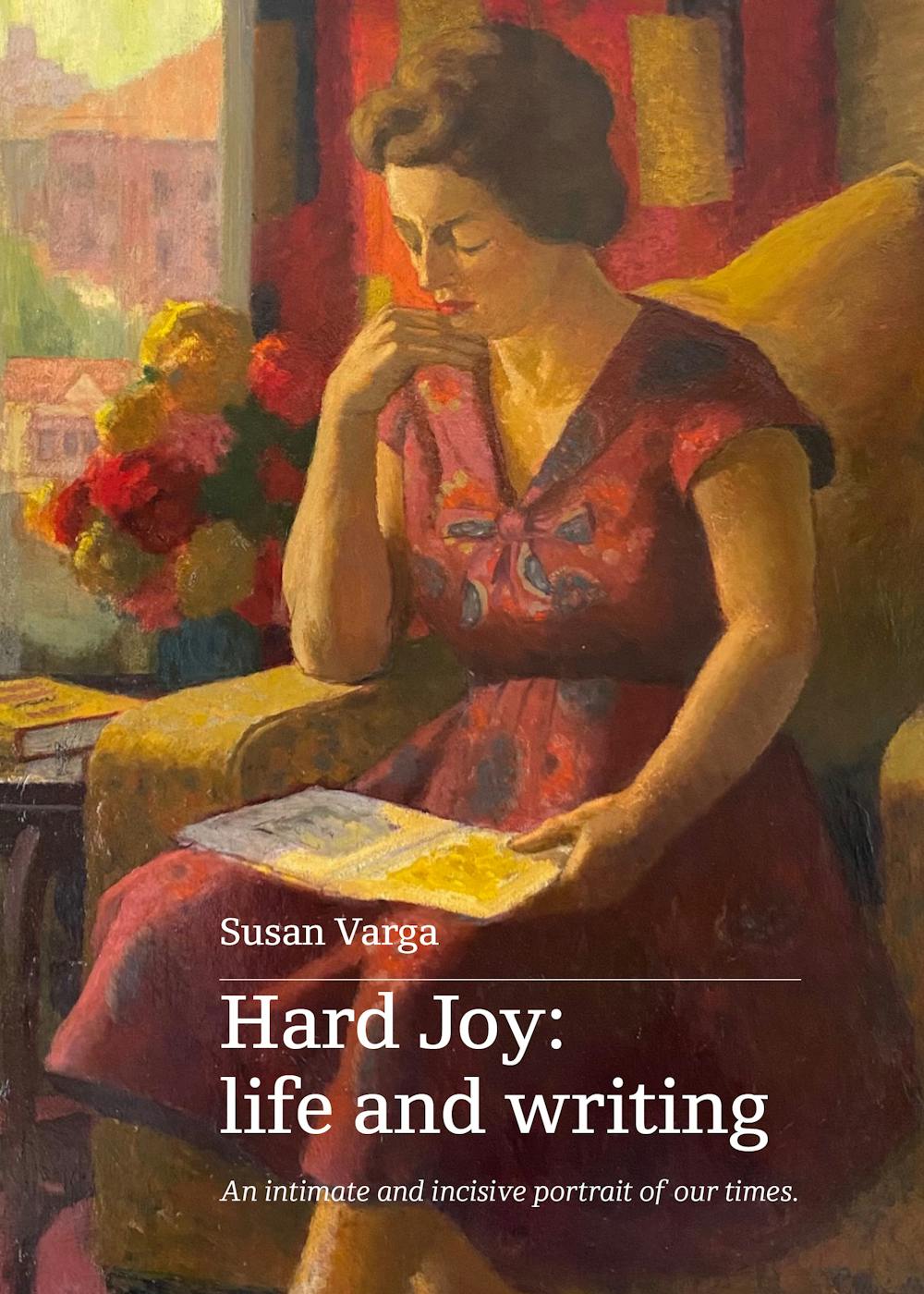
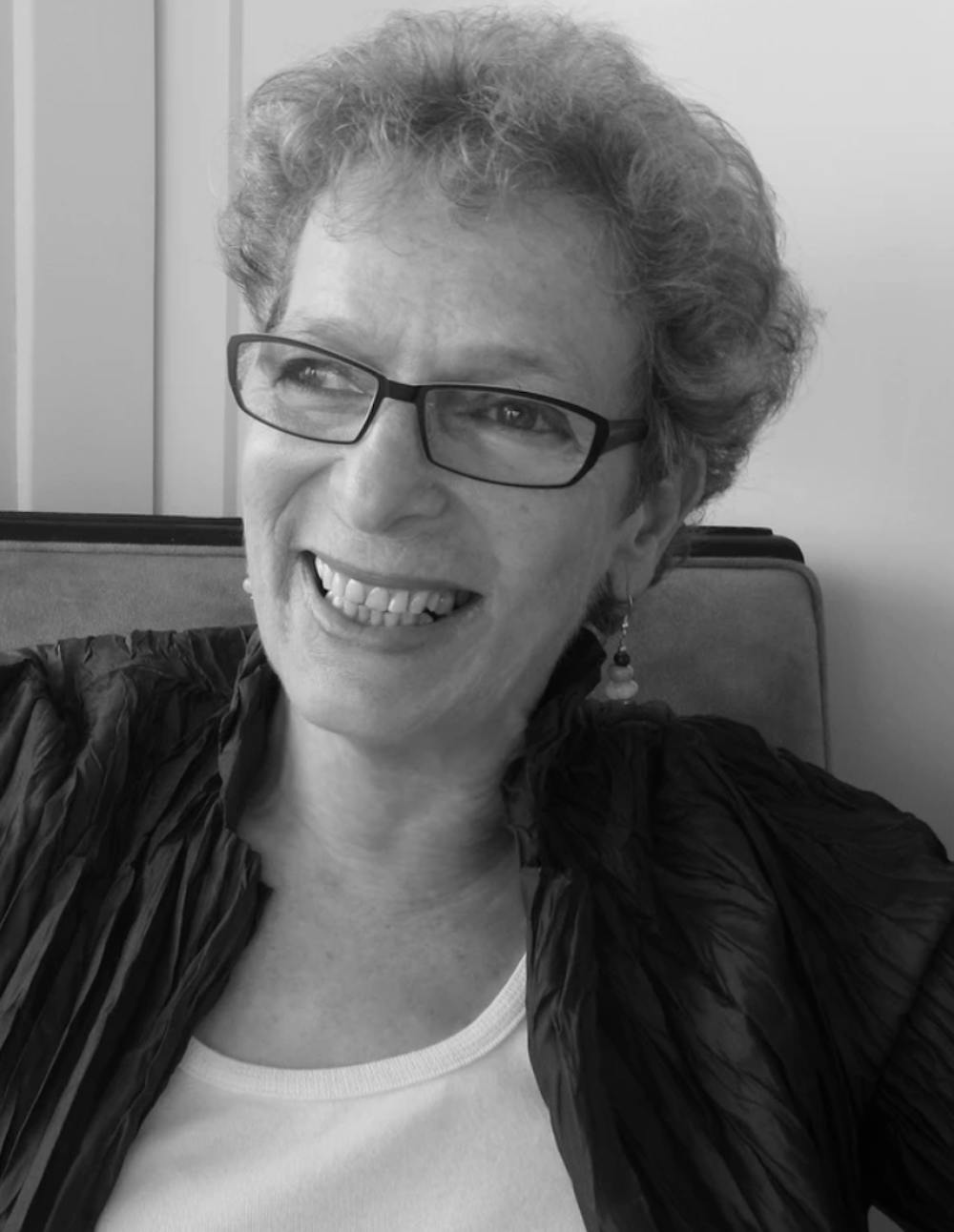 Susan Varga.
Upswell Publishing
The other long-term relationship that Varga started in her 40s was with writing. After Heddy and Me, she published two novels, Happy Families (1999) and Headlong (2009), and a book of poetry, Rupture (2016). She also co-wrote a non-fiction book with Coombs titled Broometime (2001). It was as an author that Varga felt herself actualised.
Towards the end of Hard Joy, we learn that Varga suffered a stroke and had to relearn how to speak and write. At this point poetry became her primary mode as she was only able to compose in short fragments.
Perhaps this is part of the reason for the book’s unusual typesetting: rather than indented paragraphs, as is standard in contemporary Australian books, Hard Joy has line breaks with left-justified text. This has the effect of making the paragraphs stand on their own as kinds of fragments.
Another unusual element is that the book includes photos without captions – these are in a list at the end. This means we are met with faces and settings without having a clear idea of who we are seeing. Although this declutters the page, it can also feel distancing.
The third element that sets this book apart from more conventional memoirs is the inclusion of Varga’s poetry throughout. On occasion, a poem will retell a scene from a different perspective or with a different emphasis. In other instances, switching modes introduces new information. The poetry offers readings that are, by turns, estranging and immediate, since it calls attention to its own form as it pares language back to its core components.
Read more:
How to write about broken trust in a memoir? Janine Mikosza’s Homesickness maps trauma in bold new ways
Inheritances
Like many Australians, Varga identifies her family as “middle class; nothing special”. But the extent of her father’s property portfolio (at the end of his life, he was driven around in a car to inspect his buildings) suggests this is not quite accurate. Varga inherited enough money to establish a charity that employed two staff and to make significant donations to other organisations. An interrogation of her relationship with wealth and its attendant freedoms and complications would have been a worthwhile addition to Hard Joy.
I would also have been interested to read more about Varga’s relationships with the men in her life. At the end of the book, she briefly mentions inappropriate behaviour from her (non-biological) father – behaviour that was eventually stopped by her mother. She also mentions that he assaulted one of her friends. The discussions of the gender politics of the Push and her time as a barrister are also relatively brief. Including these personages and situations without a detailed discussion meant my curiosity was piqued, but not satisfied.
Throughout the book, Varga engages with the question of what it means to write a memoir, helping to set the reader’s expectations. In the first chapter, she asks: “How to pin the myriad pieces of a life together in one’s clumsy writing net?”
Later, she says memoir is a “random collection of memory, a bit like a bird nest, scraps and twigs collected from obscure places of the psyche”.
She addresses some of her past behaviour from a contemporary viewpoint with comments such as “no one gave it a thought” (regarding relationship swaps in the Push), or “This hadn’t occurred to me”, when she finds out, a few years into their friendship, that a friend of hers is Aboriginal.
“If this was another kind of memoir,” she observes, “I would describe in more detail the political and social contexts in which I was embroiled.” Later, she remarks: “Looking back, I am opaque to myself.”
These acknowledgements recognise both the shortcomings and the limits of memoir as a form. As much as the hard joys of writing have afforded Varga an opportunity to reflect on her life, she suggests there are terrains that the memoir cannot traverse and pasts that must remain distant. Our view is always, and only ever, from the perspective of the author alone, so our proximity to and distance from the past is set alongside hers.
Authors: Alice Grundy, PhD Candidate, Australian National University
Susan Varga.
Upswell Publishing
The other long-term relationship that Varga started in her 40s was with writing. After Heddy and Me, she published two novels, Happy Families (1999) and Headlong (2009), and a book of poetry, Rupture (2016). She also co-wrote a non-fiction book with Coombs titled Broometime (2001). It was as an author that Varga felt herself actualised.
Towards the end of Hard Joy, we learn that Varga suffered a stroke and had to relearn how to speak and write. At this point poetry became her primary mode as she was only able to compose in short fragments.
Perhaps this is part of the reason for the book’s unusual typesetting: rather than indented paragraphs, as is standard in contemporary Australian books, Hard Joy has line breaks with left-justified text. This has the effect of making the paragraphs stand on their own as kinds of fragments.
Another unusual element is that the book includes photos without captions – these are in a list at the end. This means we are met with faces and settings without having a clear idea of who we are seeing. Although this declutters the page, it can also feel distancing.
The third element that sets this book apart from more conventional memoirs is the inclusion of Varga’s poetry throughout. On occasion, a poem will retell a scene from a different perspective or with a different emphasis. In other instances, switching modes introduces new information. The poetry offers readings that are, by turns, estranging and immediate, since it calls attention to its own form as it pares language back to its core components.
Read more:
How to write about broken trust in a memoir? Janine Mikosza’s Homesickness maps trauma in bold new ways
Inheritances
Like many Australians, Varga identifies her family as “middle class; nothing special”. But the extent of her father’s property portfolio (at the end of his life, he was driven around in a car to inspect his buildings) suggests this is not quite accurate. Varga inherited enough money to establish a charity that employed two staff and to make significant donations to other organisations. An interrogation of her relationship with wealth and its attendant freedoms and complications would have been a worthwhile addition to Hard Joy.
I would also have been interested to read more about Varga’s relationships with the men in her life. At the end of the book, she briefly mentions inappropriate behaviour from her (non-biological) father – behaviour that was eventually stopped by her mother. She also mentions that he assaulted one of her friends. The discussions of the gender politics of the Push and her time as a barrister are also relatively brief. Including these personages and situations without a detailed discussion meant my curiosity was piqued, but not satisfied.
Throughout the book, Varga engages with the question of what it means to write a memoir, helping to set the reader’s expectations. In the first chapter, she asks: “How to pin the myriad pieces of a life together in one’s clumsy writing net?”
Later, she says memoir is a “random collection of memory, a bit like a bird nest, scraps and twigs collected from obscure places of the psyche”.
She addresses some of her past behaviour from a contemporary viewpoint with comments such as “no one gave it a thought” (regarding relationship swaps in the Push), or “This hadn’t occurred to me”, when she finds out, a few years into their friendship, that a friend of hers is Aboriginal.
“If this was another kind of memoir,” she observes, “I would describe in more detail the political and social contexts in which I was embroiled.” Later, she remarks: “Looking back, I am opaque to myself.”
These acknowledgements recognise both the shortcomings and the limits of memoir as a form. As much as the hard joys of writing have afforded Varga an opportunity to reflect on her life, she suggests there are terrains that the memoir cannot traverse and pasts that must remain distant. Our view is always, and only ever, from the perspective of the author alone, so our proximity to and distance from the past is set alongside hers.
Authors: Alice Grundy, PhD Candidate, Australian National University


 Daily Bulletin


