

The 'gas trigger' won't be enough to stop our energy crisis escalating. We need a domestic reservation policy
- Written by: Samantha Hepburn, Professor, Deakin Law School, Deakin University
Australia’s east coast gas crisis is set to sharply worsen. A new report from the Australian Competition and Consumer Commission (ACCC) notes supply conditions will deteriorate significantly in 2023 if no action is taken. The 56 petajoule shortfall is huge – equivalent to around 10% of domestic demand.
So what’s been done? You would have heard about the “gas trigger” the government is considering pulling. This trigger – formally known as the Australian Domestic Gas Mechanism – is designed to increase gas supply by limiting gas exports during periods of shortfall.
The problem is, it’s too weak and much too slow to respond to fast-moving energy crises like the one we are now in. It hasn’t been used once since being introduced in 2017, as Australia’s LNG exporters can easily avoid the threat of the trigger by putting the bare minimum of gas back into domestic supply.
As it stands, the gas trigger is a wholly inadequate measure to tackle our uncertain energy future in a globally disrupted market. It’s unfathomable why a country with abundant and diverse gas resources does not protect its domestic market more effectively. Remember – this gas crisis is an east coast problem. Western Australia put in place a domestic reservation policy years ago, which has worked exceedingly well. Over west, there is no crisis.
How did we get into this mess?
The price of gas in Australia continues to surge, which in turn has helped push up wholesale energy prices by 141% in the first quarter of 2022 compared with last year.
This is driven by huge increases in global demand for gas following shortages in Europe caused by the Russian war on Ukraine, coupled with rising domestic demand for gas-fired power as coal power becomes less reliable with outages from ageing and retired generators.
The likely result will be much higher domestic energy prices, causing pain on the home front and resulting in more manufacturers closing. The ACCC report makes it clear a shortfall of this magnitude represents a “substantial risk to Australia’s energy security”.
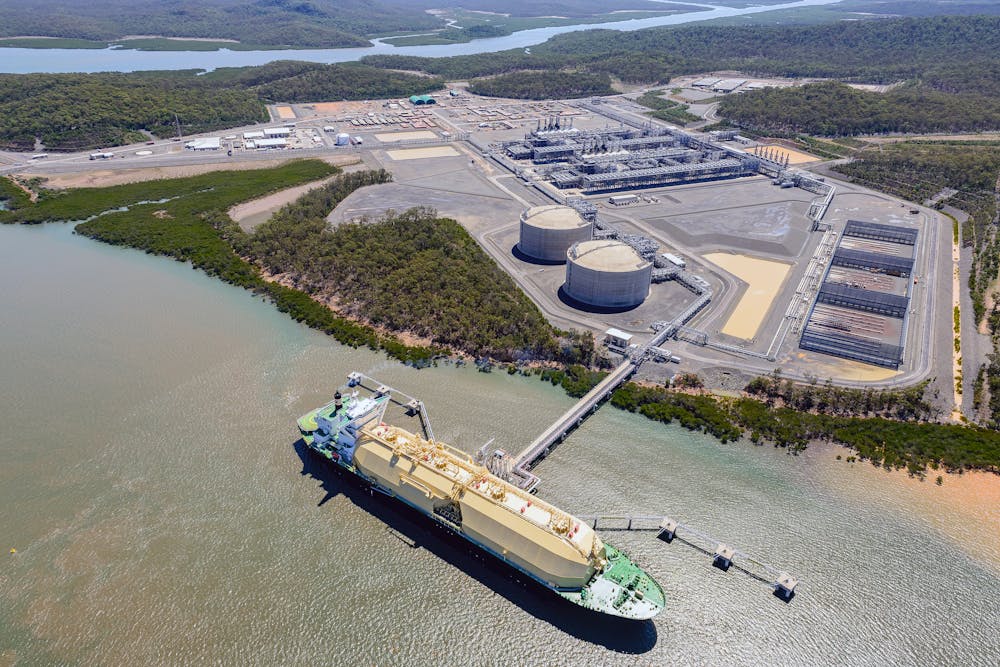
It seems bizarre Australia – one of the world’s largest fossil fuel exporters – is in this situation. Next year, the east coast LNG market is forecast to produce 1981 petajoules of natural gas. Most of this will supply long term contracts.
The excess is often sold by LNG exporters on the international market. In the past, some of this excess has flowed to domestic supply. But the ACCC predicts in 2023, most excess gas will be sold on the international market – taking advantage of high prices – even though our domestic market is likely to need a lot more of it than in previous years.
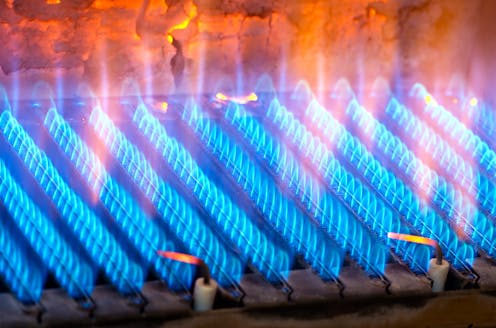
 Gas is currently used for manufacturing products such as fertiliser, as well as generating power.
Shutterstock
Gas is currently used for manufacturing products such as fertiliser, as well as generating power.
Shutterstock
It’s our gas – isn’t it?
Given the gas is being extracted from under Australian soils and waters, there’s a big question we’re facing. Can – or will – the government compel LNG exporters to direct more of this excess gas to domestic use?
On the east coast, we’re hindered by the lack of a legally binding supply mandate. By contrast, Western Australia has laws forcing LNG exporters to reserve 15% of their gas for the domestic market. These laws have kept their market relatively immune to the wild rises of the globally disrupted market.
Australia’s east coast does not have a reservation mandate. Instead, it has an agreement between the government and LNG exporters who have committed not to sell uncontracted gas to the international market unless they first offer it to the domestic market at a competitive price. This commitment expires on January 1 next year and at this stage has not been extended.
That brings us to the gas trigger, introduced in 2017 as a measure of last resort but never actually used. Instead, it’s lingered in the background. Federal resources minister Madeleine King has argued the trigger can be used as a security mechanism, but that remains to be seen.
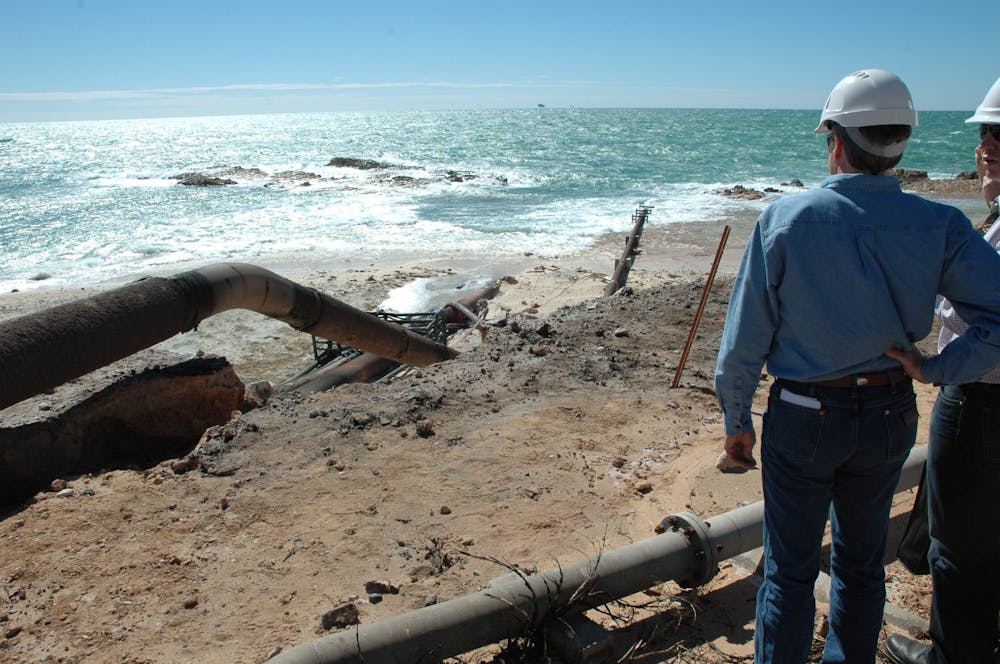 Energy security has long been on the minds of Western Australians after incidents like the 2008 explosion at the Apache Energy’s gas processing plant on Varanus Island.
Rebecca Le May/AAP
Energy security has long been on the minds of Western Australians after incidents like the 2008 explosion at the Apache Energy’s gas processing plant on Varanus Island.
Rebecca Le May/AAP
How does the trigger work?
The gas trigger has to be activated to have any effect. This is quite a lengthy process. To pull the trigger, the federal minister must notify the industry they are considering making a determination the following year will amount to a gas “shortfall year”. There is big delay between making a determination and imposing export restrictions.
Worse, the minister has to consult with the industry and other agencies. To date, the LNG industry has been able to stop the trigger by putting the barest amount of gas back into domestic supply to prevent a shortfall determination.
If a determination is made, LNG producers exporting more than they produce domestically will be subject to pro-rata volume restrictions during the shortfall year. The amount depends upon the shortfall volume the minister believes will be required.
Read more: 4 reasons our gas and electricity prices are suddenly sky-high
The slow-motion trigger
There are many concerns with this trigger.
First, it’s extremely slow. In practice, export restrictions could take up to eight months to have any effect. As the new ACCC report indicates, this must change so the trigger becomes more responsive to immediate energy concerns.
Second, the estimated shortfall volume may not generate enough gas to alleviate the shortfall because export restrictions can only apply to exporters drawing more gas from the market than they put in.
Third, the gas trigger has never actually been used. At the first hint of a shortfall, the LNG industry has stepped in to supply the minimum amount of gas necessary to avoid a shortfall year being declared.
As a result, the gas trigger is basically ineffective. It’s had no real impact on domestic gas prices and has never functioned as a substantive export control capable of creating stronger domestic gas reserves. That’s precisely why the east coast gas market finds itself in this mess.
It’s time for a rethink. The gas trigger is an inadequate way of tackling a very uncertain energy future in our globally disrupted market. So why keep it? We don’t need to reinvent the wheel. Western Australia’s domestic reservation policy shows us very clearly what does work: laws, with teeth.
Read more: Want a solution for the energy crisis gripping Australia's east? Look west
Authors: Samantha Hepburn, Professor, Deakin Law School, Deakin University


 Daily Bulletin


