

From curry nights to ‘coal kills’ dresses: how social media drives politicians to behave like influencers
- Written by: Cameron McTernan, Lecturer of Media and Communication, University of South Australia
Why do politicians often post content that seems awkward, outrageous or strange? The answer could be an appeal to authenticity – something that has become a valuable currency in the world of politicians, influencers and social media.
When John Howard debuted his first YouTube video as prime minister in 2007 he famously began by addressing the audience with “Good morning”.
The gaffe – not realising that users might view the content at any time of day – represented the beginning of an era for Australian politicians on social media, and a period coloured by naivety and experimentation.
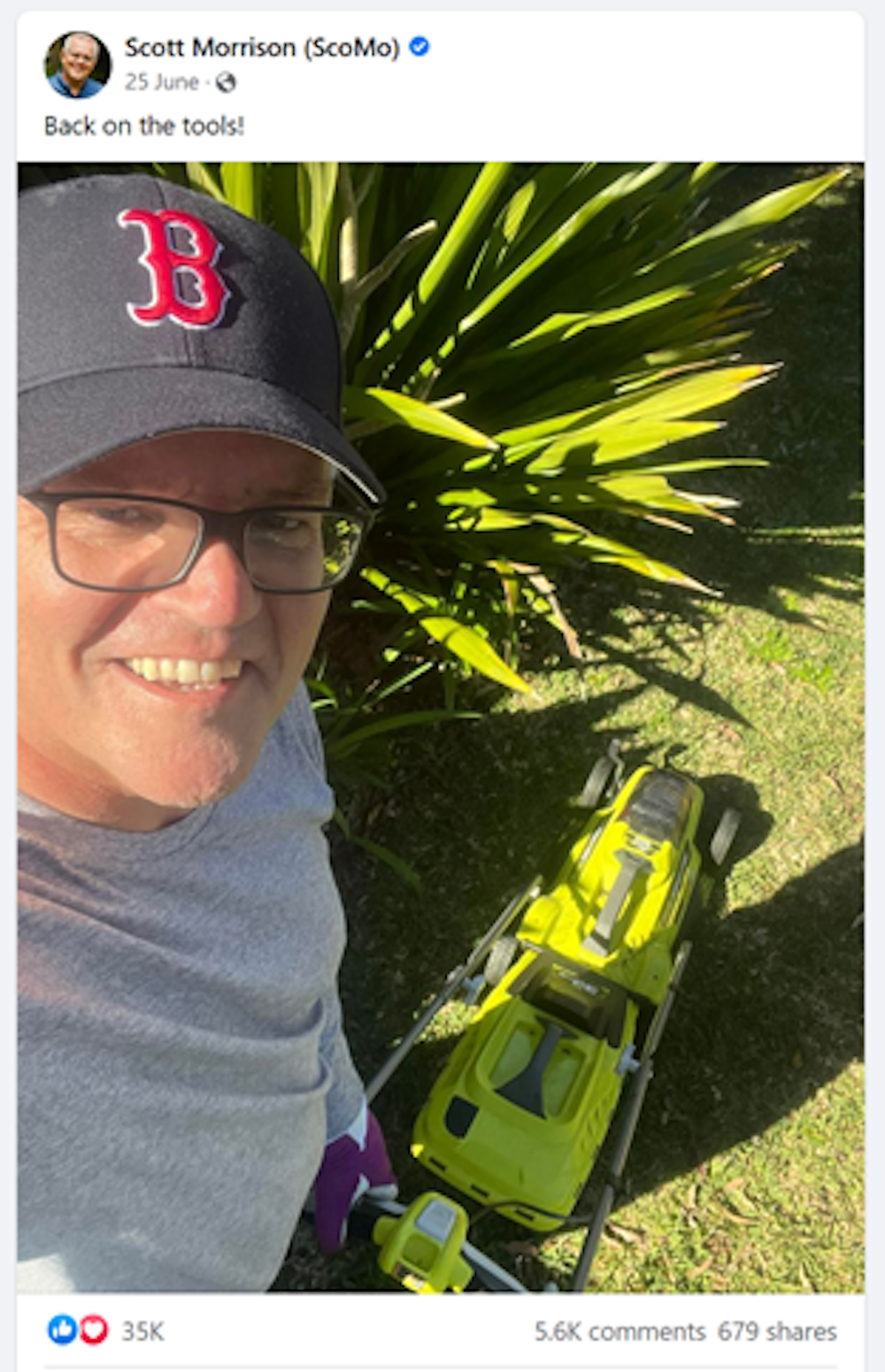
Yet if we were to examine the then prime minister Scott Morrison’s Facebook page ahead of the 2019 and 2022 elections (not to mention his famous “curry night” posts) you might be forgiven for thinking not much had changed.
Of course, Morrison and other pollies’ pages have plenty of high-production content that reflects their professional personas – but among this are also myriad posts that appear unscripted and unrefined.
It could very well be deliberate, and there is evidence to show it’s working.
Can we fake authenticity?
Media scholar Gunn Enli argues that for personalities in the media their public-facing “authenticity” is a kind of performance. This thinking suggests that in the media, being authentic is something you do as opposed to something you are.
Theories of authenticity have been used to examine influencers, reality television and Barack Obama’s presidential election campaign.
Ambivalence, imperfection and shared “live” experiences are among the range of qualities that Enli suggests constitute an authentic performance.
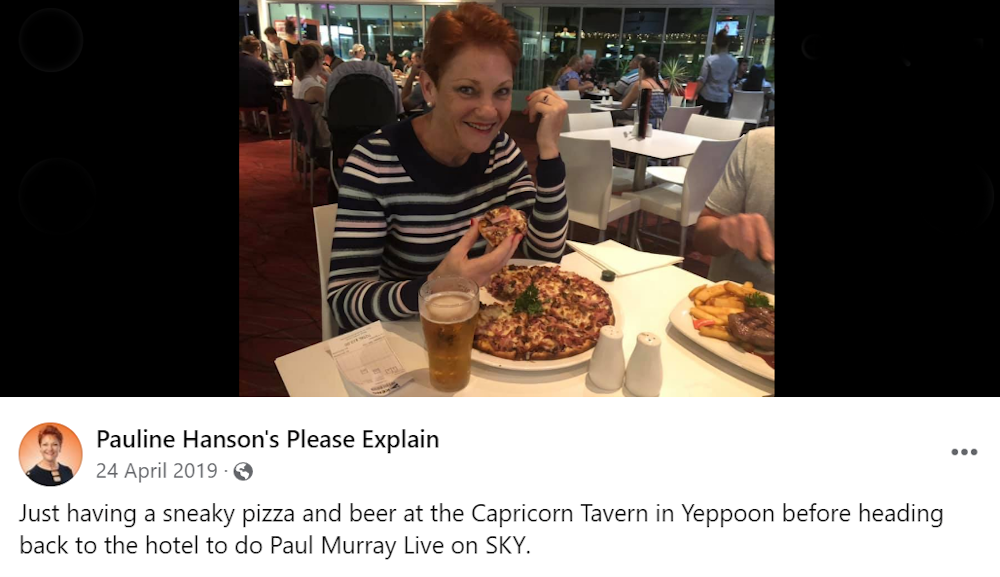 Behind-the-scenes photos can make politicians appear more ‘authentic’.
Pauline Hanson/Facebook
Behind-the-scenes photos can make politicians appear more ‘authentic’.
Pauline Hanson/Facebook
Strategic engagement with social media platforms has become a major preoccupation for politicians. But why?
Well, research has shown young voters in Australia, the UK and US want to see politicians who are more authentic and accessible online. So it could be politicians are taking the authenticity approach to appeal to young voters.
Another consideration is that social media often force campaigners to reduce the scope of their messaging. It’s hard to articulate the nuance of tax reform in Twitter’s 280 characters, or diplomatic efforts in 15 seconds on TikTok.
Appealing to emotions over logic (what is called “politics of the gut”) could be a strategy for campaigners trying to overcome the constraints of digital platforms.
So does ‘authenticity’ on social media work?
We can measure the success of content characteristics or appeals on social media, such as authenticity, by comparing high-engagement posts against a randomised sample.
If a particular characteristic is over-represented in the high-engagement sample, we can estimate it is contributing to its popularity online.
My analysis of social media posts by Australia’s federal party leaders ahead of the 2019 election indicates these kinds of authenticity appeals do, in fact, give posts an edge.
Using Enli’s analytical theory, the following graph shows six out of seven authenticity traits were over-represented in a sample of high-engagement posts. The data were collected from six party leaders: Bill Shorten, Scott Morrison, Clive Palmer, Pauline Hanson, Richard Di Natale and Michael McCormack.
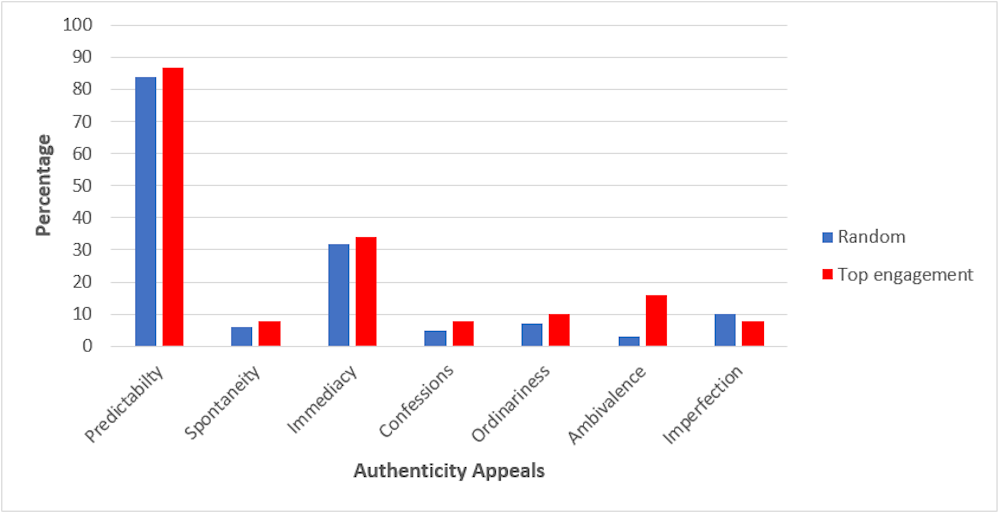 This graph shows the mean frequency of authenticity appeals between random and top engagement samples. ‘Imperfection’ was the only trait that didn’t feature prominently in high-engagement posts.
Cameron McTernan
This graph shows the mean frequency of authenticity appeals between random and top engagement samples. ‘Imperfection’ was the only trait that didn’t feature prominently in high-engagement posts.
Cameron McTernan
Of these qualities, “predictability” (which loosely refers to how on-brand they stay) and “immediacy” (use of “live” content) were the most frequently observed.
“Ambivalence” appeared to have the widest margin. Further examination at a page-by-page level revealed the majority of these posts were coming from Palmer’s page, reflective of the abundance of memes among Palmer’s high-engagement posts.
We can understand authenticity alongside a constellation of political communication styles referred to as “politics of the gut”. Other appeals to politics of the gut include “populist” and “nativist” appeals.
Populism promotes the worldview that political elites are depriving the public of their rights. Nativism conveys a worldview that promotes divisions between non-migrants and migrants.
When I compared posts that have been measured for traits of populism and nativism, the inverse was observed. Populist and nativist appeals made by Australian party leaders received less support.
This would suggest that, in the context of Australian politics, there is less of an appetite for these kinds of appeals, compared to authenticity.
 This graph shows the mean frequency of populist-nativist appeals between samples of random and top engagement posts.
Cameron McTernan
This graph shows the mean frequency of populist-nativist appeals between samples of random and top engagement posts.
Cameron McTernan
But authenticity is a good thing … right?
Politicians have sought to appear more authentic since well before the advent of social media. We can look to former US President Franklin D. Roosevelt’s “fireside chats” as an early example of politicians using the media and performance to appear more down to earth.
But is this a good thing for politics and democracy?
Politics of the gut comes at the cost of hearing politicians discuss matters that genuinely affect the public. If social media continue to be a leading arena for political communication, politicians will continue to engineer content that works best on these platforms. This might mean more political personality, but less political substance.
We saw this play out on TV ahead of the 2022 Australian federal election too, with Anthony Albanese’s authenticity being challenged by Morrison after the former’s “glow-up”.
More recently, Senator Sarah Hanson-Young wore an “end gas and coal” dress at a Press Gallery event – an obvious nod to US politician and social media icon Alexandria Ocasio-Cortez (whose “tax the rich” Met gala dress made headlines everywhere).
The research suggests people (especially young people) want more “authentic” politicians. But this might actually be a political literacy issue.
Wanting politicians to act more like influencers might only seem natural for a generation raised on internet media. Memes, selfies and curry nights help us relate to our political leaders, but they don’t help solve the issues that matter most.

Authors: Cameron McTernan, Lecturer of Media and Communication, University of South Australia


 Daily Bulletin


