

Read The Times Australia

Daily Bulletin

What position should I sleep in, and is there a ‘right’ way to sleep?

  • Written by: Christian Moro, Associate Professor of Science & Medicine, Bond University

What position should I sleep in, and is there a ‘right’ way to sleep?

After 50 years of research, eminent Stanford University sleep researcher William Dement reportedly said the only solid explanation he knows for why we sleep is “because we get sleepy”.

Even though sleep may be, as one researcher put it, “the only major behaviour in search of a function”, it clearly does matter for our health and wellbeing.

But are we doing it right? What does the research say about sleeping position?

Read more: On your back? Side? Face-down? Mice show how we sleep may trigger or protect our brain from diseases like ALS

Is there a correct position to sleep in?

Most people prefer to sleep on their side. This is good to hear, as those who lie on their backs are more likely to be poor sleepers or have breathing difficulties during the night.

In most cases, we tend to move around quite a lot during the night. One study of 664 sleepers found, on average, that participants spent about 54% of their time in bed sleeping on their side, about 37% on their back, and about 7% on their front.

Males (especially those aged under 35) tend to be most restless, with more position shifts, and arm, thigh, and upper-back movements during the night.

This may not be a bad thing, as allowing your body to move during the night is generally a good idea.

During sleep, your body will keep track of any pain or discomfort and adjust position accordingly. This is why we usually avoid developing bedsores (or pressure ulcers) in everyday life.

If you find you can’t move because your partner (or dog) is taking up too much room in the bed, consider switching sides or getting a larger bed.

And don’t tuck yourself in too tightly; give yourself some room to move around on either side.

Read more: Yes, women might 'feel the cold' more than men. Here's why

Being comfortable is key. There is no quality research providing clear evidence for an “optimal sleep position”. Your age, weight, environment, activities and whether you’re pregnant, all play a role in which sleep position is best for your body.

Ideally, we can find a position that helps us get a good night’s sleep, and one that avoids us waking up in any pain.

Even with our chosen position, some layouts are better than others. In one study, people who rested in a position where there is a rotation of the spine (such as the unsupported side position), woke up with more pain in the morning.

We all have a preference for a particular sleep position. Christian Moro, Author provided

Nonetheless, although some forms of side-sleeping may cause a bit of load on the spine, it appears the side positions, in general, are still better than the other options.

Read more: Why are my hands and feet always cold? And when should I be worried?

What pillow should I choose?

Choosing the right pillow is vital for a good night’s sleep.

A lack of support for the head and neck during sleep has been found to severely impact spine alignment, and cause muscle problems such as neck pain, shoulder pain and muscle stiffness.

Promisingly, the pillow material does not appear to affect the spine. Instead, the shape and the height is what matters. A U-shaped pillow may help you have a longer night’s sleep, and a roll-shaped pillow can reduce morning pain and bedtime pain in those suffering from chronic pain.

Unfortunately, science has not given us an answer on what is the optimal mattress. With everyone sleeping differently, this would be hard to compare over the long term.

However, there are bad mattresses. If your bed is sagging, has lost its firmness, develops noisy springs, or shows clear signs of wear and tear, consider changing your mattress.

Rotating the mattress can help with its longevity and improve comfort. This should be done at least one to two times per year.
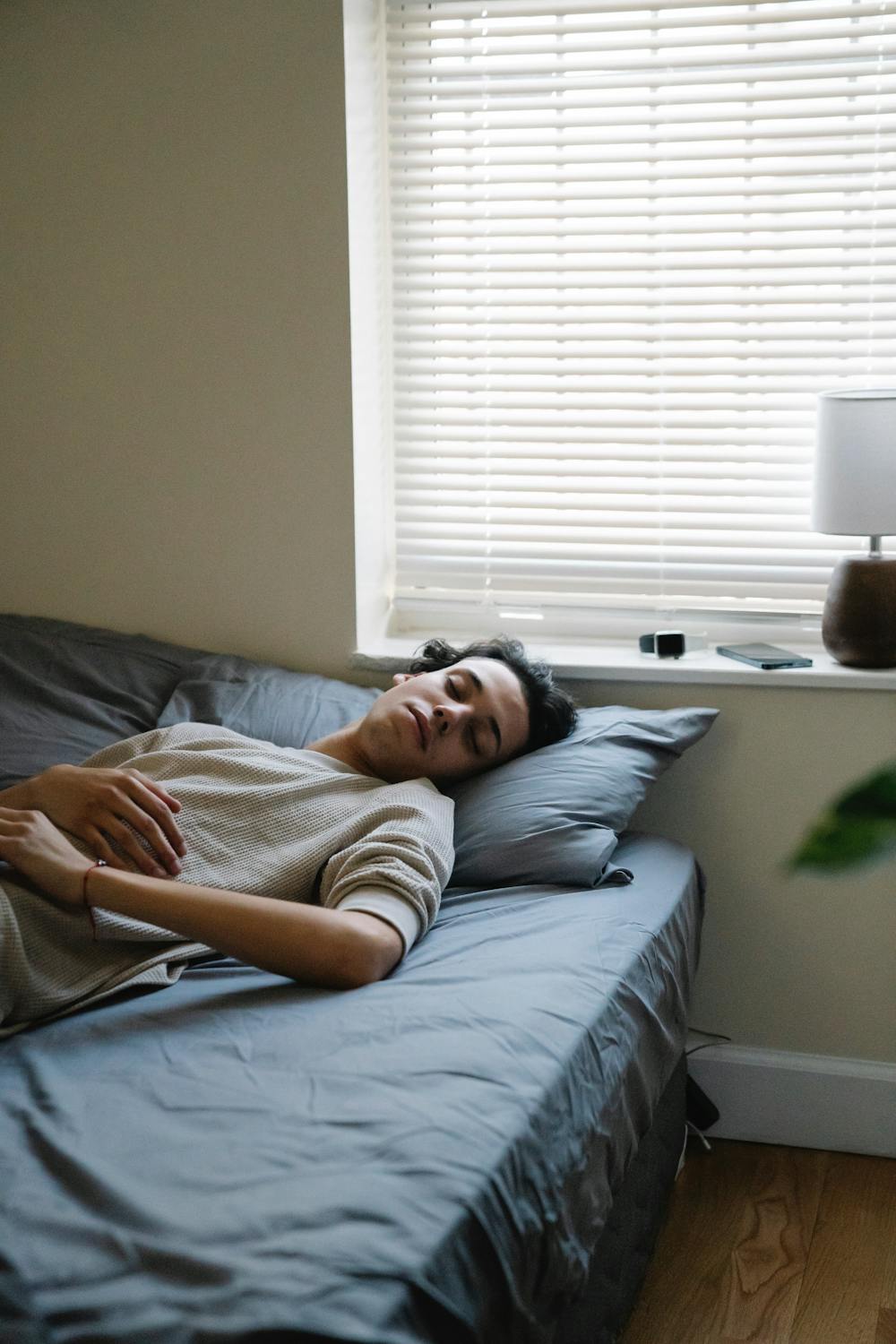
A man sleeps in bed.
Comfort is key. Photo by Eren Li/Pexels, CC BY

Other tips for a restful night’s sleep

Set a cooler room temperature. The ideal temperature for sleep is 18.3℃ (ranging between 15-19℃); higher temperatures can affect sleep.

Allow some airflow in the room. Besides bringing nice, fresh air, it also clears away any accumulated heat, keeping us nice and cool during the night.

Some medications, such as certain types of antihistamines, may make it easier to get to sleep. On the other hand, stimulants such as caffeine can drastically affect the quality of your sleep.

Finally, be sure not to go to bed with a full bladder, as having to get up at night to wee can impact sleep.

Read more: Curious Kids: if our bodies are happy at 37℃, why do we feel so unhappy when it's too hot outside?

Authors: Christian Moro, Associate Professor of Science & Medicine, Bond University

Read more https://theconversation.com/what-position-should-i-sleep-in-and-is-there-a-right-way-to-sleep-189873

Business News

Designing Eco-Friendly Custom Water Bottles for Your Next Event

The Evolution of Sustainable Event Merchandise Event planning has undergone a massive transformation over the last decade. Gone are the days when organizers could hand out cheap, single use plastic...

Daily Bulletin - avatar Daily Bulletin

Why Choosing a Professional Florist Melbourne Makes Flower Delivery Impactful

Flowers have a great power to speak when humans cannot express their feelings with right words. Flowers are the best gifts when you are celebrating a birthday or welcoming a newborn child into your fa...

Daily Bulletin - avatar Daily Bulletin

The Business Case for Choosing Australian Fabricators Over Imported Alternatives

For a long time, you might have defaulted to overseas suppliers when sourcing fabricated metal components for a project. The unit price was lower on paper, and the maths seemed straightforward. That...

Daily Bulletin - avatar Daily Bulletin

Australian organisations are relying on business continuity plans built for a far more predictable world

Tariff escalations, supply chain fragility, geopolitical events, and the ongoing threat of cyber disruption have reshaped the risk environment facing Australian organisations. The problem is that ma...

Daily Bulletin - avatar Daily Bulletin

How to Rent a Car for Uber in Melbourne: What Every New Driver Needs to Know

Starting out as an Uber driver in Melbourne is not as complicated as it sounds but getting the vehicle right is where most new drivers get stuck. Uber has strict requirements around vehicle age, condi...

Daily Bulletin - avatar Daily Bulletin

When Should You Speak to a Lawyer About a Legal Issue?

Legal issues can begin with a simple question, then become harder to manage once formal steps are involved. Many people wait until a matter feels urgent before seeking guidance, even though earlier ...

Daily Bulletin - avatar Daily Bulletin

The strategic rise of Bali as Australia’s next essential healthcare support hub

As Australian healthcare providers grapple with unprecedented operational bottlenecks, a new nearshore model is quietly transforming patient care delivery. Forward-thinking organisations,  including...

Daily Bulletin - avatar Daily Bulletin

Cost Savings and Benefits of Using Used Pallets in Logistics

In today’s competitive logistics and supply chain industry, businesses are constantly looking for ways to reduce operational costs without compromising efficiency and reliability. One of the most prac...

Daily Bulletin - avatar Daily Bulletin

How Fulfilment Services in Australia Help Businesses Scale Efficiently

The growth of e-commerce and modern retail has transformed customer expectations. Consumers now expect fast shipping, accurate order processing, and seamless delivery experiences regardless of where...

Daily Bulletin - avatar Daily Bulletin

The Daily Magazine

Why a Cordless Rebar Tying Machine Is a Smart Investment for Australian Construction Projects

Tying reinforcing steel by hand means spending hours bent over while making the same twisting moti...

How to Get a Document Notarised in Sydney: What to Bring, What It Costs and How Long It Takes

If an overseas bank, embassy, university, employer or land registry has asked you for a notarised ...

The 2026 Used-Car Market

For a few strange years, the used-car market rewrote its own rules. Supply shortages sent second-h...

Why CCTV Alone Is Not Enough for Modern Business Security

Cameras are usually the initial step that companies take to strengthen their physical security. If...

Why Every Workplace Should Take Emergency Preparedness Seriously

Emergency planning is one of those things many workplaces know they should think about, but it oft...

Why Clearer Communication Still Matters in a Digital-First Business

It’s never been easier for businesses to communicate, but that doesn’t mean they’re always communica...

What Happens After You Lodge a BYDA Enquiry? The Step Most Excavation Projects Miss

Every excavation project in Australia — from a backyard deck footing to a multi-storey commercial bu...

How to Choose the Right Dentist on the Gold Coast

Finding a dentist you trust is one of those decisions that quietly affects your health for years, ye...

The Hidden Engineering Problem Inside Australia's Older Housing Stock

A significant share of Australian homes were built for a way of living that no longer exists. Houses...