

Judith Butler: their philosophy of gender explained
- Written by: Anna Szorenyi, Lecturer in Gender Studies, University of Adelaide
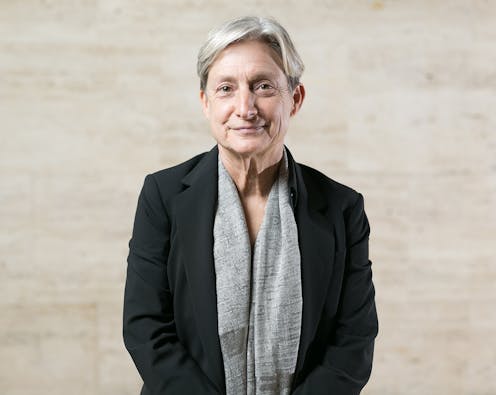
It would be difficult to overstate the importance of the American philosopher and gender theorist Judith Butler, both for intellectuals and for queer communities. There are scholarly books, university courses, fan clubs, social media pages and comics dedicated to Butler’s thinking.
They (Butler’s preferred pronoun) did not single-handedly invent queer theory and today’s proliferation of gender identities, but their work is often credited with helping to make these developments possible.
In turn, political movements have often inspired Butler’s work. Butler served on the International Gay and Lesbian Human Rights Commission, spoke at the Occupy Wall Street protests, has defended Boycott, Divestment and Sanctions campaigns, and famously declined a Civil Courage Award in Berlin because of racist comments made by the organisers.
This has at times led to controversy. Some right-wing movements and religious figures who are attached to conservative gender roles have seen Butler as a threat to society. This is ironic, given Butler’s work has always maintained a commitment to justice, equality and non-violence.
Gender performativity
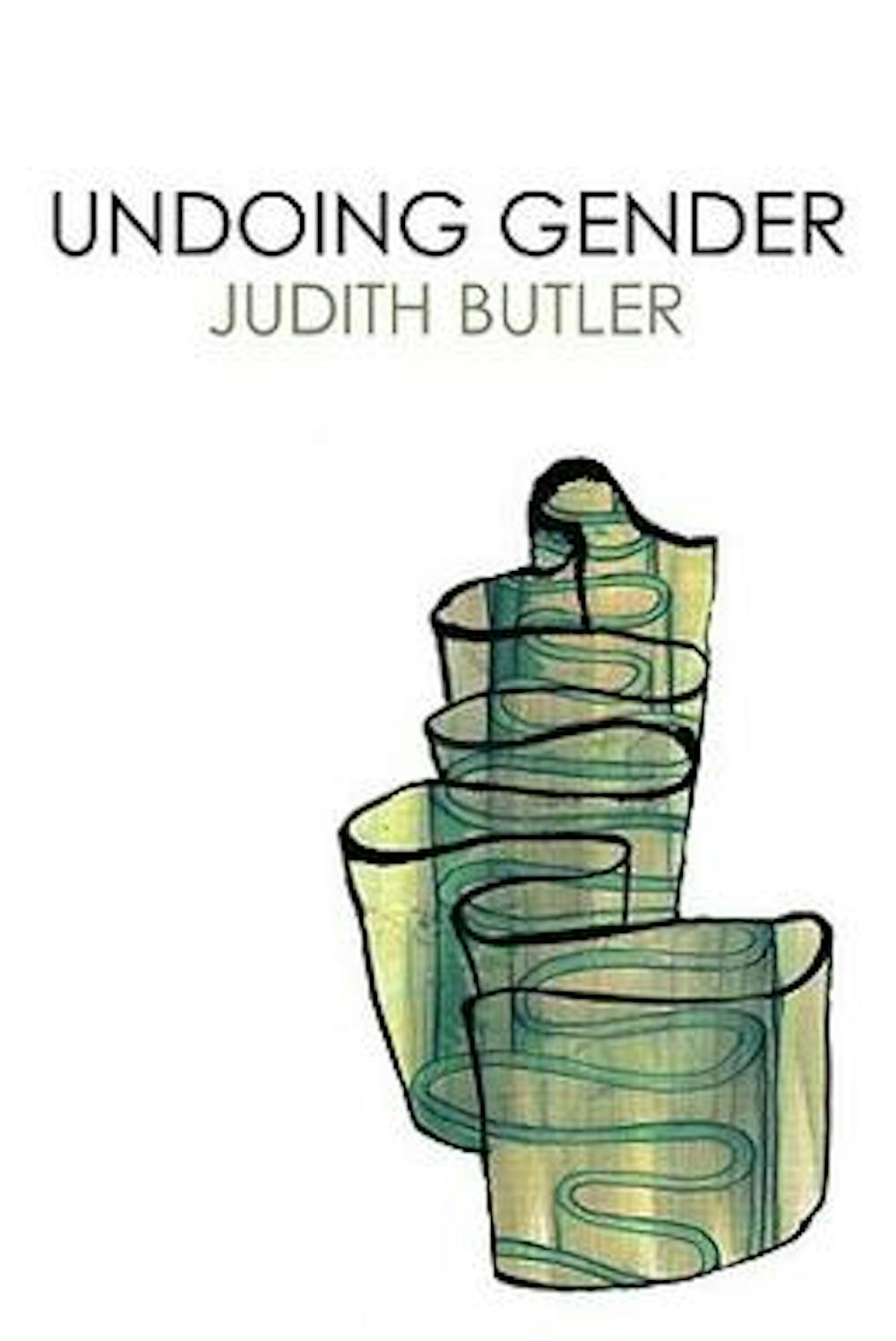
The most influential concept in Butler’s work is “gender performativity”. This theory has been refined across Butler’s work over several decades, but it is addressed most directly in Gender Trouble (1990), Bodies That Matter (1993) and Undoing Gender (2004).
In these works, Butler sets out to challenge “essentialist” understandings of gender: in other words, assumptions that masculinity and femininity are naturally or biologically given, that masculinity should be performed by male bodies and femininity by female bodies, and that these bodies naturally desire their “opposite”.

 At this point, Butler is often accused of thinking gender is entirely caused by language and has nothing to do with bodies, or that we can simply decide what gender to be when we wake up in the morning.
But this is not what they mean. Butler argues that we reproduce gender not only through repeated ways of speaking, but also of doing. We dress in certain ways, do certain exercises at the gym, use particular body language, visit particular kinds of medical specialists, and so on. Through such repetitions, gender is reinforced, layer by layer, until it seems inescapable.
However, this work of creating and redefining gender is never finished – for gender norms to hold, they must be constantly repeated. This means in the longer term, gender norms are intrinsically open to change. We can never get them exactly “right”, and if we stop doing them, or do them differently, we participate in changing their meaning. This opens up possibilities for gender to change.
These are not easy ways to think, because they challenge some of our most familiar assumptions about what a person is, what gender is, and how language works. This is one reason why Butler’s writing has been notorious for being “difficult”. But the popularity of their work shows there are many people who feel their lives are not adequately described by “common sense” ways of thinking.
Read more:
Explainer: what does it mean to be 'cisgender'?
Grievable life, vulnerability and non-violence
Over the past 20 years, Butler’s writing has expanded beyond gender into other areas of political exclusion and oppression. An underlying theme across much of this more recent work is a concern about the ways some people are discounted as “human”.
At this point, Butler is often accused of thinking gender is entirely caused by language and has nothing to do with bodies, or that we can simply decide what gender to be when we wake up in the morning.
But this is not what they mean. Butler argues that we reproduce gender not only through repeated ways of speaking, but also of doing. We dress in certain ways, do certain exercises at the gym, use particular body language, visit particular kinds of medical specialists, and so on. Through such repetitions, gender is reinforced, layer by layer, until it seems inescapable.
However, this work of creating and redefining gender is never finished – for gender norms to hold, they must be constantly repeated. This means in the longer term, gender norms are intrinsically open to change. We can never get them exactly “right”, and if we stop doing them, or do them differently, we participate in changing their meaning. This opens up possibilities for gender to change.
These are not easy ways to think, because they challenge some of our most familiar assumptions about what a person is, what gender is, and how language works. This is one reason why Butler’s writing has been notorious for being “difficult”. But the popularity of their work shows there are many people who feel their lives are not adequately described by “common sense” ways of thinking.
Read more:
Explainer: what does it mean to be 'cisgender'?
Grievable life, vulnerability and non-violence
Over the past 20 years, Butler’s writing has expanded beyond gender into other areas of political exclusion and oppression. An underlying theme across much of this more recent work is a concern about the ways some people are discounted as “human”.
 Butler summarises this through the concept of “grievable life”, which draws attention to the ways in which some lives are not publicly mourned, because they were never publicly acknowledged as being properly alive in the first place. For example, Butler points out that AIDS victims rarely receive obituaries in mainstream US newspapers, nor do prisoners in Guantanamo Bay, Palestinians killed by the Israeli military, Black people killed by US police, or refugees and stateless people who die crossing borders.
These populations can be abandoned to unliveable, precarious lives and unnoticed deaths without any serious public accountability. In our contemporary globalised, neoliberal world, more and more people are living in such situations, without adequate social support, health care, sustainable environments or access to the public sphere. Butler calls this situation “precarity”.
Often this exclusion is justified through “frames of war”, which position certain groups of people as threats to “security”. To defend this security, it is tempting to violently impose precarity on others, as the US administration did after 9/11 in the “war on terror”.
Butler summarises this through the concept of “grievable life”, which draws attention to the ways in which some lives are not publicly mourned, because they were never publicly acknowledged as being properly alive in the first place. For example, Butler points out that AIDS victims rarely receive obituaries in mainstream US newspapers, nor do prisoners in Guantanamo Bay, Palestinians killed by the Israeli military, Black people killed by US police, or refugees and stateless people who die crossing borders.
These populations can be abandoned to unliveable, precarious lives and unnoticed deaths without any serious public accountability. In our contemporary globalised, neoliberal world, more and more people are living in such situations, without adequate social support, health care, sustainable environments or access to the public sphere. Butler calls this situation “precarity”.
Often this exclusion is justified through “frames of war”, which position certain groups of people as threats to “security”. To defend this security, it is tempting to violently impose precarity on others, as the US administration did after 9/11 in the “war on terror”.
 To counter such frames of war, Butler proposes an ethics of non-violence, based on the understanding that we become ourselves only in relation to others. This means that no life is fully secure, self-contained or independent. We cannot choose who shares the planet with us, and they can always hurt us. Ultimately, if we are to survive together, we must learn to acknowledge and live with mutual vulnerability, as challenging as that may be.
This may sound idealistic, but it is not an ethics that assumes people are “nice”. It starts from the proposition that they are not. Performing non-violence will always be ambivalent and difficult, especially in a violent world. But it is in our own interests to realise that our own capacity to live a “liveable life” depends on life-sustaining conditions that also allow others (human and non-human) to live.
Butler finds performative enactments of this approach in some collective protests, such as the Occupy Wall Street movement in New York and the 2013 Gezi Park protests in Turkey, in which people from different backgrounds gathered to call for a more just and equitable world.
Butler reminds us that vulnerability is not all bad; it is what makes life possible. All bodies must be in some way open to the world and to others. They must be able to take in and give out: to eat, breathe, speak, be intimate. A body unable to do this could not be alive. Ultimately, Butler reminds us, often poetically, that to be fully ourselves, we need each other.
Authors: Anna Szorenyi, Lecturer in Gender Studies, University of Adelaide
To counter such frames of war, Butler proposes an ethics of non-violence, based on the understanding that we become ourselves only in relation to others. This means that no life is fully secure, self-contained or independent. We cannot choose who shares the planet with us, and they can always hurt us. Ultimately, if we are to survive together, we must learn to acknowledge and live with mutual vulnerability, as challenging as that may be.
This may sound idealistic, but it is not an ethics that assumes people are “nice”. It starts from the proposition that they are not. Performing non-violence will always be ambivalent and difficult, especially in a violent world. But it is in our own interests to realise that our own capacity to live a “liveable life” depends on life-sustaining conditions that also allow others (human and non-human) to live.
Butler finds performative enactments of this approach in some collective protests, such as the Occupy Wall Street movement in New York and the 2013 Gezi Park protests in Turkey, in which people from different backgrounds gathered to call for a more just and equitable world.
Butler reminds us that vulnerability is not all bad; it is what makes life possible. All bodies must be in some way open to the world and to others. They must be able to take in and give out: to eat, breathe, speak, be intimate. A body unable to do this could not be alive. Ultimately, Butler reminds us, often poetically, that to be fully ourselves, we need each other.
Authors: Anna Szorenyi, Lecturer in Gender Studies, University of AdelaideRead more https://theconversation.com/judith-butler-their-philosophy-of-gender-explained-192166


 Daily Bulletin


