

'I go for the food': what children and young people told us about why they steal from houses
- Written by: Natalie Gately, Criminology Courses Coordinator, Edith Cowan University

The latest figures from the Australian Bureau of Statistics show theft and burglary are among the most common offences committed by young people.
We wanted to find out from children why they committed burglary, which can exact a huge financial and emotional toll on victims.
Our study, recently published in the journal Youth Justice, involved interviews with children presenting at the Perth Children’s Court who reported they had burgled.
We interviewed 50 children between the ages of 11 and 17 years who told us why they stole, what they stole, and how they learned how to burgle.
We found children rarely planned or “staked” premises. They usually committed burglaries on the spur of the moment with friends, and generally to steal items they felt they needed – like food or drugs – out of boredom or while drunk or high.
Most young people chose a target that had “signs” of being an empty home (such as no cars in the driveway). This was commonly tested by a young person knocking on a door.
Other ways homes were picked was when they saw items they wanted through windows or in gardens that were “just sitting there” and, in their words, “just there for us to take”.
The time spent selecting a target was minimal, with many tending to favour places that could obviously be accessed easily via, for example, an open window or door.

More need than greed
Children’s reasoning for why they burgled was more out of need than greed.
One child said they stole because they were “poor” and “had nothing”.
Eight of the 50 children we spoke to said they only stole food, often looking for fresh food from the fridge to eat in the moment, and frozen or tinned items to take home to family.
When asked why they stole, one child said:
I had nothing to eat.
Another told us:
I got stuff from the freezer. I go for the food, but I didn’t take anything else.
Commonly stolen items included money, drugs, jewellery, food and mobile phones. Most young people reported keeping the items or gifting them to friends or family.
Those items not kept were often sold to drug dealers, with one child telling us they stole
just what was around: jewellery, money, anything really that we could sell to get drugs.
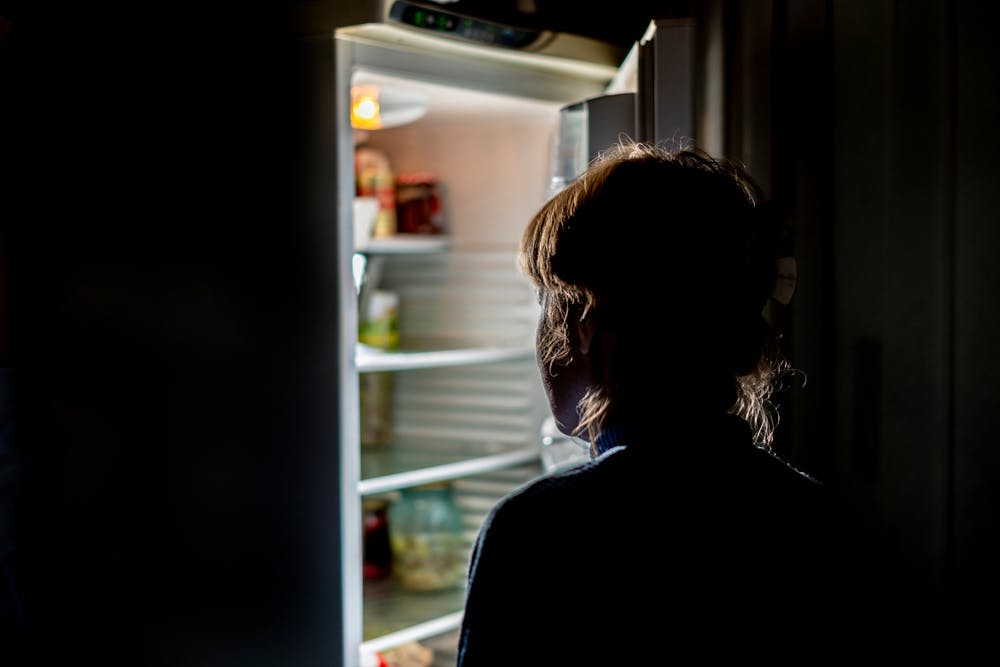 Some children burgled because they were looking for food.
Shutterstock
Some children burgled because they were looking for food.
Shutterstock
Read more: Home alone: how to keep your kids safe (and out of trouble) when you’re at work these holidays
Drug use and burglary
Many children reported stealing to obtain drugs or money to buy drugs. One child targeted a certain place because
I knew they had dope in there.
Another said they stole because
I needed the fix.
In one case, a child was “employed” to steal from drug dealers’ homes known to have large qualities or drugs and money.
Others reported only burgling because they were intoxicated. As one child put it:
I was just drunk and being stupid.
Motivations for burglary
We sorted these young burglars into categories based on their motivation (using categories developed by previous criminology research).
The majority fell into the “opportunistic” category. These were characterised by the opportunity posed to the child, such as an open window in an affluent area or valuables in view. As one child put it:
It was just out of the blue.
Another told us:
We just walked into a house.
Another said:
I just saw toys and stole the toys. No, it wasn’t planned – just walked past and that’s it.
Another category – “searchers” – said that while they had intended to burgle, they had not picked a property and would instead roam the streets looking for a house. As one child put it:
We don’t plan it, we just knock on the people’s door and if they aren’t home we go in.
Although intention to burgle was present for children in this group, the element of planning was minimal. There was overlap with “opportunists”, as they targeted premises based on the ease of entry without being caught.
The background lives of these children were often chaotic. Most were not attending school regularly, if at all. Most had learned to burgle from family members. As one child put it:
[I’ve] been there and seen it; Dad used to take me along with him.
Most committed their burglaries in groups with friends (78%) or family members (10%).
This snapshot of young burglars calls for a better understanding of the reasons for “food-only” theft as a matter of urgency.
These findings could also be used to support measures such as Youth Drug Courts to address the underlying drug behaviours that contribute to criminal behaviours.
We need holistic interventions that address the economic and social disadvantages that drives children to burgle.
Read more: A handsome soldier with a 'medical bill': how romance scammers make you fall in love with them
Authors: Natalie Gately, Criminology Courses Coordinator, Edith Cowan University


 Daily Bulletin


