

More and more women in Australia are having their labour induced. Does it matter?
- Written by: Angela Brown, Midwifery Program Director, University of South Australia
Induction of labour for women having their first baby has risen in Australia from 26% in 2010 to 46% in 2020, according to the latest data from the Australian Institute of Health and Welfare (AIHW). This compares to a rise from 21% to 34% over roughly the same period in the UK (for all births, not just first-time mothers).
South Australia was the highest state with 48.8% induction rates for first time mothers, and Queensland the lowest with 40.5%.
Why are rates so high in Australia, and why are they increasing?
First, why do we induce labours?
Doctors or midwives might recommend induction when they believe allowing the pregnancy to continue could pose a risk to the mother or baby.
This can be for multiple reasons, including prolonged pregnancy (being overdue), diabetes, bleeding, medical complications, ruptured membranes, high blood pressure, twin pregnancy, infection, large babies or foetal death.
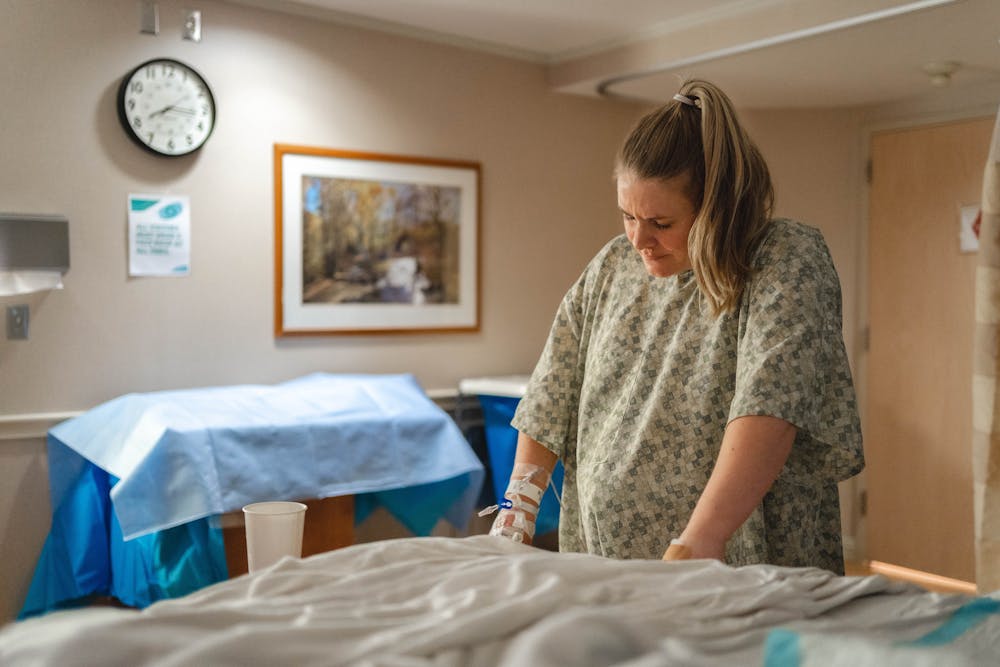
If the woman or birthing parent decides to proceed with induction, this can occur in several ways. A popular method for inducing labour involves the midwife or doctor inserting a small catheter through the woman’s cervix (the neck of the womb) and inflating a balloon on the other side, or sometimes on both sides.
This mechanical pressure can stimulate the production of prostaglandin (a natural hormone that helps prepare for labour) and encourage a slight opening of the woman’s cervix. This allows the doctor or midwife to break the membranes (releasing the amniotic fluid) around the baby with a special plastic hook. At this point, a hormone called oxytocin can be used to stimulate contractions and labour.
Other methods for inducing labour include applying hormones directly to the cervix, or rupturing the membranes of the amniotic sac.
Read more: Weight gain during pregnancy: how much is too much?
Why are induction rates increasing?
Australian women are giving birth at the average age of 30.8 years, which has been slowly increasing over the past decade. Pregnancy risks and medical complications increase with advanced age or with very young women. Many of these complications can increase the likelihood of a recommendation of induction.
Obesity adds another layer of complexity when considering pregnancy and birth. The AIHW 2018 report found 47% of women giving birth in Australia were either obese or overweight at their first antenatal visit. We know women who are overweight or obese have significant increased risks in pregnancy and birth and these risks extend to their babies.
The UK’s Care of Women with Obesity in Pregnancy Guideline and Best Practice Statement from the Royal College of Australian and New Zealand College of Obstetricians and Gynaecologists highlights the risks for overweight pregnant women and these include hypertension, pre-eclampsia, haemorrhage, depression, diabetes, venous thromboembolism, infection, failed induction and death.
They also highlight additional risks for the baby if the mother is overweight or obese in pregnancy and these can include stillbirth, large baby, shoulder dystocia (where the baby gets stuck during birth), prematurity, admission to the nursery and undiagnosed congenital abnormalities.
Some inductions occur at the request of the woman and in the absence of risks that might necessitate induction. It is these cases where a reduction in rates should be targeted. Women can mistakenly believe induction is a risk-free procedure when we know it is better for mother and child a woman establishes in labour without interventions where possible. This is because each intervention in the birthing process is more likely to lead to further interventions.
Does it matter rates are increasing?
A recent review of studies found in places where labour is induced once a woman reaches 40 weeks or shortly thereafter, there are fewer stillbirths and perinatal deaths (deaths shortly after birth).
However when labour is induced the baby must be monitored, which involves strapping equipment to the woman’s abdomen or directly to the baby’s head. This can restrict movement for some women, and women frequently use movement to help them manage contractions.
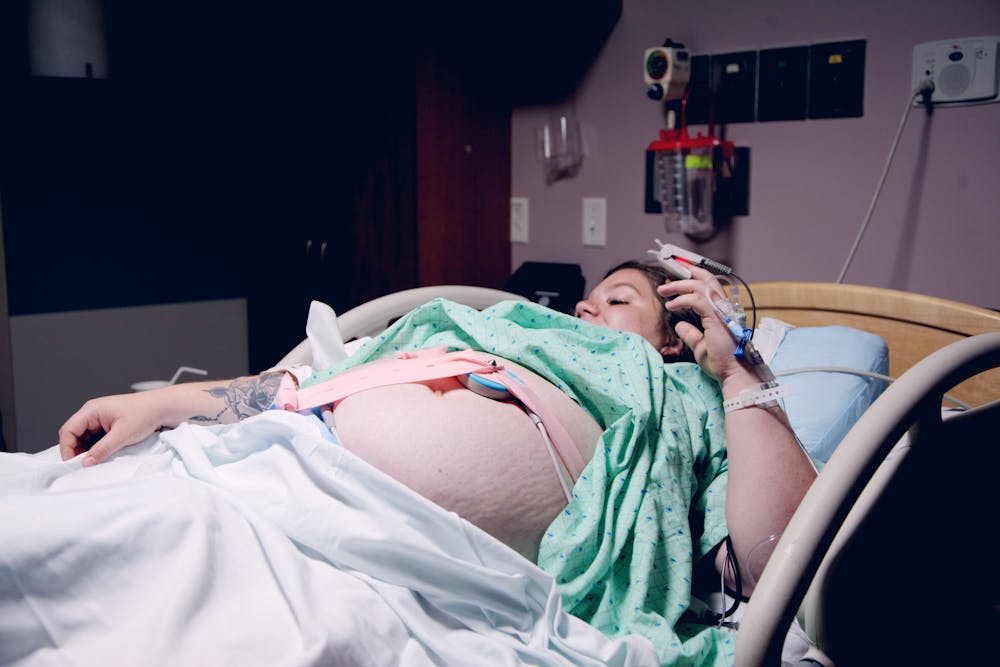 Moving around helps women manage contractions, and foetal monitoring equipment makes that difficult.
alexander grey/unsplash, CC BY
Moving around helps women manage contractions, and foetal monitoring equipment makes that difficult.
alexander grey/unsplash, CC BY
Sometimes despite using the methods described above the induction may not be successful. In these cases, a different method may be attempted, or the doctor or midwife may try again in a few days. Sometimes a caesarean may be recommended.
Another potential side effect is from the hormone used to stimulate contractions – occasionally these hormones cause over-stimulation of the uterus, and this can stress the baby. The hormone can be stopped but sometimes because of the impact on the baby’s wellbeing a caesarean might be recommended.
Induction rates are higher in Australia than like countries and without detailed data about all reasons for induction it is difficult to comment on the cause of these increases. The demographics as described above may be one factor.
Ultimately women should talk with their midwife or doctor about any concerns they may have, and make the best decision that is informed by their individual pregnancy.
Read more: Don't blame and shame women for unintended pregnancies
Authors: Angela Brown, Midwifery Program Director, University of South Australia


 Daily Bulletin


