

Australia's record on energy efficiency has been woeful for decades, but that could be about to change
- Written by: Hugh Saddler, Honorary Associate Professor, Centre for Climate Economics and Policy, Australian National University
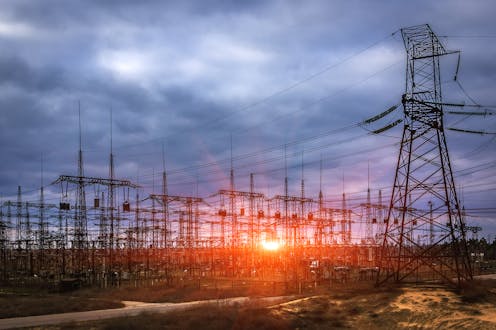
Over many years, Australia has barely increased the efficiency of its energy use. Energy consumption per dollar of GDP decreased by an average of only 1% per year from 2002-03 to 2018-19. Over the same period, energy consumption per person actually increased by an average of 0.2% per year.
Of 20 comparable developed countries, Portugal is the only other one to have recorded such an increase over the 15 years to 2020. (The two most recent years are excluded because the impacts of COVID distort these data.)
All the other countries, including European Union members, the United Kingdom, the United States, Canada and Japan, cut their energy consumption, some by over 20%. The decrease for the United States was 12%.
The energy we use to support economic activity and supply essential services to consumers remains a major source of greenhouse gas emissions. That makes it timely that the Australian government today released a consultation paper on what it calls its National Energy Performance Strategy. The strategy is due to be delivered in mid-2023.
Read more: Australia has failed miserably on energy efficiency – and government figures hide the truth
What is energy performance?
The term energy performance usually refers to the technical performance of equipment that uses energy, such as a motor vehicle or a refrigerator. In this context, improved performance means reduced energy consumption to achieve a given output, such as distance travelled or cold temperature maintained.
The paper explains that its use of the term energy performance is intended “to encapsulate the broad management of energy demand. It includes energy efficiency, load shifting, fuel switching and behaviour change.”
This is a clever change in language, for several reasons. The first is that it uses a term that the public probably understands better than “energy productivity”. That was the term both the Gillard and Abbott governments used in white papers published in 2012 and 2015, respectively.
The second reason is that it moves thinking away from a near-exclusive focus on price signals and market efficiency, and towards technologies and engineering. The former approach dominated the policy discussion in both the white papers.
The third reason is that including load shifting and fuel switching will make it easier for the strategy to become a major component of overall emissions reduction policy. For example, load switching means people with rooftop solar shift some of their electricity use from night to day, thereby cutting consumption of coal-fired electricity. Fuel switching can mean replacing a gas heating appliance with a far more efficient electric heat pump alternative.
Both approaches, if used appropriately, can reduce emissions and energy costs, without necessarily reducing the quantity of energy used.
What are the benefits of improving performance?
All four of the activities included with energy performance – energy efficiency, load shifting, fuel switching and behaviour change – will be able to reduce the cost of buying the energy needed to deliver an enormous range of goods and services. Lower energy costs mean lower operating costs for businesses and not-for-profit organisations and lower living costs for Australians.
This should not be seen as in any way diminishing the importance of reducing energy use by increasing energy efficiency. As advocates for stronger energy-efficiency policies and programs have long pointed out, improving energy efficiency in housing increases comfort and health, as well as reducing costs. The consultation paper endorses this approach.
The paper also points out that, for these reasons, for some years now, the International Energy Agency has termed energy efficiency the “first fuel”.
Read more: Our buildings are driving us closer to 'climate hell' – how do we get back on course to net zero?
Paper’s focus on governance is welcome
The consultation paper is structured as sets of questions on particular topics. Significantly, the first topic is not about policies and programs directed at particular groups of energy users. Instead, it’s about what the paper terms governance.
Nationally, Australia has had policies and programs relating to energy efficiency for over 40 years. The Fraser government first introduced such measures, focused on oil consumption, in response to the so-called second oil crisis in 1979. Since then, federal and state governments from both sides of politics have introduced, pursued and abandoned a wide range of energy-efficiency policies and activities.
In recent years, many policies were abandoned or progressively defunded. There were few significant new initiatives, with some state-level exceptions. Energy policies have been almost entirely concerned with the “big league” issues of energy markets, energy supply and energy security.
It is therefore most significant that this paper prioritises, under the heading of governance, the “need to strengthen the role of demand-side considerations in energy system planning”. It also includes, under governance, consideration of formal efficiency targets. Such targets are an important part of the policies of most of the better-performing countries.
All sectors are under review
The paper then moves on to examine policy actions in each of the main energy-consuming sectors: residential, commercial and industrial.
The fifth and last topic is supply chains and workforce. These aspects have gained prominence in broader policy discourse over the past couple of years. Some observers see them as being among as the largest potential barriers to a successful transition of the energy system to a low-emissions future.
Comprehensive action is needed to make up for Australia’s woeful performance of recent decades. We will have to transform consumption and efficiency across the full range of activities that depend on energy.
Authors: Hugh Saddler, Honorary Associate Professor, Centre for Climate Economics and Policy, Australian National University


 Daily Bulletin


