

Read The Times Australia

Daily Bulletin

Elon Musk's 'hardcore' management style: a case study in what not to do

  • Written by: Libby (Elizabeth) Sander, MBA Director & Assistant Professor of Organisational Behaviour, Bond Business School, Bond University
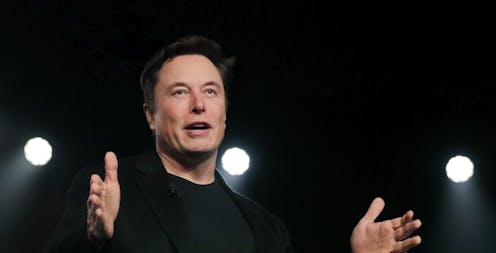
Elon Musk's 'hardcore' management style: a case study in what not to do

As a case study in how to implement organisational change, Elon Musk’s actions at Twitter will go down as the gold standard in what not to do.

Among other things, the evidence shows successful organisational change requires: a clear, compelling vision that is communicated effectively; employee participation; and fairness in the way change is implemented. Trust in leaders is also crucial.

Musk, the world’s richest man, appears in a hurry to make Twitter into a money-spinner. But it takes time to understand the requirements for successful organisational change. Two in three such efforts fail, resulting in significant costs, a stressed workforce and loss of key talent.

Change management never quite goes to plan. It’s hard to figure out whether Musk even has a plan at all.

Musk’s ‘extremely hardcore’ style

Since taking over Twitter on October 27, Musk has stopped employees working from home, cancelled employee lunches, and laid off about 3,700 employees – roughly half of Twitter’s workforce. Many realised they had been sacked when they could no longer access their laptops.

Just days later it emerged that Musk had a team of snoopers comb through employees’ private messages on Slack, firing those who had criticised him.

Then, on Wednesday last week, Musk sent an ultimatum to staff to pledge commitment to a new “extremely hardcore” Twitter that “will mean working long hours at a high intensity”. Employees had until 5pm the next day to accept, or take a severance package.

About 500 staff reportedly wrote farewell messages.

Tweet from Twitter employee Leah Culver:
Twitter, CC BY Musk appears not to have anticipated this reaction. As the “hardcore” deadline approached, he started bringing key staff into meetings, trying to convince them to stay. He also walked back his working-from-home ban, emailing staff that “all that is required for approval is that your manager takes responsibility for ensuring that you are making an excellent contribution”. It was unsuccessful. So many employees decided to leave that on Friday Twitter locked all staff out of its office until Monday amid confusion as to who actually still worked there and should have access. Twitter has lost more than half its workforce in less than a month.
Twitter has lost more than half its workforce in less than a month. Jeff Chiu/AP

Layoffs and restructuring are common in organisational change. But the way they are managed has significant effects on those who are leaving, as well as those who remain. If you want employees to be committed and to respond to a crisis, telling them they are lazy and threatening them won’t help.

Read more: Thinking of breaking up with Twitter? Here’s the right way to do it

Choice matters

But what about SpaceX and Tesla – the companies on which Musk has built his fame and fortune? Doesn’t their success prove he is a good leader?

Not so fast. There is a big difference between a mission-driven company like SpaceX and a platform like Twitter.

When there is a common mission to achieve something extraordinary or which hasn’t been done before, employees will often willingly work extremely long hours in difficult situations.

They will choose to go above and beyond and work long hours if they feel aligned with the organisation’s purpose or that their work matters. But the key point here is that they choose.

As one Twitter employee tweeted after Musk’s “hardcore” email:

I didn’t want to work for someone who threatened us over email multiple times about only ‘exceptional tweeps should work here’ when I was already working 60-70 hours weekly.

Musk ignores the fundamentals

Both Tesla and SpaceX have many unhappy employees, with lawsuits filed over working conditions and Musk’s management style.

He has been commended for his thinking on iterative design and solving engineering problems. Challenging old models that may no longer be useful is important. But the fundamentals of leadership and organisational change are still essential – and on these, Musk falls woefully short.

Read more: What Elon Musk's destruction of Twitter tells us about the future of social media

While his employees – real people who aren’t billionaires and who have rent or mortgages to pay – were grappling with what being “hardcore” even means, and how that might impact their ability to have a life outside work, Musk was tweeting about his poll on whether former US president Donald Trump should be allowed back on the platform.

Then, after Trump declined to return, Musk tweeted the following:

The idea of any other chief executive sending such a message on social media almost defies belief. Read more: Twitter and Elon Musk: why free speech absolutism threatens human rights Some have suggested this whole debacle is an ego trip for Musk – a theory lent credence by his attempt to get out of the deal. His actions pose a significant risk to the business even if there are still enough employees around to keep it working. Twitter’s former head of trust and safety, Yoel Roth, who resigned on November 10, wrote last week: Almost immediately upon the acquisition’s close, a wave of racist and antisemitic trolling emerged on Twitter. Wary marketers, including those at General Mills, Audi and Pfizer, slowed down or paused ad spending on the platform, kicking off a crisis within the company to protect precious ad revenue. But even more powerful than the advertisers, Roth noted, are the digital storefronts of Apple and Google: Failure to adhere to Apple’s and Google’s guidelines would be catastrophic, risking Twitter’s expulsion from their app stores and making it more difficult for billions of potential users to get Twitter’s services. Organisations are complex, interdependent systems, underpinned by a web of behavioural processes. Creating successful change requires aligning individual, work group and organisational goals. Even if the little blue bird is still flying for now, the people-led systems that keep it aloft are under significant threat. Authors: Libby (Elizabeth) Sander, MBA Director & Assistant Professor of Organisational Behaviour, Bond Business School, Bond University

Read more https://theconversation.com/elon-musks-hardcore-management-style-a-case-study-in-what-not-to-do-194999

Business News

Designing Eco-Friendly Custom Water Bottles for Your Next Event

The Evolution of Sustainable Event Merchandise Event planning has undergone a massive transformation over the last decade. Gone are the days when organizers could hand out cheap, single use plastic...

Daily Bulletin - avatar Daily Bulletin

Why Choosing a Professional Florist Melbourne Makes Flower Delivery Impactful

Flowers have a great power to speak when humans cannot express their feelings with right words. Flowers are the best gifts when you are celebrating a birthday or welcoming a newborn child into your fa...

Daily Bulletin - avatar Daily Bulletin

The Business Case for Choosing Australian Fabricators Over Imported Alternatives

For a long time, you might have defaulted to overseas suppliers when sourcing fabricated metal components for a project. The unit price was lower on paper, and the maths seemed straightforward. That...

Daily Bulletin - avatar Daily Bulletin

Australian organisations are relying on business continuity plans built for a far more predictable world

Tariff escalations, supply chain fragility, geopolitical events, and the ongoing threat of cyber disruption have reshaped the risk environment facing Australian organisations. The problem is that ma...

Daily Bulletin - avatar Daily Bulletin

How to Rent a Car for Uber in Melbourne: What Every New Driver Needs to Know

Starting out as an Uber driver in Melbourne is not as complicated as it sounds but getting the vehicle right is where most new drivers get stuck. Uber has strict requirements around vehicle age, condi...

Daily Bulletin - avatar Daily Bulletin

When Should You Speak to a Lawyer About a Legal Issue?

Legal issues can begin with a simple question, then become harder to manage once formal steps are involved. Many people wait until a matter feels urgent before seeking guidance, even though earlier ...

Daily Bulletin - avatar Daily Bulletin

The strategic rise of Bali as Australia’s next essential healthcare support hub

As Australian healthcare providers grapple with unprecedented operational bottlenecks, a new nearshore model is quietly transforming patient care delivery. Forward-thinking organisations,  including...

Daily Bulletin - avatar Daily Bulletin

Cost Savings and Benefits of Using Used Pallets in Logistics

In today’s competitive logistics and supply chain industry, businesses are constantly looking for ways to reduce operational costs without compromising efficiency and reliability. One of the most prac...

Daily Bulletin - avatar Daily Bulletin

How Fulfilment Services in Australia Help Businesses Scale Efficiently

The growth of e-commerce and modern retail has transformed customer expectations. Consumers now expect fast shipping, accurate order processing, and seamless delivery experiences regardless of where...

Daily Bulletin - avatar Daily Bulletin

The Daily Magazine

Thermoplastic vs. Paint: The True Long-Term Cost Comparison

Line marking looks like a simple line item on a school maintenance budget, until the true cost of ...

Why Vetting Beats Volume: The Real Story Behind Australia's Growing Applicant Pools

On paper, hiring should be getting easier. Job ads across the country are pulling in more applicat...

Moving Out of a Rental in Melbourne? A Practical Moving Checklist

Moving out of a rental in Melbourne is one of those things that always feels further away than it ...

Why a Cordless Rebar Tying Machine Is a Smart Investment for Australian Construction Projects

Tying reinforcing steel by hand means spending hours bent over while making the same twisting moti...

How to Get a Document Notarised in Sydney: What to Bring, What It Costs and How Long It Takes

If an overseas bank, embassy, university, employer or land registry has asked you for a notarised ...

The 2026 Used-Car Market

For a few strange years, the used-car market rewrote its own rules. Supply shortages sent second-h...

Why CCTV Alone Is Not Enough for Modern Business Security

Cameras are usually the initial step that companies take to strengthen their physical security. If...

Top 4 Wheelchair Ramp Providers in the Boulder Area

Finding the right wheelchair ramp in Boulder will feel like a turning point. Whether you are plann...

Why Every Workplace Should Take Emergency Preparedness Seriously

Emergency planning is one of those things many workplaces know they should think about, but it oft...