

Where did the new year's resolution come from? Well, we've been making them for 4,000 years
- Written by: Joanne Dickson, Professor of Psychology & Mental Health, Edith Cowan University
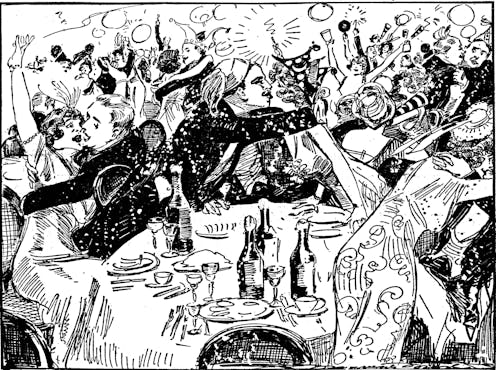
As we welcome in the new year, a common activity across many cultures is the setting of new year resolutions. New year represents a significant temporal milestone in the calendar when many people set new goals for the year ahead. Here in Australia, over 70% of men and women (over 14 million Australians) are reported to have set at least one new year resolution in 2022.
New year pledges or promises are not new. This practice has been around for some time. Most ancient cultures practised some type of religious tradition or festival at the beginning of the new year.

The Babylonians
Historically, the first recorded people to set new year pledges (later to become known as resolutions) are the Ancient Babylonians some 4,000 years ago.
The Babylonians are also the first civilisation to hold recorded celebrations in honour of the new year. Though for the Babylonians the year began not in January, but in mid March, when the crops were being planted. New year resolutions for the Babylonians were intertwined with religion, mythology, power, and socioeconomic values.
The Babylonians are said to have initiated the tradition of a 12-day new year festival called Akitu. Statues of the deities were paraded through the city streets, and rites were enacted to symbolise victory over the forces of chaos.
During this festival people planted crops, pledged their allegiance to the reigning king or crowned a new king, and made promises to repay debts in the year ahead. The Babylonians believed if they fulfilled their new year promises, then the Gods would look favourably upon them in the new year.
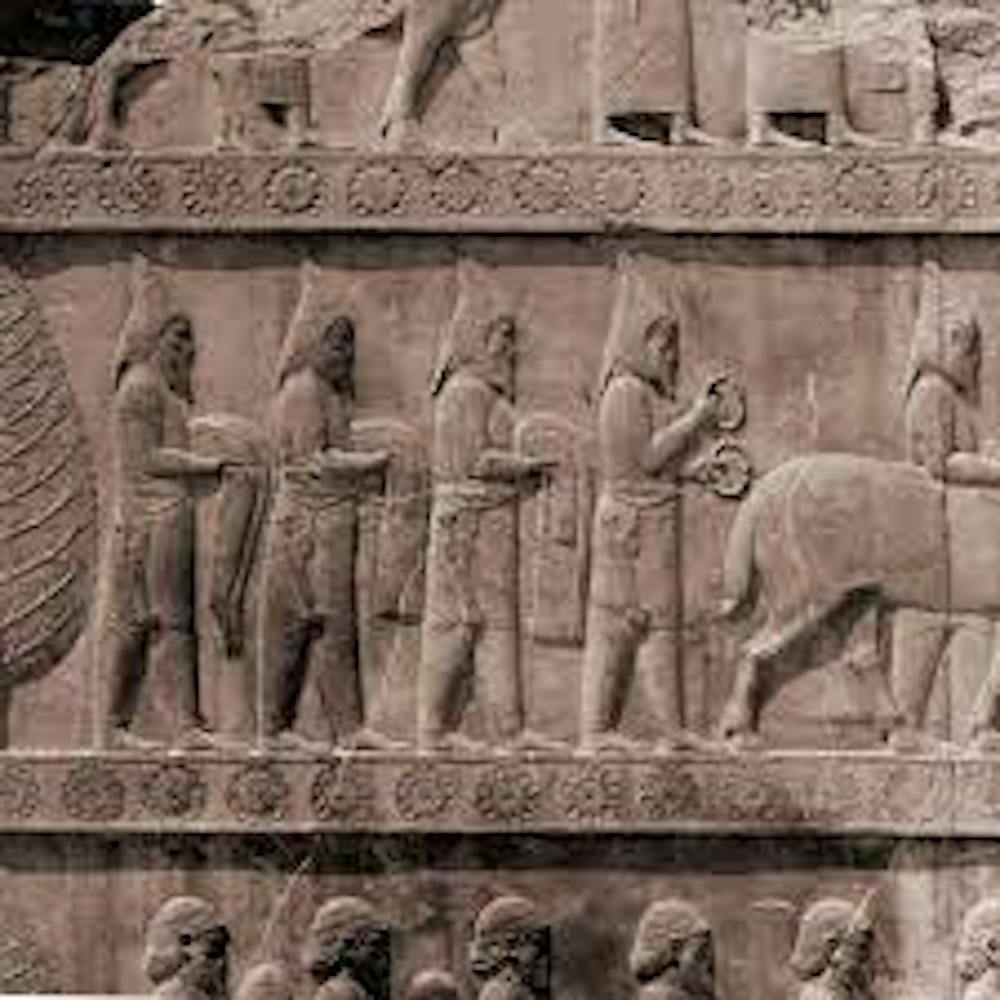 Akitu was the Babylonian festival for the new year.
Wikimedia
Akitu was the Babylonian festival for the new year.
Wikimedia
Ancient Rome
Ancient Rome continued the tradition of celebrating new year and setting new year pledges. The Roman new year was initially celebrated on March 15 (The Ides of March), as this was the time the most important Roman officials (Consuls) took office.
The festival of Anna Perenna, an Italian goddess of the new year and the beginning of spring, was also celebrated on March 15.
The Julian calendar
The emperor Julius Caesar introduced the Julian calendar, in 46 BC, which declared January 1 as the start of the new year. This new date was to honour the Roman god, Janus.
Symbolically, Janus has two faces, to look back on the previous year and to look forward into the new year. Janus was the protector of doors, archways, thresholds and transitions into new beginnings.
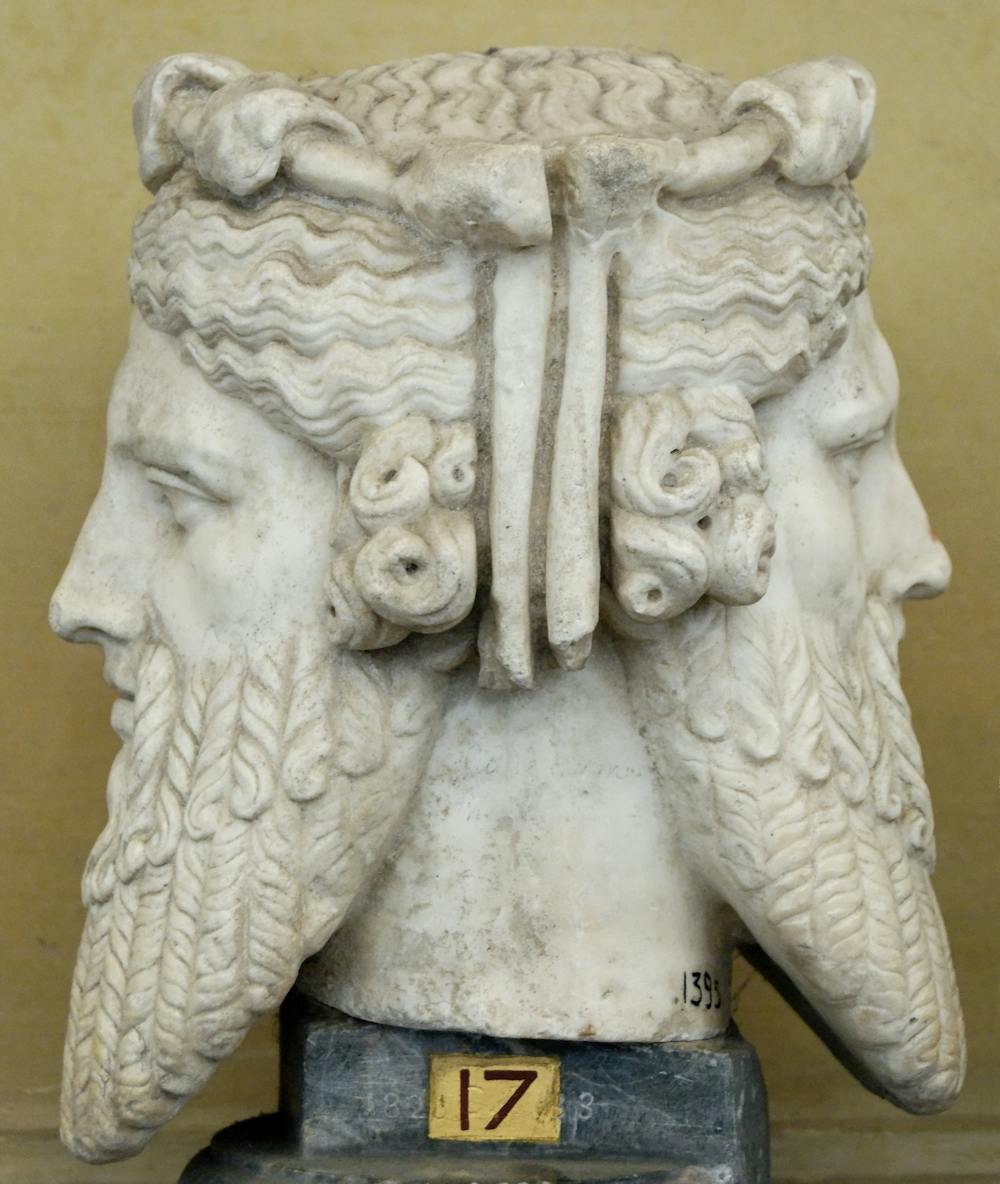 Statue representing Janus Bifrons in the Vatican Museums.
Wikimedia
Statue representing Janus Bifrons in the Vatican Museums.
Wikimedia
Each new year Romans would offer sacrifices to Janus and pledge renewed bonds between citizens, the state, and the deities. Blessings and gifts were exchanged (for example sweet fruit and honey), and allegiances pledged to the emperor. New year celebrations and pledges were embedded into spirituality, power structures, and the societal fabric of the Roman culture.
The age of chivalry
In the Middle Ages (around 500 to 1500 A.D), medieval knights pledged their allegiance and renewed their vows to chivalry and knightly valour each new year.
Legend has it the most celebrated chivalry vows were those called “The Vow of the Peacock” or the “Pheasant”. The knights placed their hands on a live or roast peacock and renewed their vows to maintain knighthood values.
The splendid and various colours of these birds is thought to have symbolised the majesty of kings and nobility.
Beyond knightly valour and honour, however, chivalry served social and religious functions. Chivalry reinforced social divisions of wealth, prestige and superiority that served the interests of the ruling nobility and landed aristocrats. Thus, knighthood became analogous to an elite members’ club.
In the Middle Ages, new year was celebrated by different societies at different times of the year. Due to a timing miscalculation, the Julian calendar had resulted in seven extra days by the year 1000.
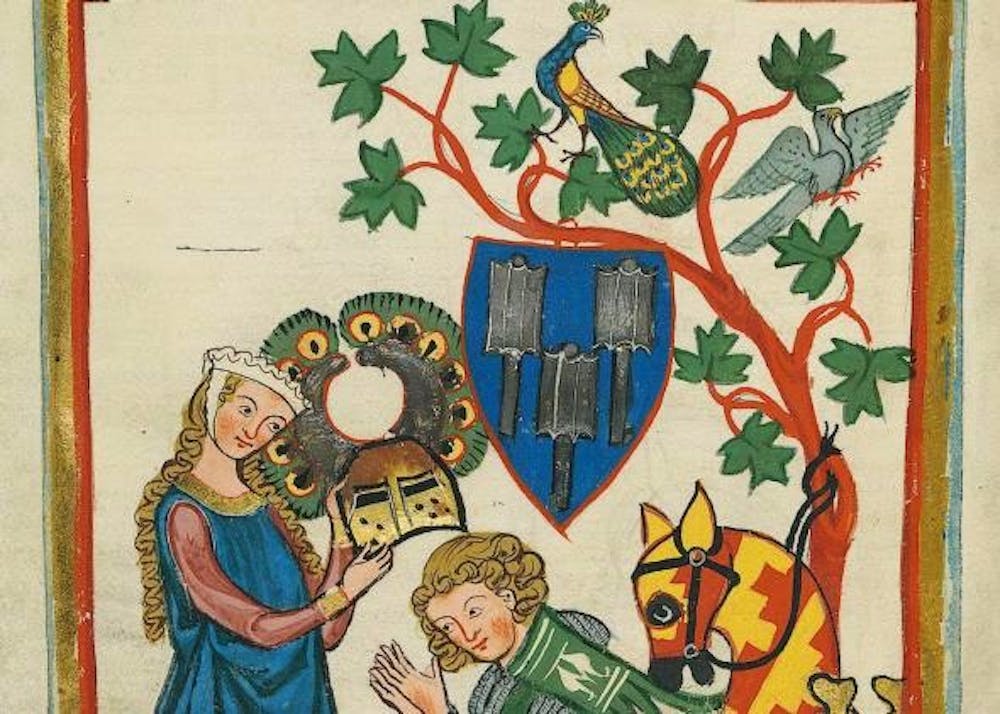 An early 14th-century German manuscript depicting a knight and his lady.
Wikimedia Commons
An early 14th-century German manuscript depicting a knight and his lady.
Wikimedia Commons
Modern times
To solve problems associated with the Julian calendar, the Gregorian calendar was instigated by Pope Gregory XIII in 1582. The new year was officially reinstated to January 1.
Religion continued to exert a significant social and cultural influence on the purpose and function of people’s new year pledges. For instance, in the 19th century, Protestantism emphasised setting pledges strongly aligned to religion, spirituality, and moral character.
However, in the 1800s there is some evidence resolutions were beginning to be satirised. For instance, a series of satirical resolutions were being reported in the Walker’s Hibernian Magazine (1802), “Statesmen have resolved to have no other object in view than the good of their country”.
Resolutions had become a common activity, and people were making and breaking pledges just as they do to this day. For instance, as early as 1671, the Scottish writer Anne Halkett recorded in her diary the resolution, “I will not offend anymore”.
As in earlier times, people from across cultures continue to celebrate the new year (though at different times), and to set resolutions. Just as ancient civilisations would pray for rich harvest, resolutions today tend to also project societal values.
Contemporary resolutions tend to be more secular than religious or societal in nature. Conceptually, however, new year resolutions continue to capture people’s imagination, hopes, and promises for betterment. Even after 4,000 years, the new year continues to symbolise a new threshold. An opportunity for a fresh start.
Authors: Joanne Dickson, Professor of Psychology & Mental Health, Edith Cowan University


 Daily Bulletin


